Mass testing scheme to be piloted in north – with all Liverpool residents offered free COVID tests
The armed forces will be stepping into the North West region from Friday (6 November) to deliver the programme - which will see more than half a million people given the opportunity to take a coronavirus test.
Liverpool has been selected to pilot a new mass testing programme – with everyone living and working in the city set to be offered a free COVID-19 test.
The armed forces will be stepping into the North West region from Friday (6 November) to deliver the scheme – which will see more than half a million people given the opportunity to take a coronavirus test.
The pilot has been set up to determine whether mass screening is feasible across the UK – a concept first outlined as part of Boris Johnson’s ‘Operation Moonshot’.
Back in September, the Prime Minister floated the notion of making tests so readily available that UK citizens could enjoy a ‘freedom pass‘ to interact with others.
Now, as England prepares for a second lockdown, the government is embarking on its mission to create a “powerful new weapon in [the] fight against COVID-19.”
ADVERTISEMENT
Number 10 / Flickr
All test subjects will receive a combination of swab tests – already in wide use across England – and lateral flow tests, which can use nose-and-mouth swabs or saliva and produce results in 15 minutes.
The aim of the pilot is to determine whether testing at such high speed and scale is viable and effective.
ADVERTISEMENT
If successful, mass testing will then be rolled out across the rest of the Liverpool city region and into other areas.
High risk regions with many cases, such as Greater Manchester, may be the next on the list to receive mass testing.
The opportunity to use voluntary “mass testing” in Liverpool can help us get out of Tier 3 when lockdown ends on 2nd Dec. 80% of people who are positive don’t know they have it, this will help us identify them. Let’s do this for our City, our NHS,our people and our economy.
The first batch of tests will be carried out in a mixture of settings – including new and existing test sites, as well as hospitals, care homes, schools, universities and workplaces.
ADVERTISEMENT
Anyone who tests positive will receive a text or email from NHS Track and Trace and will be asked to self-isolate.
This isolation period – currently 14 days – may also be reduced to 10 or seven days this week.
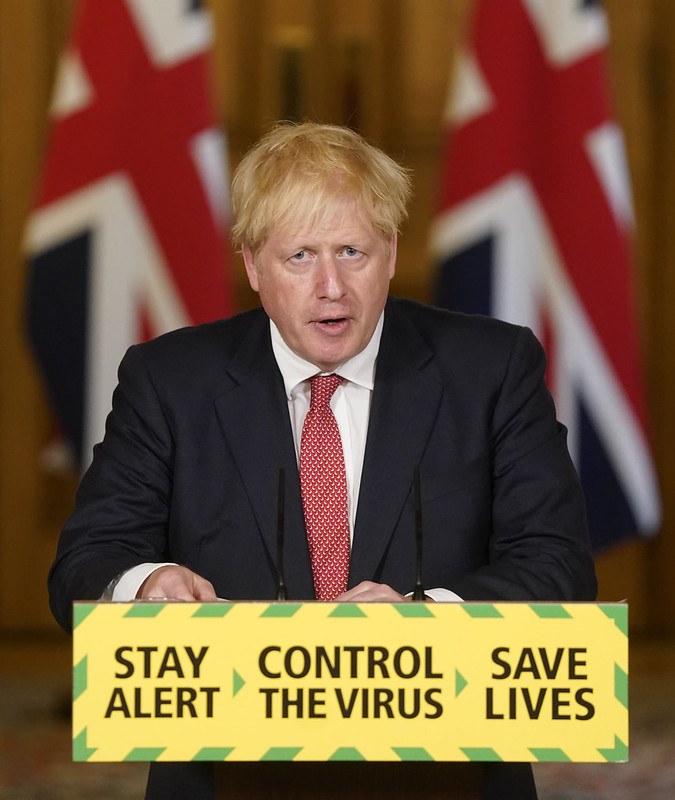
Discussing the pilot scheme, the PM stated: “These tests will help identify the many thousands of people in the city who don’t have symptoms but can still infect others without knowing.
“Dependent on their success in Liverpool, we will aim to distribute millions of these new rapid tests between now and Christmas and empower local communities to use them to drive down transmission in their areas.”
News
Travel warning issued as tens of thousands to descend for Manchester Half Marathon
Daisy Jackson
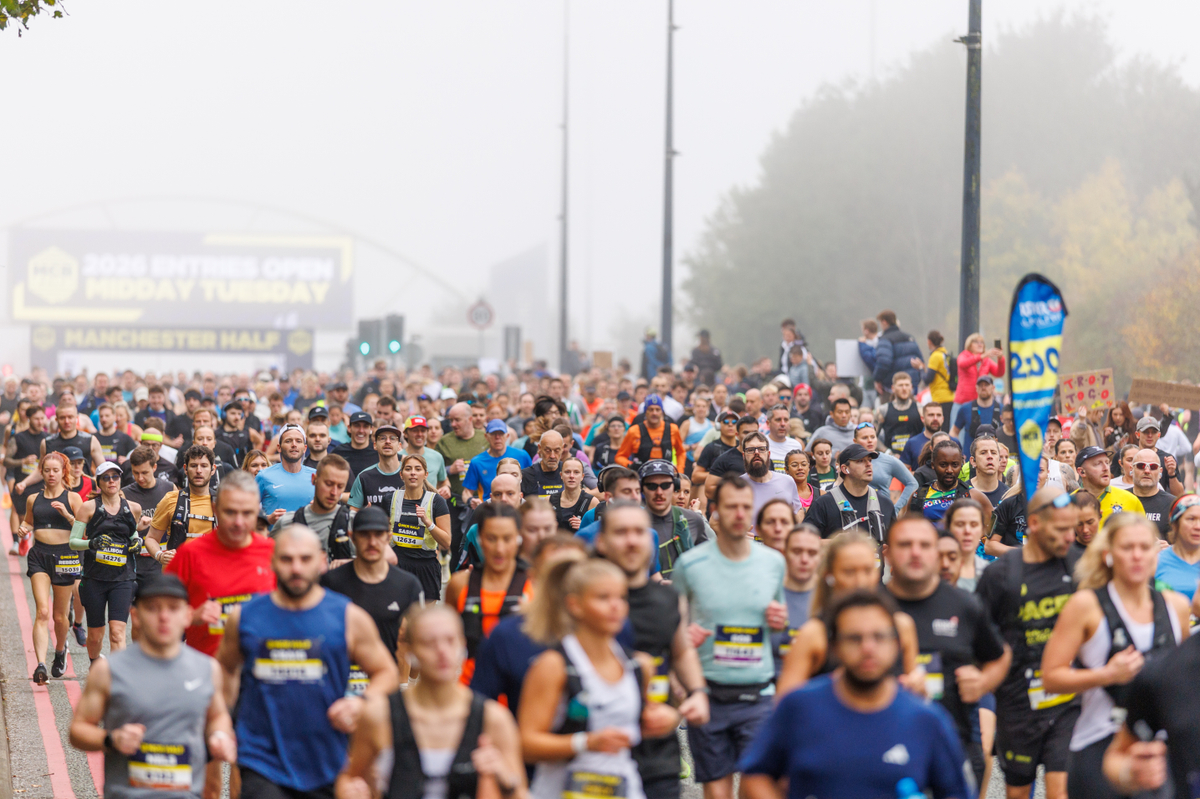
A travel warning has been issued ahead of the Manchester Half Marathon this weekend, with tens of thousands of runners and spectators expected to arrive in the city.
People are being urged to plan their journeys ahead of time, with significant road closures in place from the city centre as far out as Sale.
Road closures – and subsequent bus diversions – will also affect parts of Stretford, Chorlton, Trafford, and surrounding areas.
Around 32,000 people are expected to take part in the Manchester Half Marathon this Sunday, with thousands more coming out to cheer the runners on.
Transport for Greater Manchester is advising people that the Bee Network trams will be the best way to get around over the weekend.
Extra trams will be operating to provide as much capacity as possible.
Road closures and bus diversions will start on Saturday 3 October and continue until the actual race day on Sunday 4 October, lifting fully by 8.30pm.
Tens of thousands of runners and spectators will descend on Manchester for the half marathon
Earlier this year, the Manchester Marathon led to a record-breaking day for Metrolink trams, with the highest number of passengers ever recorded on a single day in the network’s history.
Whether running or cheering, people are advised to use the Bee Network app to plan their journeys and are strongly encouraged not to drive within the affected areas.
Steve Gilholme, Head of Events at Transport for Greater Manchester, said: “The Manchester Half Marathon is another one of those special occasions where the people of Greater Manchester and beyond come together, with thousands of people taking on the challenge and raising money for good causes, while many more will line the route to cheer them on.
“This does mean the city centre and especially trams will be incredibly busy so please plan ahead and give yourself extra time to make journeys.
“The Bee Network app and website will be the best places to get the latest travel information and tap and go contactless payments are the quickest and easiest way to pay.”
You can see all the road closures for the Manchester Half Marathon HERE.
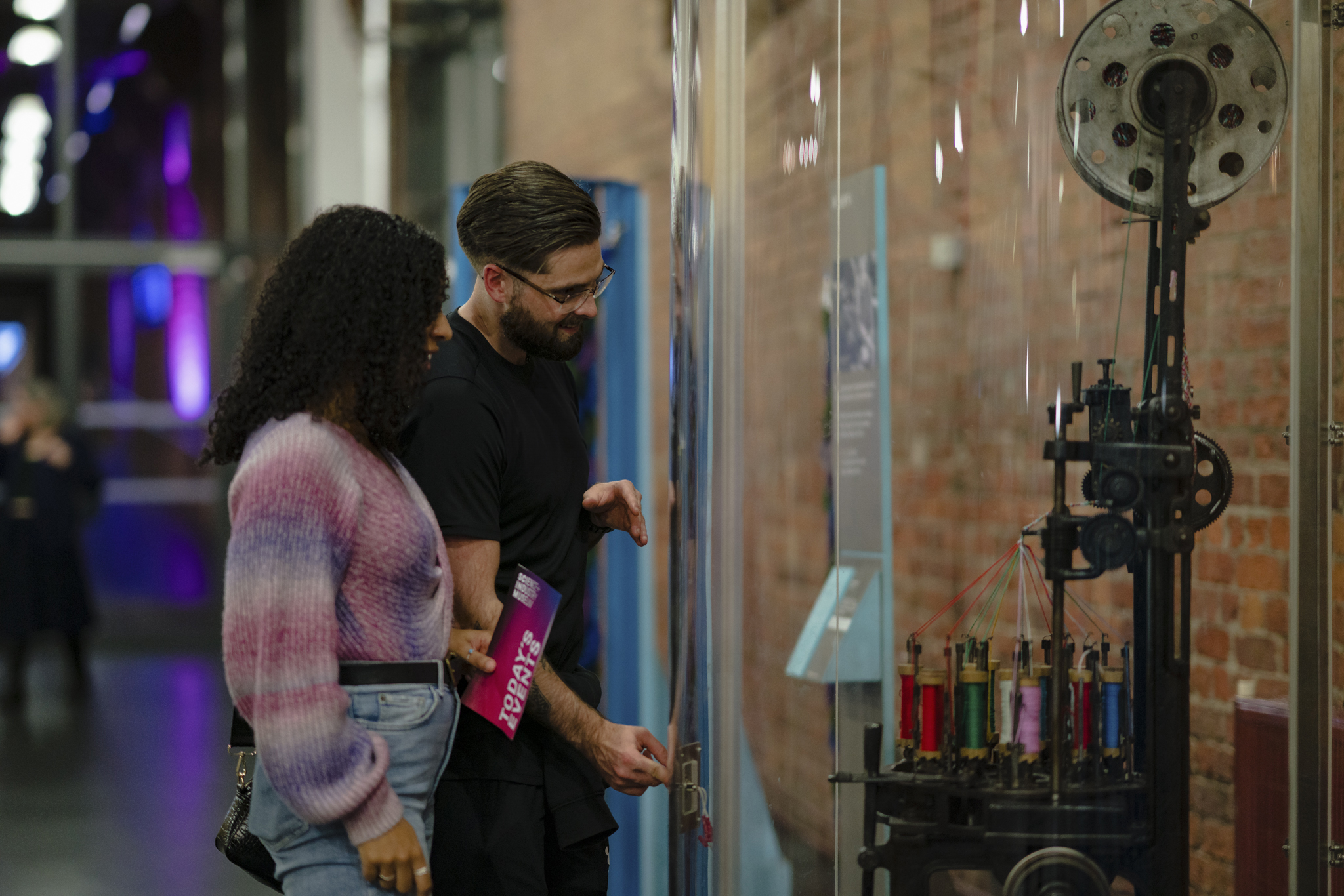
Funded by the Department for Culture, Media and Sport (DCMS), the 14 national museums of the UK are all located in England – including the Imperial War Museum North, and the Science and Industry Museum in our region – and free entry to was first introduced all the way back in 2001, with millions of visitors having benefitted since.
National museums are said to add more than £1 billion a year to the economy, and bring in visitors from all over the world.
In fact, seven of the UK’s 10 most visited museums are national museums, and 7.1 million people visited the Natural History Museum and 6.4 million visited the British Museum in 2025 alone.
The Government has announced that all national museums in the UK will remain free for everyone to visit / Credit: Science Museum Group | Wikimedia Commons
Earlier this year though, the Government committed to working with local leaders and the museum and tourism sectors to explore whether charging overseas visitors could help museums’ finances.
But following this, it’s now believed that charging could deter visitors, and that the impacts and benefits would ‘not be felt equally’ across the sector.
Instead, the free entry will be funded by the £1.5 billion Arts Everywhere Fund – which is providing £760 million for museums – while £600 million of infrastructure funding is supporting national museums and DCMS-sponsored cultural organisations.
The latter funding will be used to address critical maintenance and works to estates, and enable institutions to deliver on their commitments to share collections with visitors from around the world.

 The Manc -
3rd November 2020
The Manc -
3rd November 2020