Boris Johnson has rejected calls to keep gyms, tennis courts, golf courses and swimming pools open during England’s pending four-week national lockdown.
Under the new restrictions – which will be voted on in Parliament on Wednesday and are expected to come into force at 00:01 GMT on Thursday 5th November – the prime minister has ordered indoor and outdoor sports and leisure facilities to close for the four week duration.
A number of sporting bodies have thus sought to challenge the government’s shutdown of these facilities.
But in an address to MPs in the House of Commons yesterday afternoon, Mr Johnson offered them little hope of success and instead suggested that unpicking parts of the lockdown would mean “the effectiveness of the whole package is compromised”.
When questioned on the matter by a number of MPs, Mr Johnson insisted that it is “difficult to take out one part of the Jenga block without disturbing the whole package”.
ADVERTISEMENT
James Sunderland – Conservative MP for Bracknell – told the Prime Minister he had been contacted by many constituents concerned about the closure of gyms, golf clubs and tennis clubs and went on to ask: “Given the proven benefits of exercise and the lack of any clear evidence that these activities have contributed to an increase in the R rate, might the prime minister be willing to reconsider the current guidance within the next four weeks?,”
But Mr Johnson replied: “Once you unpick at one thing, alas, the effectiveness of the whole package is compromised.
ADVERTISEMENT
He continued: “That is why I want everybody to work together for the next four weeks, as I say, to get the R under control so that we can open things up again in time for December.”
Boris Johnson is pressed on the science behind the decision to close gyms and golf clubs, despite efforts to ensure they are Covid-safe
Another Tory MP, Stephen Metcalfe, asked the Prime Minister to review the rules around socially distanced outdoor sports such as golf and tennis, and Labour MP Kevan Jones – who highlighted the “valiant efforts” of golf clubs and gyms to ensure they are COVID-safe – urged Mr Johnson to publish the scientific data behind the decision to close such sports facilities.
When pressed further by Conservative MP Peter Aldous who asked the Prime Minister to rethink the rules on activities “that can take place in a socially distanced and responsible way”, such as outdoor swimming, Mr Johnson said the government would “look at any exceptions that we can sensibly make”,
ADVERTISEMENT
But then added: “It is difficult to take out one part of the Jenga block without disturbing the whole package.”
The resisting of these calls came after Mr Johnson defended the decision to introduce the regional three tier system in October following a growing number of senior Conservative backbenchers signalling their opposition to the measures due to come into effect on Thursday, and despite Labour stating that his failure to act sooner will have cost lives and caused further damage to the economy.
Setting out why the lockdown is now needed, Mr Johnson said to MPs: “At the end of four weeks, on Wednesday 2nd December, we will seek to ease restrictions, going back into the tiered system on a local and regional basis according to the latest data and trends.”
He continued: “Models of our scientists suggest that unless we act now, we could see deaths over the winter that are twice as bad or more compared with the first wave.”
“Faced with these latest figures, there is no alternative but to take further action at a national level.”
ADVERTISEMENT
___
For the latest information, guidance and support during the coronavirus (COVID-19) pandemic in the UK, please do refer to official sources at gov.uk/coronavirus.
#HandsFaceSpace
News
Exciting new CGIs released of £500m Therme Manchester wellness resort as construction continues
Emily Sergeant
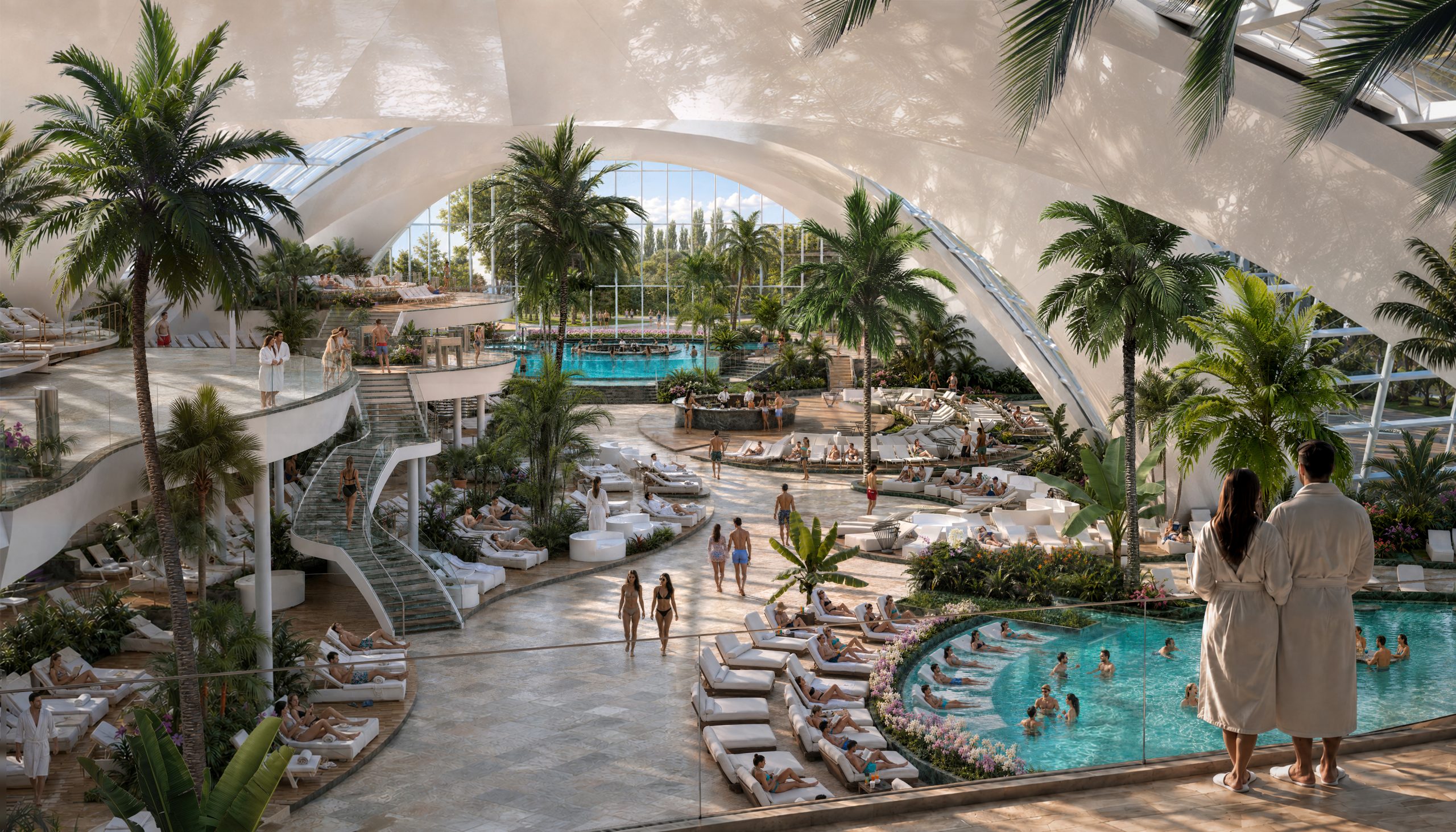
As construction continues on Manchester’s massive wellness resort, some new CGIs have now been released.
In case you need bringing up to speed, construction of the £500 million Therme Manchester wellness resort officially began last September after several years of planning, and now developers have released some exciting new CGIs – with an update on how construction is going, as a new milestone has been reached this week.
Set to open to the public in 2029, Therme Manchester will become one of the largest urban wellbeing resorts in the world.
Visitors can expect to make the most of a 10 pools – both lagoon and wave pools included – thermal bathing, multi-sensory sauna rituals, steam rooms, 18 water slides, affordably-priced luxury spa therapies, and health and fitness experiences.
Exciting new CGIs released of Therme Manchester have been released / Credit: Supplied
At the heart of Therme Manchester will be three distinct zones, each offering a different way to spend time at the resort.
Play will bring together water-based fun and attractions for families and visitors of all ages, and Restore will focus on thermal bathing and restorative experiences designed to help visitors unwind, while Relax will offer spaces for relaxation and wellbeing.
The latest CGIs showcase the design as it develops – including the resort’s extensive indoor and outdoor spaces, and its 53,000sq ft wellbeing garden.
Construction is still underway on the £500m wellness resort / Credit: Supplied
The plans also feature a new public plaza designed to strengthen connections between the resort and the Bridgewater Canal.
Professor David Russell, CEO of Therme UK, said: “We have taken the opportunity to refine the design, improve how traffic and parking are managed and create a more welcoming environment for everyone arriving at the resort.
“We are creating an even better experience for visitors while supporting more efficient and sustainable operations.”
Therme Manchester was initially touted as a £250m project that would complete in 2025, but it’s now up to £500m and is scheduled to complete it 2029.
It marks one of the most significant building developments to ever take place in the North.
Featured Image – Supplied
News
All students in England to be offered the chance to do a new Ukrainian GCSE
Emily Sergeant
All students in England are soon to be offered the chance to do a new Ukrainian GCSE.
Said to be part of the UK’s ‘enduring support’ for the Ukrainian community and continued commitment to stand with Ukraine and its people, young people in England, Wales, and Northern Ireland will now have the opportunity to study for a new Ukrainian GCSE, the Government has announced.
While the qualification will be open to all students, it marks a ‘particularly significant’ milestone for Ukrainian children and young people living in the UK.
It’s hoped that the introduction of the new GCSE will help Ukrainians to preserve a vital connection to their language, culture, and identity.
It’s also hoped that it’ll open pathways to future education and employment for all pupils.
In line with the other modern foreign language GCSEs that are currently on offer, the qualification will assess listening, speaking, reading, and writing skills, while also recognising the cultural and historical contexts that shape the Ukrainian language.
Examination board AQA will now begin the next phase of development, bringing together language and subject experts to design what will be a ‘high-quality’ qualification reflecting the richness of Ukrainian language and culture.
Education Secretary, Lucy Powell, commented: “As they build their lives here in the UK, it is right that Ukrainians and their children should have every opportunity to maintain that connection to their heritage and to be proud of who they are.
“This new qualification is available to all pupils and will give them the chance to develop their language skills and celebrate Ukraine’s rich culture and history, while also opening pathways to future study and employment and strengthening our partnership with Ukraine.
“Through that enduring partnership, we are building the lasting ties between our countries that will see the young minds of the future move forward together, and foster connections that transcend borders.”
The Ukrainian GCSE is expected to be available for first teaching from September 2028 – with first assessments taking place in 2029.

 The Manc -
3rd November 2020