Tib Street is a built-up blend of bakeries, bars, florists, cafes, newsagents and sex shops nowadays. It’s an intriguing and peculiar old part of town that seems to have a bit of everything.
But it wasn’t always this way.
For many years, this slender stretch of Northern Quarter had a single definitive trade that used to attract Mancunians in their thousands: animals.
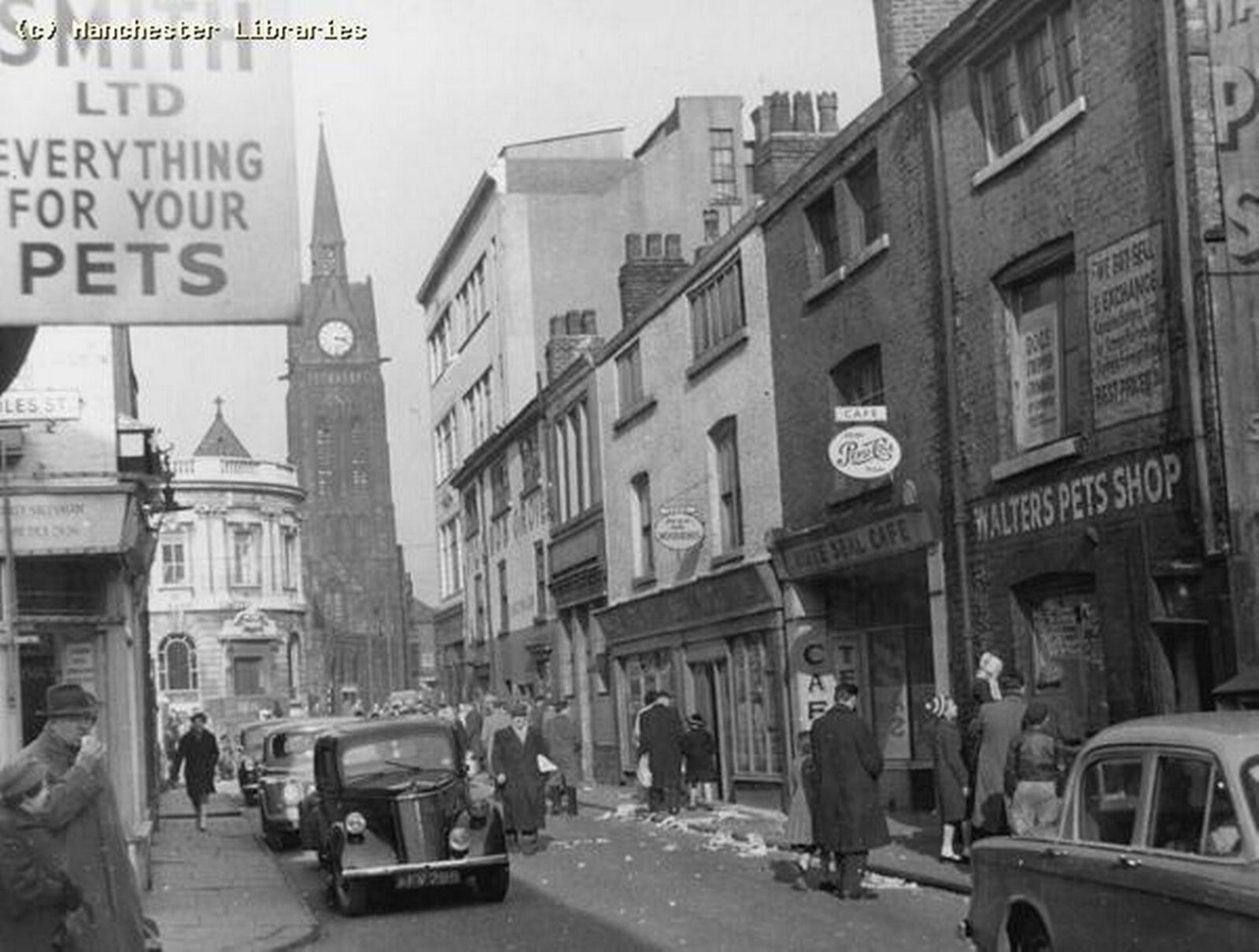
Established as an agricultural space in the 1800s, Tib Street gradually morphed into a pet shop paradise during the early 20th century; a cavalcade of creatures peeking out from behind the windows that lined the street.
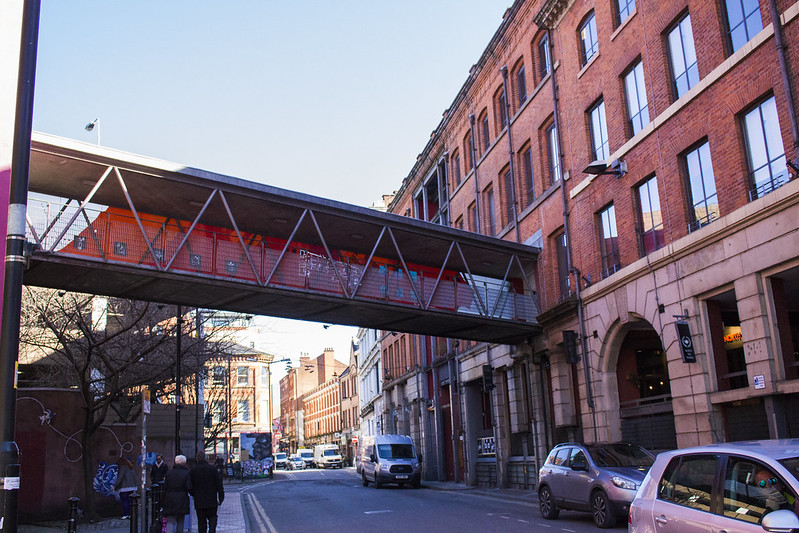
Hayley Flynn, the founder of Skyliner and a walking encyclopaedia of Manchester history, has previously dived into the history of the area on her walking tours, having discovered that Tib Street was a truly ‘wild’ part of the city.
ADVERTISEMENT
“There’s always been animals on Tib Street since it was established around the 1800s,” Hayley explains.
“But it became less about agriculture and pigs, and more about pets when the area became more developed in the early 1900s.
ADVERTISEMENT
“There’s still one pet shop there today but it was the arrival of the Arndale in the mid to late 1970s that saw most of the area close down and businesses move out.
“The area then became what we have today partly through the natural process of gentrification, partly down to arts-led regeneration.”
One of the most prominent traders in Tib Street’s heyday was a man name Walter Smith – who owned one of the longest-running pet shops in the area.
ADVERTISEMENT
He eventually sold it to another family, the Browns, but they kept the original name – and the original founder’s legacy survives in a painting titled “Mr Smith’s Dream” created by artist Liz Scrine.
“The Dream piece is based on Under Milk Wood by Dylan Thomas and the plan was the create the dreams of the animals in the pet shops in further lightboxes along the same wall, but the project was never completed,” Hayley informs us.
“So, we have this one piece that seems quite abstract as a standalone installation.”
Tib Street’s markets became bigger and more diverse throughout the 1900s.
As the areas began to attract five-figure attendances on Friday evenings, the pubs opened earlier to accommodate growing numbers of traders.
ADVERTISEMENT
“Around Tib Street could draw crowds of up to 10,000 on a Friday night, much of this was market footfall around Smithfield, especially the Shudehill side (the wholesale fish markets on High Street),” Hayley tells us.
“Then to serve the workers of the markets the pubs opened very early in the morning – so it was something of a 24 hour city in that respect.
“Teenagers relied on the markets for entertainment and a social space, and it was popular with sex workers too, so it was a bit of a wild place at times.”
Google
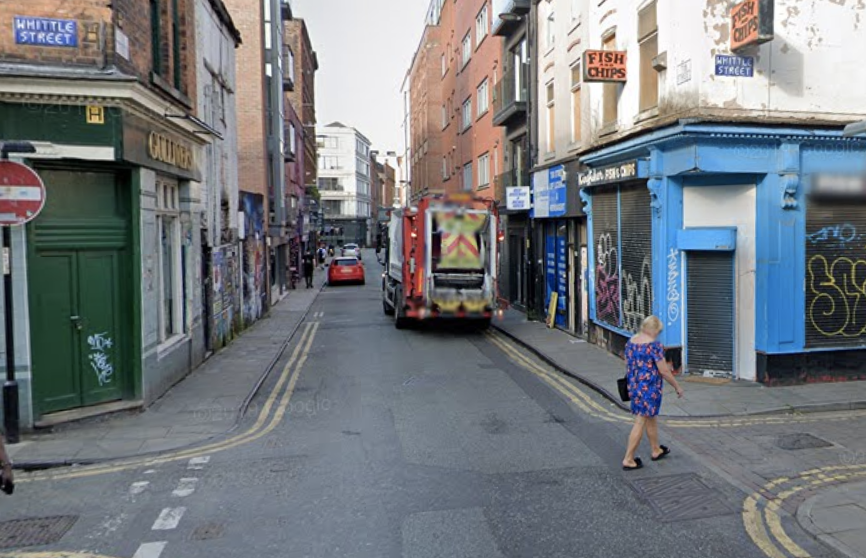
Much of the animal trade and pet shops shut down on Tib Street in the seventies, but the concealed structure of the street rendered it ideal for explicit stores to pitch up for patrons; away from city residents’ prying eyes.
“The pet shops and other independents along Tib Street were a very popular day out right up until the 70s,” says Hayley.
ADVERTISEMENT
“Even later on, strange independent traders who managed to survive in the area for a while longer drew in crowds, there was a latex mask shop that was popular with the younger crowd.”
Modern Tib Street is no longer a round-the-clock fiesta of beasts and booze, but if you crane your neck upwards, the relics of its past are in plain view.
Perched gently on the buildings, you’ll see a pandemonium of painted parrots.
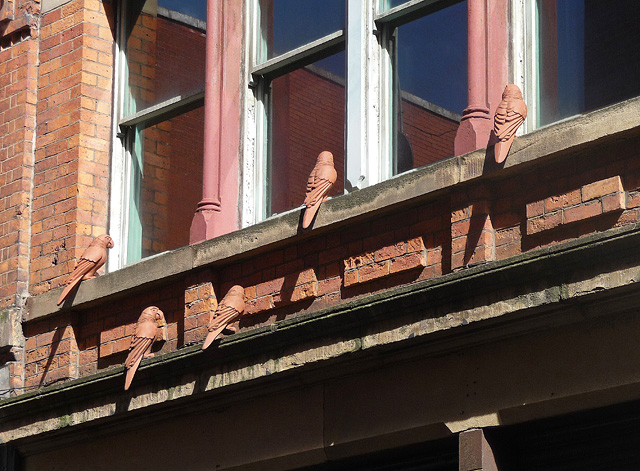
“The birds form part of the same art trail as Mr Smith’s dream, they’re looking back into the building wondering where to go now that the pet shops are closed,” Hayley explains.
“They’re the Sulking Parrots of Tib Street, and have found themselves homeless. There are other birds like this hidden around the Northern Quarter to look out for, from doves to toucans.
ADVERTISEMENT
“They’ve been handing around since the late 90s but have been surprisingly overlooked, suppose that’s just testament to the fact we should always look up.”
To discover more about the amazing history of Manchester, you can take a walking tour with Skyliner – led by Hayley herself.
Tours are resuming later this month following lockdown; currently limited to five people due to group restrictions.
Inside Levenshulme Antiques Village, Manchester’s three-story treasure trove of vintage finds
Daisy Jackson
If you’re the sort of person who gets a real kick out of saying ‘Thanks, it’s vintage’, then you probably already know of Levenshulme Antiques Village. But if not, allow us to show you around a little.
This three-story hypermarket has been trading out of the former Levenshulme Town Hall for decades, filling the 127-year-old building with items potentially even older.
It’s a vast antiques centre where every twist in the maze reveals vintage furniture, collectibles, artwork and curiosities from every era imaginable.
The building itself still carries plenty of charm and history from the building’s past as the local council offices, and thankfully very little of its personality was stripped away in the process of transforming the building into the Levenshulme Antiques Village.
Today, visitors still climb the grand staircase beneath soaring ceilings and pass through hallways lined with original wall-to-wall ceramic tiles.
There’s free parking outside (which is good, because you’re likely to leave with a boot-full of treasure), and once inside, the scale of the place quickly becomes apparent.
Friendly traders fill the building, many of whom are more than happy to chat, share stories behind their stock, or guide visitors towards hidden gems tucked away in quieter rooms. And there are plenty of gems to uncover.
A room packed with mid-century furnitureLevenshulme Antiques Village is a treasure trove of vintage findsJust look at this lot…
From antique furniture and oil paintings to jewellery, records, ceramics and shelves overflowing with nicknacks, the village rewards slow wandering. One moment you might stumble across a beautifully carved temple door; the next, a collection of vintage signs or a perfectly preserved mid-century cabinet.
The top floor is perhaps the most striking space of all. Once a ballroom, the enormous room still retains a sense of grandeur, with high ceilings and huge windows flooding the space with natural light, but is now transformed into a densely packed emporium of antiques and collectibles.
Outside, the experience continues with artist workshops and creative studios, among them is craftsman Kip Kaboli, known for producing handcrafted Japanese knives and even hosting oyster events. It’s an unusual but fitting addition to a place that celebrates both heritage and craftsmanship.
Old ceramic tiles still line the hallwaysThe on-site tearoom at Levenshulme Antiques Village
Halfway through exploring, many visitors end up at the affordable tearoom on the first floor, serving comforting classics like salad sandwiches and afternoon teas.
What makes Levenshulme Antiques Village special is not simply the volume of antiques packed inside, but the atmosphere, the warm welcome from traders, and the weird and wonderful history of the place.
Review | The Karate Kid at Palace Theatre and Opera House, Manchester – very much wax ON
Lonnie Bowes
The theatrical version of The Karate Kid has arrived at the Palace Theatre and Opera House, bringing a well-known story of discipline, resilience and mentorship to a live audience.
Best known for its iconic cinematic legacy, The Karate Kid translates surprisingly well to the stage. It leans less on spectacle and more on character, movement and emotional growth.
At the production’s heart, the story still revolves around a young outsider trying to find confidence and belonging in an unfamiliar environment, guided by an unexpected mentor.
The narrative follows Daniel, played by Gino Ochello, marking his first professional stage debut, as he struggles to adjust to a new life, facing intimidation and self-doubt before encountering the legendary Mr Miyagi, played by Adrian Pang.
What unfolds is more than just a story of learning karate; it becomes a study of patience, balance and inner strength for Daniel. The central relationship between student and teacher remains the production’s strongest theme, grounding the story in warmth and sincerity.
The bond between student and Sensei is clear to see throughout. Focusing more on the movement side of things, the musical definitely has its fair share of action; the production shines with storytelling through choreography.
The fight sequences are carefully staged. The whole production walks a balanced line between movement and tension that feels immediate without losing theatrical elements.
These scenes are not about aggression alone but about control, reflecting the philosophy at the core of the story: balance. If you’ve seen the movies or the likes of Cobra Kai, you’ll know the vibes.
The cast works cohesively to maintain this balance. Ochello playing Daniel captures a mix of genuine vulnerability and determination as he attempts to settle into his new life in California, a million miles from the streets of Jersey he once knew.
While Adrian Pang portrays Mr Miyagi does this with a quiet authority. Their dynamic evolves on stage flawlessly, allowing the audience to invest in their journey rather than simply anticipating the next fight.
Visually, the production makes effective use of staging and design. The set shifts fluidly between locations, using lighting and more than a few well-timed transitions to keep the pace moving.
Subtle changes in atmosphere mirror the cast’s internal world, moving from insecurity and isolation to confidence and connection as the story progresses. The music throughout further supports this, blending nostalgia from the old flicks we all knew and love, with a new contemporary stage feel.
As the story builds toward its familiar ending, the focus remains less on winning and more on personal growth. The final moments emphasise discipline, self-belief and restraint rather than triumph alone.
A well-deserved standing ovation. (Credit: The Manc)
Reinforcing why the story has endured across generations and how the themes explored remain powerful pillars of life in today’s world.
Ultimately, The Karate Kid on stage at the Palace Theatre succeeds not by trying to replicate the film exactly, but by reinterpreting its themes for a live audience. It’s a production that leans into character, movement, friendship and emotional resilience.
It reminds viewers that its real power lies not in the fights, although sometimes necessary as a last resort, but in what they represent on the inside. We had a much deeper experience than we expected, and loved pretty much every minute of it.