When you take a stroll through the Peak District, there are some wildlife encounters you expect.
Hares, deer, mice, bats, and dozens of British birds have all made their homes in the north west national park.
But, at least until fairly recently, it wasn’t uncommon to stumble upon an altogether less expected beast – a wild wallaby.
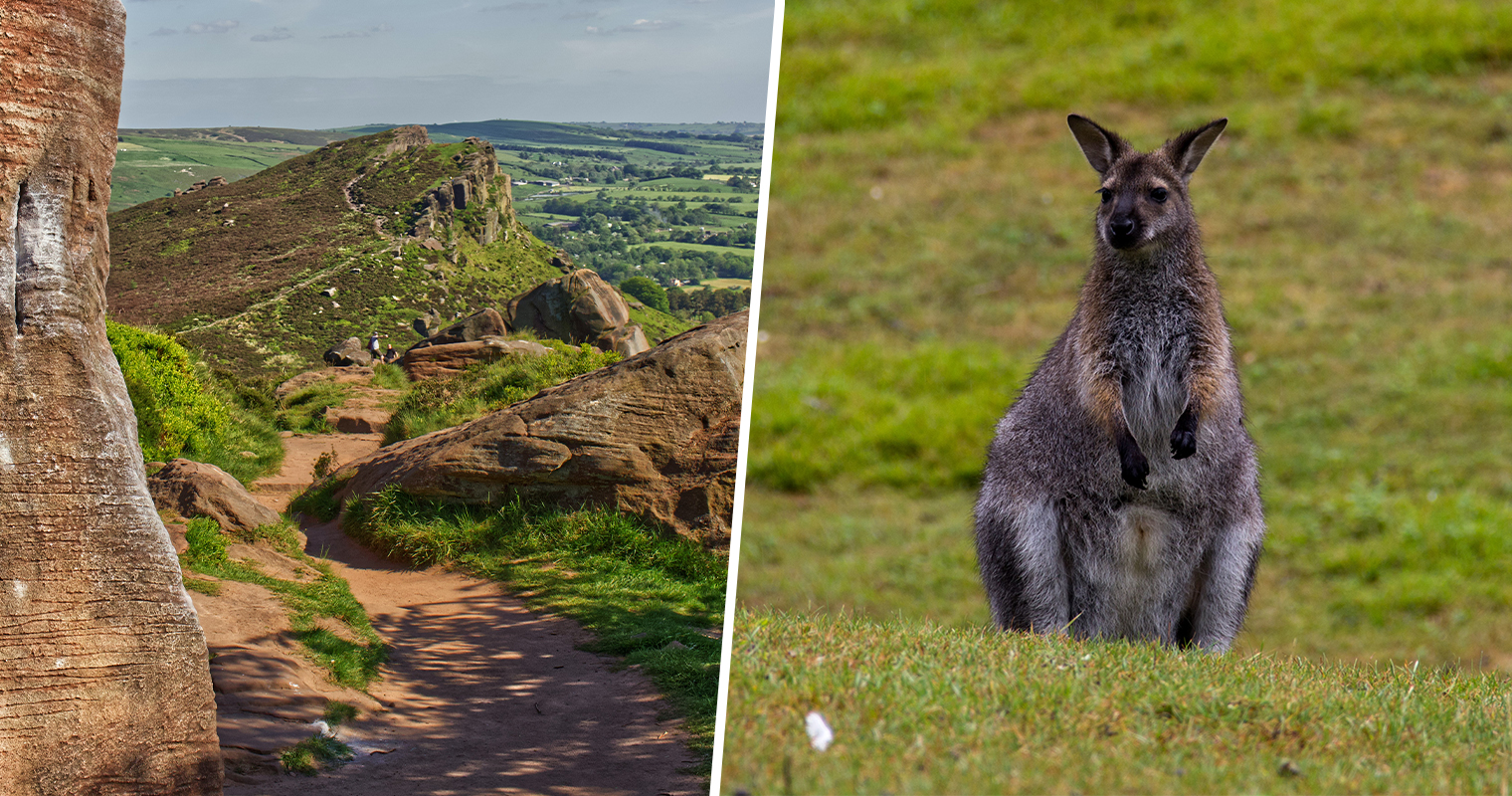
These hopping little macropods, a smaller relative of the kangaroo, used to be seen bouncing around the Peak District.
Although their native home is on the eastern coast of Australia and Tasmania, a small group of Bennett’s wallabies successfully bred and survived in Staffordshire.
ADVERTISEMENT
Credit: Nicholson Museum
But how on earth did they end up here, half a planet away from their natural habitat?
In 1936 a local landowner, Henry Brocklehurst, introduced five wallabies as part of his private zoo collection.
ADVERTISEMENT
The creatures were deliberately released during World War Two, along with three Himalayan yak.
Against the odds, the wallabies thrived.
At the peak of their existence here in the north west, there were around 50 in the colony, though one particularly bleak winter in 1963 is understood to have halved their population (one local recalled seeing ‘several bodies as the snowdrifts melted’).
ADVERTISEMENT
The Roaches. Credit: Unsplash, Nirmal Rajendharkumar
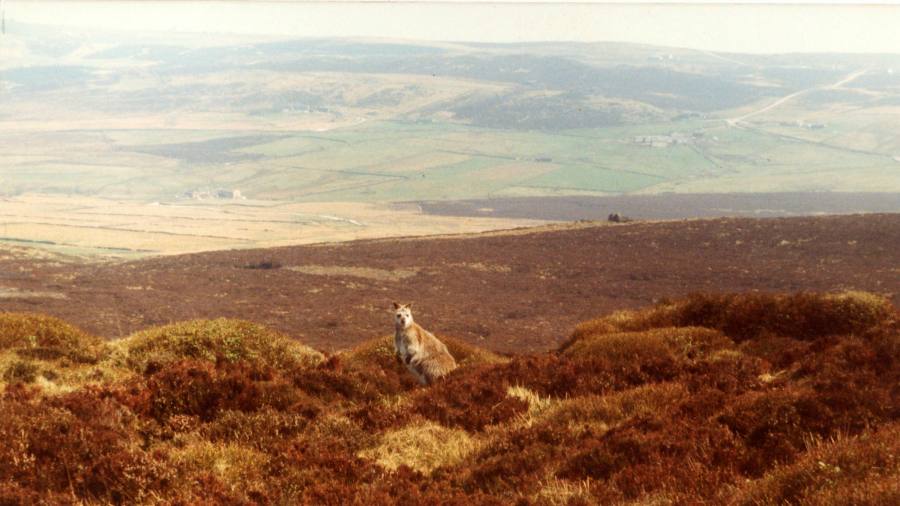
In the Facebook group Roaches Appreciation Society, Clare said: “I saw one at the Roaches skyline in the early ‘90s. It sat watching us climbing with its head poking out of the bracken. Then it bounded off. Much to the bemusement of my King Charles spaniel.”
By the 2000s, most locals believed there were only two wallabies left – a mother and daughter, both white-faced.
The most recent confirmed sighting was back in 2009, with undeniable footage showing one of the wallabies bounding through the heather near The Roaches.
Sadly, it’s thought that the snowy weather in the winter of 2010 may have finally pushed the colony into extinction.
Extreme snow in 2010 may have ended the wallabies’ roam at The Roaches. Credit: Unsplash, ian kelsall
There have been plenty more submissions of sightings – though none with photos or videos – in the years since, all listed here.
ADVERTISEMENT
Another sighting was in 2017 near the Wild Boar Inn in Wincle, where one person shared a photo of a ‘creature’ that they were ‘fairly certain’ was a wallaby.
When the Financial Times mentioned that sighting to Dr Anthony Caravaggi, a lecturer in conservation biology at the University of South Wales, he replied: “I have no doubt in my mind that that one was a cat.”
Dr Caravaggi published a paper on red-necked wallabies in the UK, which recorded 95 verified sightings in the 10 years leading up to 2018. He’s pretty certain the Peak District wallaby colony is extinct.
A leading expert in the field, who sadly died in 2013, was Dr Derek Yalden.
He found droppings in 2009, but nothing since.
ADVERTISEMENT
He wrote in a letter to Roaches.org.uk: “I think they ran out of decent food. However, accidental deaths, on the roads, falling over cliffs and (especially in 1962-63 and 1979) severe winters also took a toll.
“Why should a wallaby venture onto the roads, or jump over a cliff? Probably because a certain section of the public seemed to respond to a sighting with “let’s chase it”, or their dog did.
“They always were very timid, and I watched them panic both to thunder and to the terrifying sight of a sheep arriving.”
There is one place to get a guaranteed wallaby sighting, but don’t expect much in the way of hopping.
ADVERTISEMENT
The Nicholson Museum in Leek has stuffed Wally, a male who is believed to have died when he fell into the Lud’s Church cavern.
If you did want to head out exploring for your own wallaby sighting, you can head to The Roaches, a stunning gritstone ridge overlooking Leek.
For those who do visit, remember to stick to the footpaths, take litter home, and respect the rules laid out locally.
Mercury Prize 2026 review: RAYE takes home the crown as Newcastle celebrates the very best in music
Clementine Hall
One of the biggest nights in music kicked off last night as the Mercury Prize 2026 was awarded.
If there was ever a night to fall head over heels in love with British and Irish music, the 2026 Mercury Prize made a very convincing case.
Bringing together some of the country’s most exciting artists under one roof in Newcastle, this year’s ceremony was a reminder of just how much talent is packed into the current music scene.
From established legends to the names shaping what comes next, it was an absolute belter.
Images: Audio North
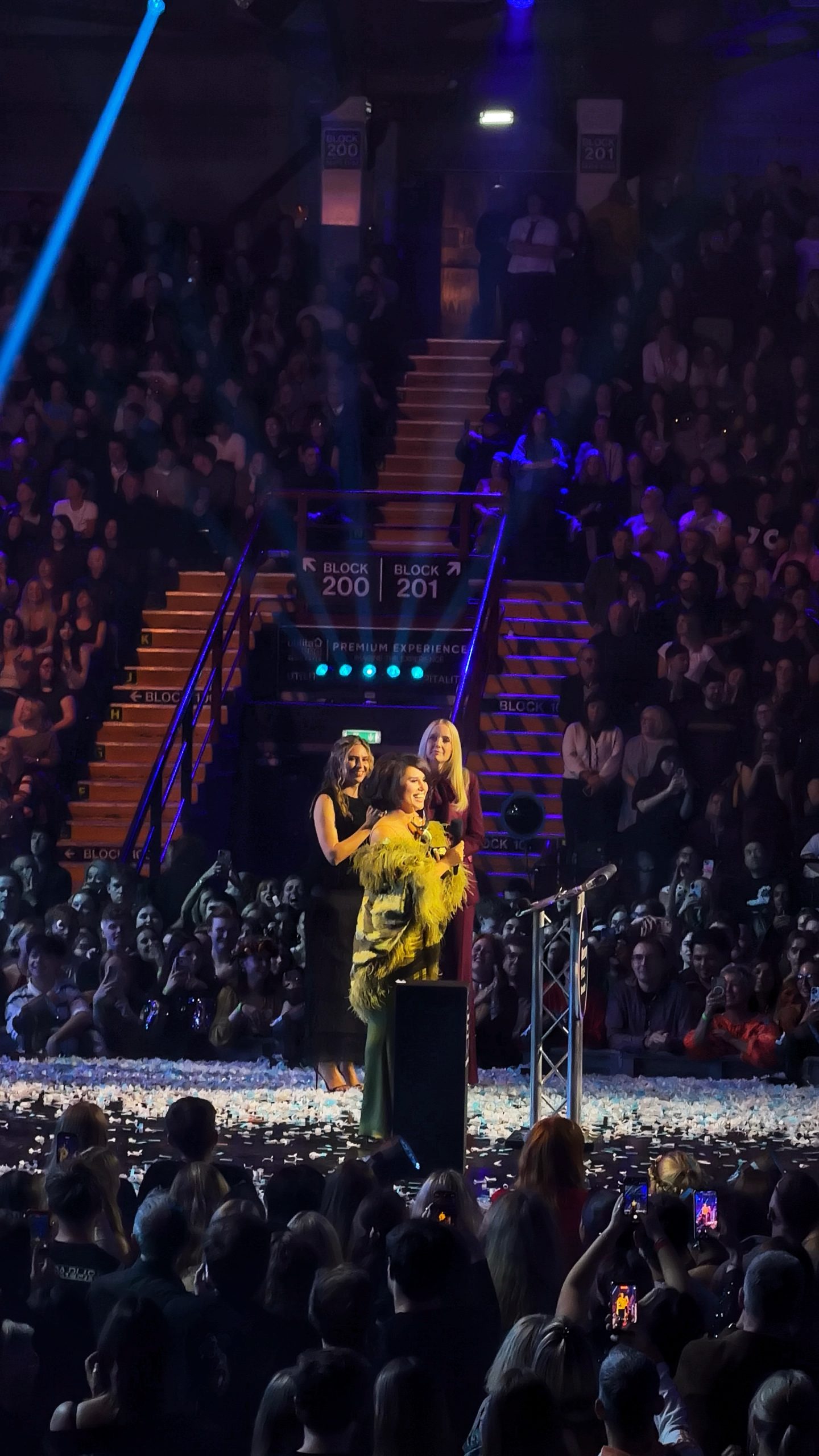
Held at the Newcastle Utilita Arena for the second year running, I think everybody in that room felt very lucky to be there to see firsthand who took home the coveted prize.
The shortlist brought together an impressive mix of artists, with Florence + The Machine, Olivia Dean, JADE, Suede, Pulp, Dave and Sir Paul McCartney among the big names making the lineup very star studded indeed.
Suede kicked things off with ‘Dancing With The Europeans’, bringing their unmistakable energy to the ceremony, while Pulp delivered ‘Begging For Change’ as part of the HELP(2) charity compilation.
It was a line-up that demonstrated the sheer range of music being made across the UK and Ireland, from contemporary pop to established rock and even jungle thanks to Bradford’s own Nia Archives.
And of course, there was one woman who had every reason to leave with a smile on her face.
RAYE took home the coveted Mercury Prize for THIS MUSIC MAY CONTAIN HOPE., an ambitious, genre-hopping album that blends jazz, soul, R&B and classical influences into something so fabulously unique.
Image: Audio North
Newcastle’s own Knats performance was definitely a highlight of the evening, combining slick jazz with spoken-word poetry against a projection of The Tyne Bridge.
A fitting image, and one that underlines the importance of holding such huge events in the north and highlighting the obvious talent that thrives here.
The 2026 Mercury Prize was a brilliant showcase of the country’s music at its best.
And with RAYE taking home the trophy, it’s clear there is plenty of ‘hope’ left in British music.
The most magical Christmas displays have now landed at one of the North West’s best garden centres
Emily Sergeant
Christmas has officially arrived at one of the best garden centres in the North West, and it’s just as magical as you’d hope it would be.
Just outside of Greater Manchester in the village of Glazebury in Warrington, you’ll find Bents Garden and Home – a multi award-winning destination garden centre that’s often voted one of the region’s best. It’s great place to visit all year round, but as anyone who has ever made the trip there will tell you, this place really comes alive during the festive season.
Bents first started out life all the way back in 1937, when Alfred and Margaret Bent began growing and selling roses in the front garden of their terraced house in Glazebury.
Ever since then, the business has gone from strength to strength – opening its first dedicated garden centre building in the early 1950s, and then undergoing several expansions in the 60 years that followed to create the place we know and love today.
A place that’s home to everything you need to kit out your home and garden, several cafes and restaurants, a food hall, a cook shop, a children’s boutique, and plenty more.
Christmas has arrived at Bents Garden and Home for 2026 / Credit: The Manc Group
And then at Christmas time, you can also get to wander around all the magical festive displays and stop for a bite to eat at the winter food markets.
Christmas at Bents originally began in the 1970s, establishing what would become one of the garden centre’s most successful – and favourite – times of the year, with people travelling in their thousands from all across the North West to visit, making it an annual tradition in the festive events calendar for many families.
With a jaw-dropping display to suit everyone’s festive decor tastes, Christmas at Bents really does need to be seen to be believed.
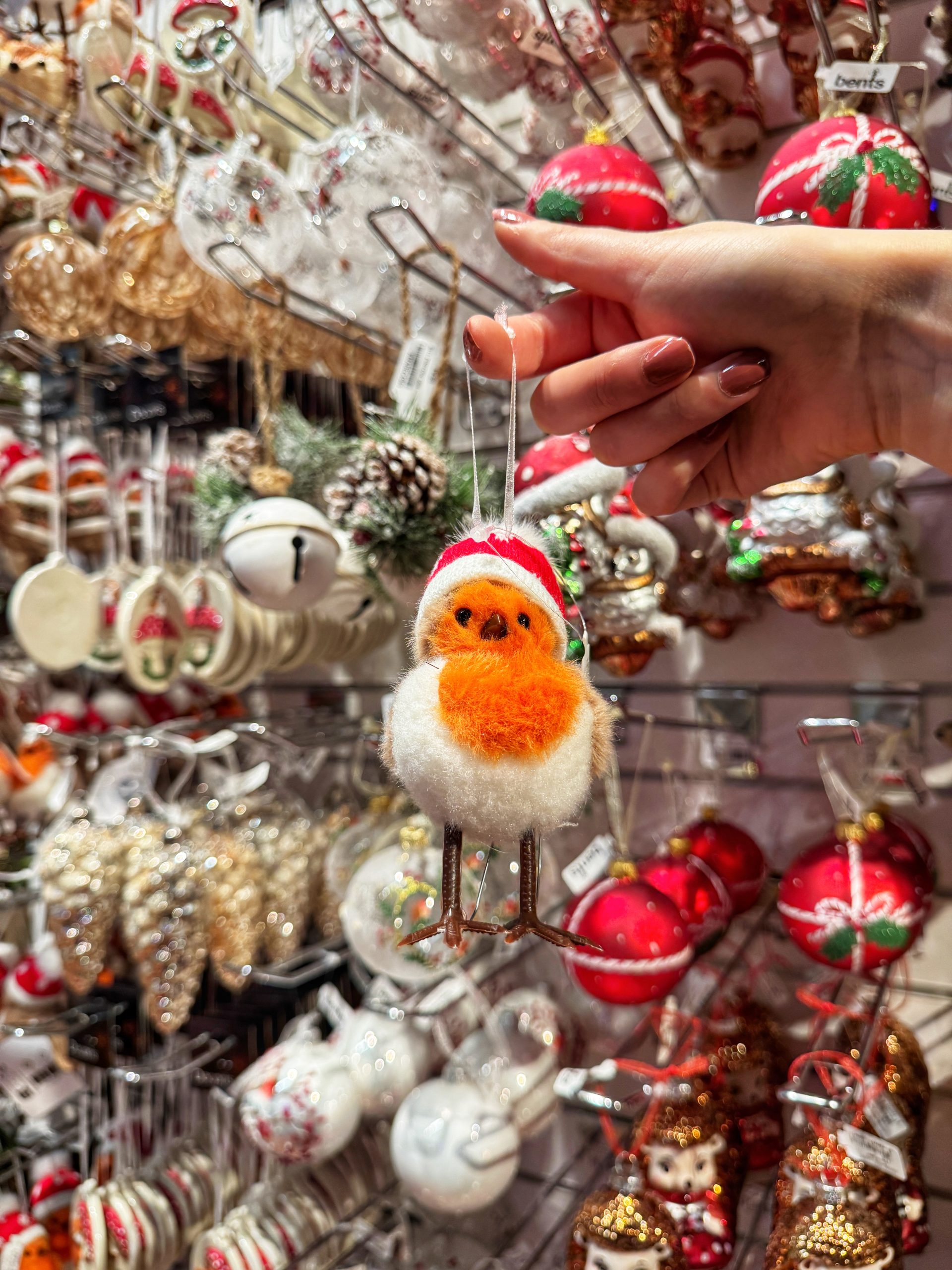
Expertly decorated trees form the centrepiece of each display, with all the baubles and decorations adorning them for sale by the side for you to recreate yourself at home.
Walking around the centre, you’ll also find every type of artificial tree (both normal and pre-lit), an array of fairy lights, wreaths, and garlands, before you arrive at what is sure to be one of the best Christmas Lemax Model Village set-ups you’ve probably ever seen.
A trip to Bents is an annual festive tradition for thousands across the North West / Credit: The Manc Group
Then, once you’ve filled your basket up with all the decs you need, you have to stop off at the Winter Food Markets before you head home.
There’s a wide array of different street food options to choose from like bratwursts, giant filled Yorkshire puddings, loaded fries, nachos, mac and cheese, crepes, churros, and build-your-own crumble, before taking a pew in one of the little wooden huts and washing it all down with festive-themed hot chocolates and mulled wine.
Don’t forget to stop off at the food hall, farm shop, and deli counters to stock up on plenty of goodies there before you leave too.
Basically, if you’ve never been to Bents before, we honestly cannot recommend it enough – even more so during Christmas time.
Don’t forget to stop off at the Winter Food Markets before heading home / Credit: The Manc Group
But it is really important to note that it does get very busy here, especially on weekends and at peak times like the run up to Christmas.
So you may have to be prepared to patiently wait for parking spaces and cooperate with your fellow shoppers, as well as join queues at the cafes and restaurants, all while respecting the hard-working staff at all times.
Let’s be as respectful as possible, and make this a place where everyone can enjoy a magical festive experience in 2026.

 Daisy Jackson -
28th January 2022
Daisy Jackson -
28th January 2022