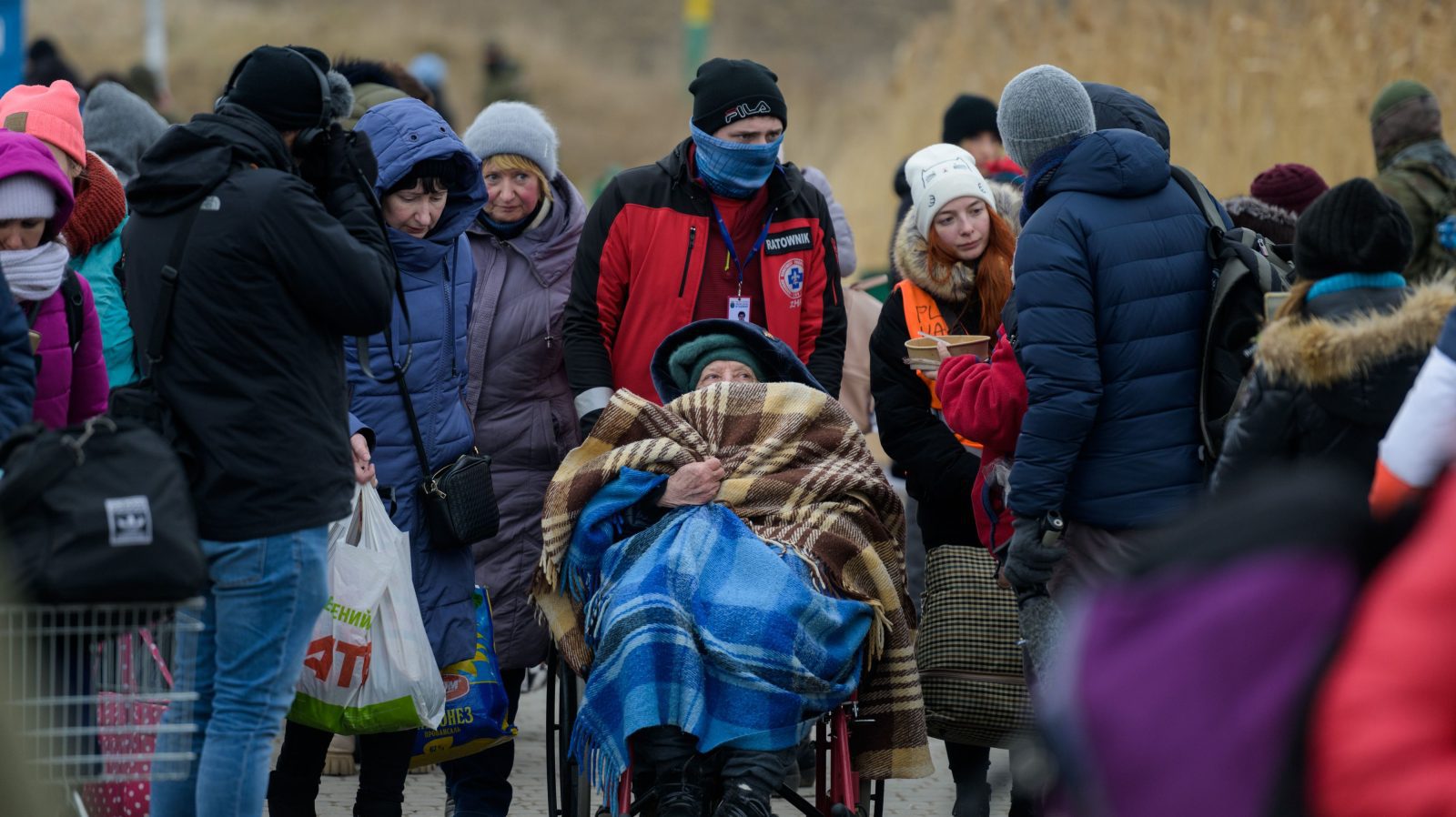
It’s been confirmed this morning that over 89,000 people in the UK have signed-up to open their homes to refugees fleeing war in Ukraine.
The website for the dedicated Homes for Ukraine scheme was officially launched yesterday afternoon, and has reportedly crashed on several occasions as an impressive 1,500 people registered to offer support within just the first hour of it going live, according to Levelling Up, Housing and Communities Secretary Michael Gove.
In an address to the House of Commons this morning, Mr Gove said that the UK had a history of “supporting the most vulnerable during their darkest hours”.
He expressed his hope that many Brits would “open their homes” and accept Ukrainian refugees, adding that this act would help those fleeing persecution to find “peace, healing and the prospect of a brighter future.
Mr Gove said the new scheme would be based on “the enormous goodwill and generosity of the British public”, and said there’d be “no limit” to how many Ukrainians could enter the UK under the scheme.
“This is a huge humanitarian crisis, and we are urging the British public to come forward and help where they can,” Mr Gove said.
ADVERTISEMENT
As part of the visa sponsorship scheme, any Ukrainian national or immediate family member of a Ukrainian national, if they were resident in Ukraine prior to 1 January this year, is eligible to enter the country, and they do not need to have existing family ties to the UK.
📣NEW – UK individuals, charities, community groups & businesses can now record their interest in supporting Ukrainians fleeing the war through our new Homes for Ukraine scheme.
— Ministry of Housing, Communities & Local Gov (@mhclg) March 14, 2022
How does the scheme work?
The scheme offers a route to those who want to come to the UK and have someone here willing to provide them with a home, and will enable individuals, charities, community groups, and businesses to volunteer accommodation and provide a route to safety for Ukrainians, and their immediate family members who have been forced to escape their homeland.
Sponsors should provide accommodation for as long as they are able, but the government has a minimum expectation of six months.
ADVERTISEMENT
Under the first phase of the scheme, offers must be made to a specific person or people, and charities and other organisations might be able to help those offering accommodation to make contact with a named person.
It’s been confirmed that checks will be undertaken on individuals offering to host refugees, but Mr Gove said full DBS checks would not be needed.
Local councils may also check that the accommodation being offered is appropriate.
Is there any financial support?
As confirmed last week ahead of the launch of the scheme yesterday, those who make an offer of accommodation to refugees will be entitled to an optional “thank you” tax-free payment of £350 per month, and this will not affect benefit entitlement or council tax status, such as single occupancy discount.
Those offering to house refugees will not be expected to cover the costs of meals, food and living expenses for Ukrainians, but they can do if they wish to do so.
ADVERTISEMENT
Local councils will also be offered extra funding to give wider support.
Refugees from Ukraine under the scheme will be able to apply for benefits, take up employment, and will be granted leave to remain in the UK for three years so they have the access public services, such as the NHS and schooling.
89,000 people in the UK have signed-up to open their homes to refugees fleeing war in Ukraine / Credit: DEC (via Twitter)
How do I sign up?
You can sign up to offer accommodation to refugees fleeing Ukraine on the Homes for Ukraine website here.
If you have a named person who you wish to sponsor, then you should get in contact with them directly and prepare to fill in a visa application – which will go live on Friday 18 March – with all their details and yours, but if you don’t know anyone and still want to offer accommodation, the government suggests getting in touch with charities, faith groups, or local community organisations who are starting to make connections between individuals.
You can record your interest as an individual or as an organisation, and the government says all those who register will be “kept updated” once they sign-up.
ADVERTISEMENT
Additionally, the British public are also being urged to make donations to the Disasters Emergency Committee (DEC), which has been set up in response to the crisis in Ukraine, with every pound donated by the British public set to be matched by the government up to the value of £20 million.
The DEC has stressed that monetary donations are needed as opposed to specific items, which are often challenging to transport and not always relevant.
You can find more information and donate via the DEC here.
Charli XCX announces massive Manchester arena gig as part of long-awaited UK and European tour
Emily Sergeant
Charli XCX has finally given UK fans the news they’ve been waiting for.
After the genre-bending popstar announced back in June a series of US gigs this autumn to support and celebrate the release of her eighth studio albumMusic, Fashion, Film – which was met with critical acclaim following its release in late July – fans in her home country were wondering when she would announce UK dates to accompany these.
The 34-year-old been had hinting at a UK and European leg of the Music, Fashion, Film Tour on social media over the past couple of months, but nothing was set in stone as of yet.
Then last night, Charli took to Twitter to announce that she ‘finally’ had some information coming today (11 September), and then followed it up with a teaser video – sending fans into a frenzy.
And now, it has been announced this morning that Charli XCX will be taking to the Co-op Live stage early next year.
Support on the UK and European leg of the Music, Fashion, Film Tour will come from US popstar Audrey Hobert.
Hobert has been having somewhat of a star-making year herself in 2026 following the release of her own critically acclaimed debut album, Who’s The Clown?, last year – with her streams racking up daily and drawing in massive crowds on the festival circuit this summer.
Charli XCX – Music, Fashion, Film Tour UK & EU Dates 2027
13 February – 3Arena, Dublin
15 February – OVO Hydro, Glasgow
17 February – Co-op Live, Manchester
19 February – The O2, London
22 February – Ziggo Dome, Amsterdam
24 February – Accor Arena, Paris
Upon release back in July, Music, Fashion, Film the album received acclaim from music critics, who praised its lyrical honesty and experimental production, as Charli took a sonic journey away from the undeniable mega hit that was her 2024 album BRAT, and into ‘Rock Music’ territory.
Music, Fashion, Film topped the charts in the UK and Australia, as well as in Belgium, Hungary, and New Zealand, while reaching the top 10 in countless other countries – including the US.
Charli XCX will be bringing the Music, Fashion, Film Tour to Manchester‘s Co-op Live on Wednesday 17 February 2027, and tickets will go on sale next week.
Featured Image – Henry Redcliffe (Publicity Picture)
News
Manchester Christmas Markets 2026 opening date announced – including new spots
Emily Sergeant
Manchester Christmas Markets are merely months away, and the opening date and important details for 2026’s return have been announced.
It’s official… holidays are coming, and the countdown is on.
Just as we do every year, the Greater Manchester public has been eagerly awaiting news of when the city’s iconic Christmas Markets would be making a comeback for the 2026 festive season. And now, Manchester City Council has announced – initially via the MEN – that the famous wooden huts will be lining the city’s streets once again from the first week in November.
Now in their 27th year, Manchester Christmas Markets are known and loved for bring thousands of people into the city centre each year to fill up on the fantastic festive treats and to soak up all the Christmas atmosphere.
This year will see a bigger return of Albert Square, after the headline-grabbing partial return at last year’s event, with the big wheel also set to make a comeback.
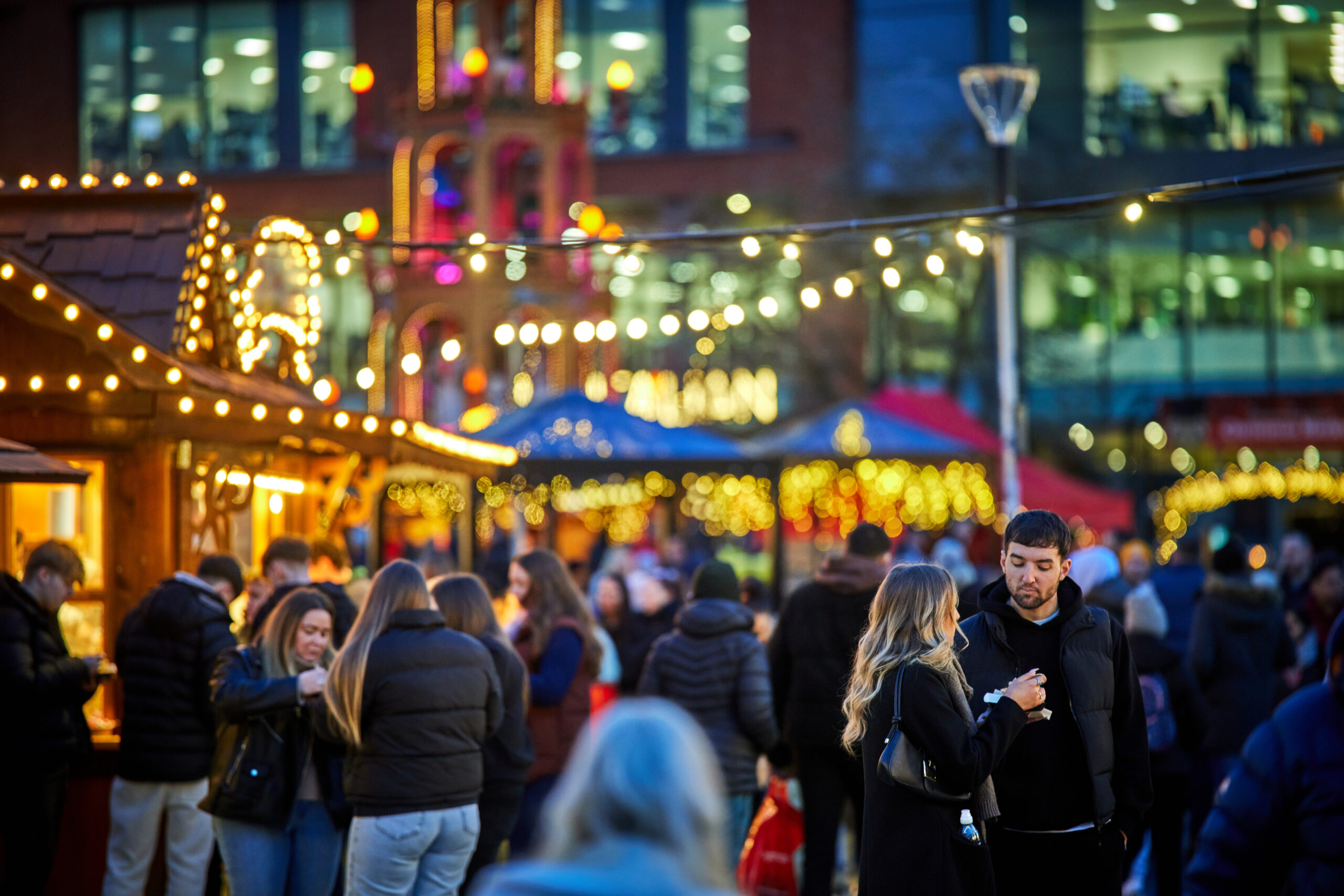
The Manchester Christmas Markets 2026 return date has officially been confirmed / Credit: The Manc Group | Flickr
And there’s also set to be some new locations too for 2026, with Lincoln Square joining in on the action this year.
There will also be big changes to St Ann’s Square this year, according to the Council, with what is being described as a ‘brand new layout’ bringing in a bigger number of market stalls.
There will be a total of 210 stalls spread out across the city centre.
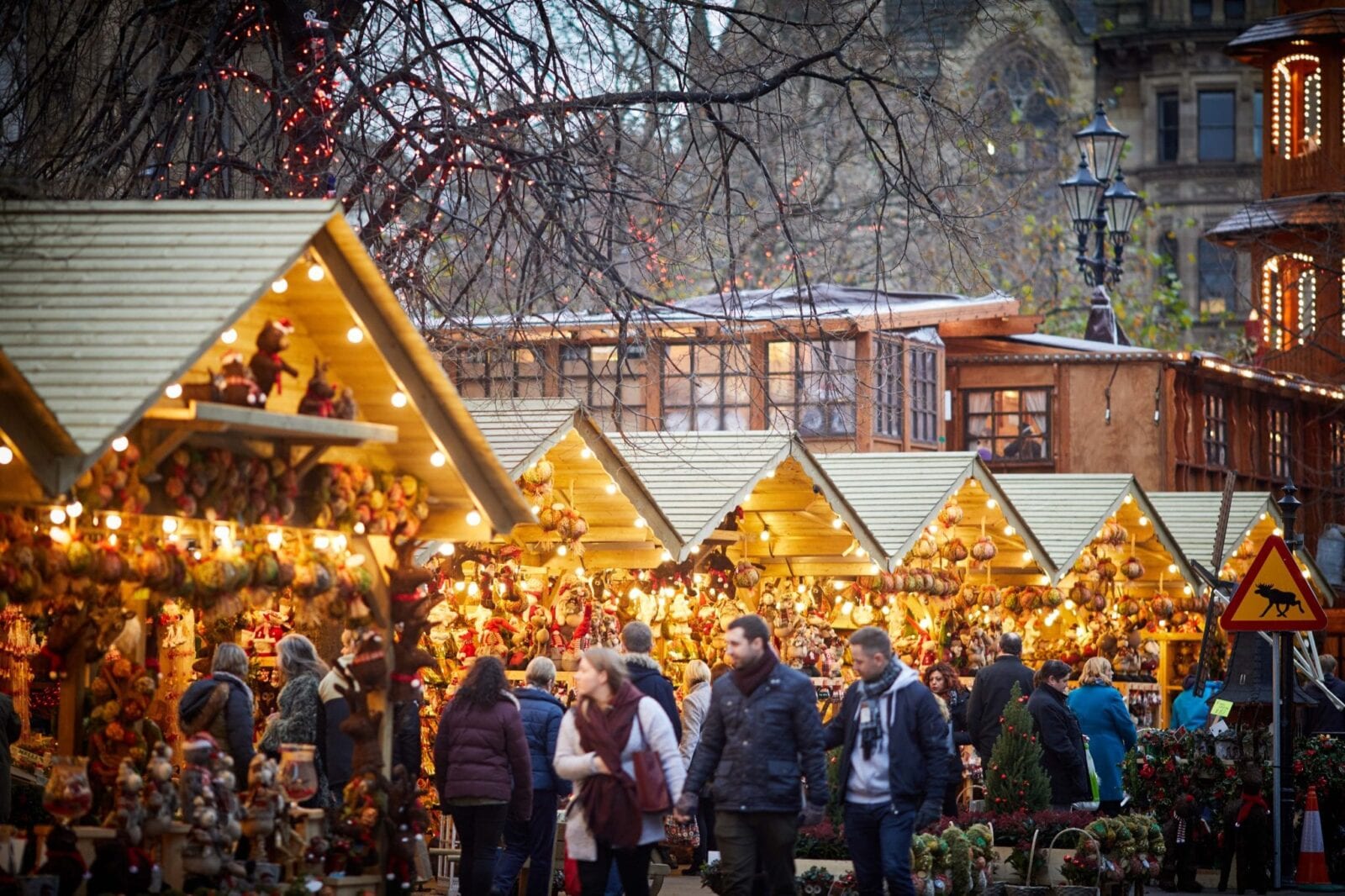
There’s officially eight weeks to go until the iconic wooden huts line the streets / Credit: Manchester City Council
Promising to be plenty on offer for seasonal shoppers of all ages, it has been confirmed that 2026 will see the iconic wooden ski chalet market stalls take over Albert Square, Lincoln Square, King Street, St Ann’s Square, Exchange Street, New Cathedral Street, Exchange Square, Corn Exchange, Cathedral Gardens, and Market Street.
Of course, everyone’s favourite big red legend, Zippy Santa, will also be back this year, although his location has not been set in stone just yet, so stay tuned.
“There’s nowhere that does Christmas quite like Manchester,” commented Councillor Pat Karney, who is the Christmas spokesperson for Manchester City Council.
“The return of Christmas festivities last year to Albert Square was a triumph and we’re looking to build on this success with a fantastic festive offer there again this year that is sure to be a hit with everyone who visits.
“Our legendary Christmas markets draw thousands upon thousands of visitors every year from right around the world and this year’s markets look set to be the very best yet, with a brand-new location in Lincoln Square just around the corner from Albert Square, and a brand-new look and even more stalls in St Ann’s Square.”
He concluded: “Christmas in Manchester will be absolutely magical this year and we can’t wait to welcome everyone and celebrate the festive season with them.”
Manchester Christmas Markets 2026 will officially open across the city on Friday 6 November and close on Tuesday 22 December – with the exception of Albert Square and Cathedral Gardens, which will remain open right through until Sunday 3 January.

 Emily Sergeant -
15th March 2022
Emily Sergeant -
15th March 2022