Greater Manchester has been praised after a recent study found the region’s street homelessness figures have reduced by over 50%.
After Greater Manchester set what was deemed to be “the most ambitious target” out of the 13 initial ‘Vanguard Cities’ that committed to tackling street homelessness by December 2020, new research from Heriot-Watt University in Edinburgh found that there was an “impressive” 52% reduction against baseline figures across the region.
The region overall had the largest reduction in absolute numbers on the streets, from 241 in November 2018, to 115 that month in 2020, according to the research.
However, it did not meet its overall target of completely ending all rough sleeping.
The report by Heriot-Watt University comes after the Institute of Global Homelessness’ (IGH) A Place to Call Home initiative launched in 2017 as the first concerted effort to support cities around the world to eradicate street homelessness and rough sleeping, ITV Granada reports.
ADVERTISEMENT
Among the initial 13 ‘Vanguard Cities’ committed to tackling the issue by December 2020 as well as Greater Manchester included Glasgow, Brussels, Chicago, and Adelaide.
Rijeka, Little Rock, Edmonton, Montevideo, Santiago, Tshwane, and Bengaluru were the others.
ADVERTISEMENT
There was an “impressive” 52% reduction against baseline street homelessness figures across Greater Manchester / Credit: Gary Knight (via Wikimedia Commons)
Researchers into the initiative since its inception found that one of the reasons for Greater Manchester’s reduction in figures can be put down to dedicated initiatives brought in because of the COVID-19 pandemic, which were said to have helped to accelerate success and “demonstrate what can be achieved with sufficient political will”.
A lead co-ordinating agency, and co-ordinated entry to services, as well as investment in “specialised and evidence-based interventions” were among the keys to progress in tackling homelessness, the report found.
On the flip side, the report found that reliance on “undignified and sometimes unsafe communal shelters” were barriers, and more “structural and system change” was needed to progress.
Speaking on the findings of the recent research, Professor Suzanne Fitzpatrick – director of the Institute for Social Policy, Housing, Equalities Research (I-Sphere) at Heriot-Watt University – said: “While there are clear country-specific challenges that need to be overcome, this first global initiative on tackling street homelessness has highlighted the need to move away from a one-size-fits-all approach, towards more specialised interventions that target specific subgroups.”
She highlighted appropriate services for women, children, older people, and other vulnerable groups as being “essential”.
Featured Image – Flickr
News
New £60m fund launched to fill potholes across Greater Manchester
Emily Sergeant
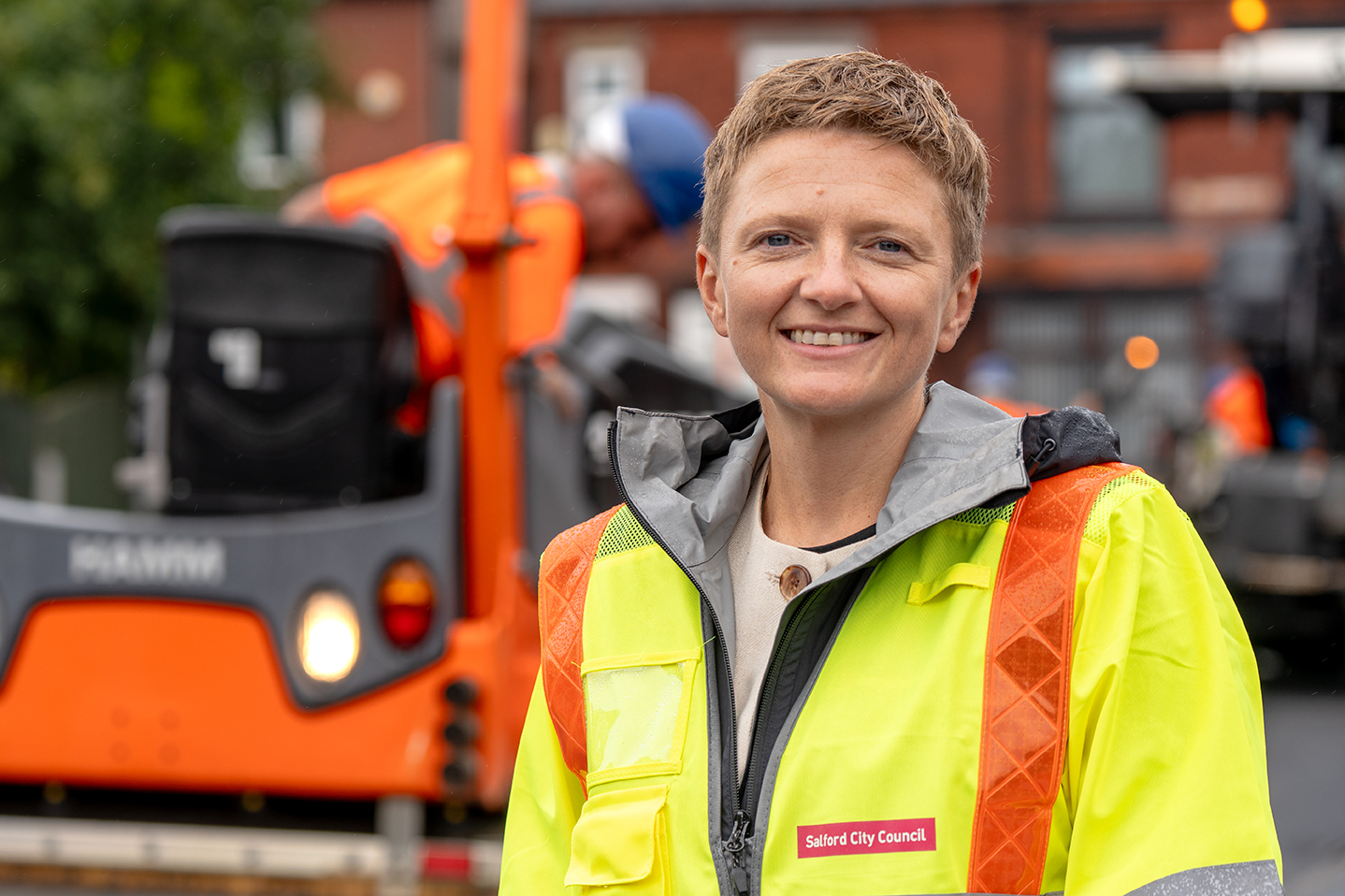
A new £60 million Pothole Fund has been created to repair more of the city region’s roads and pavements.
The fund – which has been set up by new Mayor Bev Craig, and is to be spent across every borough in Greater Manchester – is set to be a ‘major boost’ to efforts to tackle the pothole problem, as it will be enough to repair and maintain over a million square metres, or around 125 kilometres, of road across the wider region.
Around 2.5 billion trips are made on Greater Manchester‘s roads every year – not only by motorists, but also by buses, trams, cyclists, and pedestrians. So the fund will be used to help keep the highways network ‘safe and reliable’.
The fund will enable transport teams to repair hotspots where surfaces are in poor condition, as well as resurface roads and pavements to prevent them from deteriorating in the first place.
A new £60m fund has been launched to fill potholes across Greater Manchester / Credit: TfGM
Cold and wet winters, more traffic, and heavier vehicles using the roads are just some of the contributing factors to the pothole problem, which is why the fund is being introduced before autumn and winter properly arrives.
The amount each of the 10 boroughs will receive is based on an agreed funding formula, with the allocations being:
Bolton: £6,552,000
Bury: £4,374,000
Manchester: £8,155,000
Oldham: £5,258,000
Rochdale: £5,243,000
Salford: £5,388,000
Stockport: £6,820,000
Tameside: £4,980,000
Trafford: £4,992,000
Wigan: £8,241,000
The extra cash comes from the region’s transport budget, with leaders agreeing to reallocate funding towards highways maintenance, and it fulfils a commitment Bev made in her Mayoral Manifesto to repair more roads and make sure pavements are safe.
“Keeping our roads and pavements safe and well maintained is essential for a growing city region like Greater Manchester,” explained Mayor Bev Craig.
“That’s why I promised to create this new Pothole Fund that will benefit drivers and everyone who uses our roads to get around. Properly maintaining our roads will save motorists money on costly repairs, and by preventing potholes forming in the first place, councils won’t have to spend as much money on emergency road repairs.
“This issue came up repeatedly on the doorstep during my election campaign so I’m pleased that I can do something about it so quickly, building on the significant work already planned by councils across Greater Manchester.”
Featured Image – TfGM
News
Six GMP officers dismissed following racial discrimination allegations
Emily Sergeant
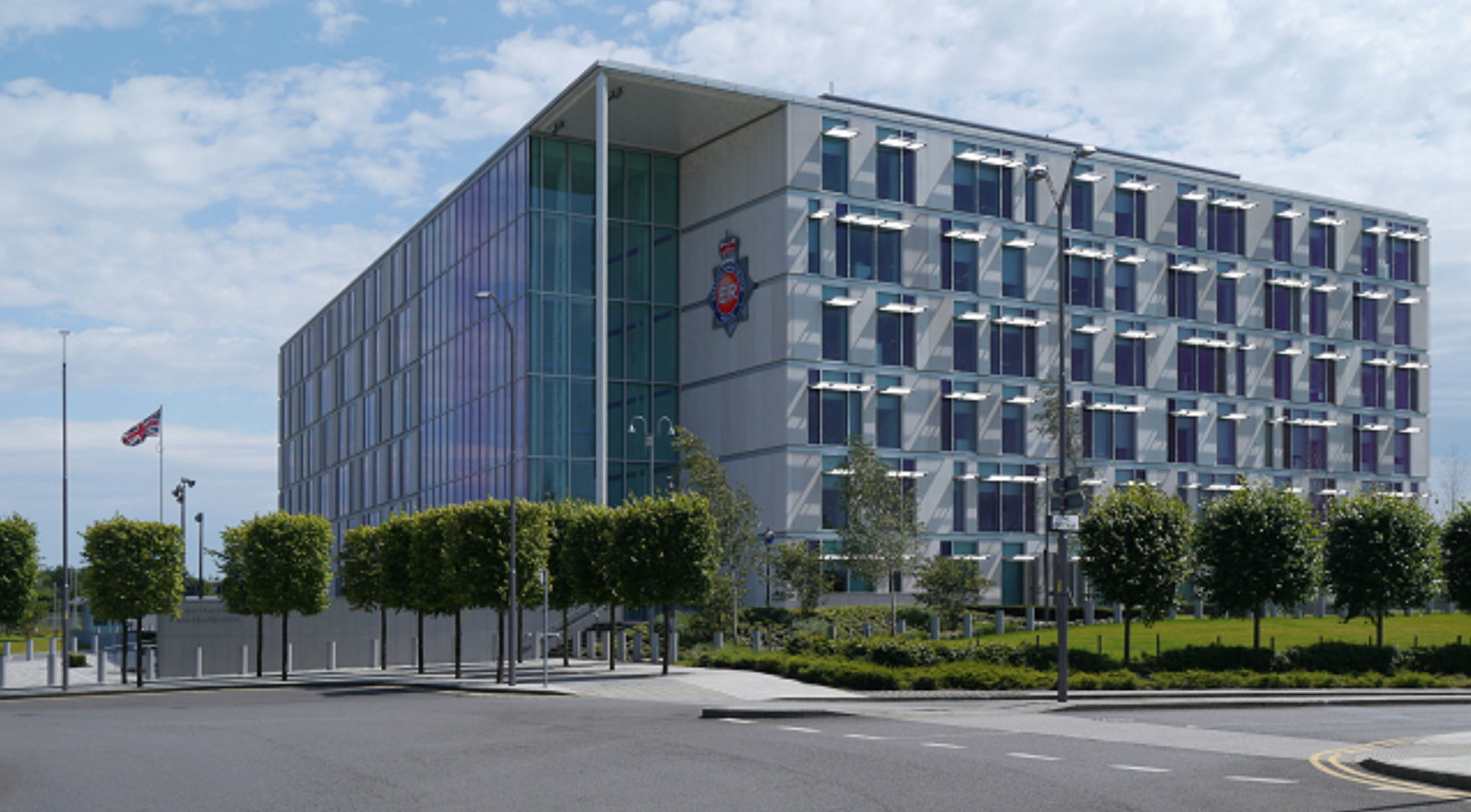
A number of police officers have been dismissed following an internal investigation, Greater Manchester Police (GMP) has confirmed.
Following the internal investigation into alleged racial discrimination against an officer on the Bury district – which was launched by GMP‘s Professional Standards Directorate in July 2024 – six officers and two former officers were found to have committed gross misconduct, and a ninth officer was found to have committed misconduct.
The investigation came after a report was made that an officer had been subjected to ‘racist behaviour’ by colleagues in December 2023.
The panel heard how PC Y – who has African heritage and has been granted anonymity – made a complaint after her accent was mimicked by a group of officers. She was also compared to a suspect with similar skin colour, and one of the dismissed PCs made a derogatory comment about her hair.
PC Y was supported and kept updated throughout the investigation, GMP assured, as well as providing evidence at the hearing.
The misconduct hearing lasted just over two weeks, with the panel concluding that the officers breached the Standards of Professional Behaviour relating to Equality and Diversity, Authority, Respect, and Courtesy.
The six officers who have been dismissed are PC Demi Green, PC Heena Rani, PC Lucy Granby, PC Matthew Barlow, PC Matthew Hill, and PC Mohammed Abid, while the former officers who were found to have committed gross misconduct are PC Jake Holt, and former Officer A – who has been granted anonymity.
The panel also found that Sergeant Adrian Bick’s actions amounted to misconduct, as there was no breach of the standard of equality and diversity.
As a result, the six serving officers have been sacked without notice, while the two former officers would have been dismissed had they not already left the force, and Sergeant Bick was issued a written warning.
“No officer or member of staff should have to come to work and experience discriminatory behaviour from the people they serve alongside,” declared Deputy Chief Constable, Terry Woods.
“Everyone has the right to feel respected, valued and part of the same team with a shared commitment to serving our communities and keeping people safe.”

 Emily Sergeant -
4th April 2022
Emily Sergeant -
4th April 2022