A freshly-painted Akse P19 mural has appeared on the side of new sleeping pods created for the homeless in Salford.
The new energy-efficient pods feature a hyperrealistic mural of Abbe Pierre, a catholic priest, former member of the French resistance, and founder of the homeless charity Emmaus which first began in Paris after the Second World War.
Pierre is pictured, mouth agape, on the side of the new insulated pods alongside a quote that reads: “A smile costs less than electricity but gives as much light.”
Created to offer some comfort for rough sleepers with nowhere warm or dry to lay their head at night, The People’s Pods at Emmaus Salford form part of Salford City Council’s A Bed Every Night provision.
All referrals to the pods are managed by Salford Housing Options, providing a safe temporary place to stay for people who are street homeless.
ADVERTISEMENT
The brainchild of one of the charity’s community members, the pods were borne out of the lived experience of those seeing so many homeless people coming into Emmaus shops to request emergency support.
Located within the grounds of Emmaus Salford’s community home in Pendleton, the fully-furnished pods have beds, storage, access to an en-suite toilet and mains electricity.
ADVERTISEMENT
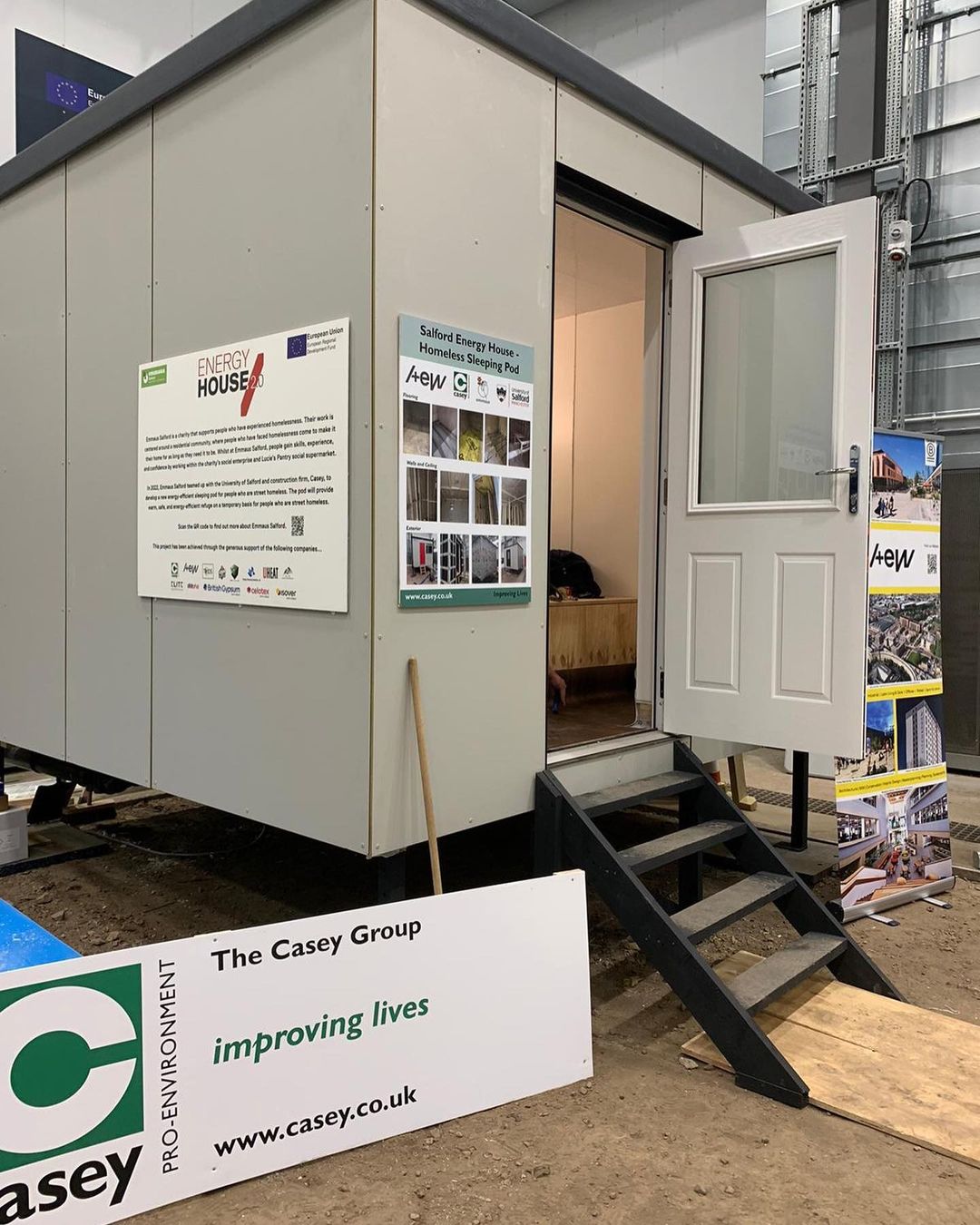
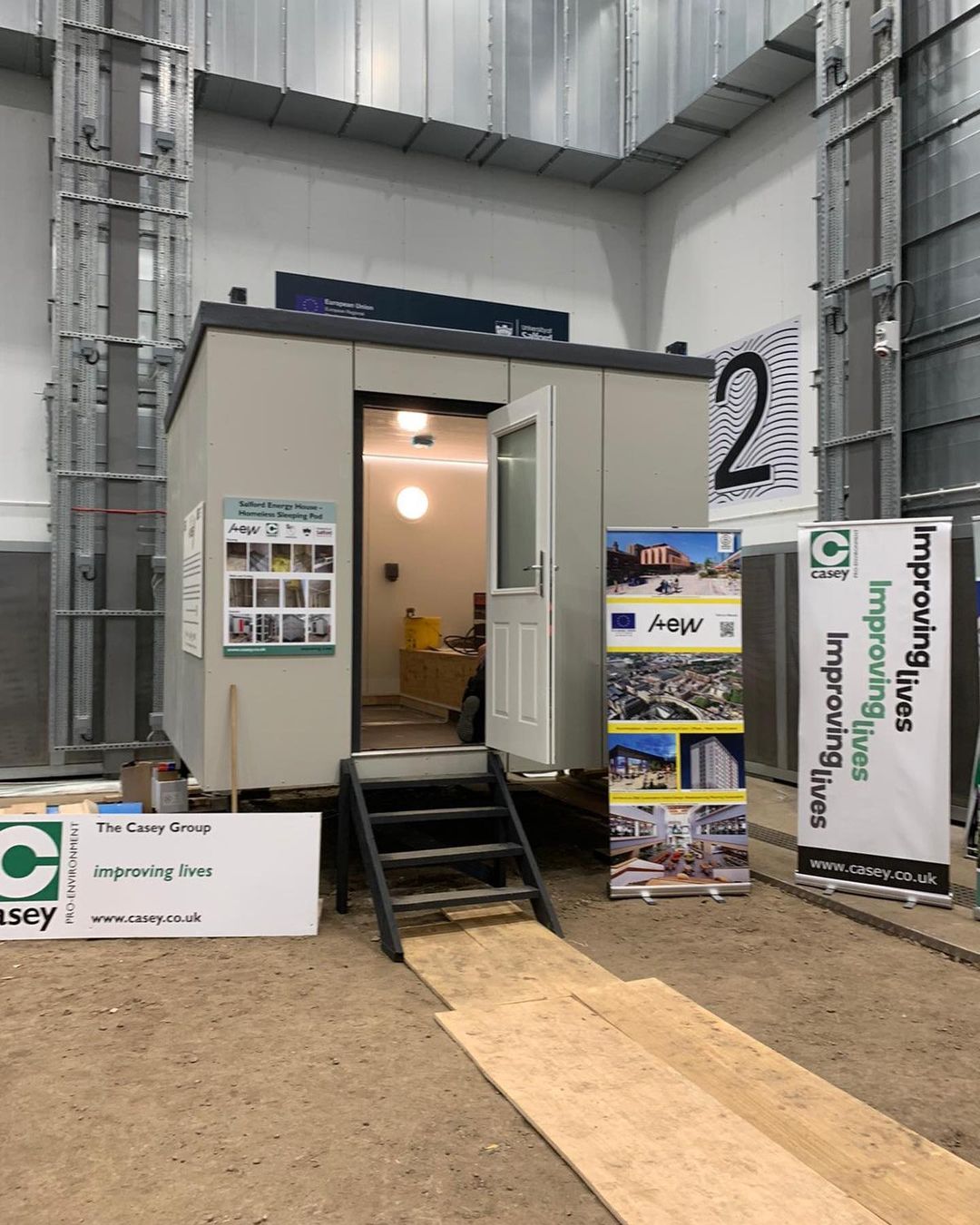
A prototype of the new pods has undergone extensive testing at the University of Salford Energy House 2.0 to measure energy efficiency. It has now been refurbished to the highest thermal standards. / Image: Emmaus
The pod was originally used as a portacabin and was donated to Emmaus by Casey Construction. / Image: Emmaus
The site also has facilities to support people who want to bring their dogs with them, which is huge as many homeless accommodations to not allow residents to bring their pets.
The pods have been designed to enable people sleeping rough to be able to access support from the charity’s outreach workers, complimenting Emmaus Salford’s residential on-site community.
When rooms then become available inside, they are offered to people using the pods first as the next step to getting people off the streets and back into permanent housing.
ADVERTISEMENT
Sharing an image of the new mural with his Instagram followers, artist Akse P19 said: “Portrait of Abbé Pierre painted on a new energy efficient sleeping pod at @emmaus_salford which was developed in collaboration with the University of Salford and construction firm Casey for people who are street homeless.
“Abbé Pierre was a French catholic priest and former member of the French Resistance who founded the Emmaus movement after the Second World War, focusing on helping homeless people in Paris.
“‘Emmaüs’ comes from the name of a village in Palestine where despair was transformed into hope. The Emmaus movement has since grown in over 40 countries around the World, including 30 communities spread across the UK, which is the largest Emmaus community outside France.
“Emmaus Salford supports formerly homeless people by providing them with a stable home, meaningful work and support for as long as they need it. As well as a residential community, Emmaus Salford also has on-site pods to provide a safe and comfortable night’s sleep for people who are street homeless.”
If you are homeless or at risk of homelessness and need advice or support please call 0161 793 2020 or visit the Salford City Council website.
Featured image – Emmaus Salford
News
GMP officer sentenced after hitting pedestrian during police chase in Rochdale
Emily Sergeant
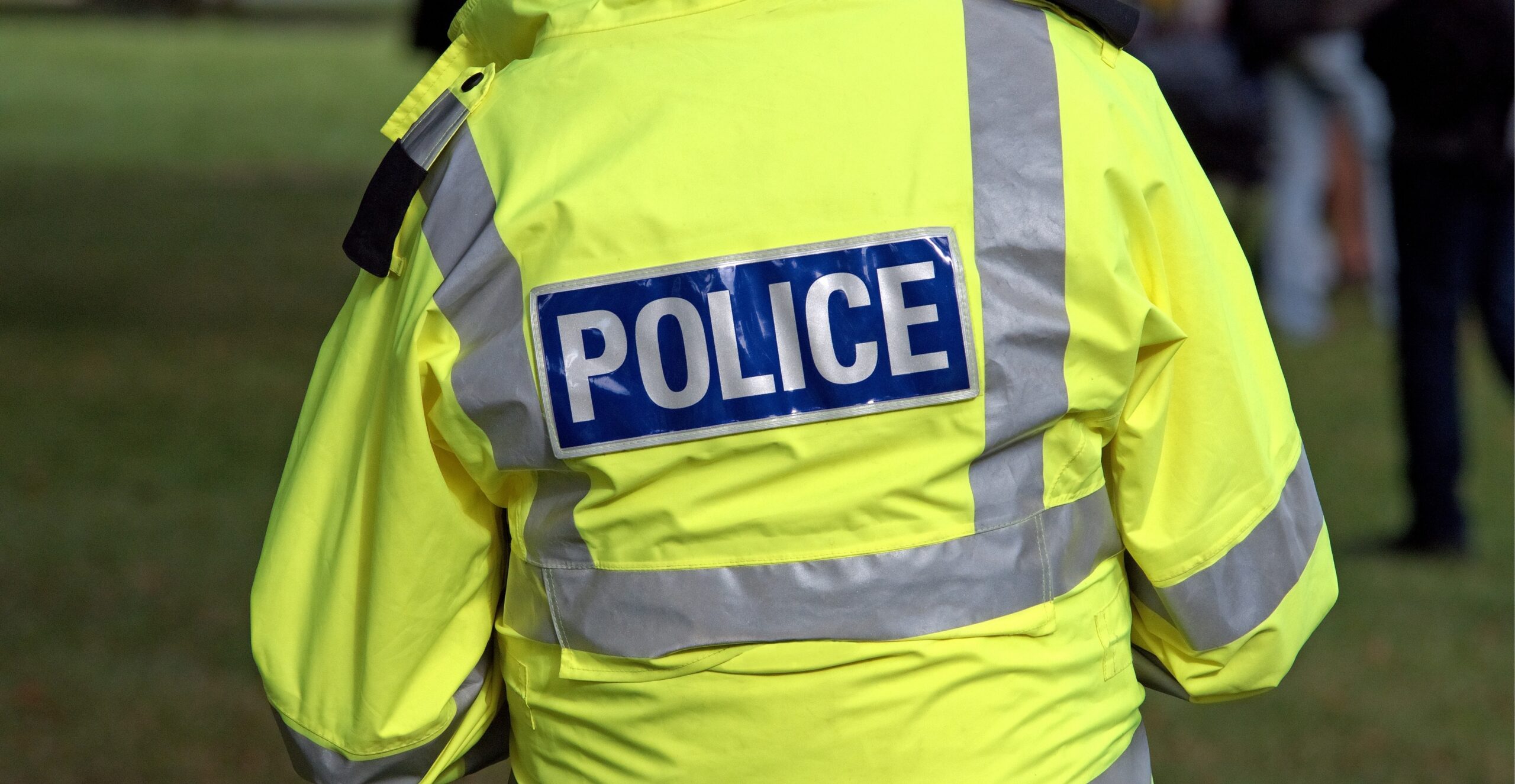
A police officer has been sentenced this week after he struck and ‘seriously injured’ a pedestrian following a pursuit of a suspected drink driver in Rochdale.
35-year-old Greater Manchester Police (GMP) officer PC Sam Lockley pleaded guilty back in January 2026 following an Independent Office for Police Conduct (IOPC) investigation.
The IOPC investigation established that, in the early hours of the morning on 19 November 2023, PC Lockley was driving a marked police vehicle with the lights and sirens activated, and attempted to stop a suspected drunk driver on Drake Street in Rochdale.
A short pursuit that commenced but stopped merely a minute later after the police vehicle collided with a pedestrian on the footpath of Rochdale Road at approximately 3:30am.
The evidence gathered indicated that PC Lockley failed to slow down as he approached and drove through the red traffic lights at the Kingsway junction, and was travelling at a speed of 96mph in a 30mph zone.
The pedestrian suffered ‘serious injuries’ as a result of the collision, and received extensive medical treatment following.
At a hearing back in February of this year, PC Lockley received a two-year suspended sentence and was ordered to carry out 15 days community service, while also receiving two-year driving disqualification.
Also following the investigation, the IOPC decided that Lockley should face a gross misconduct hearing to face allegations that his manner of driving breached the police standards of professional behaviour.
“We continue to liaise with the force about disciplinary proceedings,” the IOPC concluded.
IOPC Director Amanda Rowe added: “My sympathies remain with the man, who sustained serious injuries, and all those affected by the incident.
“This was a complex investigation which relied on extensive amounts of data and expert analysis and the evidence showed PC Lockley drove at excessive speeds at night-time and although he was responding to a report of a suspected drink driver, it does not excuse his manner of driving.
“PC Lockley admitted he drove in a dangerous manner when he didn’t address hazards or warnings during the pursuit and ultimately by the time he saw the pedestrian, he was travelling too fast to avoid a collision.
“His actions that day have had long-lasting consequences and he has now been held accountable.”
Featured Image – Rawpixel
News
Manchester Town Hall is FINALLY taking wedding and events bookings for the first time since 2018
Emily Sergeant
A new era is on the horizon, as Manchester Town Hall has announced that it’ll be finally taking bookings for weddings and events once again.
That’s right… for the first time since it closed its doors to the public for what is the UK’s biggest restoration project to date back in 2018, one of Manchester’s most iconic landmarks is soon set to welcome its first weddings and events in a decade – with bookings for the city’s most romantic address now open once again.
Manchester Town Hall has stood at the centre of civic life in the city since 1877, and for generations, couples have exchanged their vows within its walls.
Now, as it enters the home stretch of its restoration, the Grade I-listed building is gearing up to kickstart weddings and corporate events from January 2028.
Set reopen to the public next year, first up will be a series of celebratory reopening events – which are yet to be announced – before a phased approach will then allow the building and teams to be fully prepared to host commercial events again from 2028.
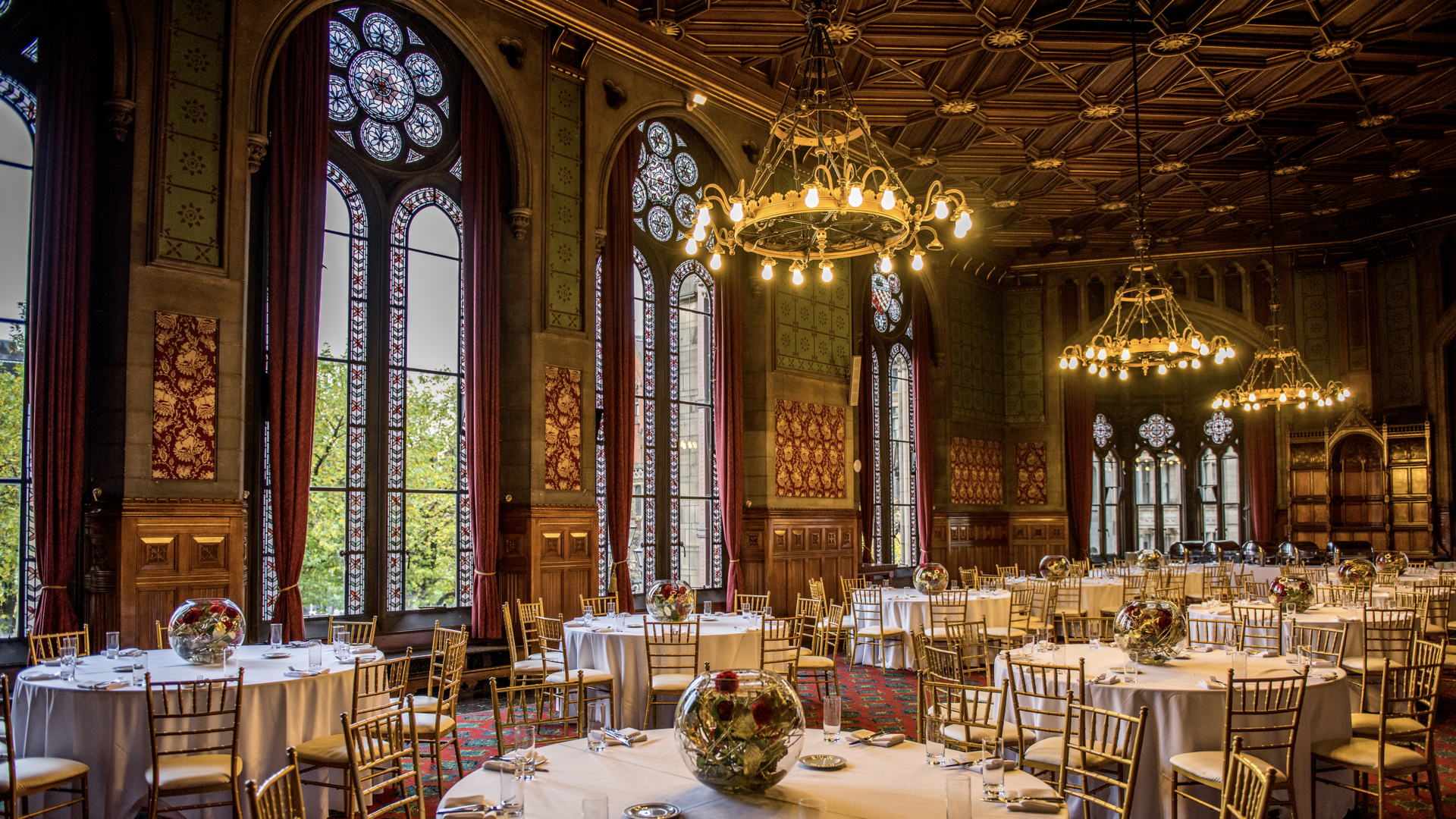
Manchester Town Hall has announced that it’s finally taking wedding and events bookings for the first time since 2018 / Credit: Supplied
From its grand architecture and soaring stained glass windows, to sweeping staircases that offer the perfect ‘just married’ photo opportunities, this one-of-a-kind venue gives couples the opportunity to combine the romance and grandeur of a historic setting with the energy of a city centre celebration.
Inside the restored building, you’ll find The Great Hall, which is a magnificent setting with striking architectural character, as well as The Conference Hall, The Banqueting Hall, and The Reception Room, all of which offer equally characterful spaces that are perfect for private dinners, ceremonies, or corporate events.
The Lord Mayor’s Parlour is one of many settings overlooking the newly reopened Albert Square, while various elegant reception areas provide the perfect location for drinks and arrival moments.
“Our Town Hall is a real Victorian masterpiece and we’re looking forward to sharing it with the public once again,” explained Cllr Garry Bridges, who is Leader of Manchester City Council, as bookings finally open up this week.
“It’s a special building which belongs to the people and it’s great that they will be able to celebrate important landmarks in their lives, such as marriage, in its spectacular setting.
“The Town Hall is full of history. Here’s to many more stories being written within its walls.”
Want to be one of the first people who gets married or hosts an event at Manchester Town Hall once it reopens in 2028? You can enquire about booking here.

 Georgina Pellant -
3rd July 2023
Georgina Pellant -
3rd July 2023