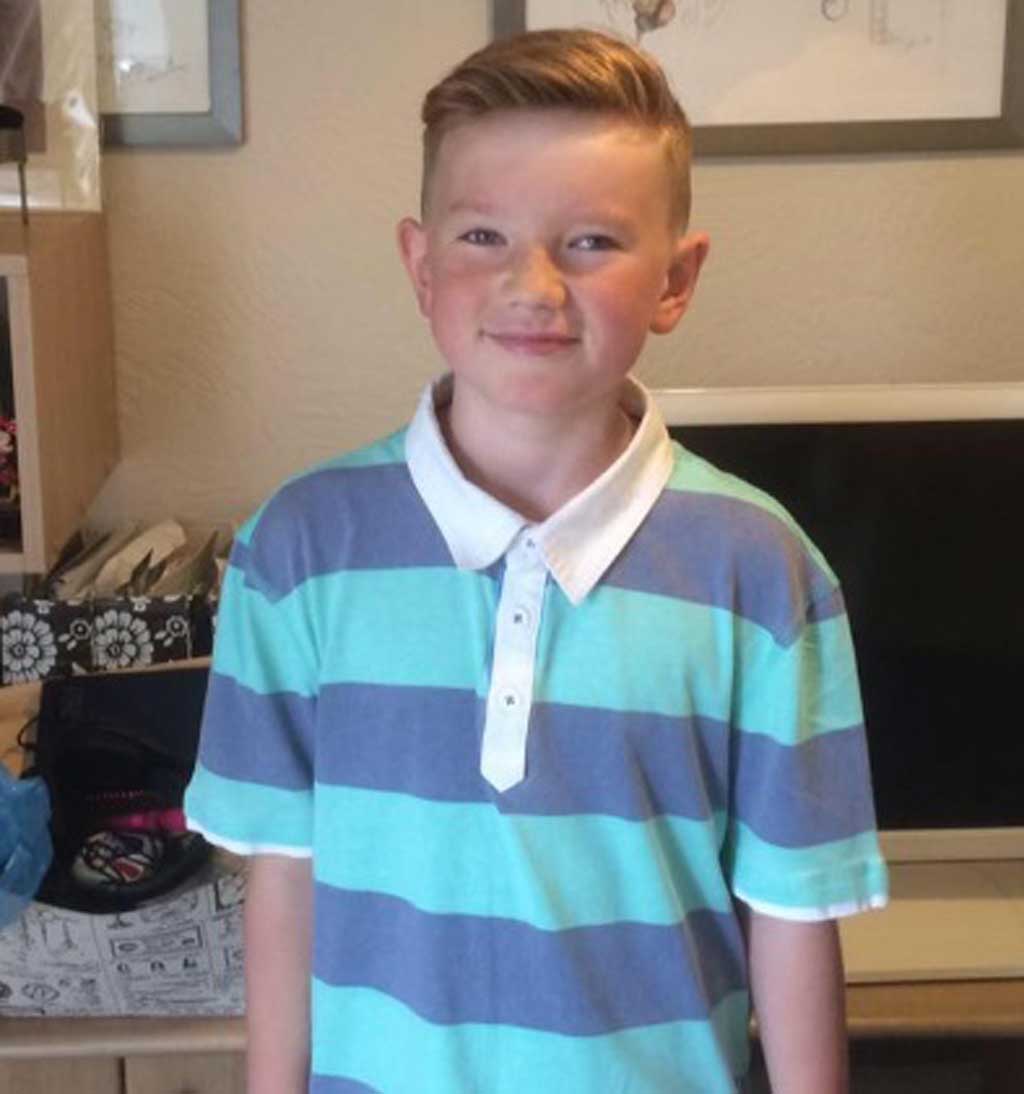
Greater Manchester Police have issued a statement about Alex Batty, as the missing boy from Oldham is found safe and well in France.
Alex, who is from Oldham, went missing when he was 11 years old, but was found by a member of the public near Toulouse this week – six years after disappearing.
The teenager had left the UK on 30 September 2017 for a family holiday to Spain. He was with his mother Melanie Batty (43), who did not have parental guardianship, and his grandfather David Batty (64).
Alex Batty didn’t come home from his trip as expected and despite extensive enquiries, remained missing until this week.
GMP has been working closely with the French authorities and with Alex’s family since he was spotted, and have now formally confirmed the 17-year-old to be Alex.
ADVERTISEMENT
The Foreign, Commonwealth & Development Office is now working on bringing him safely home to the UK.
Assistant Chief Constable Chris Sykes said in a statement today: “I think I speak on behalf of the whole of Greater Manchester Police when I say we were relieved and overjoyed to receive news from the French Authorities that they believe Alex Batty had been located safe and well, more than 6 years after his disappearance. This is a huge moment for Alex, for his family and for the community in Oldham.
ADVERTISEMENT
“Alex went missing whilst on holiday in 2017 when he was just 11 years old. On Wednesday, a member a public reported a potential sighting in the Toulouse area of France. The young man identified as Alex and was taken to a French police station.
Alex Batty has been found alive and well in Spain as GMP issue a statement. Credit: GMP
“The young man and Alex’s Grandmother spoke on a video call last night and whilst she is content that this is indeed Alex – we obviously have further checks to do when he returns to the country.
“Our main priority now is to see Alex returned home to his family in the UK and our investigation team has been working around the clock with partner agencies to ensure they are fully supported.
ADVERTISEMENT
“Alex and his family remain our focus – and we still have some work to do in establishing the full circumstances surrounding his disappearance and where he has been.
“I can only imagine the emotions they have experienced throughout this ordeal. I would ask that they be granted privacy as they come to terms with what has happened and as they try to find a way to move forwards with their lives together.”
Information can also be reported by calling 101 or via GMP’s website: www.gmp.police.uk.
You can also make a report anonymously via the independent charity Crimestoppers on 0800 555 111.
Travel warning issued as tens of thousands to descend for Manchester Half Marathon
Daisy Jackson
A travel warning has been issued ahead of the Manchester Half Marathon this weekend, with tens of thousands of runners and spectators expected to arrive in the city.
People are being urged to plan their journeys ahead of time, with significant road closures in place from the city centre as far out as Sale.
Road closures – and subsequent bus diversions – will also affect parts of Stretford, Chorlton, Trafford, and surrounding areas.
Around 32,000 people are expected to take part in the Manchester Half Marathon this Sunday, with thousands more coming out to cheer the runners on.
Transport for Greater Manchester is advising people that the Bee Network trams will be the best way to get around over the weekend.
Extra trams will be operating to provide as much capacity as possible.
Road closures and bus diversions will start on Saturday 3 October and continue until the actual race day on Sunday 4 October, lifting fully by 8.30pm.
Tens of thousands of runners and spectators will descend on Manchester for the half marathon
Earlier this year, the Manchester Marathon led to a record-breaking day for Metrolink trams, with the highest number of passengers ever recorded on a single day in the network’s history.
Whether running or cheering, people are advised to use the Bee Network app to plan their journeys and are strongly encouraged not to drive within the affected areas.
Steve Gilholme, Head of Events at Transport for Greater Manchester, said: “The Manchester Half Marathon is another one of those special occasions where the people of Greater Manchester and beyond come together, with thousands of people taking on the challenge and raising money for good causes, while many more will line the route to cheer them on.
“This does mean the city centre and especially trams will be incredibly busy so please plan ahead and give yourself extra time to make journeys.
“The Bee Network app and website will be the best places to get the latest travel information and tap and go contactless payments are the quickest and easiest way to pay.”
You can see all the road closures for the Manchester Half Marathon HERE.
Funded by the Department for Culture, Media and Sport (DCMS), the 14 national museums of the UK are all located in England – including the Imperial War Museum North, and the Science and Industry Museum in our region – and free entry to was first introduced all the way back in 2001, with millions of visitors having benefitted since.
National museums are said to add more than £1 billion a year to the economy, and bring in visitors from all over the world.
In fact, seven of the UK’s 10 most visited museums are national museums, and 7.1 million people visited the Natural History Museum and 6.4 million visited the British Museum in 2025 alone.
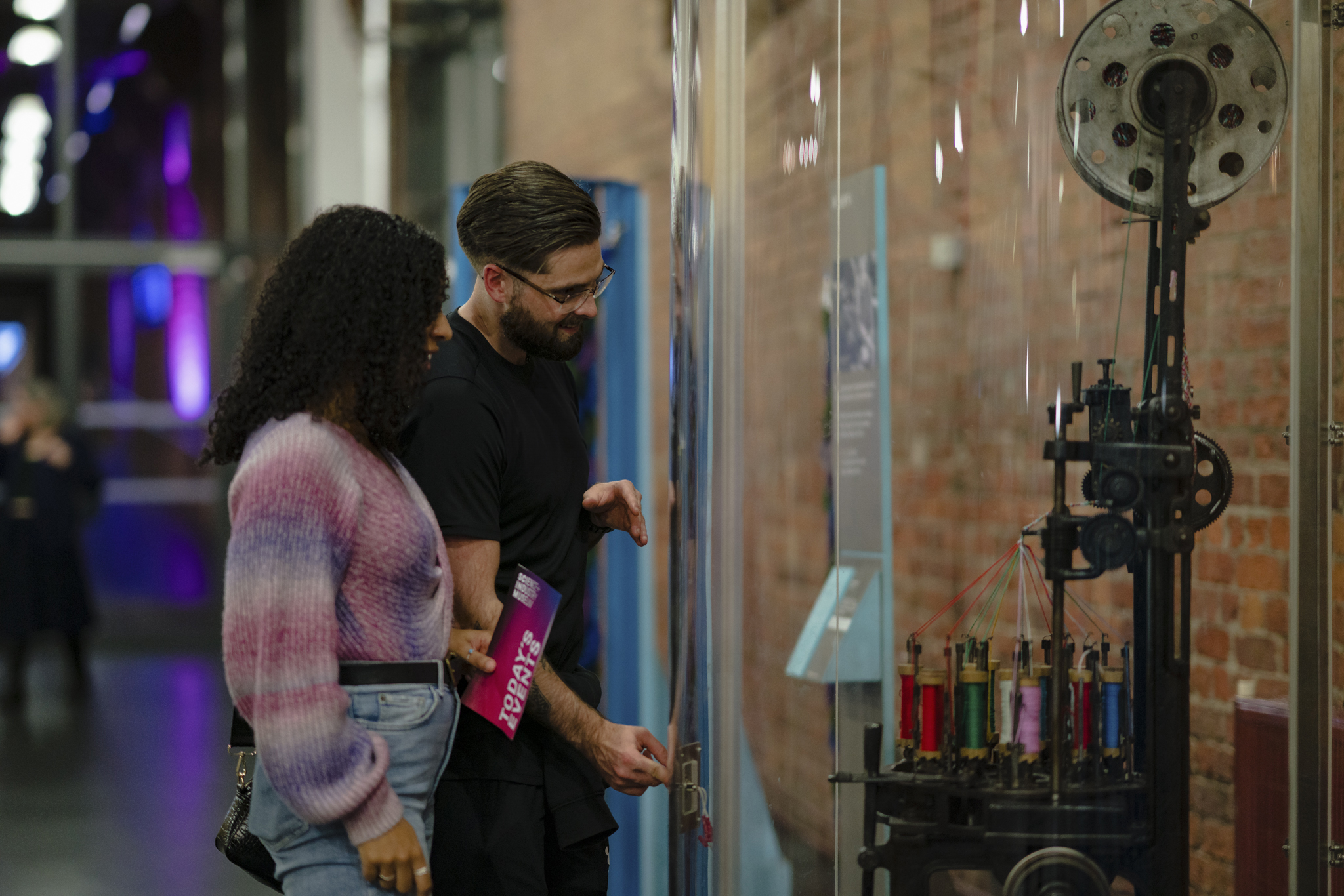
The Government has announced that all national museums in the UK will remain free for everyone to visit / Credit: Science Museum Group | Wikimedia Commons
Earlier this year though, the Government committed to working with local leaders and the museum and tourism sectors to explore whether charging overseas visitors could help museums’ finances.
But following this, it’s now believed that charging could deter visitors, and that the impacts and benefits would ‘not be felt equally’ across the sector.
Instead, the free entry will be funded by the £1.5 billion Arts Everywhere Fund – which is providing £760 million for museums – while £600 million of infrastructure funding is supporting national museums and DCMS-sponsored cultural organisations.
The latter funding will be used to address critical maintenance and works to estates, and enable institutions to deliver on their commitments to share collections with visitors from around the world.

 Daisy Jackson -
15th December 2023
Daisy Jackson -
15th December 2023