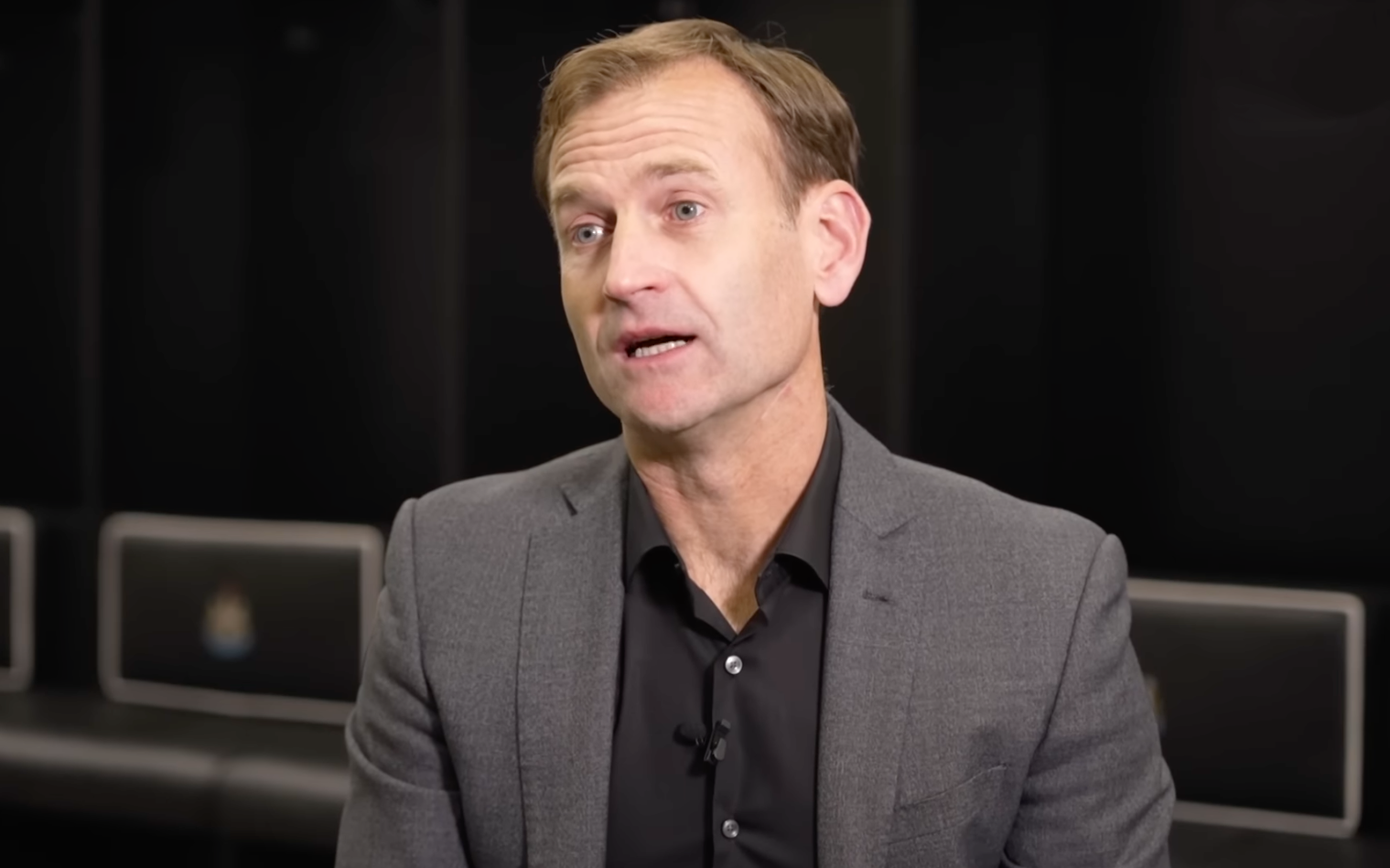
Manchester United are reportedly set to make a ‘formal approach’ for Newcastle United’s sporting director, Dan Ashworth, as Sir Jim Ratcliffe and the INEOS Group continue to assemble their new executive team.
The club have been linked to the likes of ex-Liverpool recruiter Julian Ward, Crystal Palace’s Dougie Freedman and most heavily Paul Mitchell, who has worked at Southampton, Spurs, RB Leipzig and more, but Newcastle’s Dan Ashworth now appears to be the frontrunner.
As per The Athletic, the leading candidate has now told the Magpies of United’s interest and although there is yet to have been any contact between the two teams thus far, a formal approach is expected to come soon.
ln fact, the word from Fabrizio Romano is that Ashworth has apparently already personally agreed to the move, it’s just a case of the North East club greenlighting it and setting their terms.
🚨 Dan Ashworth has already said yes to Manchester United. He's prepared to accept their proposal as it's considered big opportunity & project.
Understand Man United are intentioned to negotiate and pay compensation to Newcastle; they absolutely want Ashworth now, not in 2025. pic.twitter.com/Ka2pHQzFnh
As explained in multiple reports, the main hurdle the Red Devils now face is how much it’s going to cost them, with Newcastle understood to be after significant compensation if Ashworth is to depart.
ADVERTISEMENT
The 52-year-old only arrived at the club a couple of years ago, not long after the Saudi takeover and the start of their own rebuild, and given their recent progress not only in recruitment but on the pitch as a result, they are obviously keen to keep him on board as they continue their resurgence.
Having already helped develop the player recruitment structure as well as investing in attracting more youth talent on Tyneside, his reputation at Newcastle and prior is a glowing one.
ADVERTISEMENT
It is this pedigree, combined with the other highlights on his CV that has seen Ashworth jump to the top of Ratcliffe’s list, with the UK billionaire and his right-hand man Sir Dave Brailsford said to want him in place and ready to help overhaul in time for the transfer window rather than wait until next summer.
🗣️ "I think it's a real determination from INEOS and Sir Jim Ratcliffe to get the best in class"
The Back Pages Tonight panel on reports that Man Utd are closing in on hiring Dan Ashworth as their sporting director 🔴📰 pic.twitter.com/GymQr2kvwq
Who is Dan Ashworth and why do Man United want him?
Before his role at Newcastle, started out his youth career as a footballer at Norwich and eventually went on to get his first job as a sporting and technical director at West Brom in 2007.
He then went on to join the FA as their director of elite development in 2012 and played a key role in the success of both the men’s and women’s national teams throughout the age groups and beyond, with several of England’s youth teams having gone on to win silverware.
ADVERTISEMENT
It was in 2019 that he became technical director at Brighton, whose recruitment strategy has been heavily praised over the past few years, before eventually leaving in February 2022 after being headhunted by Newcastle to become their new sporting director.
Both teams have picked up some very good players and introduced some promising young talent in recent seasons, so United will be hoping for similar success at Old Trafford. Fans can also expect Ashworth to create better communication and relationships throughout the club’s infrastructure.
🎙 Our interview with #NUFC's newly appointed sporting director, Dan Ashworth is now available to watch in full on YouTube.
Once again, no official approach has been made as yet but is thought things could move quite quickly once an offer is made and United’s board are clearly keen to make things happen soon.
The impressive bit of poaching is also thought to have played into Ashworth’s own decision to say yes according to The Guardian, and if approved, Manchester United could have a whole host of new faces at the helm in a relatively short space of time.
The road to the Super League Grand Final at Old Trafford has been confirmed
Daisy Jackson
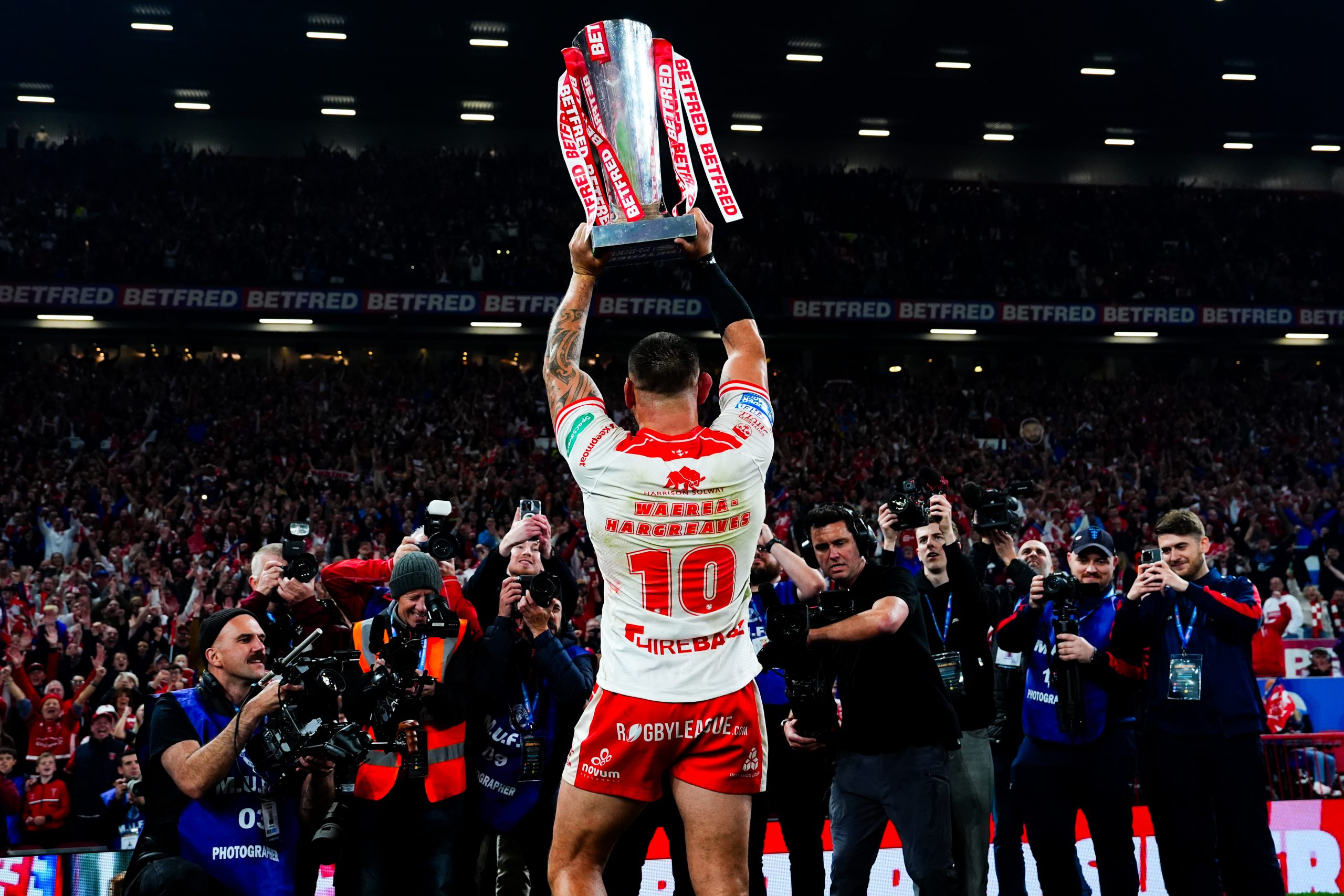
The road to one of the biggest nights in rugby league has officially been mapped out, with the 2026 Betfred Super League Grand Final set to return to Manchester’s Old Trafford this October.
Following the final round of regular-season action, the four play-off ties have now been confirmed as the battle for a place at the home of Manchester United enters its final stages.
And there’s plenty for Greater Manchester sports fans to get excited about.
Wigan Warriors have secured the League Leaders’ Shield after an emphatic 50-12 victory over Catalans Dragons, with Matt Peet’s side running in nine tries to finish top of the table.
The result keeps Wigan’s hopes of an incredible treble alive, having already lifted the Betfred Challenge Cup back in May.
They’ll now have a week off while the opening play-off ties take place, as will second-placed Leeds Rhinos.
The first eliminator sees Wakefield Trinity welcome Leigh Leopards on Friday 18 September, with kick-off at 8pm.
Then, on Saturday 19 September, Warrington Wolves take on Hull KR at 5.30pm.
The winners of those games will progress to the semi-finals, while the losing sides will face the two highest-ranked teams in the competition.
The road to the Super League Grand Final at Old Trafford has been confirmed. Credit: Simon Wilkinson/SWpix.com
Leeds will host the highest-ranked eliminator loser on Friday 25 September at 8pm.
Then, 24 hours later, Wigan will welcome the lowest-ranked loser to the Brick Community Stadium for their semi-final, with that one kicking off at 5.30pm on Saturday 26 September.
For Wigan, it represents a huge opportunity to take another step towards an historic treble – and ultimately a return to Old Trafford.
The Grand Final itself takes place on Saturday 3 October, with the action getting underway at 6pm.
As ever, the biggest prize in Super League will be decided under the lights at Old Trafford, with the two remaining sides battling it out in front of what is expected to be another huge crowd in Manchester.
Both Manchester United and Manchester City named as teams with the least amount of local fans
Emily Sergeant
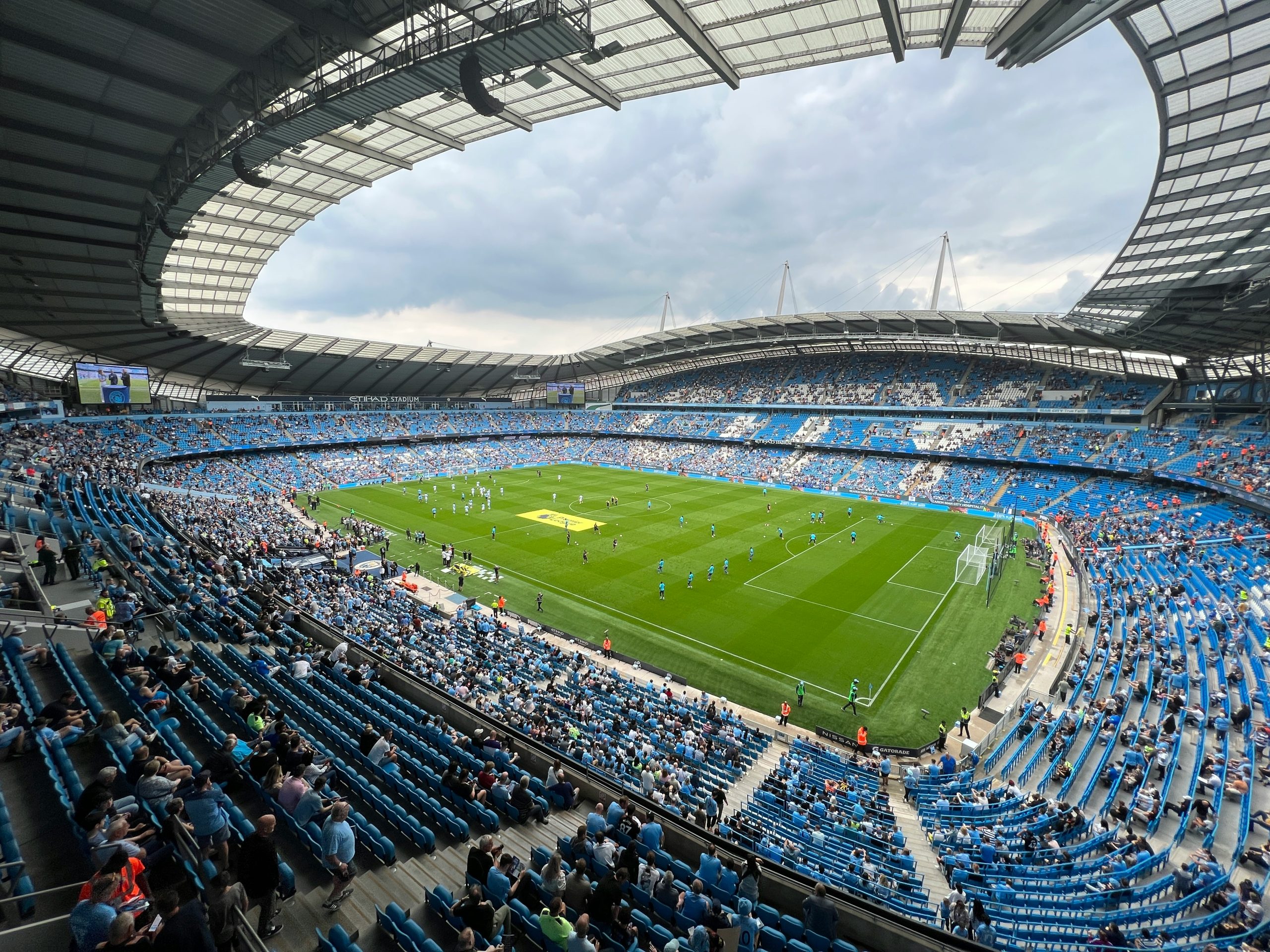
Both Manchester United and Manchester City have been identified as being teams with the least amount of local fans, according to a new survey.
We all know that supporting a local team can be seen as a mark of credibility among a certain kind of football fan, while on the flip side of that, not following a local team is often associated with being a ‘glory hunter’. But which Premier League clubs have the highest – and lowest – proportion of supporters living close to home?
Well, YouGov decided to use its profiles data to analyse the fanbases of all 20 Premier League clubs for the 2026-27 season to get the answer to this once and for all.
And it’s fair to say that it’s not looking the best for the Manchester teams.
The study found that, overall, Brighton & Hove Albion is the Premier League’s most local team – with 56% of fans based in the South East.
Sunderland (50%) and Nottingham Forest (49%) supporters are the next-most likely to live in the same region as their teams, followed by Aston Villa, Brentford, Ipswich, Leeds, Fulham, Hull, and Crystal Palace fans rounding out the top 10.
At the other end of the table, Manchester United has the second-lowest proportion of local supporters, with only a quarter based in the North West (23%), with one in six (17%) actually living in London instead.
And then as for Manchester City – who are widely considered to be the most successful team of the modern era – it has ranked fourth-bottom for local fans, as a quarter of the club’s supporters are based in the North West, with a fifth based in London (19%).
But although both United and City have found themselves towards the bottom end of the ranking, they are not the worst offenders.
That title, unfortunately, does belong to another North West team though – Liverpool.
Liverpool is the club with the lowest proportion of ‘local’ supporters, as just a fifth are based in the North West (21%) with the next highest concentration of fans can being found in London.

 Danny Jones -
15th February 2024
Danny Jones -
15th February 2024