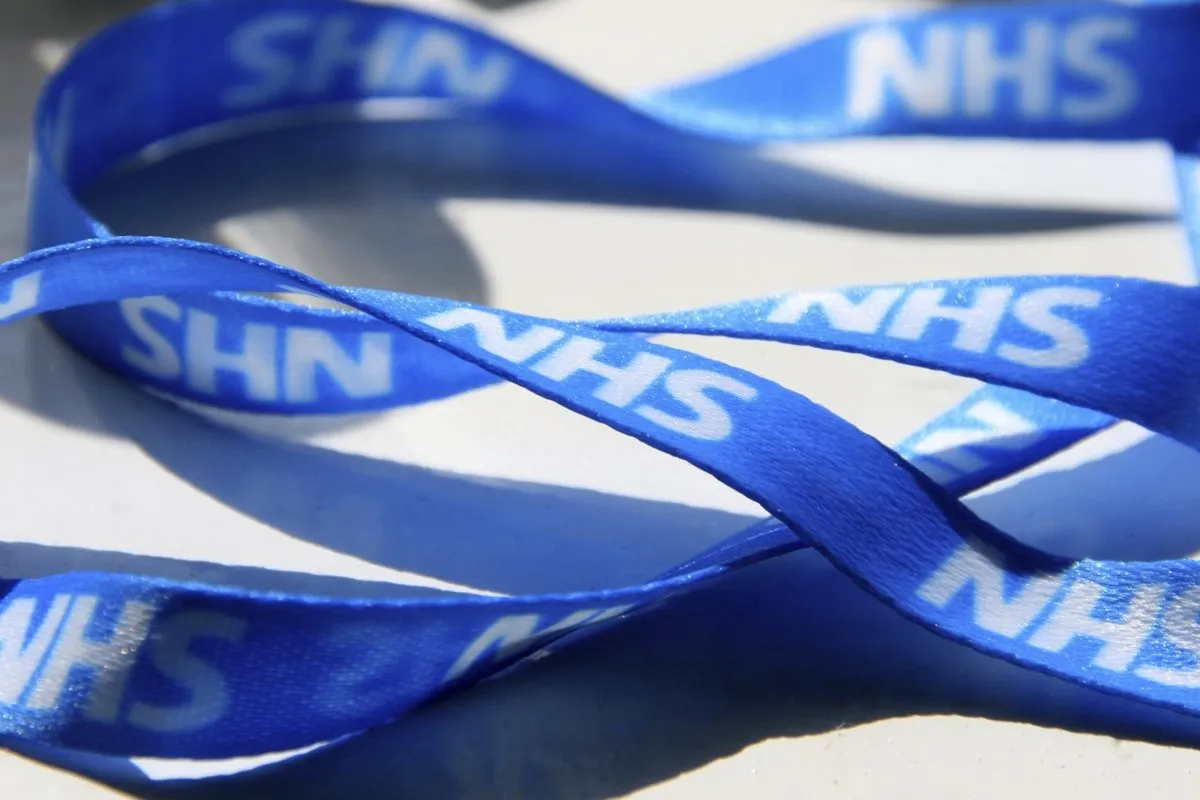
The NHS’s 111 service is to begin offering crisis mental health support for the first time ever, it has been announced.
In what is a truly groundbreaking move, making England one of the first countries in the world to offer such a service, the NHS has announced today that 111 will begin offering a full package of mental health crisis support through one single phone line, 24 hours of the day, seven days a week.
Millions of patients nationwide are set to benefit from the change.
Previously, local health systems had their own separate phone lines for mental health crisis support – which were fast-tracked during the COVID pandemic – that took around 200,000 calls per month, but now, people of all ages who are in crisis or concerned family and loved ones, even including children, can call 111 and select the ‘mental health’ option to speak to a trained mental health professional.
Once the call is made, NHS staff can guide callers with a series of next steps – including organising face-to-face community support, or facilitating access to alternatives services like crisis cafés, ‘safe havens’, and more.

ADVERTISEMENT
The NHS’s 111 service is to begin offering crisis mental health support for the first time ever / Credit: NHS Digital | rawpixel
For people who need support at A&E – which is generally if there is a risk to life – every emergency department in England will now also have a liaison psychiatric team available to offer specialist care.
The move to extend the support 111 offers comes after the NHS has invested an extra £2.3 billion into expanding its mental health services.
ADVERTISEMENT
This latest innovation will help patients in crisis get directed to the support they need quickly.
“We know that record numbers of people are suffering with their mental health,” commented the NHS’s National Director for Mental Health, Claire Murdoch, “and we want to ensure that when people are in crisis, they have easy, straightforward access to the support they need.
“While the NHS made significant progress during the pandemic with local services creating their own crisis phone lines, we want to go a step further by giving people everywhere in England one single point of access via NHS 111, and in doing so, I am extremely proud that we will become one of the first countries in the world to offer a free universal package of support to people through one easy to access phone line.
ADVERTISEMENT
For the first time, anyone in a mental health crisis can now call 111 and receive support from trained mental health professionals.
“The new integrated service can give people of all ages specialist mental health support and ensure they can be offered face-to-face support in a safe and therapeutic environment, so, if you or someone you know needs urgent mental health support, please call 111, and select the mental health option.”
NHS Talking Therapy Services are also available for people who need help with other mental conditions, such as anxiety, depression, obsessive compulsive disorder, and PTSD, and anyone can refer themselves online via NHS.uk or by contacting their GP.
A full list of mental health support options is available via the NHS.uk website, and free listening services are also provided by charities such as The Samaritans or Shout Crisis text line.
The NHS continues to advise people to call 999 if there is a serious risk to life.
Greater Manchester town named as one of country’s worst at fixing potholes
Emily Sergeant
A town in Greater Manchester has been named one of the worst in the country at managing roads and fixing potholes.
For the first time ever, drivers across England can now see how well their local highway authority is tackling potholes on their roads thanks to a new traffic light rating system published by the Government this weekend.
The new ratings grade local highway authorities as red, amber, or green.
The ratings – which have presented on a new interactive map – are based on current road condition and how effectively local authorities are spending the Government’s record £7.3 billion funding to fix potholes and investing in long-term measures to maintain roads.
The Government funding is meant to allow local authorities to repair potholes ‘effectively’ and move away from short-term repairs that work out to be more expensive – with these fixes meaning more money in drivers’ pockets, as the average repair bill from hitting potholes is said to be around £320.
We’ve launched a Red, Amber, Green rating system, so you can see how well your local highway authority (LHA) is fixing your local roads.
🟢 Green = best practice, long-term preventative plans 🟠 Amber = on the way, but room to improve 🔴 Red = support in place to raise… pic.twitter.com/gRwkEx5kdm
The condition of local roads, how much local authorities are spending on road repairs, and whether they are following best practice in maintaining highways are all key areas taken into account when deciding on an area’s rating.
Those that scored ‘green’, like Manchester, were able to demonstrate they are following best practice, while also maintaining good road conditions and investing significantly into improving local roads, and those that scored ‘amber’ – which the majority of Greater Manchester came under showed that there was room for improvement in individual areas.
However, one Greater Manchester town did not fare well at all, and ended up with an ‘red’ rating… and that town was Bolton.
The colour-coded map showing each local authority’s pothole rating / Credit: OS / Crown Copyright (via gov.uk)
Those local authorities that are rated ‘red’, like Bolton, are not yet meeting the expected standards in one or several areas measured, according to the Government, such as the current state of the roads, their plans for preventing potholes, or investment into maintaining their local roads more widely.
“For too long, drivers have paid the price because our roads were left to deteriorate,” commented Transport Secretary, Heidi Alexander.
“We’ve put our money where our mouth is, increasing the funding for local highway authorities with £7.3 billion to fix roads and given them the long-term certainty they have been asking for.
“Now it’s over to them to spend the money wisely, and for the first time, we are making sure the public can see how well councils are doing in delivering the improvements they want to see in their local area.”
Featured Image – Picasa (via Unsplash)
News
Plans to build ‘modern’ underground train station at Manchester Piccadilly officially proposed
Emily Sergeant
Plans have officially been proposed to build a ‘modern’ underground train station at Manchester Piccadilly.
The Government has announced a ‘major growth plan’ for the north, and as part of that, has firmed up its commitment to delivering Northern Powerhouse Rail (NPR).
NPR is said to be ‘at the heart’ of plans to deliver faster commutes, better jobs, more homes, increased investment, and ultimately, stronger connections between Manchester and several other major northern cities, even as far as North Wales.
£1.1 billion has been committed over this Spending Review period to support delivery of NPR, the Treasury has confirmed.
One of the most crucial proposals from the commitment to the NPR is an entirely new line between Liverpool and Manchester – via Warrington and Manchester Airport – will be delivered as part of the second phase in the 2030s, and work is set to begin ‘immediately’ to develop the project plans and business case in more detail.
Plans have officially been proposed to build a ‘modern’ underground train station at Manchester Piccadilly / Credit: TfGM
As part of this, Greater Manchester and the Government will be working together to explore an underground solution at Manchester Piccadilly.
It’s hoped that a new underground station at Manchester’s main train train travel hub would be a ‘catalyst’ and ‘enabler’ for major regeneration and economic growth in the region and across the North as a whole.
The underground option is said to be ‘preferred’ by local leaders.
This option would see trains run through the station, providing more reliable and quicker connections to and from West Yorkshire and beyond.
It’s also hoped that it would ‘future-proof’ the station to accommodate growing passenger numbers for decades to come, as well as ensure that the region remains the ‘growth capital’ of the UK.
Big news for the North.
Work is set to begin immediately on detailed plans for the new Liverpool–Manchester Northern Powerhouse Rail line.
A major catalyst for growth and jobs across the North. 🚆
“Finally, we have a Government with an ambitious vision for the North, firm commitment to Northern Powerhouse Rail, and an openness to an underground station in Manchester city centre,” commented Mayor Andy Burnham as the proposals were announced this week.
“A modernised Manchester Piccadilly could become the Kings Cross of the North, acting as a catalyst for major growth in our city region and beyond.
“Over the past decade, we’ve become the UK’s fastest growing city region, but underinvestment in rail infrastructure has long acted as a brake on further growth.
“Today marks a significant step forward for Greater Manchester. We’ll now work at pace to prove the case for an underground station and work up detailed designs for the route between Liverpool and Manchester.”