Finally, Manchester’s historic Campfield Market is being brought back to life, set to turn into a creative tech campus.
The huge space – part of which was previously the Air and Space Hall at the Science and Industry Museum – will soon reopen as a ‘mega campus’ for the city’s creative and tech businesses.
The plans revealed by Allied London show a whopping 130,000 sq ft campus across three buildings, including the two landmark Victorian market halls.
Set to launch this June, Campfield will be home to flexible workspaces, cafes, media studios, a bar, and plenty more.
A highlight will be Campfield House, ‘the city’s newest destination for socialising and entertainment’, home to a cafe, event space, the Campfield House Bar, and weekend craft markets and food stalls, all set beneath the building’s iconic glass roof
ADVERTISEMENT
At the heart of the mega campus will be Department at Campfield, with a range of cutting-edge facilities and flexible workspaces from private offices to creative studios to co-working areas.
There’ll also be mixed media studios, workshops, meeting rooms, all based on the success of existing Department workspaces established in 2020 across Manchester and Leeds.
ADVERTISEMENT
Elsewhere, the creative tech-specialising Exchange will provide critical resources, coaching and community to businesses – it’s already supported more than 1000 individuals and 200 businesses.
The vision for Campfield in Manchester
Of the two listed former market halls, the smaller will become Campfield Studios, with production spaces and studios around a dramatic central atrium available for hire.
And completing the Campfield campus will be Castlefield House, where members will find a dynamic media workspace and hospitality hub, with a Bauhaus-inspired design and a spacious courtyard cafe.
ADVERTISEMENT
Campfield will join other restored, repurposed and revolutionary landmarks in St John’s, like Aviva Studios, Bonded Warehouse and Manchester Goods Yard.
Michael Ingall, Chief Executive of Allied London, said: “Campfield will provide creative, tech and media businesses with the infrastructure and facilities they need to grow and develop. Importantly, it will once again be open for social gatherings and for the public to enjoy.
“The project will see these historically significant buildings given a new life and fully equipped to play an integral part in the next generation of artistic and creative output from the city’s new creative district.”
The vision for Campfield in Manchester
Councillor Bev Craig, Leader of Manchester City Council, said: “Campfield is a much-loved historic site that has sat empty and underutilised for so long. We’ve been supporting this project from the start, bringing these important heritage buildings brought back into active use, supporting the city’s ongoing growth and boosting employment opportunities in some of the city’s key emerging sectors.
“Manchester’s reputation is growing globally as a leader in the creative, tech and media industries, and this new hub is another example of creating a supportive ecosystem where businesses can start-up, scale-up and thrive. It’s great to see this scheme come to life, bringing a renewed energy to Campfield.”
ADVERTISEMENT
Tanya Grady, Commercial Director of Allied London, said: “The sustainable reimagination of the historic Campfield campus will become a catalyst for a new creative community. We recognise that a place for creative, tech and media companies needs a diverse set of amenities to enable innovators to produce their best work.
“Campfield will maximise the number of businesses and founders we can support in fulfilling their creative potential. Campfield possesses everything founders need to take their tech, media and creative businesses to the next level.”
Abigail Gunning, Operational Director of Department, said: “Department Campfield will offer thoughtfully designed, service-led workspaces that enable businesses to succeed.
“The new campus represents our commitment to providing amenity-rich environments where people feel fulfilled, and businesses can attract the best talent. We’re excited to continue growing our community and support businesses shaping the future of Manchester’s creative and tech landscape.”
Inside Dakota, the luxurious new hotel at Manchester Airport
Daisy Jackson
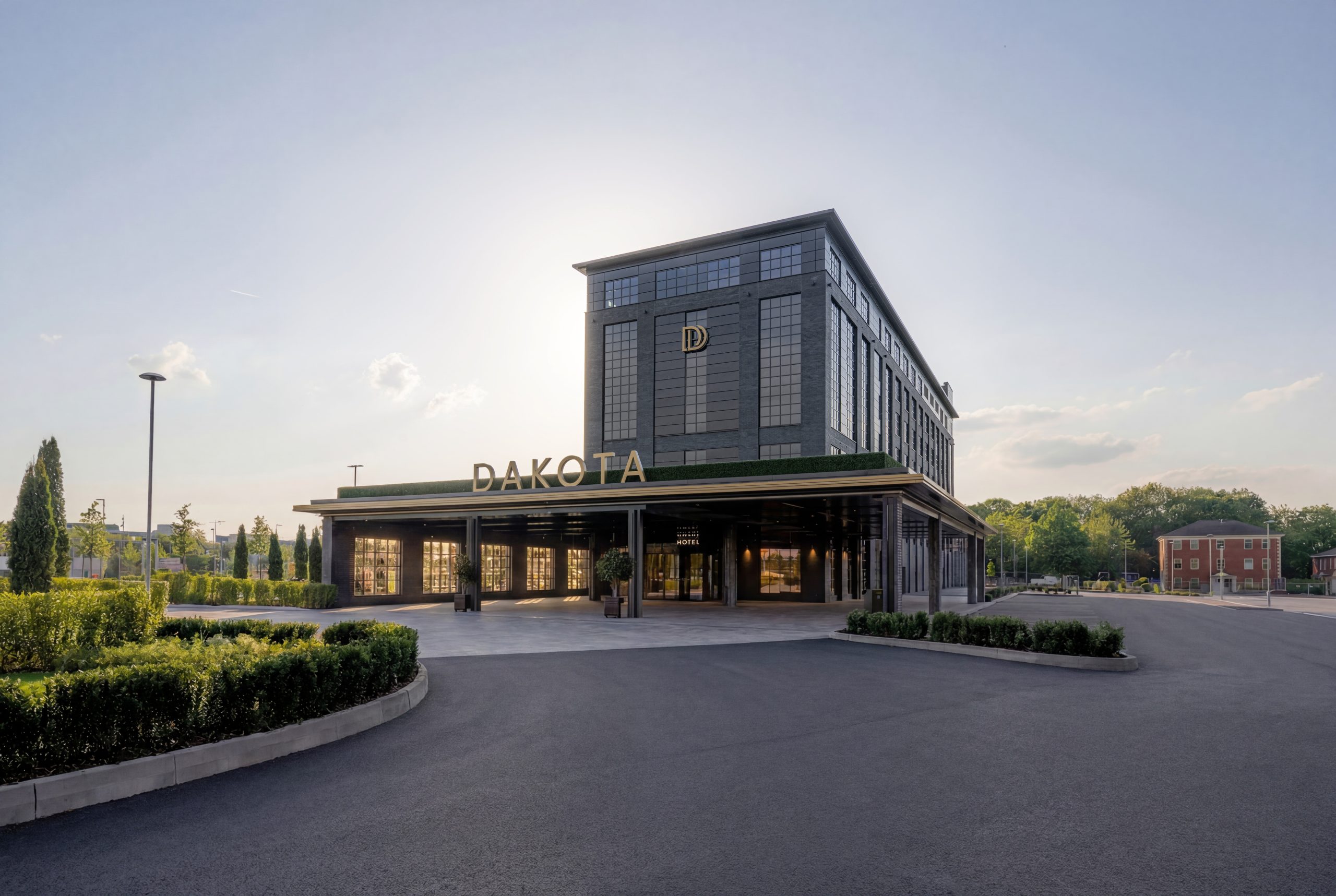
There’s a new hotel at Manchester Airport, and this one is all about luxury.
If the Dakota name sounds familiar, it’ll probably be from its city centre hotel, which has become a favourite with A-list celebrities and discerning travellers alike.
Now, the luxury hotel brand has opened its second Manchester location, this time just moments from the airport.
Designed to be ‘the destination before the destination’, Dakota Manchester Airport is aiming to redefine what an airport hotel can be.
The £54 million development features 154 elegant bedrooms and suites, all finished with the brand’s signature dark, sophisticated interiors and premium design details.
Just like its city centre counterpart, guests can expect a stylish bar and restaurant at the heart of the hotel. The Grill serves premium steaks, indulgent sides and an extensive wine list in an art deco-inspired setting complete with leather booths and a striking central bar.
And just like in town, there are plenty of luxury touches and details at Dakota Manchester Airport for guests to take advantage of.
The beautiful bar area at Dakota Manchester AirportThe Grill restaurantThe Grill restaurantA dedicated chauffere service to take you to your terminalAn example of the bedrooms at Dakota Manchester Airport
That includes the UK’s only hotel-operated valet parking service at an airport hotel, with the Dakota team looking after your car while you’re away.
There’s also a chauffeur service running 24 hours a day to take guests directly to their terminal, as well as private dining rooms, a cigar terrace and humidor, making it feel more like a luxury city hotel than somewhere to stay before an early flight.
Matt Townley, Group Operations Director, said: “I’m over the moon to see the doors of Dakota Manchester Airport finally open after all the hard work, dedication and passion the team has put into bringing it to life.
“We wanted to create something that goes beyond the traditional airport hotel – a place where guests can relax, unwind and enjoy exceptional hospitality before or after their journey. We’re looking forward to welcoming people from around the world and giving them the experience Dakota is known for.”
ITV to be bought out by Sky in transformational British broadcasting deal worth £1.6 billion
Danny Jones
In a watershed moment for British broadcasting, Sky has reached a transformational agreement worth more than £1.6 billion to buy out ITV in a landmark takeover deal.
With Sky already owned by US telecommunications corporation Comcast, this is set to be one of the biggest shakeups in TV and streaming for some time.
Talks actually started last November, but the process to complete a buyout like this has obviously taken a significant amount of time and money already.
It’s also worth noting that the deal is still pending full approval from the relevant regulators; nevertheless, it’s fair to say that it could change the face of the British media giants – who are based here in Greater Manchester over at MediaCity – but might signal a significant overhaul of our media landscape.
The Sky Group have assured there will be no immediate change to popular shows and will not be put behind a paywall at present (for now, anyway), with ITV still under a free-to-air service until 2034 as part of its public licensing contract.
Aquisitons/mergers of this size like this don’t come around very often, at least not across this side of the pond, with the growing Disney’s growing multinational monopolisation being one of the biggest examples of conglomerates mopping up major networks and huge brands over the past decade.
Writing in a statement, Sky said: “The UK media market is undergoing a profound and rapid transformation, and as competition for audiences intensifies, scale matters more than ever in order to compete with global streaming giants and YouTube in the UK.
“Viewers will continue to enjoy the shows they know and love, such as Coronation Street, Emmerdale, Love Island, I’m a Celebrity… Get Me Out of Here!, This Morning, Loose Women, Lorraine and News at Ten – alongside major live sporting events.”
That lattermost example feels particularly poignant at the moment, as this also means that the likes of ITV’s impressive World Cup coverage will come under the Sky umbrella in the near future.
ITV agrees sale of media and entertainment business to Sky for up to £1.6bnhttps://t.co/UtgO9REejy
It’s being seen as an ambitious attempt to shake up traditional terrestrial telly and digital platforms, with the ‘old guard’, as it were, having to move forward and fast to keep up with the mercurial market becoming evermore dominated by streaming services.
Of course, there are plenty raising questions and concerns over yet another domestic institution becoming deeper and deeper entwined with big American business; on the other hand, former ITV chairman Sir Peter Bazalgette, who still owns shares, says the deal was “essential” for its survival.
ITV will also receive £1.2bn in cash and Sky’s Love Productions business in return for ownership of their media and entertainment arm, whose shows include the Great British Bake Off.
Moving forward, ITV will also get a further £200m in 2028 if they meet revenue targets when it comes to advertising, with Sky promising to spend over £2.1bn on content from ITV Studios over a five-year period. You can read the full update from ITV right HERE.

 Daisy Jackson -
16th April 2025
Daisy Jackson -
16th April 2025