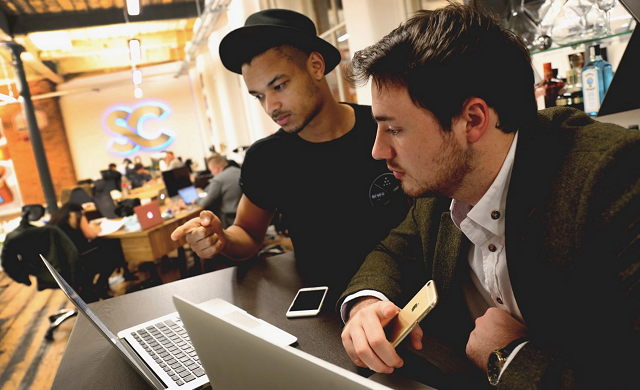
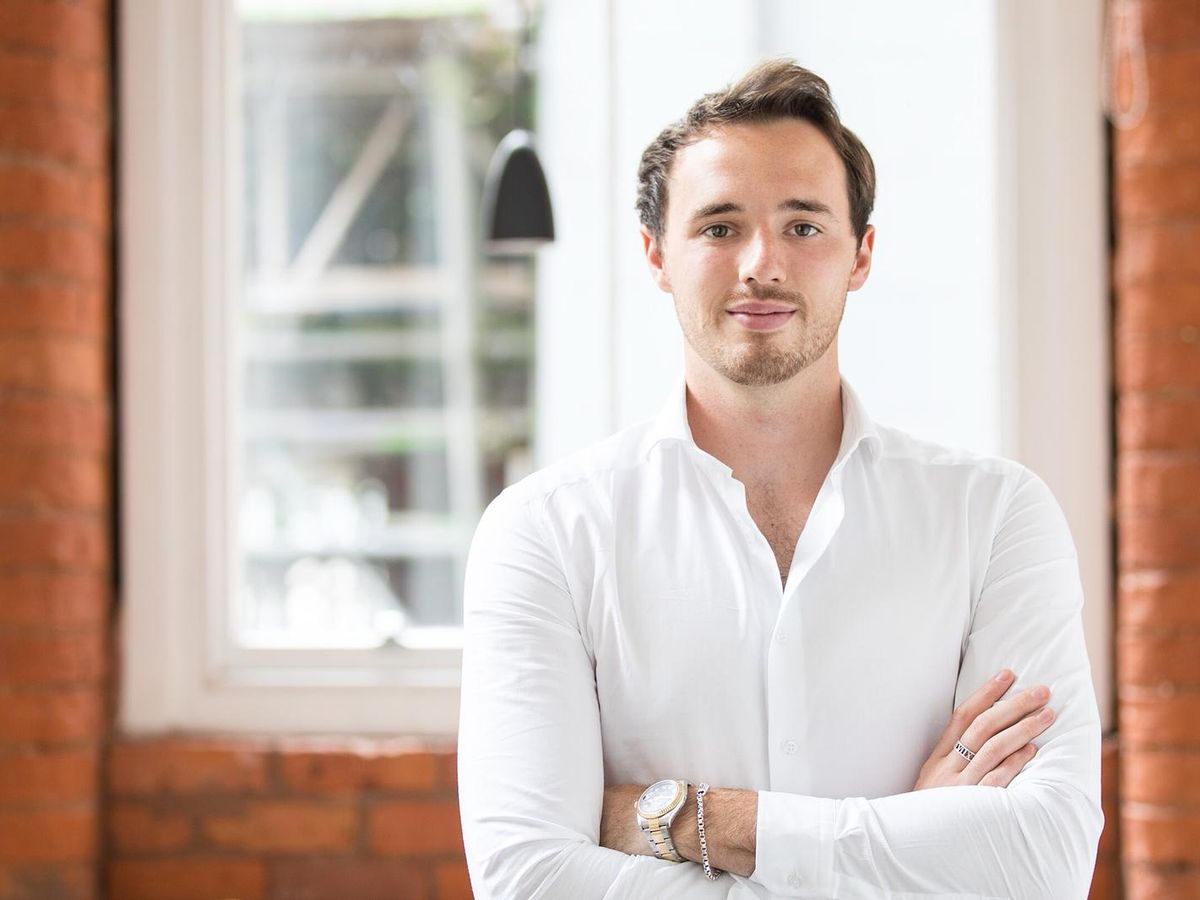
Co-founders Steven Bartlett and Dominic McGregor have announced today they are to step down from their roles at Social Chain after six years.
CEO Bartlett and COO McGregor were just 20 and 21 respectively when they became founding members of the Manchester-based social media publishing and marketing company that has since grown to over 750 staff globally and has revenues forecast to hit $200 million this year.
Announcing his stepping down across social media this morning, Steven Bartlett said: “Social Chain was conceived on a small desk in the backroom of the uni I had just dropped out of in Manchester. I was 20, full of wild dreams, and I believed we could take on the world.
“What started as a crazy and sometimes ridiculed idea, in the mind of a few drop-out underdogs, at a time when people didn’t believe in the potential of this new thing called social media.
“As I write this, at 27, we have more than 700 Social Chainers around the world, a world-beating team, we went public last year, we are the best at what we do, and we’ve just posted record numbers. The company is showing unbelievable momentum and I remain Social Chain’s biggest fan, supporter, and believer.
ADVERTISEMENT
“I owe an unpayable debt of gratitude to my team, past and present – if it wasn’t for you, my board, our chairman, (and mum and dad), I would be nothing.”
Twitter – Steven Bartlett
In a post to LinkedIn today, Dominic McGregor added: “I’m deeply proud of everything we’ve achieved, the relationships we’ve made and the lessons learned,”
ADVERTISEMENT
“Social Chain is a very special company, the growth we’ve seen over the last six years has been quite frankly phenomenal, we recently posted record numbers, and based on some of the exciting things I’ve seen over the last year, the future promises to be even brighter than the past.
“This business has been my rock, even when I faced difficult times in my personal life. The purpose it gave me, and the people I worked with got me through – they gave me something to fight for and without it, and without them, I wouldn’t be the person I am today.”
LinkedIn – Dominic McGregor
The pair has overseen exponential growth throughout the past six years at Social Chain.
ADVERTISEMENT
The journey may have started with humble beginnings in Manchester, but Social Chain now has bases in London, Berlin, New York and Munich, and works with global brands such as Amazon, Coca Cola and Apple.
It claims an owned media reach of over 2 billion views a month.
Last year, the company merged with German online retailer Lumaland AG to become The Social Chain AG and list on XETRA and the Düsseldorf Stock Exchange, and it recently announced the largest acquisition in its history by taking a 51% stake in A4D Inc – a Southern Californian digital performance marketing agency.
It has been confirmed that Wanja S. Oberhof – currently Co-CEO of Social Chain AG – will retain his position as CEO upon Bartlett’s standing down.
You can find out more about Social Chain AG via its website here.
Business
Plans unveiled to deliver 50,000 council and ‘genuinely affordable’ homes in Greater Manchester
Emily Sergeant
Plans to deliver 50,000 council and ‘genuinely affordable’ homes in Greater Manchester have been unveiled.
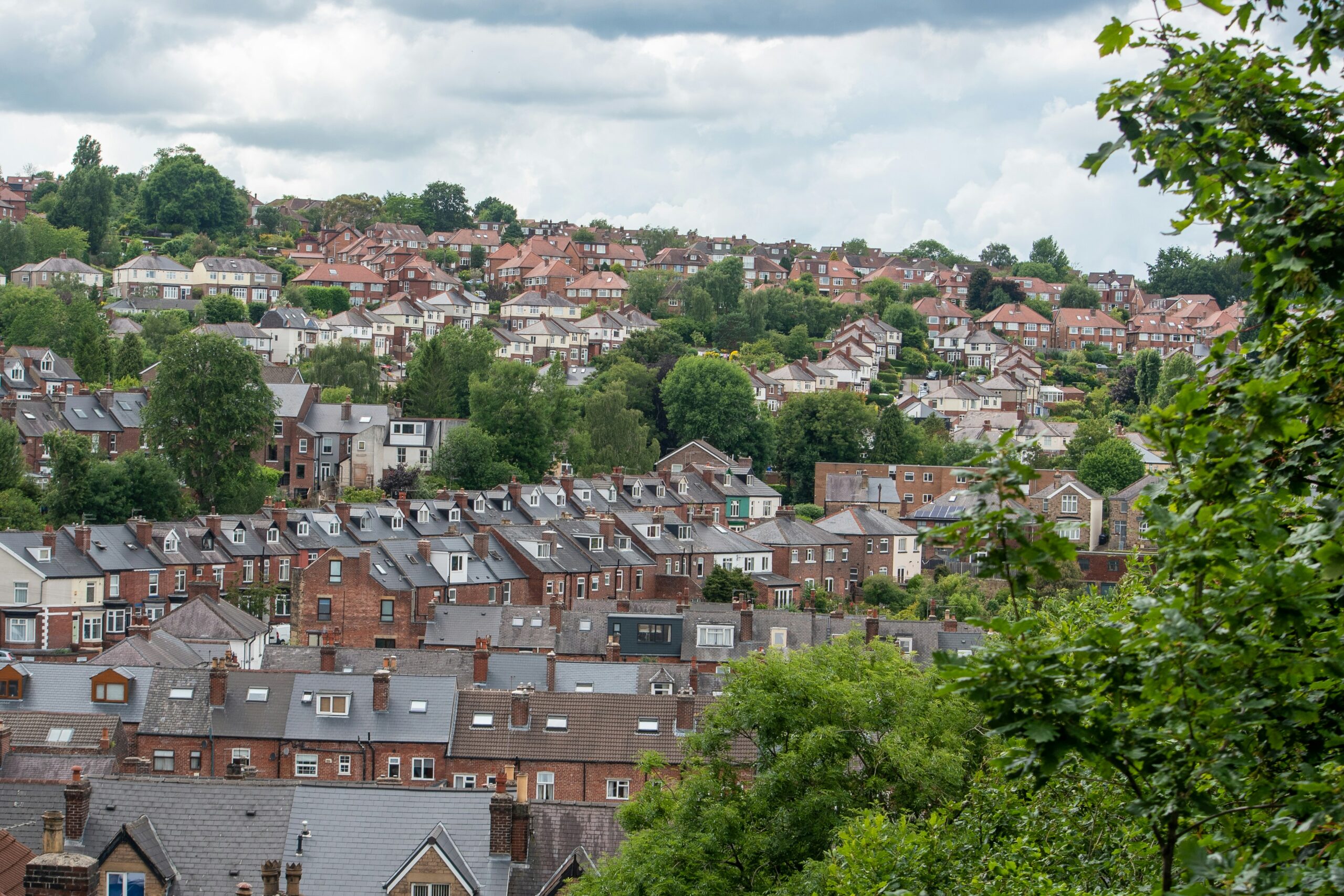
By removing ‘blockers’ to development and transforming disused public land into new housing schemes, Greater Manchester Mayor Bev Craig has set out her plan to tackle the housing crisis and deliver ‘a new generation’ of homes – with 50,000 new ‘genuinely affordable’ homes to be available across the city region by 2039.
It’s expected that 10,000 of these homes will either be built, on site, or in the pipeline with planning permission ready to go by May 2028.
To meet the scale of this ambition and deliver the homes the region needs, Greater Manchester Combined Authority (GMCA) says it will need to ‘pull every lever at [its] disposal’, from remediating brownfield land, to bringing forward dormant sites in public ownership.
That’s why the Mayor will be asking Greater Manchester‘s public bodies to carry out a public land review and identify sites that could be brought forward to deliver homes.
GMCA has already used its Brownfield Housing Fund to support several schemes that are delivering thousands of affordable homes – including social rent homes – as part of the £2 billion Good Growth Fund.
If you’re unfamiliar, the Good Growth Fund is investing in a pipeline of projects to deliver new homes, regenerate town centres, create jobs, and build infrastructure to connect people and places.
“When I was Manchester City Council Leader, I built more council and social homes than Manchester had built in 25 years,” Bev Craig declared. “But we need to go further and faster in every bit of Greater Manchester.
“We will be leading by example when it comes to freeing up disused and dormant public land for development and I’m calling on other Government bodies to join us.
“I know first-hand the security that a Council house brings, and that’s why I am absolutely committed to delivering the Council and social homes that people here in Greater Manchester need, so everyone can have the foundation of a good life in our city region.”
Currently, land supply for 78,585 new homes of all tenures up to 2030 has been identified.
Greater Manchester is in line to receive an initial £1.8 billion from the Government’s Social and Affordable Homes Programme, and the Mayor will meet with Government in the coming weeks to set out joint plans to achieve these ambitions.
Featured Image – Benjamin Elliott (via Unsplash)
Business
Elbow get behind campaign to save Jodrell Bank from closure
Danny Jones
Manc band Elbow are among the latest to get behind the campaign to save Jodrell Bank Observatory from closing permanently.
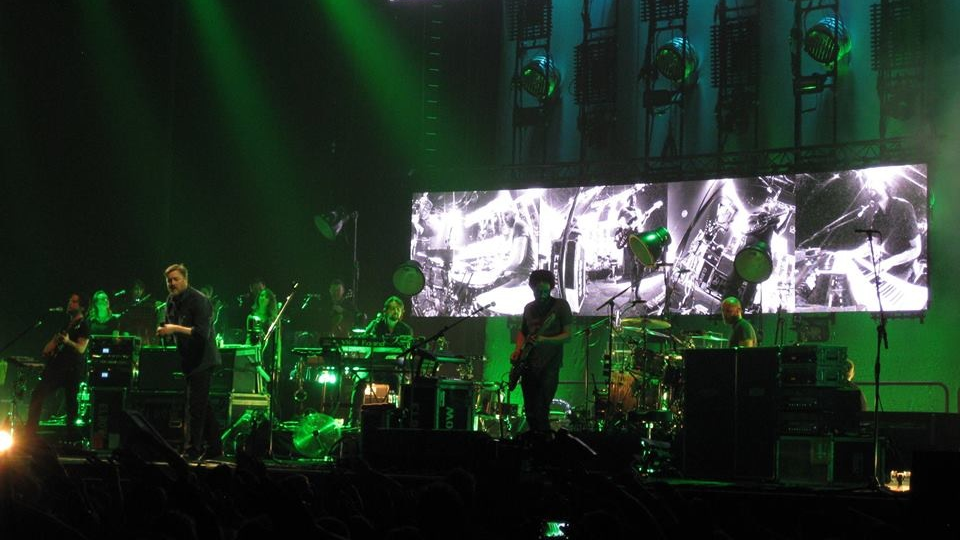
The Greater Manchester natives famously played a sold-out gig at the important scientific and cultural landmark for a very special live album recording well over a decade ago, and know all too well the site’s national and, indeed, global heritage.
Choosing the Observatory and the rare chance to perform a show in the shadow of the world-renowned James Lovell Telescope, it probably remains one of their most significant standalone UK date ever.
With that in mind, the local lads have been left just as worried by the news of its impending closure as everyone else, and have therefore issued a fresh appeal to help keep it open.
Posting a timely statement on social media, the group wrote: “Jodrell Bank has long been close to elbow’s heart. In 2012, the band played beneath the Lovell Telescope for one of the most memorable shows in our history.
“The recent news that funding for the e-MERLIN radio telescope network is set to end in 2028 puts the future of the scientific work at Jodrell Bank under serious threat. It is a remarkable place, with an extraordinary history, and one that continues to play an important role in science, culture and education.”
In addition to reliving clips and images from the historic live set all the years later, they also pointed people towards their ‘elbow – Live at Jodrell Bank‘ album documentary, which has now been made available online for the very first time as part of wider efforts to raise awareness around the cause.
Directing people to key online resources shared by the institution and astrophysics centre itself following their unfortunate update late last month, the push to not only find the funding but sustain support for the facility continues to ramp up throughout the world of science, arts and industry.
For anyone who somehow missed the news – 2028 being the current deadline handed down as per budget cuts across the sector – concerned parties here in the North West and all over the country have since started petitioning to save Jodrell Bank Observatory from shutting down for good.
In addition to being described as a “huge blow” to the field by the Royal Astronomical Society (RAS), some have even gone so far as to describe the decision as a form of “vandalism” when it comes to research and British culture as a whole.
Having also served as the host venue for the annual bluedot Festival since 2016, the multi-genre science and arts celebration could soon be forced to find a new home.
The battle is far from over yet, and the community has time to rescue Jodrell Bank Observatory from its fate, but it will take lots of money and more notable public figures to make it happen.
Once again, you can do your bit by signing the petition mentioned above right HERE.

 Emily Sergeant -
17th August 2020
Emily Sergeant -
17th August 2020