Manchester-based recruitment company Amoria Bond is one of the fastest-growing businesses in Europe, and for good reason.
The business, which has been named one of the best recruitment companies to work for by several major industry bodies, is leading the way when it comes to STEM recruitment while also offering incredible benefits to its employees.
Its team members have access to perks like lunch clubs and book clubs as well as career-progressing benefits like grants for external training, not to mention the team trips to destinations like Las Vegas and Dubai.
Amoria Bond prides itself on its expertise and relationships with its clients and candidates but colleagues are well looked-after too – as per its mission statement of ‘Progressing Lives Everywhere’.
Credit: Amoria Bond
Anyone who goes to work for Amoria Bond is placed on a 10-steps-to-the-top progression programme, so everyone knows where they sit and where they’re headed within the business.
ADVERTISEMENT
Even those who join at trainee level know they’re only 10 steps away from being a member of the executive board, and four members on the current executive board actually joined as trainees.
But despite the clear route to career progression for all employees, each individual is given a personalised progression plan to help them reach that next step.
ADVERTISEMENT
It works, too – half of all the recruiters who work at Amoria Bond have been promoted in the last year, with some even getting promoted twice.
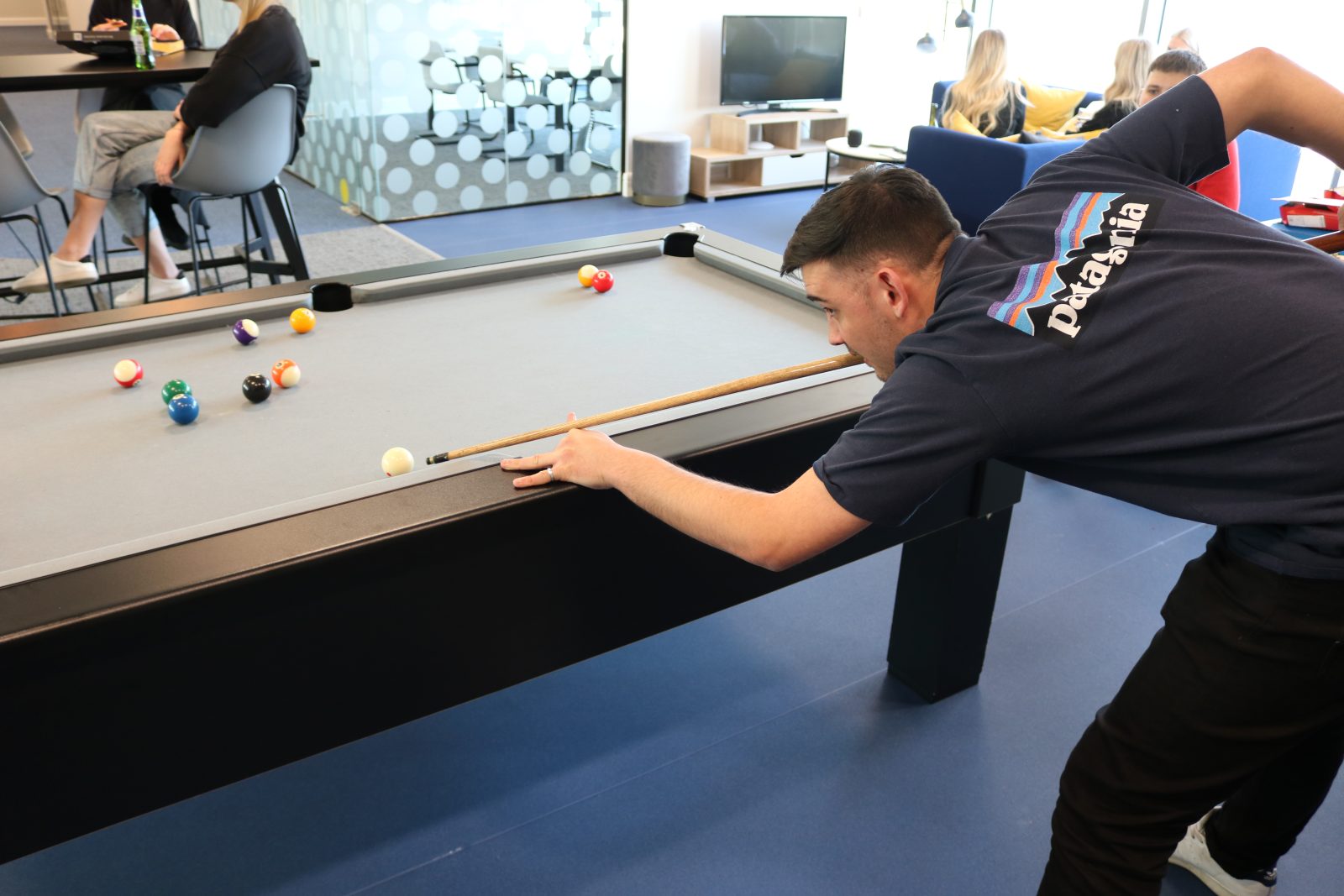
The team at Amoria Bond. Credit: Supplied
Amoria Bond specialises in pioneering sectors like advanced engineering, technology and energy, matching people and businesses who are building a cleaner future for the world.
Those who work for the business have access to award-winning training and development, including the Amoria Bond Academy, which has thousands of expert-led videos.
ADVERTISEMENT
The company’s learning and development team also runs in-person training sessions and one-on-one Zoom sessions.
It’s also committed to diversity and inclusion, believing that everyone deserves respect and equal opportunity regardless of background.
Amoria Bond says: “Diversity and Inclusion is an ongoing journey and we’re in it for the long haul.
“We don’t pretend to be perfect, but we are 100% committed and hold ourselves fully accountable to delivering sustainable, meaningful action-led change internally, within the recruitment industry we love, and across the STEM sectors we serve.”
As well as internal diversity and inclusion committees in each office, and annual reports published publicly, Amoria Bond is one of the founding signatories of the Diversity and Inclusion Charter and founding members of Programme One, a collaborative initiative that aims to remove barriers to black talent.
ADVERTISEMENT
ASCEND is an internal initiative too, which is designed to attract, retain and progress women across the Amoria Bond Group and wider recruitment industry.
The perks keep coming too, including daily benefits like flexible and remote working, uncapped earnings, company cars and mobiles, and 24/7 access to a wellness hub.
Amoria Bond offers a lunch club to its employees. Credit: Supplied
Employees are given a £500 development allowance to spend on external training every year, and are offered activities and prizes for hitting targets.
Top performers are treated to a Lunch Club at some of Manchester’s best restaurants as well as being able to get a book or audiobook of their choice every month through the company Book Club.
Amoria Bond team members are able to take a day off to spend time volunteering for charity without it coming out of their annual leave, and can swap time off for different religious holidays.
Everyone finishes for the week at 4pm on a Friday, but those who hit their TFI targets are able to finish at 1.30pm.
And then the whole team has the chance to travel the world with global sales conferences, with 2022 destinations including Dubai and Las Vegas.
You can find out more about Amoria Bond on the company’s website here.
Featured image: Supplied
Business
The most magical Christmas displays have now landed at one of the North West’s best garden centres
Emily Sergeant
Christmas has officially arrived at one of the best garden centres in the North West, and it’s just as magical as you’d hope it would be.
Just outside of Greater Manchester in the village of Glazebury in Warrington, you’ll find Bents Garden and Home – a multi award-winning destination garden centre that’s often voted one of the region’s best. It’s great place to visit all year round, but as anyone who has ever made the trip there will tell you, this place really comes alive during the festive season.
Bents first started out life all the way back in 1937, when Alfred and Margaret Bent began growing and selling roses in the front garden of their terraced house in Glazebury.
Ever since then, the business has gone from strength to strength – opening its first dedicated garden centre building in the early 1950s, and then undergoing several expansions in the 60 years that followed to create the place we know and love today.
A place that’s home to everything you need to kit out your home and garden, several cafes and restaurants, a food hall, a cook shop, a children’s boutique, and plenty more.
Christmas has arrived at Bents Garden and Home for 2026 / Credit: The Manc Group
And then at Christmas time, you can also get to wander around all the magical festive displays and stop for a bite to eat at the winter food markets.
Christmas at Bents originally began in the 1970s, establishing what would become one of the garden centre’s most successful – and favourite – times of the year, with people travelling in their thousands from all across the North West to visit, making it an annual tradition in the festive events calendar for many families.
With a jaw-dropping display to suit everyone’s festive decor tastes, Christmas at Bents really does need to be seen to be believed.
Expertly decorated trees form the centrepiece of each display, with all the baubles and decorations adorning them for sale by the side for you to recreate yourself at home.
Walking around the centre, you’ll also find every type of artificial tree (both normal and pre-lit), an array of fairy lights, wreaths, and garlands, before you arrive at what is sure to be one of the best Christmas Lemax Model Village set-ups you’ve probably ever seen.
A trip to Bents is an annual festive tradition for thousands across the North West / Credit: The Manc Group
Then, once you’ve filled your basket up with all the decs you need, you have to stop off at the Winter Food Markets before you head home.
There’s a wide array of different street food options to choose from like bratwursts, giant filled Yorkshire puddings, loaded fries, nachos, mac and cheese, crepes, churros, and build-your-own crumble, before taking a pew in one of the little wooden huts and washing it all down with festive-themed hot chocolates and mulled wine.
Don’t forget to stop off at the food hall, farm shop, and deli counters to stock up on plenty of goodies there before you leave too.
Basically, if you’ve never been to Bents before, we honestly cannot recommend it enough – even more so during Christmas time.
Don’t forget to stop off at the Winter Food Markets before heading home / Credit: The Manc Group
But it is really important to note that it does get very busy here, especially on weekends and at peak times like the run up to Christmas.
So you may have to be prepared to patiently wait for parking spaces and cooperate with your fellow shoppers, as well as join queues at the cafes and restaurants, all while respecting the hard-working staff at all times.
Let’s be as respectful as possible, and make this a place where everyone can enjoy a magical festive experience in 2026.
Everyone in England can now get FREE careers advice as part of a new Government scheme
Emily Sergeant
People all across the country now have the ability to access support from dedicated career advisers completely free of charge.
That’s because, for the first time ever, the full range of support previously offered by the National Careers Service will be available through Department for Work and Pensions (DWP) under the Government, creating a more joined-up service for people at every stage of their career.
Around 500 qualified careers advisers have joined the DWP, it has been confirmed, and they will provide expert careers information, advice, and guidance alongside the existing employment and skills support that are already available through Jobcentres.
But the key is here, the free careers support will be available to everyone – regardless of whether they claim benefits.
The services are set to be accessed either online, over the phone, or through face-to-face appointments at Jobcentres, giving people a single place to access the advice they need to take their next step.
As mentioned, these new services are part of the wider reforms the Government says it is taking to ‘give everyone the opportunity to succeed’.
These reforms include £2.5 billion of youth employment support, and £3.5 billion investment in employment support for disabled people and those with long-term health conditions.

 Daisy Jackson -
27th April 2022
Daisy Jackson -
27th April 2022