“Malaysian food, it’s not like anything really.” That’s how Juliet Moo, a co-owner of Chinatown’s newest restaurant, Kaya, puts it to me when we sit down for a chat after dinner.
Having just worked my way through piles of fiery curried Laksa noodles, buttery jam toast, tea, eggs, fragrant rice, cucumber, and fried chicken, I want to know more.
The special thing about Malaysian food, she says, is how it takes influence from the country’s three main ethnic groups – Malay, Chinese and Indian.
“Because Malaysia is a multi racial country,” she explains, “our cuisines are unique in the sense that it’s like a combo of all these different cultures and ethnicities coming together and sharing flavours.”
Heat, I have already learnt, is a must. Even the national dish Nasi Lemak – a mellow sort of Malaysian ‘picky tea’ with coconut milk aromatic rice, cucumber slices, boiled egg, fried chicken, peanuts and salty morsels of dried anchovy – has a chilli-based sambal on hand to spice things up.
ADVERTISEMENT
Curried laksa noodlees with chicken, prawn and tofu at Kaya in Chinatown. / Image: The Manc Eats
Toast with Kaya pandan jam at Manchester’s new Malaysian restaurant. / Image: The Manc Eats
Kaya hasn’t yet been open a month, but Juliet says they have been ‘overwhelmed’ with the response to the new opening – admitting that they weren’t quite prepared for the number of people they would get coming through their doors.
Most of the flavours here are big and aromatic, with dishes using a lot of lemongrass and galangal, turmeric and other spices.
ADVERTISEMENT
That said, there is also a surprising amount of toast on the menu served with homemade Kaya jam and thick chunks of butter that could’ve well been laid on with a trowel.
Eggs come two ways – half-boiled with a little soy and pepper with strips for dipping, or hard-boiled and halved – whilst noodle and rice dishes comprise the bulk of the mains.
It is, as Juliet has already explained, a real mishmash of flavours. But it totally works, with Kaya already drawing in the crowds.
ADVERTISEMENT
“It was quite overwhelming to be honest, in the beginning, because we were not expecting this turnout,” she reveals.
“I guess a lot of people are obviously curious as to what Malaysian food is, so we had a lot of people coming in just to try, but we also had a lot of Malaysian coming in, just to, you know, because they feel like ‘oh cool, I can come here and eat the food from home.'”
Fiery laksa noodles at Kaya in Manchester. / Image: The Manc Eats
Kaya can be found on Faulker Street in Manchester’s Chinatown. Image: The Manc Eats
She also says they’ve already found it to be a balancing act with spice tolerance levels. Simply put, some English customers – myself included on this occasion – can’t always handle it.
I don’t know if I was having a bad day, because I’m usually into it when my lips start to tingle and my mouth feels like it’s on fire, but on this particular afternoon, I confess to finding the spicy curry laksa noodles a bit of a challenge.
Juliet laughs and tells me their Asian customers say the opposite – that it should be hotter. It doesn’t do my ego any good, but I suppose I’m not that surprised.
Her goal, she adds, is to make Kaya “as authentic as it can be, but at the same time introduce this type of food to locals.”
“I’m trying to find a balance, it’s been quite overwhelming, but it’s exciting to try new things, see people eat the food and we’re always improving, definitely, we want to make things better.”
Eggs are served as a starter half-boiled then mixed with soy sauce and black pepper with toast strips for dipping. / Image: The Manc Eats
A plate of chicken satay skewers with a chunky peanut dip, diced cucumber and red onion at Kaya. / Image: The Manc Eats
Whilst Malaysian cuisine has exploded in London, here in Manchester we’ve been slower to catch on – at least in the city centre.
For Juliet and her family, though, the lack of competition in town is a plus. They had previously tried opening a different style of restaurant a few years back, she tells me, that was a franchise and on a “very different scale altogether.”
ADVERTISEMENT
By comparison, Kaya – she adds – is “very small, but it’s a nice size to start.”
“My brother, Nicholas, my older brother. He’s been in Manchester for I think about thirteen years. So we’re all from Malaysia, so we’re all born and raised there, so he came here for school and he stayed on,” she says.
“So the fact that there’s not much Malaysian food in the city itself made us feel like there could be a chance, so we just went for it.”
It certainly makes a very welcome addition to Manchester city centre.
ADVERTISEMENT
Whether you’re already a diehard fan of Malaysian food, or you’re curious to experience something new, take it from me: Kaya is well worth a visit.
Featured image – The Manc Eats
Eats
Traitors star and comedian Joe Lycett is putting cash behind the bar at two Manchester pubs
Daisy Jackson
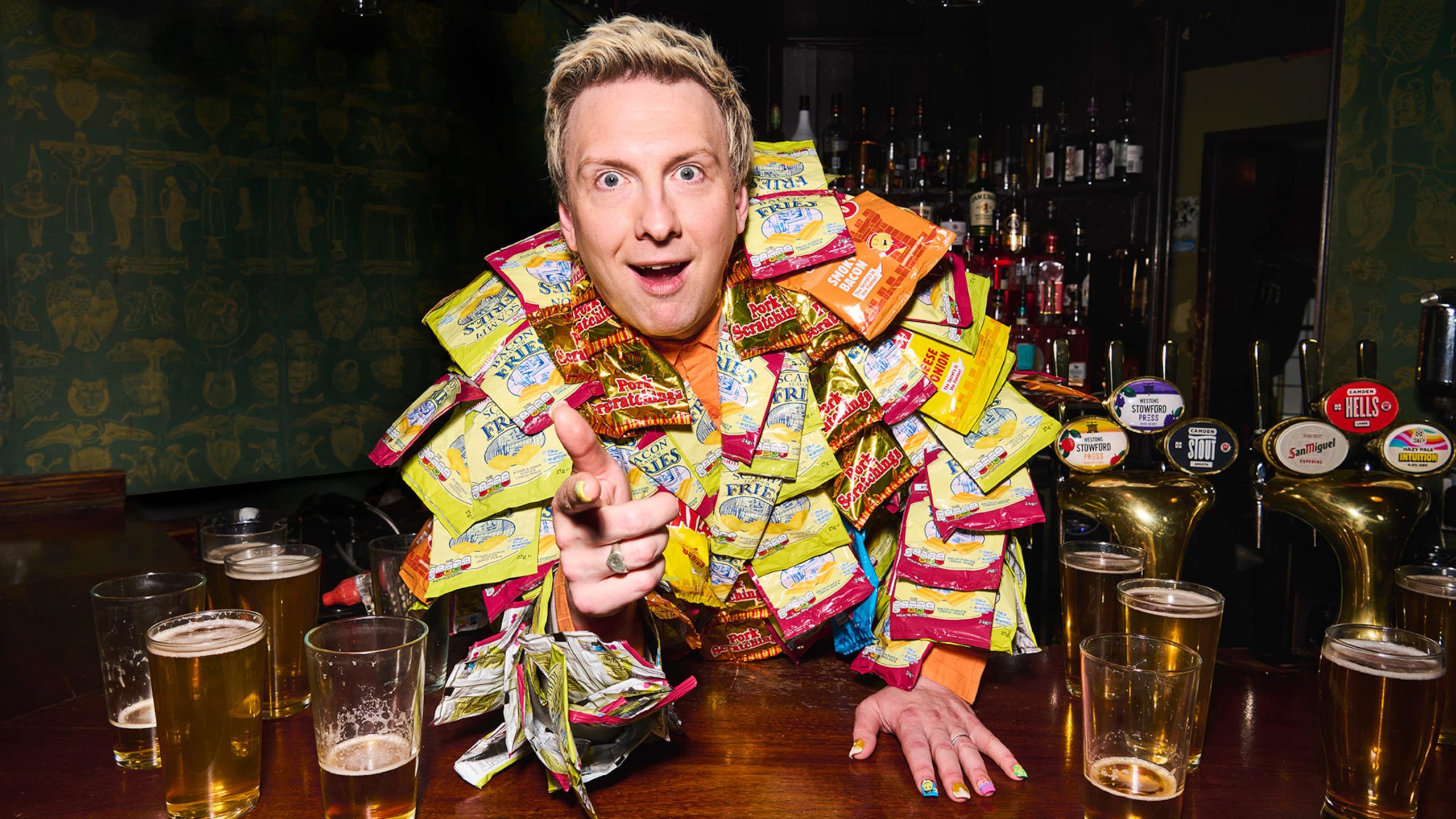
Comedian Joe Lycett is putting money behind the bar at two Manchester pubs this week, as he continues to encourage people to get out and support their local boozers.
The TV favourite – who is also currently one of the stars on The Traitors – announced the news as he bid farewell to his fictional TV pub The Lycett Arms.
On the show, he said: “There are 45,000 pubs in the UK – go and give them some love.”
Joe Lycett then proceeded to list 30 brilliant pubs up and down the country, including two in Manchester, and announced that the drinks are on him this week.
He told audiences: “[This] Friday I’ll be putting a little bit of money behind the bar in all the pubs you’ve just seen. I hope you can have a drink on me.”
The pubs he picked out in Manchester are the iconic old boozer The Peveril of the Peak, and the excellent pub and comedy venue The Old Monkey.
The Peveril of the Peak on Great Bridgewater Street is a real icon in the city centre, with its green tiled exterior and its cosy interiors.
Until recently, it was run by legendary local landlady Nancy Swanick, who died in July at the age of 96.
The Peveril of the Peak pub in ManchesterInside The Pev
Commenting on Joe Lycett’s post about his pub offer, they wrote: “You are all more than welcome at The Pev. Give me a shout and I will sort you out with a pie, Joe.”
The Old Monkey, meanwhile, is famed for its comedy nights run by Trapdoor Comedy Club, and for its open mic sessions, as well as award-winning beers.
The Portland Street pub has also very kindly agreed to match Joe Lycett’s donation, which means double the budget for pints for Mancs.
The Manchester restaurants and bars shortlisted for the MFDF Awards 2026
Daisy Jackson
The Manchester Food and Drink Festival Awards – better known as the MFDF Awards – have revealed the shortlist of local restaurants, bars, cafes, chefs, and more that are up for the city’s ultimate accolade.
Dozens of outstanding local businesses are nominated across 17 categories, covering everything from food trucks to Michelin Star chefs.
The winners will be revealed at the MFDF Awards ceremony on Monday 25 January, which this year will be held at Medlock Square’s City Hall for the first time.
Sponsored once again by Therme Manchester, the MFDF Awards celebrate the outstanding talent in Manchester’s hospitality scene.
Categories have been chosen to showcase new openings, talented chefs and producers, neighbourhood favourites, top restaurants, great pubs, and plenty more.
The shortlist has been selected from a list of submissions by the MFDF Awards judging panel, made up of leading food and drink critics, writers and industry experts.
As well as the public vote, judges will mystery shop venues in a number of categories and will score venues based on their experiences. The mystery shopping and public voting period will end at midnight on 11 January 2027 when the polls will be counted and combined with the judges’ scores and the winner of each category will be chosen.
The awards are now open to public vote on the MFDF website HERE.
Alexa Stratton-Powell, Awards Director of the MFDF Awards, said: “We’re proud to reveal this year’s MFDF Awards shortlists and shine a spotlight on the very best of Greater Manchester’s food and drink scene.
“The awards celebrate the incredible talent, creativity and diversity that make our region a world-class food and drink destination. We’re encouraging everyone to get behind the nominees by voting for your favourites, visiting the shortlisted venues and showing your support for our brilliant hospitality industry.
“We’re also looking forward to bringing the industry together on 25 January 2027 for a fantastic night of celebration and to crown this year’s winners.”
The Community Food and Drink Project of the Year, sponsored by Therme Manchester, is being decided through a separate judging process. The award celebrates initiatives making a positive difference to communities across Greater Manchester, from tackling food poverty and promoting sustainability to improving access to healthy food and bringing communities together.
The Howard and Ruth Award for Outstanding Achievement will also be presented on the night to recognise an outstanding contribution to Greater Manchester’s food and drink industry, with no public shortlist for the category.
The Manchester restaurants and bars on the MFDF 2026 shortlist
1. Affordable Eats Venue of the Year (Sponsored by Therme Manchester)
Sips n Dips in LevenshulmeNoodle Alley in ChinatownCredit: The Manc Group
Al Madina – 76 Wilmslow Rd, Manchester M14 5AL
Noodle Alley – 56A Faulkner Street, Manchester M1 4FH
Sips & Dips – 994 Stockport Rd, Manchester M19 3WN
Que Huong Viet – 76–78 Oldham Rd, Ancoats, Manchester M4 5EB
Kabana – 52 Back Turner Street, Manchester M4 1FR
Bahn Mi 782 – 782 Wilmslow Rd, Didsbury, Manchester M20 2DR
Zaytoni’s – 12 Oldham St, Manchester M1 1JQ
Cafe San Juan – 27 St Petersgate, Stockport, Manchester SK1 1EB
Previous winner – Double Zero
2. Takeaway of the Year
Kool Runnings – 118 Chorlton Road, Old Trafford, Stretford, Manchester M15 4AN
Rita’s Reign – Piccadilly, Manchester M1 1LY
Chicken Run – 6 Yarburgh St, Whalley Range, Manchester M16 7FJ
Viet Deli – 22 Blackfriars Street, Manchester M3 5BQ
Levenshulme Bakery – 842 Stockport Rd, Levenshulme, Manchester M19 3AW
The Post Box Shawarma – 543 Wilbraham Rd, Chorlton-cum-Hardy, Manchester M21 9PP

 Georgina Pellant -
6th July 2023
Georgina Pellant -
6th July 2023