The arrival of Storm Christoph in January 2020 put Greater Manchester under its greatest threat of catastrophe for some time.
Over2,000 homes were evacuated as the region was battered with ice and snow, and water levels in the River Mersey reached their highest levels. According to the Environment Agency, the waterway was just 2cm away from disaster.
Still, if the local situation appeared perilous then, it’s hard to imagine what was running through the minds of residents in 1852 – when parts of Manchester were left submerged in water rising up to bedroom windows.
169 years ago, on February 5, the North-West fell victim to days of torrential rainfall – causing a number of rivers and streams in Manchester to burst their banks.
Peel Park, which runs right alongside the River Irwell, was completely swamped during the bout of adverse weather – plunging the green space 4-6ft underwater.
ADVERTISEMENT
The flooding was so bad that it left some residents stranded from their homes – with locals forced to create makeshift boats and float down the roads to get back to their properties instead.
Ben McGarr, in The Manchester Book of Days, writes: “Those living beyond Strangeways and Salford were forced to find alternative ways to travel home; some sailed up the flooded Great Clowes Street, Lower Broughton Road, and Hough Lane.”
ADVERTISEMENT
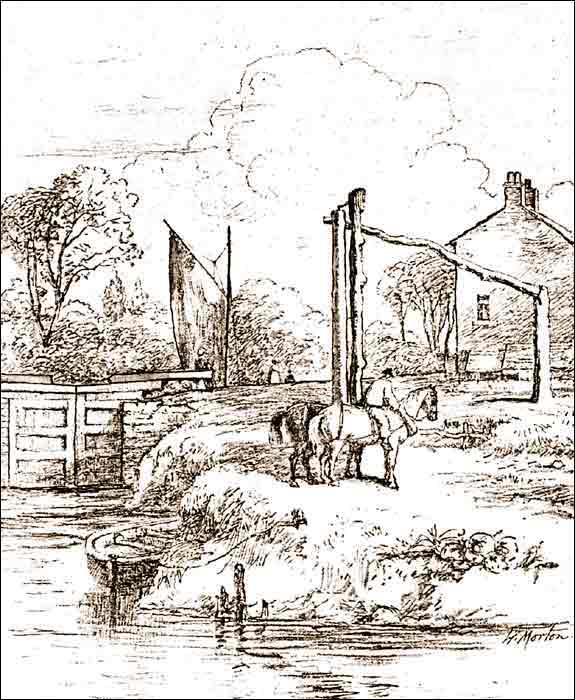
Stickings Lock on the Mersey and Irwell Navigation, c 1850 / Image: Wikipedia
The River Irk, Mersey, Goyt and Black Brook all spilled out onto surrounding areas, with data from the British Hydrological Society confirming an overflow from the River Medlock causing “flooding with some damage”.
It was some of the worst weather to befall the city and and a natural crisis the likes of which many had never seen before.
Indeed, many residents were apparently left frozen in fear by the sight of water gushing out onto the grasslands, not knowing what to do.
ADVERTISEMENT
In Shock Cities, Harold L. Platt explains that some of the homes and farms in Broughton were 6ft below water by the evening of Feb 5, but miraculously, there were no recordings of loss of life. Whilst the residents riding boats back to their homes may not have thought it at the time, things could have actually been much worse.
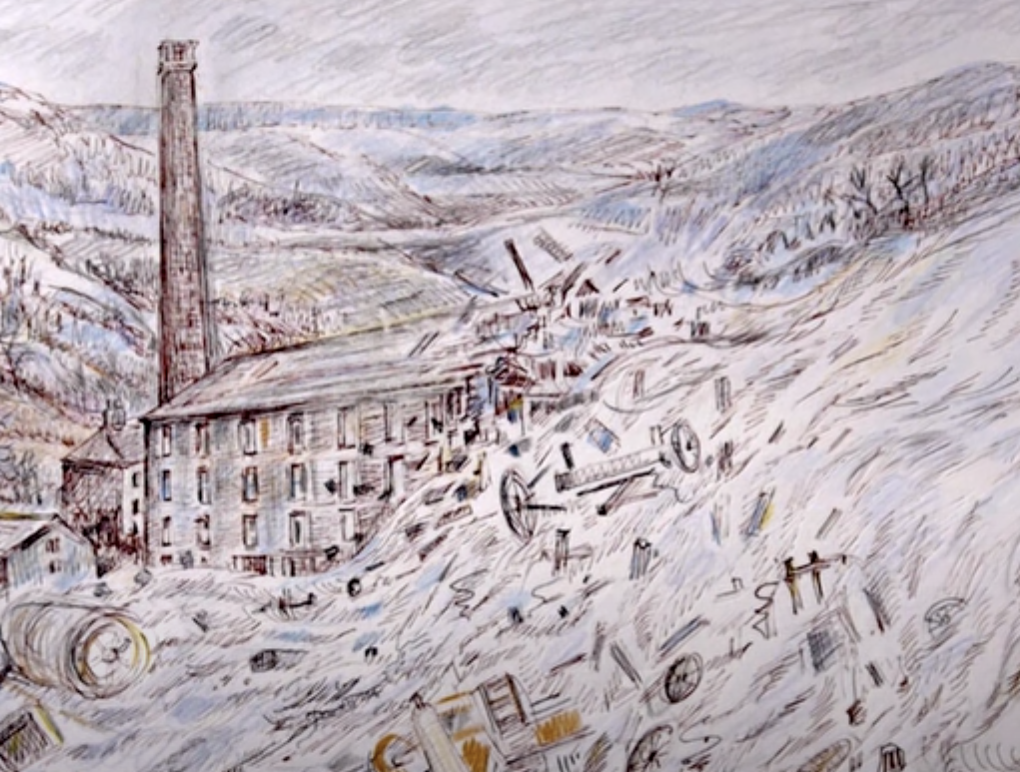
On the same date, much graver consequences occurred further north in Holmfirth, Yorkshire.
After weeks of rain, the area’s Bilberry reservoir eventually burst open on Feb 5 and released 86 million gallons of water into Holmfirth itself – decimating homes and farms and killing at least 81 people (although contemporary newspaper reports may have underestimated the total number of deaths).
The flooding was so bad that it made national headlines – appearing on front pages of newspapers beyond the north.
An inquest found poor construction work on the reservoir to be the culprit – and it still ranks to this day as one of the worst disasters to hit the north of England.
ADVERTISEMENT
Despite its relative obscurity in the modern era, the disaster received renewed attention in 2016 – when the 1852 floodings became the subject of a film titled: Twelve Pounds and Ten Shillings would have Sufficed.
‘If only he was here’: Peter Hook reflects on Ian Curtis as Joy Division join Rock and Roll Hall of Fame
Danny Jones
We were lucky enough to play a part in a bit of music history (albeit only a small one) this week, as we had the privilege of chatting with the one and only Peter Hook of Joy Division and New Order, as the pair were finally admitted into the Rock and Roll Hall of Fame.
A long overdue bit of recognition, if you ask, but a momentous day nonetheless.
Chatting with Hooky and a long-time friend, collaborator, and beloved Manchester-based DJ, Graeme Park, in the aftermath of being named in the ‘Class of 2026’, he was visibly moved and honoured by the announcement. Here’s what he had to say…
Joking from the off by repeating Graeme’s initial question, “How does it feel?” (an absolute tap-in, that one), the 70-year-old bassist and co-founder of both iconic Greater Manchester groups admitted that they “had a couple of false starts”, to put it mildly, but went on to add: “we can only thank our fans.”
Confessing there has been somewhat of a mixed reaction about “what it means” to them and/or in the industry these days, he made it clear that on a personal level, it’s still a huge moment.
Put simply, he said: “Without the fans, we’d all be nothing.”
He also went on to praise the sort of no-nonsense, DIY and unapologetic approach of the Manc music scene, quipping: “You know, what would Simon Cowell have said about Ian Curtis, Bez, Shaun [Ryder] – Ian Brown, for god’s sake?!”
Acknowledging that while no one was necessarily an “accomplished singer” (often the case when you start early and just pursue a passion), his caveat was that “they had heart and soul” and “they embody something deep within us all that has lasted and will continue to last.”
Noting a de facto ‘Renaissance’ that a few names have enjoyed – especially following the passing of certain notable figures – he believes, rather, that they never went anywhere and that Northern crowds and beyond have helped those songs stretch to three, four, even five different generations.”
He’s not wrong: they’ve never stopped connecting with audiences, and they NEVER will.
Once more, it was an absolute joy (again, pardon the pun) to chat with Peter and Parky, who clearly haven’t lost their love for each other, nor this business – even after all these decades.
Congratulations to both bands, Hooky, Bernard Sumner, Stephen Morris, Gillian Gilbert, Tom Chapman, Phil Cunningham, as well as every session musician who’s ever played these tunes and kept them alive.
Last but not least: forever and always, rest in peace, Ian Curtis.
Inside Soho House Manchester as rooftop pool finally opens
Daisy Jackson
Soho House Manchester finally opened its doors to members late last year – but there’s still more to come.
The exclusive members’ club, which costs from £2,400 per year to access, faced several years’ worth of unavoidable delays as it transformed the old Granada Studios.
And even now that members can finally visit the space for networking, dinner and drinks, events, and working, Soho House isn’t actually finished.
Instead, the hotly-anticipated venue is opening in phases – the latest of which is that beautiful rooftop pool, with views overlooking the city from the top of the former television studio.
New images taken inside Soho House Manchester show several of the completed spaces, from lounges with beautiful natural light flooding through skylights, to stylish candlelit dining rooms, to gorgeous bedrooms.
In keeping with the building’s history, the Soho House design team have stuck with a premium mid-century interior, including terrazzo flooring and warm wood details, muted green and orange colour palettes, and chrome furniture.
Have a look inside Soho House Manchester:
Soho House Manchester is now open. Credit: SuppliedBeautiful interiors. Credit: SuppliedA bar space. Credit: Edvina BruzasRestaurant spaces. Credit: Edvina BruzasDetails of Soho House Manchester. Credit: Edvina BruzasMid-century details at Soho House Manchester. Credit: Edvina BruzasInside Soho House in Manchester. Credit: Edvinas BruzasNew spaces are still opening. Credit: Edvinas BruzasThere are 22 bedrooms inside. Credit: Harry Crowder
There are now 22 beautiful bedrooms up on the sixth floor, exclusively available to Soho House Members, which carry on the 1950s heritage design.
As the build continues, members will soon have access to a Soho Health Club with a gym, reformer Pilates studio, smoothie bar, and infrared sauna and steam room.
Every Soho House has a strict no-photos policy to protect to privacy of members – which means unless you fancy forking out £333.33 a month, you might never see inside it beyond the club’s official photography.