How a public toilet became a drinking den for Manchester musicians
From the poster-stapled walls to its graffiti-scrawled toilets, Temple is brimming with character - a rare breed of bar that offers something completely different to any ordinary pub visit.
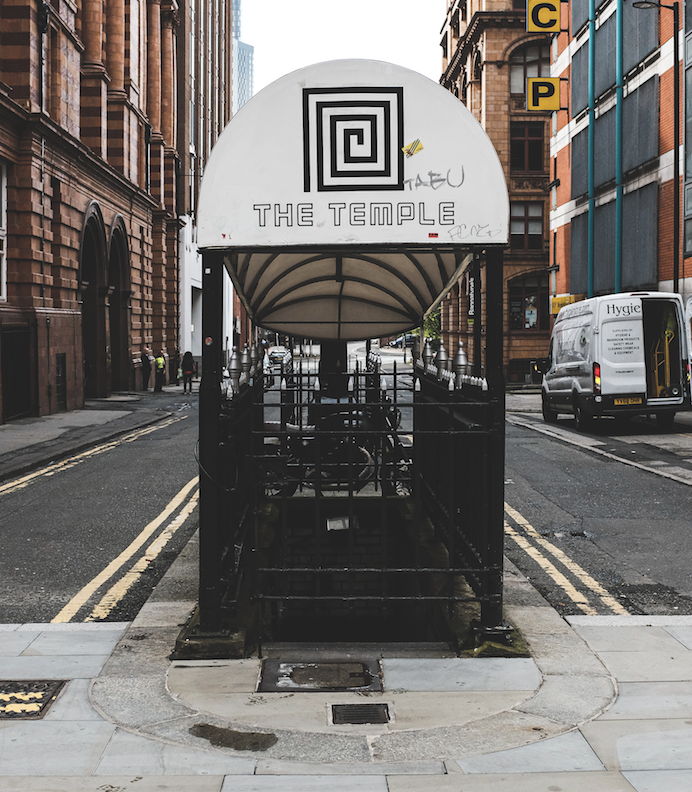
Once an underground public loo, The Temple bar on Oxford Road has become a (slightly unusual) Manchester institution.
The tiny pub has become so much a part of our city’s furniture, we often forget to take stock of what a little gem it is.
So we’re looking back at exactly what – besides its novelty – makes The Temple such an icon of Manchester’s bar scene.
This is its story.
The night I first stumbled across Temple Bar – one of Manchester’s weirdest and most wonderful institutions – will live long in the memory.
ADVERTISEMENT
I’d been travelling on the top deck of the Magic Bus one Saturday evening, when my friend bolted from his seat, grasped the yellow railing and jabbed his index finger against the red ‘stop’ button.
“There,” he said, answering my quizzical expression by gesturing to a underground staircase in the distance.
ADVERTISEMENT
“Change of plan. We need to try this place. I’ve been wanting to go for ages.”
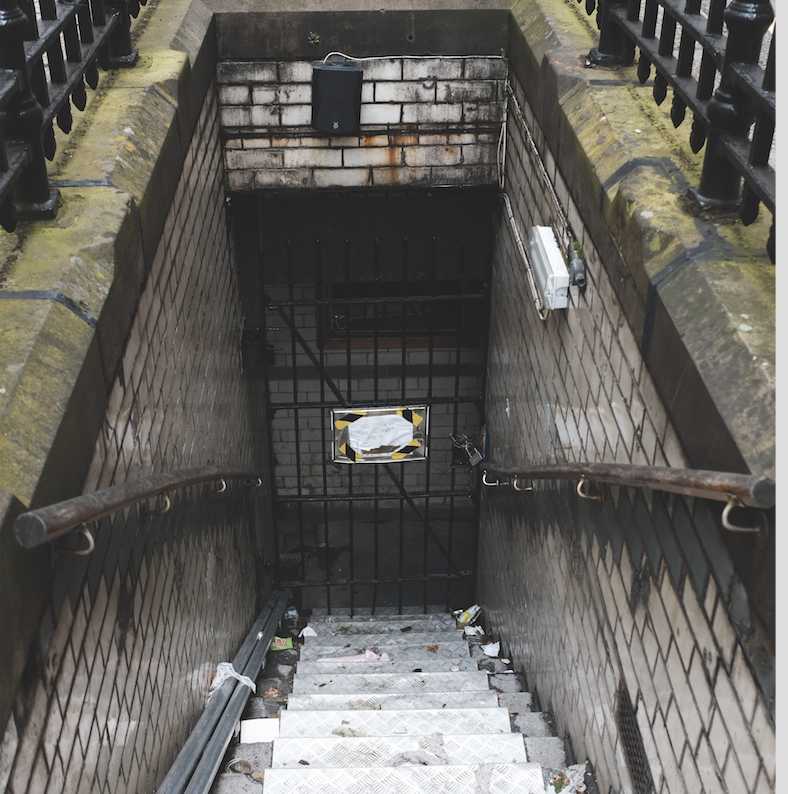
The doors hissed open and I clambered off the bus earlier than anticipated, strolling over to a set of stone steps, encircled by a black railings, covered by a white canopy.
Printed overhead was a name. “The Temple”, it read.
ADVERTISEMENT
We descended, and discovered a whole other world waiting for us at the bottom.
Wikimedia Commons
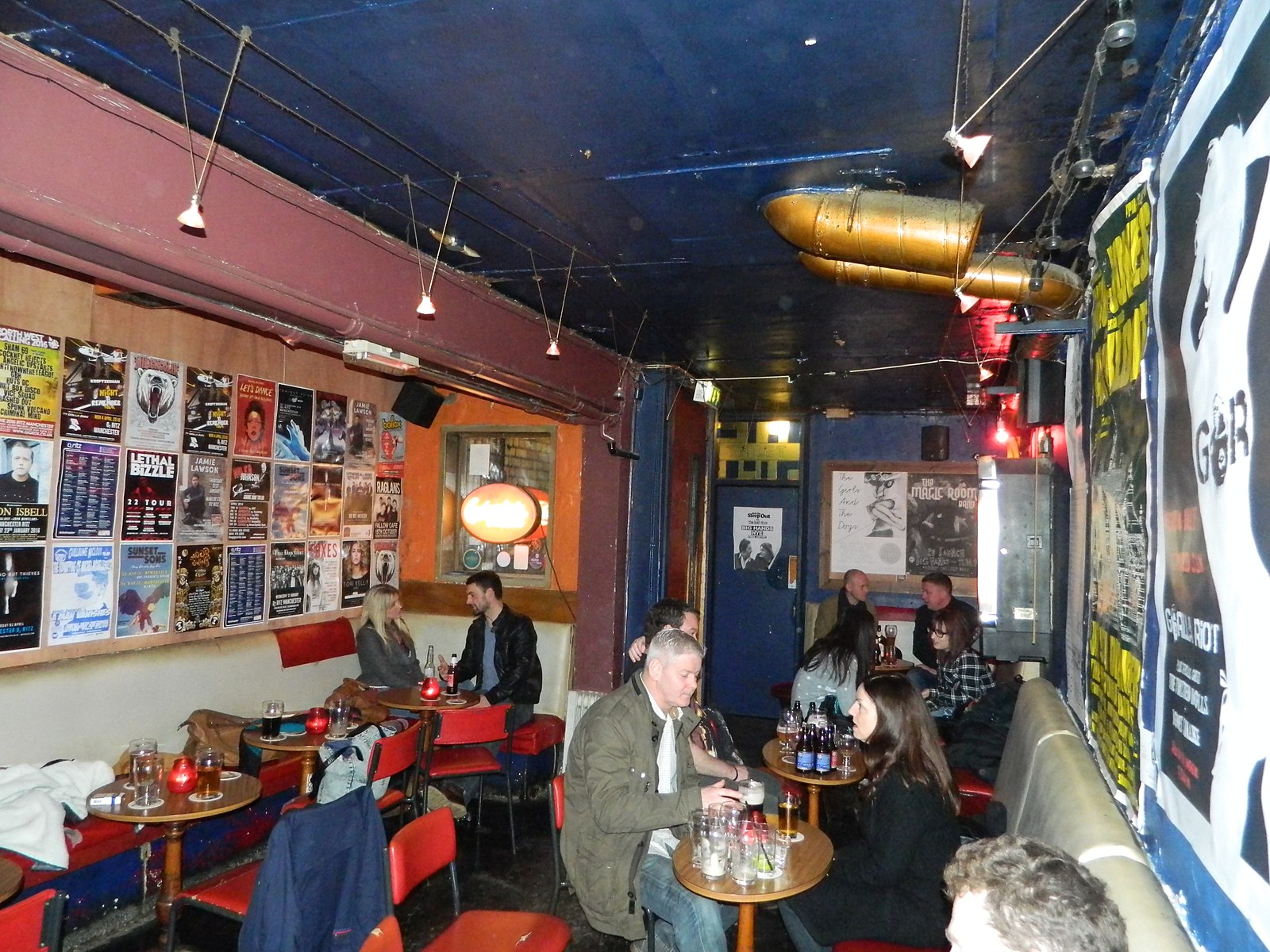
It was unlike any other pub I’d ever visited before; boasting a larger-than-life vibe that defied its diminutive size.
The place served as a public toilet over a hundred years ago during the Victorian era, but as TimeOut so aptly put it: “Temple Bar is anything but crap.”
Ever since being converted into a subterranean drinking den; the venue has become a real favourite among Mancs; earning a reputation for being low on frills but big on music.
Despite the fact that two dozen drinkers in here is a tight squeeze, Temple Bar is nonetheless the proud owner of the best jukebox in the city – serving a wide array of draught and bottled beer brewed from all around the world.
ADVERTISEMENT
This has led to the cubby hole acquiring quite the creative cult following – with the bar being frequented by Manchester’s poets, writers, artists and, most prominently of all, musicians.
Elbow lead singer Guy Garvey is a particularly popular patron, with Temple even inspiring some of the lyrics for his band’s song “Grounds for Divorce”.
There’s a hole in my neighbourhood, down of which I cannot help but fall.
Garvey told the BBC he spent many a night below Great Bridgewater Street penning songs – finding solace in scribbling away in the nether regions of the city centre.
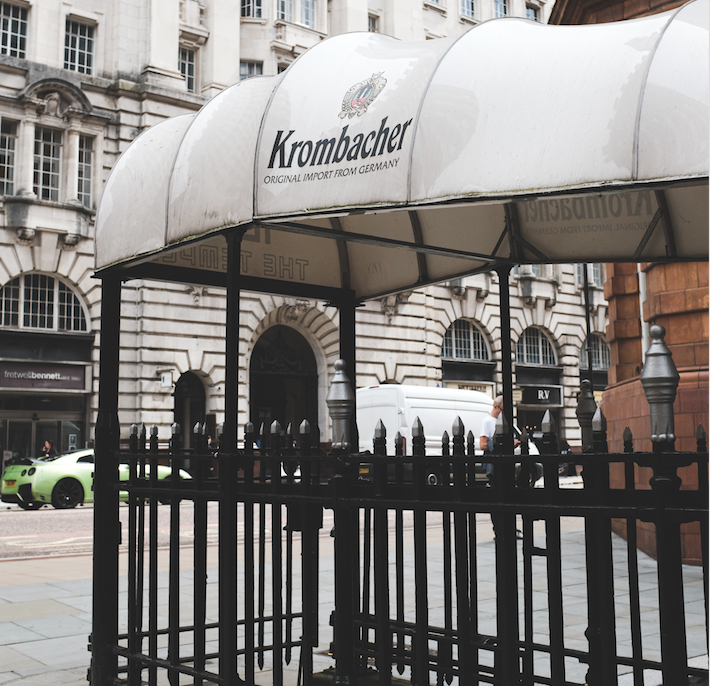
Footage shows a newspaper cutting of the vocalist was even plastered on the side of the pub at one point; accompanied by a speech bubble saying: “Pint of Krombacher please”.
ADVERTISEMENT
Despite being one the smallest watering holes in the city, Temple is among the most intriguing you’re likely to find.
From the poster-stapled walls to its graffiti-scrawled toilets (you won’t need to scroll your phone for reading material in here), it’s brimming with character – a rare breed of bar that offers something completely different to any ordinary pub visit.
In a nutshell, you could describe Temple as tight-knit, offbeat, and obsessed with music.
Or in other words, utterly Mancunian.
Feature
The incredible Asian food market held every month at an 800-year-old church in Stockport
Daisy Jackson
One of Greater Manchester’s most unique food events is taking place monthly in and around the grounds of an 800-year-old church.
Held on the second Friday of every month at St Mary’s Church in Stockport, the Asian Food Market brings together some of the region’s best independent Asian street food traders under one historic roof.
Organised by Eat Good West, the event brings together 16 traders every month, serving up dishes from across Asia.
Visitors can tuck into everything from crispy Taiwanese fried chicken and Korean corn dogs to homemade strawberry mochi.
A real highlight is the Japanese yakitori skewers, grilled fresh to order on a traditional charcoal grill while you wait, served in a cloud of smoke and delicious charred edges.
The market originally launched in Edgeley, but after growing in popularity it moved to St Mary’s around a year ago, giving organisers more space to accommodate the increasing crowds.
For the team behind the event, it’s about more than just great food. They see the market as a way of bringing together Stockport’s diverse communities, creating a space where people can connect over shared meals and discover new cultures through food.
Strawberry mochiA round of drinks for £10Sticky fried chicken
There’s a lively atmosphere throughout the evening, with live music performances adding to the experience. And if Manchester’s unpredictable weather makes an appearance, there’s plenty of additional seating inside the church.
The bar also serves a selection of Asian beers and soft drinks at surprisingly affordable prices. We picked up an Asahi, a Singha and a plum beer for just £10 – one of the best-value rounds we’ve seen in a while.
If you’re looking for an excuse to spend your Friday evening eating your way across Asia without leaving Stockport, this is one event worth putting in the diary.
The former pub in Hulme that’s now a haven for salvaged mid-century treasures
Daisy Jackson
If you’ve ever wondered where old stained-glass windows, vintage toilets, and dazzling chandeliers go when they’re rescued from demolition, the answer is probably Insitu Manchester.
Standing on Chester Road in Hulme, Insitu occupies the former Turville pub, a Grade II listed Victorian building dating back to around 1870.
What was once a neighbourhood boozer is now one of Manchester’s most fascinating places to browse, packed to the rafters with architectural salvage, antiques, and quirky design pieces.
Spread across three floors, every room feels like a treasure hunt. One minute you’re admiring an elegant fireplace, the next you’re standing in front of a huge stained-glass church window wondering if it would fit in your downstairs loo.
The real showstopper is upstairs. The former billiards room has been transformed into a bright, sunlit showroom that feels more like an art gallery than a salvage yard.
Founded in 1984 as a business specialising in reclaimed doors and fireplaces, Insitu has spent more than four decades saving beautiful objects from being lost forever.
Today, its stock ranges from reclaimed timber flooring and cast-iron radiators to stained glass, doors and other architectural features.
The former billiards room is now a beautiful showroomA beautiful mid-century tiled tableVintage sinks and toiletsIncredible stained glass windows at InsituA room packed with mid-century treasure at Insitu in ManchesterPaintings, stained glass, and ornate furnitureThe outside of Insitu in Hulme, ManchesterA glimpse inside Insitu in ManchesterA glimpse inside Insitu in Manchester
During our visit, we spotted a mid-century tiled coffee table, ornate chandeliers, vintage glass lampshades, paintings and fireplaces.
But perhaps the most unexpected room was downstairs, where an entire collection of antique sinks and vintage toilets is displayed. Who knew a loo could be so beautiful?
Part of the fun is that you never quite know what you’ll find around the next corner. Every item has a story, and many have been carefully rescued from buildings that no longer exist.
Come for the fireplaces, stay for the vintage toilets. Trust us.