The announcement that the Premier League would return on June 17 was greeted, by and large, with relish across the country.
Football’s cancellation left a void in our lives that we’ve been trying to fill ever since with podcasts, TV repeats, and, more recently, the Bundesliga.
But whilst the return of elite sport is a welcome one, clubs that sit further down the pyramid are still in panic.
Lower league football is finished for the foreseeable future, with the 2020/21 season still shrouded in uncertainty. It remains a very real and worrying possibility that COVID-19 may ultimately claim some clubs forever.
In the meantime, fans are finding solace in looking back through the footballing archives, distracting themselves with great chapters of history and origin stories.
ADVERTISEMENT
In the case of every club, there’s so much to explore. Football found its feet in separate parts of the country in so many different ways – but the true tale of how the sport took off in Manchester remained hidden until six years ago.
Manchester’s original football club: Hulme Athenaeum
Turton FC was, for many years, believed to be the oldest club in the Lancashire region – founded way back in 1871.
ADVERTISEMENT
But when researchers Gary James and Dave Day elected to delve through the annals of local history in 2014, they discovered the region’s first association football team had been forgotten.
Eight years prior to Turton, there was Hulme Athenaeum.
The memories of Manchester’s original football club have been published in James/Day’s paper, The Emergence of an Association Football Culture in Manchester 1840–1884 – a document that ultimately rewrote football history (and has since been expanded upon in James’ superb book: The emergence of footballing cultures, Manchester 1840-1919).
ADVERTISEMENT
Research shows that Hulme was one of the most impoverished local areas during the 19th century, with the neighbourhood described as being ‘sunk in filth.’
Sir William Thackeray Marriott – an ordained deacon and curate of St George’s Church and champion of working-class rights – helped to introduce sports to the poverty-stricken settlement in the 1850s, with the aim of giving residents an outlet.
This led to the opening of a clubhouse in 1860 – which was given the name ‘Hulme Athenaeum.’
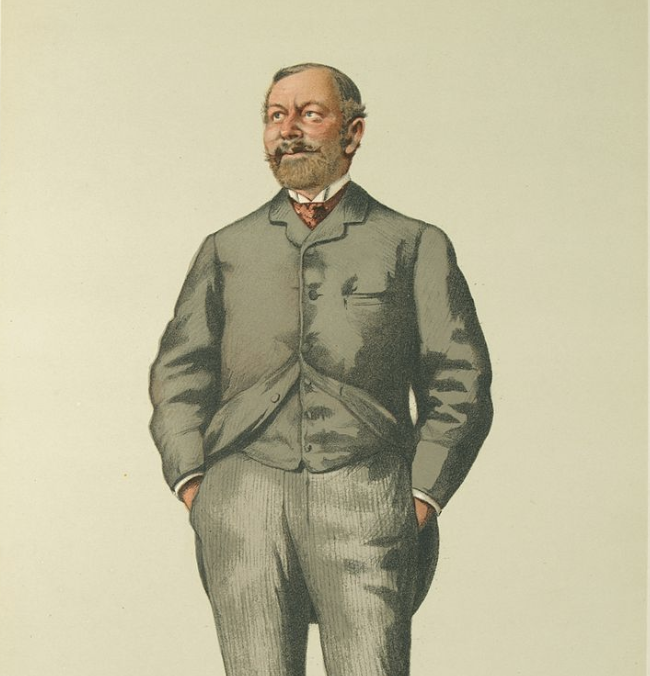
Sir William Thackeray Marriot – A deacon in Hulme and later an MP
In 1863, members of the club began playing an ‘elementary association game’, before eventually introducing dribbling and passing.
Football was far from prevalent in the North-West at the time and was a new activity for some of the players – several of whom seemingly joined the club purely to take advantage of the clubhouse facilities.
ADVERTISEMENT
According to James & Day: “Gas rental collector James Warrington, an early captain of the football club during the 1860s, later admitted he joined ‘for the sake of the gymnasium’.”
Membership was charged at one shilling, and with fifty members in the ranks Hulme Athenaeum ended up developing into an organised, ambitious football club – producing consistently updated records.
Evidence shows they played fixtures every Saturday over the course of five consecutive seasons, competing against the likes of Sale and, a little further afield, Garrick – a team in Sheffield.
With football still in its infancy, rules weren’t exactly concrete, meaning clubs would have to adapt to different regulations when they visited another area; similar to the way you might begrudgingly play along to friends’ Monopoly laws when you’re in their home over the holidays.
One match report from Hulme and Garrick, for example, states that “Sheffield rules” were used.
ADVERTISEMENT
Gary James
After 1873, the name Hulme Athenaeum vanished into the footballing wilderness, but James believes the club’s brief existence was crucial to the development of the game in the region.
He states: “Despite the failure to create a viable fixture list each season, the club did encourage individuals to adopt the game at a time when formal association football, if later chroniclers of the game are to be believed, did not exist in Lancashire.
“Moreover, the club deliberately engaged with lower middle class and working men within a densely populated area of the city.”
Some of the men that represented Hulme continued to play on after the team folded – signing for the second club founded in the city: Manchester Association.
ADVERTISEMENT
Man City Gifts
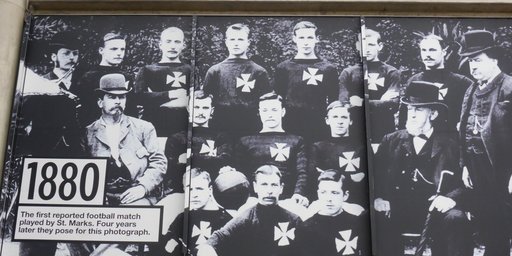
As word travelled and the game of football gathered momentum, people came to watch as well as play; leading to the birth of more local clubs in the 1880s such as West Gorton St Mark’s – who eventually turned into Manchester City (via Ardwick AFC) – and Newton Heath Lancashire & Yorkshire Railway: Who would become Manchester United.
Hulme Athenaeum wasn’t just the club that laid the groundwork for local football. It was also an organisation that proved the first people playing the game in Manchester were ordinary, working blokes.
“While football now might be thought of as a predominantly working class sport, typically football clubs in the 1860s were founded by public schools who also set the rules,” says James.
“The re-discovery of Hulme Athenaeum challenges that perception.”
Feature
The countryside Airbnb where you can have a sleepover with a Shetland pony
Daisy Jackson
Do you like your animals pint-sized and ideally sporting an excellent, tousled hairstyle? Then allow us to introduce you to Basil.
This adorable little Shetland pony lives inside an Airbnb rental, which means he’s ready and waiting for you to join him for a sleepover.
At the cosy accommodation, the bedroom is directly attached to wee Basil’s stable, so you could roll over in bed and give him a little fuss.
Then just outside your door, you’ll find paddocks that are home to Highland cows, Hebridean sheep, horses, pigs, chickens and Norwegian Forrest cats.
Honestly, this place might be paradise for animal lovers.
Known as ‘Basils Barn’, the Airbnb is located in the grounds of a 17th century manor, surrounded by a 60 acre estate.
The owners have mostly rescued the animals, who are strictly kept as pets – so it’s safe to form an emotional attachment to Basil and his farmyard pals knowing they’re in safe hands.
So back to your overnight accommodation. This cosy barn still has gorgeous original features like a flagstone floor, covered in colourful rugs, and traditional stone walls.
Basils Barn also includes a cosy living area. Credit: AirbnbThe outside space at Basils Barn has a firepit and seating area. Credit: AirbnbBasil the Shetland Pony shares an entrance to the Airbnb. Basils Barn also includes a cosy living area. Credit: Airbnb
There’s enough space for four people to sleep between the double bed and a bunk bed, as well as a separate living room/kitchen/diner.
Outside, you can have access to an open outdoor log fire with barbecue grill, and an outdoor tiki hut seating area.
Other amenities include toiletries, toys, books and board games for families, a well-equipped kitchen and free parking.
Some things to bear in mind? There is a literal horse next door, so you might experience some sights, sounds and smells.
And your alarm clock may not be needed, with a cockerel on the estate who will soon let you know when dawn arrives with his crowing.
Basil the pony is usually in his stable – adorable head poking over the low wall that separates him from the Airbnb – from the time you arrive, and he stays there overnight, before he heads back to his field in the morning.
You also have to turn his light out for him when it’s time for bed. Aww.
Inside Great Northern Market, the huge new food hall at Manchester Airport T2
Daisy Jackson
There’s a brand-new food hall in Manchester, and you won’t believe where this beauty is… it’s only at Manchester Airport (!).
The food hall craze has travelled all the way to Terminal 2, bringing a whole host of kitchens for you to enjoy before your flight.
You can tuck in to everything from full breakfasts and brunches (with the obligatory 7am pint, because time isn’t real in an airport), to burgers and street food.
Essentially, you can travel around the world before you’ve even boarded the plane.
It’s all part of the terminal’s wider £1.3bn transformation, which now includes a first-of-its-kind market hall-style food and drink offering, with six kitchens around a central dining area, plus a Gooey kiosk and a takeaway hatch.
Behind the scenes, Great Northern Market is powered by a community of Northern talent. All menus have been crafted by Manchester-born executive chef Amy Tomkinson.
Here are all the new traders who have moved in to the Great Northern Market.
Gooey
This one surely needs no introduction – Gooey is one of Manchester’s top (and most popular) bakeries, famed for its chunky cookies, fluffy doughnuts, and cinnamon buns.
It’s the first thing you’ll see as you enter the Great Northern Market, a pretty tiled kiosk with its signature neon sign overhead.
As well as fresh bakes and their limited-edition specials, this is the spot to grab a pre-flight coffee too.
La Casita
This Mexican street food spot has been created with the help of Madre’s Sam Grainger, and is serving a menu of burritos, loaded nachos, and salads.
A highlight is the beef birria nachos – authentic Mexican corn tacos loaded up with refried beans, pink pickled onions, guacamole, cheese sauce, salsa norteña and jalapeños.
Nashville Hot House
There’s another local name involved with Nashville Hot House – Yard & Coop have brought their fried chicken prowess to Manchester Airport.
At the Great Northern Market, you’ll find classic buttermilk chicken burgers, a spicy little K-pop thigh burger, and chicken tenders.
There’s also salt and pepper loaded fries and absolutely loads of different dips.
Napoli Street Pizza
There’s been a real lack of pre-holiday pizza at Manchester Airport until now.
Napoli Street Pizza makes its Neapolitan pizzas using a a 55% hydration method, and a biga dough that is fermented and used to create the dough daily.
There are loads of different flavours to choose from, like a hot honey and pepperoni, plus flatbreads, Caesar salads, and more.
Kouzina
Kouzina is importing flatbreads from Greece for the most authentic possible souvlaki experience, like a lamb kofta souvlaki with chopped tomatoes, pink pickled onions, cucumber, zhoug, tahini, garlic mayo, and coriander.
You can also order big salads here, mezze platters, halloumi fries, and flatbreads with dips.
You’ll feel like your in Santorini before you’ve even stepped on the plane (… okay, that might be a stretch).
Black Iron Grill
Smash burgers and skin-on fries are up for grabs at this next Great Northern Market trader, Black Iron Grill.
These burgers are served in glazed brioche buns, with melt-in-your-mouth beef patties topped with a number of different options.
You can also order a side of mac and cheese or some filthy fries loaded with crispy bacon bits, crispy shallots, and garlic mayonnaise.
Palms Cafe
Last but not least – and definitely not something we thought we’d ever see in Manchester Airport – is Palms Cafe.
They’re whipping up big bowls of ramen, and other noodle dishes, with toppings like satay chicken, sweet chilli king prawn, crispy tofu, pulled Korean beef, crispy fried chicken, and miso roasted sweet potato.
Noodles include hearty ramens, katsu curries, Pad Thai, and sides like prawn crackers.