Greater Manchester has been handed a pot of more than £97 million to fund the construction of thousands of new homes right across the region.
The money has been supplied via the Brownfield Housing Fund (BHF) – a scheme designed to support building on brownfield sites – and will go towards creating 2,700 Greater Manchester properties.
Manchester borough will receive £7.82m as part of the second tranche of funding – which will be used to deliver 500 homes.
BHF money will also go towards 69 low carbon homes in the Silk Street Development in Newton Heath – built with solar panels, Ground Source Heat Pumps, electric vehicle charging points, and mechanical ventilation with heat recovery to reduce utility costs.
ADVERTISEMENT
275 homes in the Back of Ancoats area and 39 homes in Ancoats Dispensary will also benefit from the fund.
A further five schemes are on the reserve list – representing a further pipeline of 1,336 new homes.
ADVERTISEMENT
Manchester City Council had pledged to deliver at least 6,400 affordable homes between 2015 and 2025 – with a total of 32,000 homes expected to be built during this period overall.
Cllr Suzanne Richards, Manchester City Council’s executive member for housing and regeneration, said the BHF funding was “very welcome”.
“The challenges in urban areas of remediating brownfield land can impact on the financial viability of affordable housing,” the Councillor stated.
ADVERTISEMENT
“This funding will allow us to support the delivery of much-needed council, social and affordable housing to meet growing demand in the city.
“Everyone in this city deserves a safe, secure and affordable home and it is for this reason we have set an ambitious affordable home building target of at least 6,400 homes between 2015 and 2025.
“Despite the challenges of the last year we are on track to exceed that target. This is testament to the strength of the partnerships that Manchester has built with our social landlords in the city and our commitment to back affordable house building with Council land and resources.”
The full list of proposed sites under Tranche 2 of Greater Manchester’s Brownfield Housing Fund allocation can be found here.
Feature image: Collyhurst Village development illustration.
News
Travel warning issued as tens of thousands to descend for Manchester Half Marathon
Daisy Jackson
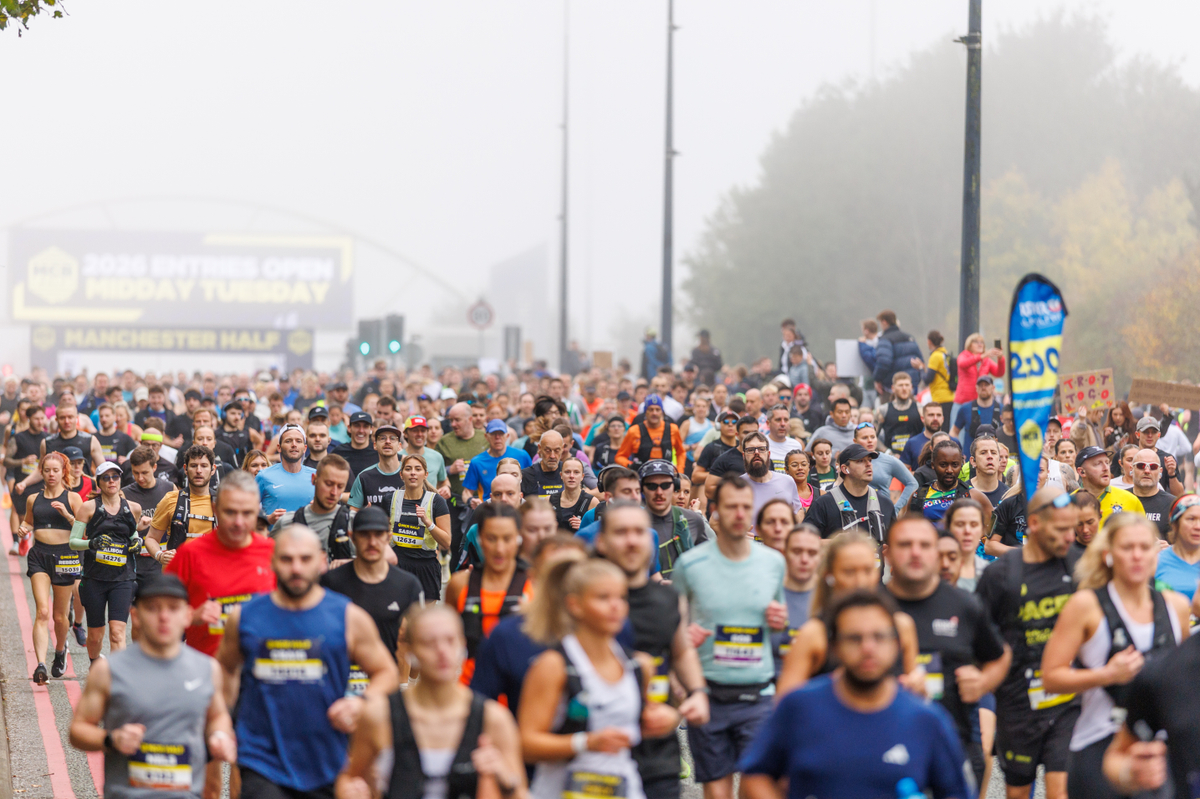
A travel warning has been issued ahead of the Manchester Half Marathon this weekend, with tens of thousands of runners and spectators expected to arrive in the city.
People are being urged to plan their journeys ahead of time, with significant road closures in place from the city centre as far out as Sale.
Road closures – and subsequent bus diversions – will also affect parts of Stretford, Chorlton, Trafford, and surrounding areas.
Around 32,000 people are expected to take part in the Manchester Half Marathon this Sunday, with thousands more coming out to cheer the runners on.
Transport for Greater Manchester is advising people that the Bee Network trams will be the best way to get around over the weekend.
Extra trams will be operating to provide as much capacity as possible.
Road closures and bus diversions will start on Saturday 3 October and continue until the actual race day on Sunday 4 October, lifting fully by 8.30pm.
Tens of thousands of runners and spectators will descend on Manchester for the half marathon
Earlier this year, the Manchester Marathon led to a record-breaking day for Metrolink trams, with the highest number of passengers ever recorded on a single day in the network’s history.
Whether running or cheering, people are advised to use the Bee Network app to plan their journeys and are strongly encouraged not to drive within the affected areas.
Steve Gilholme, Head of Events at Transport for Greater Manchester, said: “The Manchester Half Marathon is another one of those special occasions where the people of Greater Manchester and beyond come together, with thousands of people taking on the challenge and raising money for good causes, while many more will line the route to cheer them on.
“This does mean the city centre and especially trams will be incredibly busy so please plan ahead and give yourself extra time to make journeys.
“The Bee Network app and website will be the best places to get the latest travel information and tap and go contactless payments are the quickest and easiest way to pay.”
You can see all the road closures for the Manchester Half Marathon HERE.
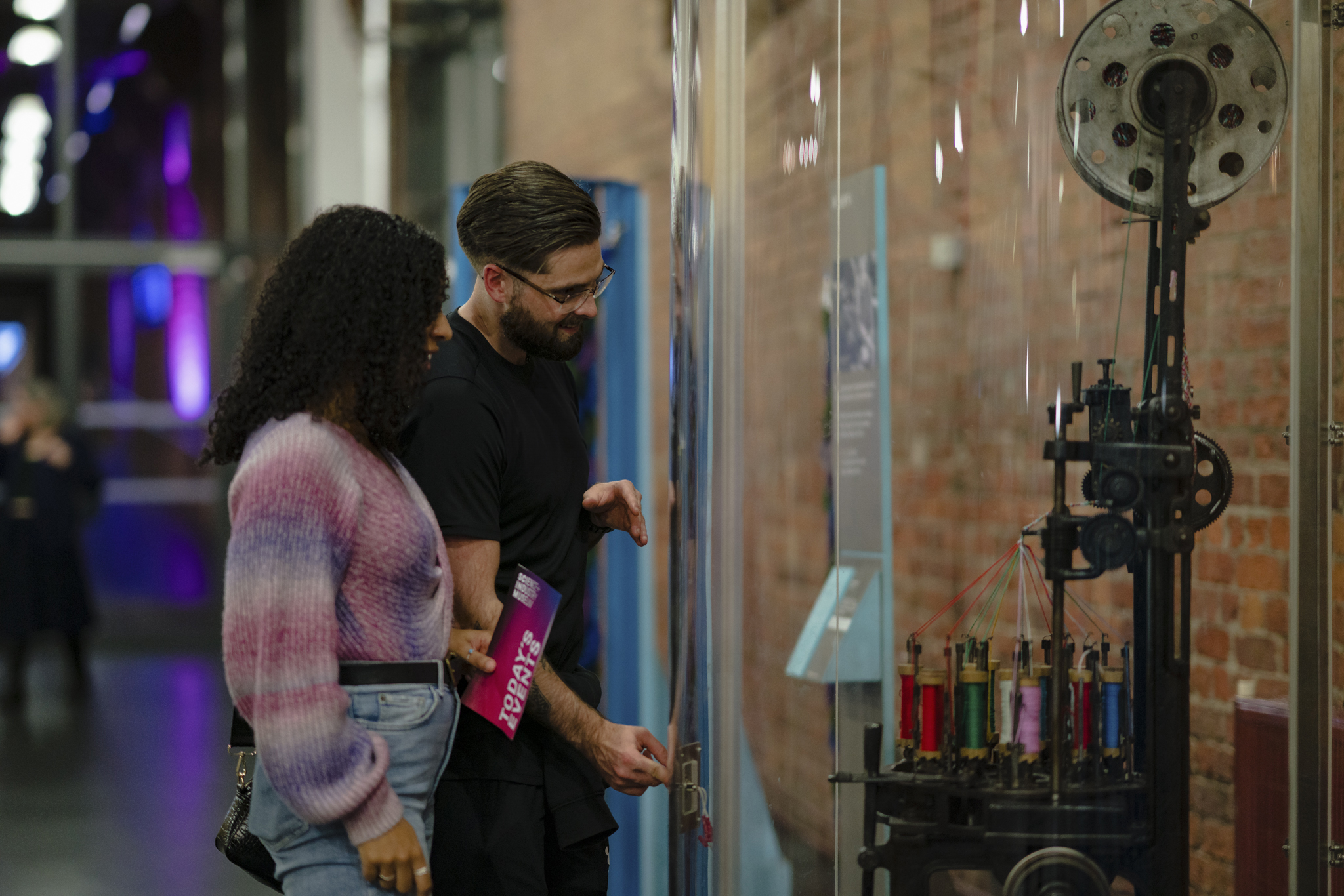
Funded by the Department for Culture, Media and Sport (DCMS), the 14 national museums of the UK are all located in England – including the Imperial War Museum North, and the Science and Industry Museum in our region – and free entry to was first introduced all the way back in 2001, with millions of visitors having benefitted since.
National museums are said to add more than £1 billion a year to the economy, and bring in visitors from all over the world.
In fact, seven of the UK’s 10 most visited museums are national museums, and 7.1 million people visited the Natural History Museum and 6.4 million visited the British Museum in 2025 alone.
The Government has announced that all national museums in the UK will remain free for everyone to visit / Credit: Science Museum Group | Wikimedia Commons
Earlier this year though, the Government committed to working with local leaders and the museum and tourism sectors to explore whether charging overseas visitors could help museums’ finances.
But following this, it’s now believed that charging could deter visitors, and that the impacts and benefits would ‘not be felt equally’ across the sector.
Instead, the free entry will be funded by the £1.5 billion Arts Everywhere Fund – which is providing £760 million for museums – while £600 million of infrastructure funding is supporting national museums and DCMS-sponsored cultural organisations.
The latter funding will be used to address critical maintenance and works to estates, and enable institutions to deliver on their commitments to share collections with visitors from around the world.

 The Manc -
26th March 2021
The Manc -
26th March 2021