Health ministers said they believe there is likely “about a million people” in self-isolation across the UK right now.
Following the televised Downing Street news conference held by Prime Minister Boris Johnson yesterday, Health Minister Gillian Keegan made an appearance on Sky News this morning to discuss the rising number of COVID cases across the UK.
Official figures released yesterday showed that the UK recorded 218,724 positive cases over COVID-19 in the latest 24-hour period.
Ms Keegan therefore made the self-isolation numbers prediction based off this.
“We don’t actually collect that data on a daily basis, but it’s obvious if you look at how many people tested positive yesterday, about 215,000, that they’ll all be self-isolating and obviously from the previous days,” Ms Keegan told Sky News this morning.
ADVERTISEMENT
“So it’s about a million people probably are self-isolating right now.”
Health Minister Gillian Keegan says at least one million people are currently in self-isolation with #COVID19.
The predicted figures of those in self-isolation comes as it is understood, and has been reported in The Telegraph and several other national media outlets, that the government is expected to make changes to testing rules today, which means that those who test positive on Lateral Flow Tests will no longer need a follow-up PCR to confirm.
ADVERTISEMENT
Awaiting PCR results is said to be a cause of delay to the official start of isolation for hundreds of thousands of people.
At present, people without symptoms who test positive on a Lateral Flow test are asked to order a PCR test, and are then told to only begin their isolation period when they get the PCR result, which effectively requires them to isolate for longer than seven days.
Growing delays in getting PCR test results have also been widely reported across the UK.
ADVERTISEMENT
But, it has now been reported that health officials have drawn up plans to limit PCR tests to those showing symptoms, which will allow those who are asymptomatic – about 40% of cases – to return to work more quickly.
People who test positive on lateral flows will still need to isolate for at least seven days, and Ms Keegan told Sky News that people will need to register their positive Lateral Flow results.
Health Minister Gillian Keegan says a "surge in demand" is behind delays to waiting times for PCR results. https://t.co/Na1rK6EJP2
The news of the expected number of people currently in self-isolation also follows the confirmation that 17 hospitals in Greater Manchester have taken the “temporary measure” to pause some non-urgent surgeries and appointments, largely due to staff shortages after COVID cases have “risen sharply” in the region.
Manchester Royal Infirmary, Salford Royal, and North Manchester General are among the 17 hospitals pausing non-urgent surgeries.
Read more:17 hospitals in Greater Manchester pause non-urgent surgeries as COVID cases rise
ADVERTISEMENT
The predicted current self-isolation numbers also come after multiple hospitals across the country declared critical incidents over the weekend amid warnings the NHS is “in a state of crisis”, as well as a growing number of industries – including education, public transport, retail, hospitality, and NHS and healthcare – reporting being affected with mass staff shortages.
Greater Manchester Combined Authority (GMCA) said that in some hospitals in our region, more than one in five patients have COVID, and around 15% of hospital staff are off ill or isolating.
Looking nationally, the chief executive of the NHS Confederation said there are “unprecedented” health worker shortages, while staff still able to come in are said to be “exhausted” after giving up their days off.
Prime Ministers Questions (PMQs) will commence in the House of Commons at 12pm today.
Andy Burnham introduces new rules to tackle ‘rip-off’ parking charges
Daisy Jackson
City centre parking is at a premium, especially in a city like Manchester – but we’ve surely all made honest mistakes when paying and been slapped with eye-watering fines as a result.
Well now, Andy Burnham has announced a new Private Parking Code of Practice, which will clamp down on ‘rip-off’ private parking charges.
It will also make it easier for drivers to challenge unfair charges, capping charges for ‘smaller slip-ups’ at £20, and scrapping charges altogether on appeal for ‘honest mistakes’.
The new Code will get drivers a guaranteed five minutes to decide whether to park and 10 minutes to leave once their session ends.
Under the new Private Parking Code of Practice laid in Parliament today, you’ll be able to appeal to have all charges scrapped for honest mistakes like stopping briefly to check directions, and for situations like a medical emergency, breakdown or broken ticket machine.
Then charges will be capped at £20 for other mistakes such as forgetting a parking permit, entering the wrong vehicle’s registration or forgetting to confirm it in the machine when parking.
The Code also freezes the maximum parking charge at £100. Operators who don’t comply risk losing access to DVLA data, meaning that even if they issue a charge, it will be far more difficult to identify the registered owner to pursue payment.
Data shows just under 17 million private parking charges were issued in the UK last year alone.
Prime Minister Andy Burnham said: “Being a few minutes late back to your car or typing one digit of your numberplate wrong shouldn’t end with a hefty fine landing on your doormat.
“These charges leave people feeling ripped off and out of pocket, so I’m putting a stop to them.
Andy Burnham introduces new rules to tackle ‘rip-off’ parking charges. Credit: Unsplash, Samuel Isaacs
“We are introducing clearer rules, longer grace periods and lower charges for genuine mistakes, while going after the deliberate scams that rip drivers off.”
Secretary of State for Housing, Communities and Local Government Angela Rayner said: “Parking should be straightforward, not another everyday hassle. These changes mean drivers get a fairer deal, protected time to park and leave without fear of being unfairly charged, and confidence that private parking providers are held to a higher standard.
“It’s yet another step forward in this government’s plan to take the stress out of everyday life and ease the pressure on people’s pockets.”
Minister for Consumer Action, Kate Dearden, said: “Nobody works hard for their money just to be deceived by a dodgy trader, and this is exactly the kind of everyday rip-off this government is going after.
“By making it easier to take action against car clocking, we are protecting consumers’ hard-earned money and supporting businesses that play by the rules.”
Two teens arrested after stabbing of 14-year-old boy in Manchester city centre
Emily Sergeant
Two teenagers have been arrested following the stabbing of a 14-year-old boy in Manchester city centre over the weekend.
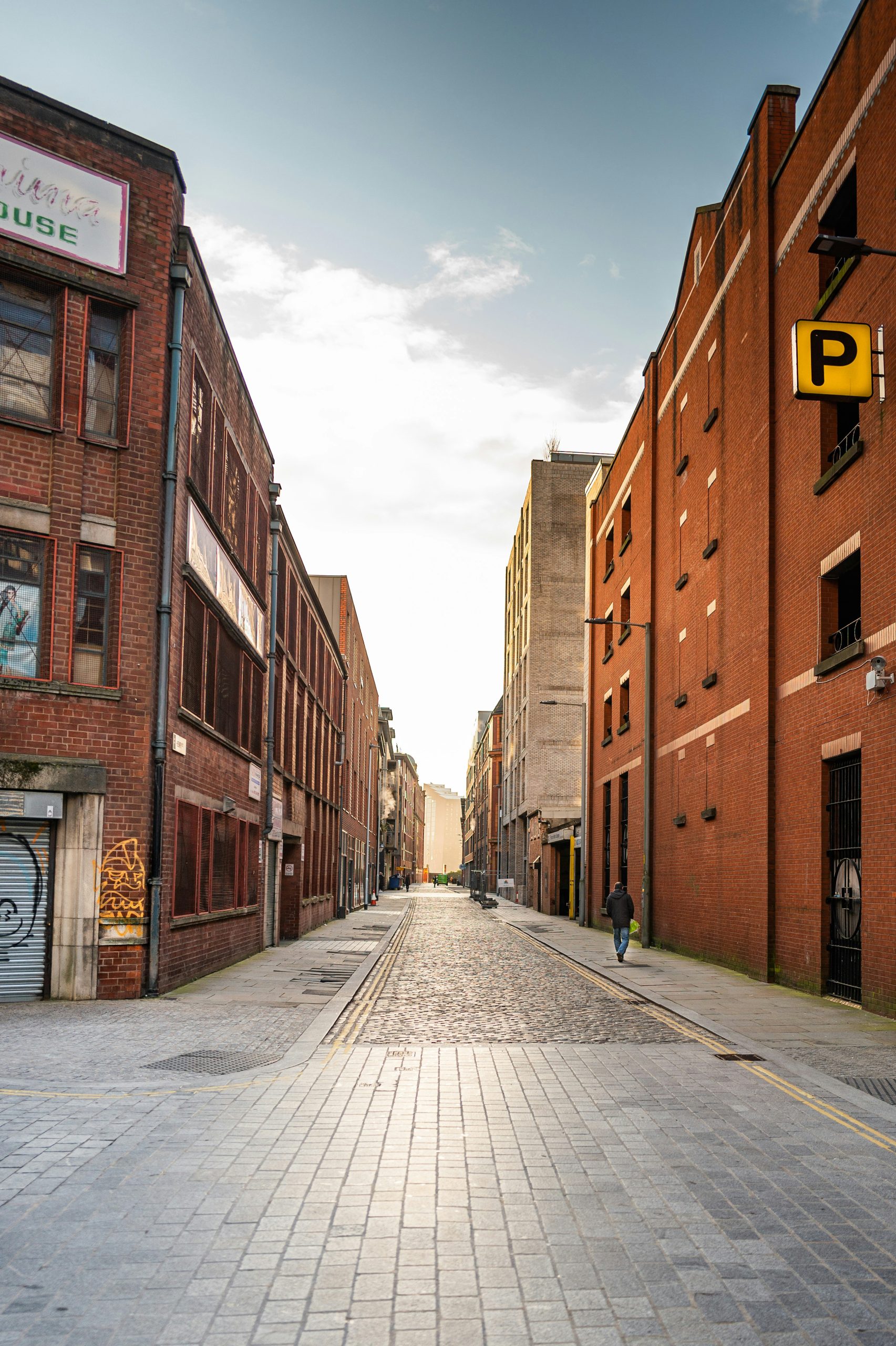
In case you need bringing up to speed first, at around 3:15pm this past Saturday afternoon (17 October 2026), officers from Greater Manchester Police (GMP) were called out to reports of a stabbing on the ninth floor of the Arndale carpark in Manchester city centre.
Emergency services attended the scene, and a 14-year-old boy was taken to hospital with injuries consistent with a stab wound.
Thankfully, the victim’s injuries are not believed to be life-threatening or life changing, but an investigation and enquiries are ongoing.
Police conceded that this will ‘understandably’ cause concern in the community, but has assured the public that they believe this to be an ‘isolated incident.
And now, it has been confirmed that two teenage boys, also aged 14, were arrested on Sunday night (18 October) on suspicion of grievous bodily harm, and tat this time, they are currently in custody for questioning.
“We’d like to thank the local community for their support during our investigation as well as the passersby who helped the victim following this incident,” commented Detective Inspector Sean McFadden, of GMP’s City of Manchester district.
“Your quick-thinking undoubtedly saved the victim from potentially life-threatening injuries.
“We appreciate that incidents of this nature can cause concern and we’d like to reassure the public that we understand this was an isolated incident and there is no wider threat to the community.
“Officers worked quickly and arrested two juveniles on Sunday, and they currently remain in custody for questioning.”
Anyone with information is asked to contact police on 101, quoting log 2050 of 17/10/2026, or via the LiveChat function. Alternatively, contact Crimestoppers anonymously on 0800 555 111.

 Emily Sergeant -
5th January 2022
Emily Sergeant -
5th January 2022