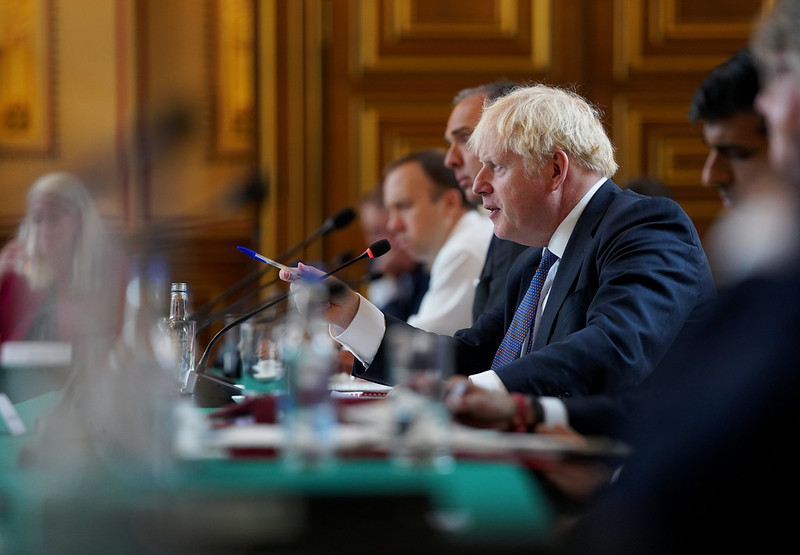
In an address to MPs live in the House of Commons, Mr Johnson has announced a new set of targeted restrictions – which have been the topic of widespread speculation over the past week or so and particularly today – for cities and towns in England in an attempt to control the spread of coronavirus (COVID-19).
Each tier under the newly-announced system has its own set of rules determined by an alert level: ‘medium’ (Tier 1) ‘high’ (Tier 2), or ‘very high’ (Tier 3).
Mr Johnson said that he does not want to go into a second full national lockdown – including closing schools and businesses and telling people to stay at home – as this would not be “the right course”. He did however say that letting the virus “rip” would lead to an “intolerable death toll” and the NHS would be under such a strain that medics wouldn’t be able to devote themselves to treating other ailments.
“We must act to save lives, and the evidence shows in changing our behaviour… our actions are saving lives.” he said.
Speaking to BBC News ahead of the announcement, Mayor of Greater Manchester Andy Burnham said officials in the area were “glad that government has listened”.
ADVERTISEMENT
“We had no evidence that hospitality was the primary course of spread in our city region,” he said.
“However, it’s important to say that any restrictions will choke off trade to our pubs, restaurants, even our shops. So, any restrictions must come with a full economic support package otherwise we are going to see a risk of redundancies and business failure running up to Christmas.”
He continued by stating that he feels that Tier 2 is “still a major restriction” for Greater Manchester.
ADVERTISEMENT
Mr Johnson confirmed that the three tier system and the whole package of measures will also be voted on in parliament before coming into force.
Here’s how each of the three tiers work:
Tier 1
Areas that fall into Tier 1 – which Mr Johnson said “will cover most of the country” – will see residents living in these areas required to adhere to national restrictions.
This includes the “rule of six”, the 10pm curfew, and social distancing measures.
Tier 2
Tier 2 will cover areas where interventions are already in place – including in Greater Manchester – and will see all mixing between different households or support bubbles indoors stopped.
ADVERTISEMENT
The “rule of six” will apply outdoors, as well as in private gardens.
It has been confirmed that Nottinghamshire, Cheshire East and West, and High Peak will also move to the high alert level as part of Tier 2.
Tier 3
This is the highest alert level and will apply where transmission is rising rapidly and the NHS could be under “unbearable pressure”.
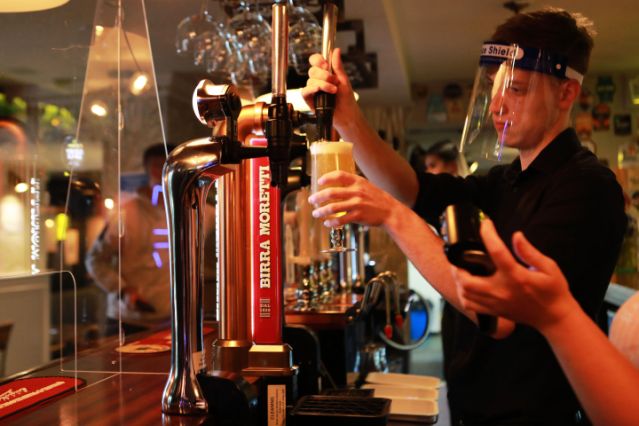
Tier 3 will see people banned from socialising with other households, both indoors and in private gardens, while bars and pubs will be closed, unless they can operate as restaurants. Residents will also be advised against travelling in and out of these areas, while it will be up local politicians as to whether other leisure venues such as gyms and casinos should also close.
However, non-essential shops, schools and universities will remain open.
ADVERTISEMENT
It has been confirmed that the Liverpool City Region is the first to be placed in Tier 3 and this comes after numbers have risen sharply in recent weeks, with Knowsley recording 944 cases per 100,000 people in the two weeks to 4th October (the highest in the country).
The restrictions for the Liverpool City Region will take effect from Wednesday.
Boris Johnson has announced his plan to "simplify and standardise" #COVID19 rules with a new three-tier alert system.
The First Tier will "cover most of the country" and includes most national measures, such as the rule of six and 10pm curfew.
A postcode checker will be launched on the government’s website to advise people what guidance applies to their area, and every local authority will be put in a Tier by the end of Monday.
In his final message to the country, Mr Johnson said: “The weeks and months ahead will continue to be difficult and will test the mettle of this country.”
But he adds: “I have no doubt at all that together we will succeed.”
ADVERTISEMENT
___
For the latest information, guidance and support during the coronavirus (COVID-19) pandemic in the UK, please do refer to official sources at gov.uk/coronavirus.
#HandsFaceSpace
News
Latest wave of ‘Evening 4’ Ricky Hatton lineup in memory of the legendary Manc boxer announced
Danny Jones
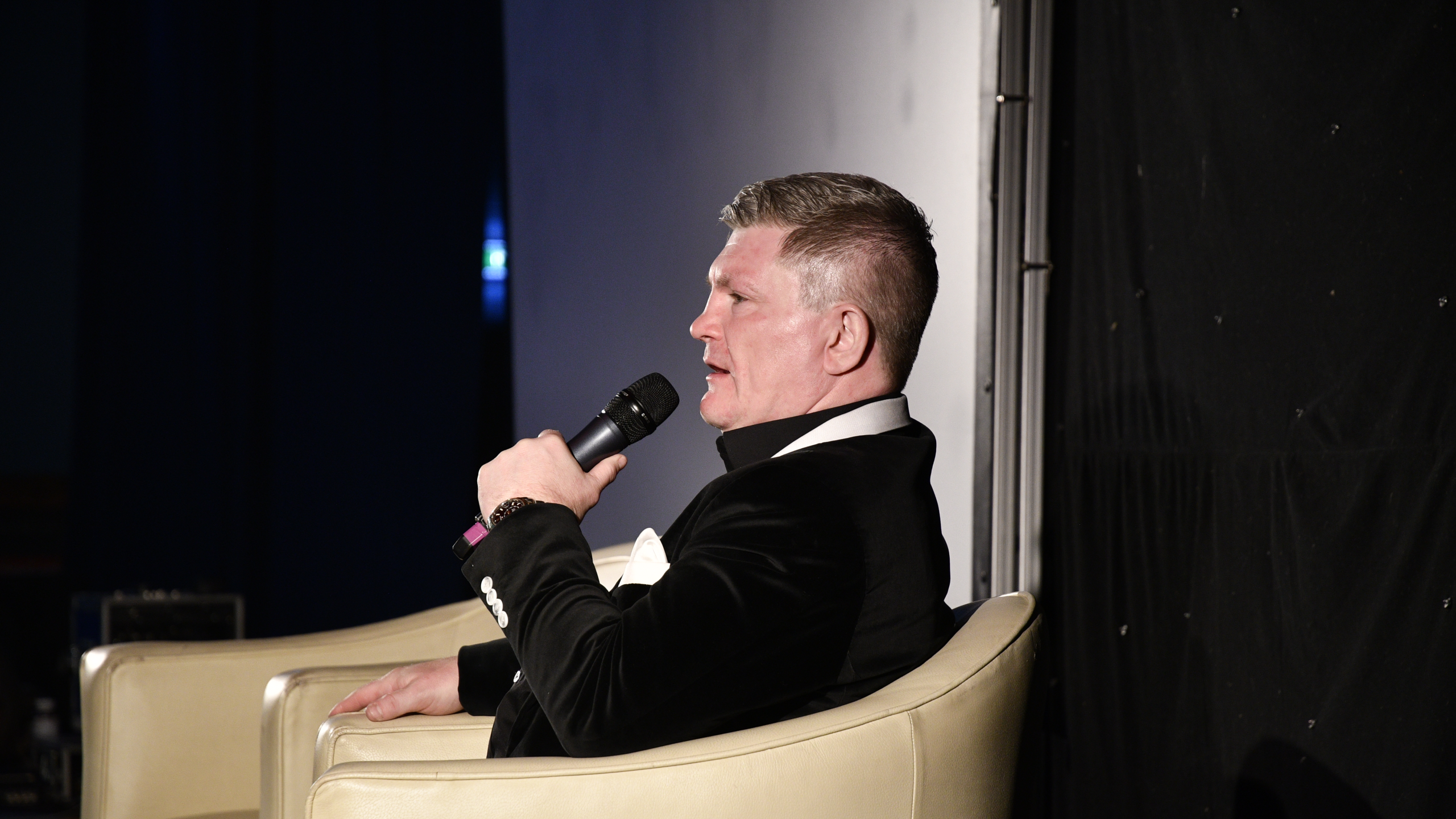
Manchester is set to host a night of remembrance and celebration in honour of the late, great, local boxer, Ricky Hatton, and now a superb second wave of names has been added to AO Arena’s lineup.
Coming this summer, the legendary Manchester arena – where Hatton enjoyed so many of his iconic moments – will be holding the first-ever ‘Evening4Ricky’ later this year.
Held at the legendary sports and live entertainment venue just in time for summer, we still only know bits and pieces about what’s in store, but a whole host of familiar Manc faces, famous British names, and figures from the world of sport have now been announced.
Sharing the news on social media, AO Arena said: “Join us for an unforgettable night of entertainment as Manchester comes together for Evening4Ricky.
“This will be a spectacular, unique celebration of the life, spirit and legacy of one of the city’s most beloved icons – Ricky ‘The Hitman’ Hatton.”
With seats priced at £25, fans are being encouraged to join the early bird sign-up to secure access to discounted tickets.
As you can see, now confirmed for the evening are the likes of Man United legend, Paul Scholes, darts icon Phil ‘The Power’ Taylor, as well as fellow former boxers like Frank Bruno, Tony Bellew and more.
Local band, The K’s, were already confirmed as part of the in-person performances, but now the likes of Manc grime artists Bugzy Malone, fellow UK rapper Tinie Tempah, and The Lottery Winners are joining in, too, alongside loads more live music and entertainment set to be revealed in the coming weeks.
They go on to add: “Hosted at the legendary AO Arena, home to so many of Ricky’s big fights, featuring a superstar cast of legends from the worlds of boxing, music, comedy and entertainment.”
So, we do at least know there’ll be some famous faces coming along to help make it a memorable Manc moment, just a few months on from the city and beyond uniting for his public funeral procession.
Ricky was beloved not only by the Greater Manchester community but was a popular figure and friend to many in the sporting and showbiz industries.
The homegrown ‘Pride of Hyde‘ tragically left us on 14 September 2025 at the age of just 46, but his passing has once again helped reassert the importance of having more conversations around wellbeing, suicide prevention, and most specifically, men’s mental health.
You can find more information and see how to grab tickets right HERE.
This isn’t the only charitable in memoriam event happening across the region in the coming weeks, either, as Mancs will be gathering to pay tribute to another fellow inspiring sportsman.
Rare picture of David Bowie’s legendary one-off gig in Stockport unearthed
Danny Jones
A rare picture taken from the night of the late, great David Bowie’s legendary one-off gig in Stockport has been unearthed by a local whilst digging through his loft.
Imagine having that kind of history just squirrelled away in an attic…
As revealed by Stockport Music Story, after being supplied with the image by David Maynard, the snap was shared more than half a century on from the much-mythologised moment in Greater Manchester music history.
In fact, it was put on display and posted on social media quite literally 56 years to the day since Bowie played his only Stopfordian set on 27 April, 1970.
Maynard himself is featured in the newly discovered photograph (second from the left) and was one of the select and lucky few who were in the room for that very special show.
Organised by a group of teens on behalf of the Stockport Schools’ Students’ Union, the performance took place at the long-gone Poco a Poco music venue and club over in Heaton Chapel.
The storied space hosted many big names over the years – Gerry Marsden, Freddie Starr, Hank Marvin and more – but sadly closed in May of 1987 following a fire.
It went on to become the popular Hinds Head pub, which still serves punters to this day, but once had the honour of hosting a true artistic great and British icon.
For anyone wondering, this is indeed the same night on which David Robert Jones (yes, that’s Bowie‘s full birth name) missed his train home and had to sleep on the railway platform.
Here’s a BBC segment covering the tale back on its 55th anniversary in April 2025.
It may be a small and somewhat curious claim to fame, but native love the legend of it all nonetheless.
As for the other individuals pictured alongside him, Stockport Music Story (SMS) said: “The names of the people we know are David Maynard (2nd left), Roz Wood (3rd left), David Bowie, Bill Frost (2nd right), Stewart Rigby (right).”
They go on to add: “It would be amazing to find out who the other people in the photograph are and what they remember from that night.” We sincerely hope they do.
You can now see the plaque up close and personal at Stockport Station for yourselves and as for SMS’s growing archive of the region’s creative culture, you can find out tonnes more about other pieces of SK heritage right HERE.

 The Manc -
12th October 2020
The Manc -
12th October 2020