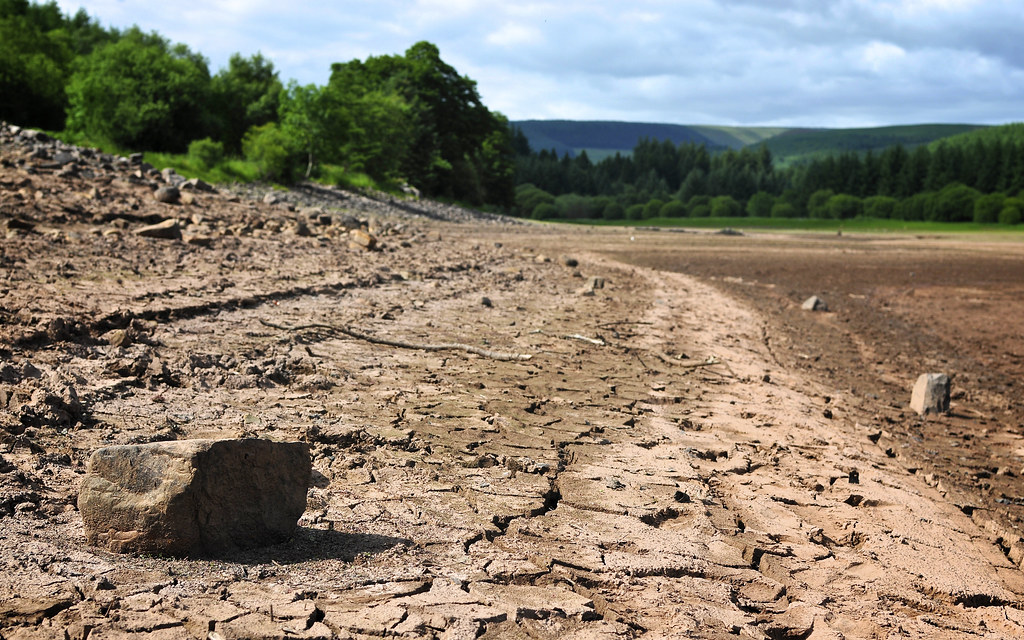
The Environment Agency has officially declared a drought in the north west of England following the driest start to spring in 69 years.
It comes after river flows and groundwater levels have been declining due to the dry March, April, and start of May, and now reservoir storage levels in the region are also receding too, meaning at this moment in time, they’re currently lower than they were during the famous drought years of 1984, 1995, and 2022.
According to the Environment Agency (EA), a decision to declare drought is taken based on reservoir levels, river flows, and moisture in the soil, along with taking into consideration weather forecasts on a long-term basis.
Declaring drought status enables the EA to ‘plan, deliver, and manage’ actions in drought plans.
The Environment Agency has officially declared a drought in north west England / Credit: Pxhere
However, there is no single definition for drought, the EA admits, so while it’s a given that it’s caused by a period of low rainfall, the nature, timing, and impacts on people, the environment, agriculture, or business will vary.
ADVERTISEMENT
Some droughts are short and intense, while others are long and take time to develop over multiple seasons.
Although there has been some welcome rain across the North West in recent days, the EA says this is ‘not enough to reverse the dry start to the year’ and is definitely not enough to cover the expected hotter weather in the coming weeks, which it believes is only set to ‘exacerbate’ the situation.
ADVERTISEMENT
The decision by the EA to move the region into drought status means the regulator will increase its operational response throughout the summer.
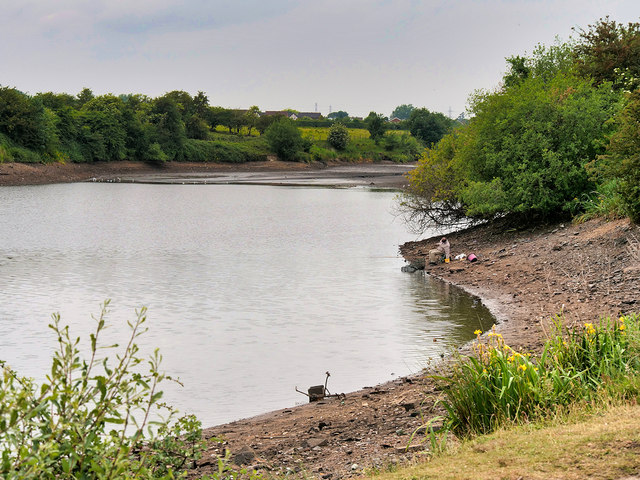
It follows what has been the driest start to spring for the region in 69 years / Credit: David Dixon (via Geograph)
This will be all while ensuring that water company United Utilities steps up the actions agreed in its drought plans – including fixing leaks, communicating with customers and supporting them to reduce demand, and submitting drought permits to take more water, as and where needed.
According to the EA, if these actions are taken in a ‘timely manner’ will help preserve supplies for people and the environment.
ADVERTISEMENT
“Drought is a naturally occurring phenomenon,” explained Andy Brown, who is the Water Regulation Manager at the Environment Agency. “As we see more impacts from climate change, heavier rainfall and drier summers will become more frequent and this poses an enormous challenge over the next few decades.
“Despite the rain over the weekend levels remain low and we are encouraging people to be aware of the impacts of drought as we enter the summer period.
“With further unsettled periods and rainfall over the coming weeks we will continue to closely monitor the situation and implement our Drought Plan.”
New £60m fund launched to fill potholes across Greater Manchester
Emily Sergeant
A new £60 million Pothole Fund has been created to repair more of the city region’s roads and pavements.
The fund – which has been set up by new Mayor Bev Craig, and is to be spent across every borough in Greater Manchester – is set to be a ‘major boost’ to efforts to tackle the pothole problem, as it will be enough to repair and maintain over a million square metres, or around 125 kilometres, of road across the wider region.
Around 2.5 billion trips are made on Greater Manchester‘s roads every year – not only by motorists, but also by buses, trams, cyclists, and pedestrians. So the fund will be used to help keep the highways network ‘safe and reliable’.
The fund will enable transport teams to repair hotspots where surfaces are in poor condition, as well as resurface roads and pavements to prevent them from deteriorating in the first place.
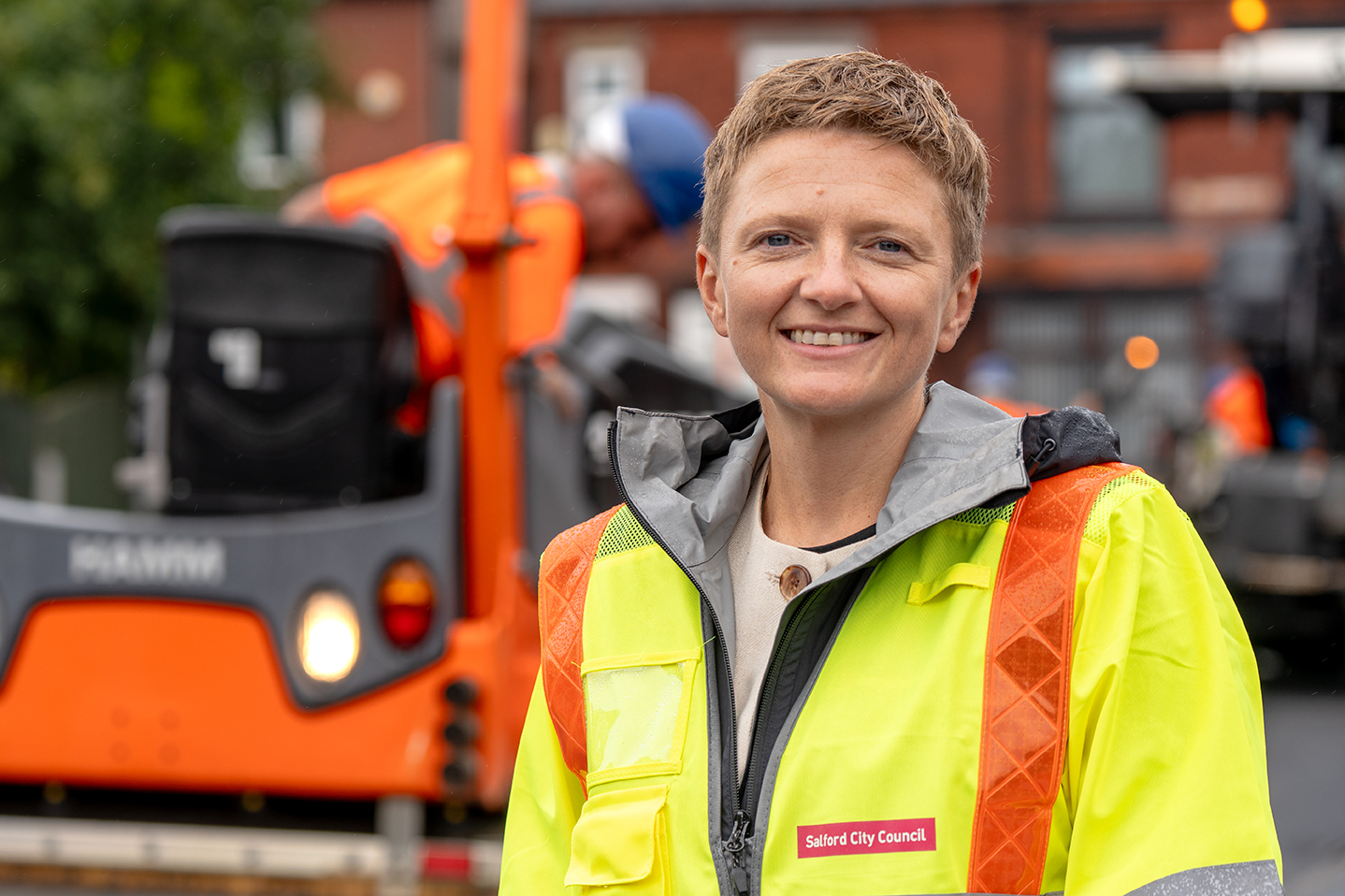
A new £60m fund has been launched to fill potholes across Greater Manchester / Credit: TfGM
Cold and wet winters, more traffic, and heavier vehicles using the roads are just some of the contributing factors to the pothole problem, which is why the fund is being introduced before autumn and winter properly arrives.
The amount each of the 10 boroughs will receive is based on an agreed funding formula, with the allocations being:
Bolton: £6,552,000
Bury: £4,374,000
Manchester: £8,155,000
Oldham: £5,258,000
Rochdale: £5,243,000
Salford: £5,388,000
Stockport: £6,820,000
Tameside: £4,980,000
Trafford: £4,992,000
Wigan: £8,241,000
The extra cash comes from the region’s transport budget, with leaders agreeing to reallocate funding towards highways maintenance, and it fulfils a commitment Bev made in her Mayoral Manifesto to repair more roads and make sure pavements are safe.
“Keeping our roads and pavements safe and well maintained is essential for a growing city region like Greater Manchester,” explained Mayor Bev Craig.
“That’s why I promised to create this new Pothole Fund that will benefit drivers and everyone who uses our roads to get around. Properly maintaining our roads will save motorists money on costly repairs, and by preventing potholes forming in the first place, councils won’t have to spend as much money on emergency road repairs.
“This issue came up repeatedly on the doorstep during my election campaign so I’m pleased that I can do something about it so quickly, building on the significant work already planned by councils across Greater Manchester.”
Featured Image – TfGM
News
Six GMP officers dismissed following racial discrimination allegations
Emily Sergeant
A number of police officers have been dismissed following an internal investigation, Greater Manchester Police (GMP) has confirmed.
Following the internal investigation into alleged racial discrimination against an officer on the Bury district – which was launched by GMP‘s Professional Standards Directorate in July 2024 – six officers and two former officers were found to have committed gross misconduct, and a ninth officer was found to have committed misconduct.
The investigation came after a report was made that an officer had been subjected to ‘racist behaviour’ by colleagues in December 2023.
The panel heard how PC Y – who has African heritage and has been granted anonymity – made a complaint after her accent was mimicked by a group of officers. She was also compared to a suspect with similar skin colour, and one of the dismissed PCs made a derogatory comment about her hair.
PC Y was supported and kept updated throughout the investigation, GMP assured, as well as providing evidence at the hearing.
The misconduct hearing lasted just over two weeks, with the panel concluding that the officers breached the Standards of Professional Behaviour relating to Equality and Diversity, Authority, Respect, and Courtesy.
The six officers who have been dismissed are PC Demi Green, PC Heena Rani, PC Lucy Granby, PC Matthew Barlow, PC Matthew Hill, and PC Mohammed Abid, while the former officers who were found to have committed gross misconduct are PC Jake Holt, and former Officer A – who has been granted anonymity.
The panel also found that Sergeant Adrian Bick’s actions amounted to misconduct, as there was no breach of the standard of equality and diversity.
As a result, the six serving officers have been sacked without notice, while the two former officers would have been dismissed had they not already left the force, and Sergeant Bick was issued a written warning.
“No officer or member of staff should have to come to work and experience discriminatory behaviour from the people they serve alongside,” declared Deputy Chief Constable, Terry Woods.
“Everyone has the right to feel respected, valued and part of the same team with a shared commitment to serving our communities and keeping people safe.”

 Emily Sergeant -
30th May 2025
Emily Sergeant -
30th May 2025