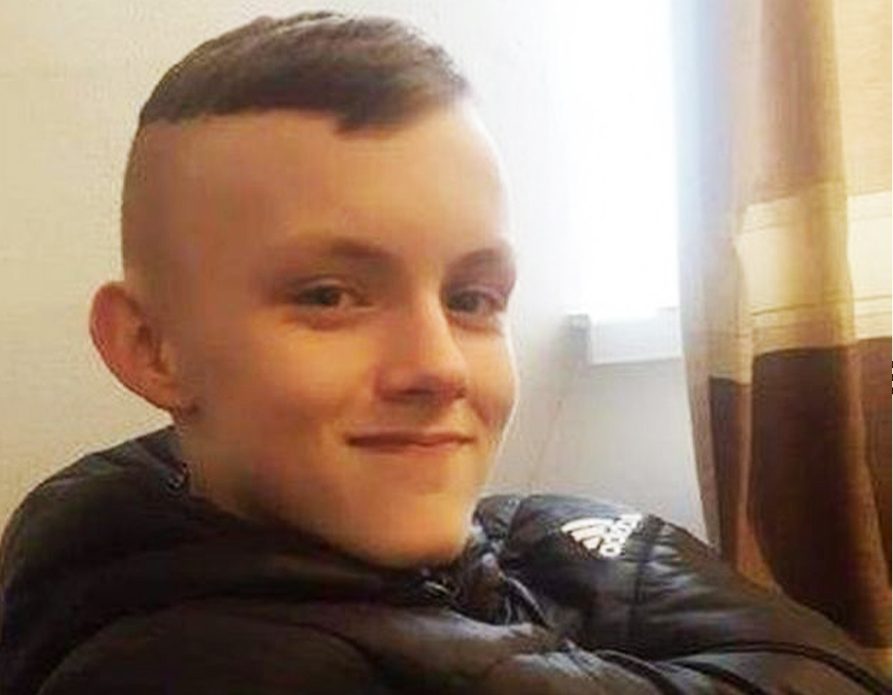
Greater Manchester Police (GMP) is appealing for footage from the night of the death of 16-year-old Kennie Carter.
Kennie died on Saturday 22 January after suffering a fatal wound to the chest after a suspected stabbing on Thirlmere Avenue in Stretford, and GMP has confirmed that eight arrests have now been made in total – including two boys aged 16 and 15 who were taken to custody earlier on Tuesday.
Detectives were also questioning two further suspects yesterday, who had been arrested on suspicion of the murder of the teenager.
Six of the boys remain in custody sites across Greater Manchester to be questioned by investigators from GMP’s Major Incident Team, and two other suspects – aged 17 and 15 – who were arrested on Sunday 23 January have now been released after questioning with no further action to be taken against them.
Six warrants have so far been executed in relation to the investigation.
ADVERTISEMENT
GMP says Kennie’s family are being kept updated with the investigation’s progress through dedicated specialist officers providing them with ongoing support.
Enquiries so far have helped detectives form a developed early picture of the events that led to Kennie’s death – but GMP is continuing to appeal to the public to bring forward any information they may have.
ADVERTISEMENT
The force says it is particularly keen to see any dash-cam, CCTV, or doorbell footage that may have been captured from the Stretford area on Saturday night – especially around the Moss Road, Davyhulme Road, and Thirlmere Avenue areas.
Anyone who may live in those areas or who was passing through those roads between 6-7pm on Saturday is urged to check any footage they may have and to get in touch with police with anything that could appear suspicious.
“After already conducting numerous enquiries with witnesses, CCTV, people in the community and speaking to several suspects, we’re developing a greater picture by the hour into the events that night that tragically ended with the death of young Kennie,” explained Detective Chief Inspector Alicia Smith, from GMP’s Major Incident Team.
ADVERTISEMENT
“Given this is a fast-moving and complex investigation it’s vital the public continue to feed into us information that initially may not appear relevant, but could provide highly significant in our inquiry.
“We’ve launched our online portal for anyone with footage or images from the night to send them to us, and I am particularly appealing to people who may have been passing through Stretford to check any CCTV, dash-cam or doorbell video and send it to us.
“The Stretford area will still have been fairly busy in the aftermath of a football match at Old Trafford a couple hours earlier, and we are confident that someone we have not yet spoken to has some important information that could be key to our investigation.”
An online portal has been opened for anyone to submit footage and other digital assets here.
Anyone can contact GMP with information – “no matter how significant it may seem” – on 0161 856 9908 quoting incident 2529 of 22/01/2022.
ADVERTISEMENT
Details can be passed anonymously to the independent charity Crimestoppers on 0800 555 111.
Featured Image – Greater Manchester Police (GMP)
News
NHS releases list of first conditions set to be eligible for new ‘online hospital’
Emily Sergeant
The first conditions that are set to be eligible for video appointments via the new NHS online hospital have been revealed.
In case you hadn’t heard, back in September of last year, the Government has announced that the NHS would be setting up an ‘online hospital’ known simply as NHS Online – which will not have a physical site and instead digitally connect patients to expert clinicians anywhere across the country.
Ultimately, this means patients can be seen faster than normal, as teams triage them quickly through the NHS App and let them book in scans at times that suit them at centres closer to their home.
NHS Online – which will begin to see its first patients in 2027 – is expected to deliver the equivalent of up to 8.5 million virtual appointments and assessments in its first three years, according to the NHS, which is four times more than an average NHS trust.
And now, the NHS has selected nine ‘common’ conditions which will be the first to be treated by the NHS Online service.
📲 Introducing NHS Online 📲
A new digital hospital will transform healthcare.
From 2027, you'll be able to get specialist care:
✅ straight to your home via the NHS App ✅ faster than a traditional hospital appointment ✅ wherever you live in England
Women’s health issues, including severe menopause symptoms and menstrual problems that can be a sign of endometriosis or fibroids, will be among the conditions available for online referrals, as will prostate problems like prostate enlargement and a raised prostate specific antigen (PSA) level, along with eye conditions including cataracts, glaucoma, and macular degeneration.
NHS Online will also provide support for other painful and distressing conditions, such as iron deficiency anaemia and inflammatory bowel disease (IBD).
So, how will NHS Online work then? Well, when a patient has an appointment with their GP, they will have the option of being referred to the online hospital for their specialist care instead, and then from there, they’ll be able to book directly through the NHS App.
Once referred to the online hospital, patients will have the ability to see specialists from around the country without leaving their home or having to wait longer for a face-to-face appointment.
The NHS has released a list of the first conditions set to be eligible for the new ‘online hospital’ / Credit: Nordwood Themes (via Unsplash) | rawpixel
If they need a scan, test, or procedure, then they’ll be able to book this in at a time that suits them at Community Diagnostic Centres closer to home.
Patients will also be able to track their prescriptions and get advice on managing their condition at home too.
“We’ve selected nine common conditions which the NHS Online service will initially provide support for when it launches next year, including some women’s health issues as well as prostate problems,” commented Professor Stella Vig, who is the National Clinical Director for Elective Care at NHS England.
“We know that these conditions can be painful and difficult to cope with so providing faster, more convenient access to diagnosis and treatments will have a real and positive impact on people’s lives.”
Junk food adverts are now banned on TV before 9pm in the UK to ‘protect’ kids’ health
Emily Sergeant
Junk food advertisements are now banned on television before 9pm in the UK in a bid to help protect children’s health.
In what is being considered a ‘landmark’ move by the Government, as of today, adverts for less-healthy food and drinks will be banned on television before 9pm and online at all times, as part of world-leading action that is expected to remove up to 7.2 billion calories from children’s diets each year, and reduce the number of children living with obesity by 20,000.
It’s also expected that this ‘decisive’ action will deliver around £2 billion in health benefits over time.
According to the Government, evidence shows that advertising influences what and when children eat – shaping their preferences from a young age, and ultimately increasing the risk of obesity and related illnesses.
At the start of primary school, 22.1% of children in England are overweight or living with obesity, and this rises to 35.8% by the time they leave.
Junk food adverts are now banned on TV before 9pm in the UK / Credit: Alan Hardman | Kobby Mendez (via Unsplash)
This change is part of a range of measures that the Government is taking to ‘lift children out of poverty’ and help give them the ‘best start’ in life – with other measures being the introduction of the Healthy Food Standard, and giving local authorities the power to stop fast food shops opening outside schools.
“We promised to do everything we can to give every child the best and healthiest start in life,” explained Health Minister Ashley Dalton, as the junk food advert ban comes into force.
“By restricting adverts for junk food before 9pm and banning paid adverts online, we can remove excessive exposure to unhealthy foods – making the healthy choice the easy choice for parents and children.
“We’re moving the dial from having the NHS treat sickness, to preventing it so people can lead healthier lives and so it can be there for us when we need it.”
Featured Image – Karolina Kołodziejczak (via Unsplash)