The Government has announced its intentions to end overseas recruitment into the care sector across the UK.
It’s just one of the measures outlined in the Government’s Immigration White Paper, which was announced by Prime Minister Keir Starmer to Parliament today, and is aiming to ‘take action’ to bring down historically high levels of net migration.
According to the Home Office, care workers from overseas have made a ‘huge contribution’ to social care in the UK for several decades, but too many have been subject to shameful levels of abuse and exploitation.
Overseas workers in the sector arrived in the country to find themselves saddled with debt, treated unfairly, or in extreme cases, even discover the jobs they were promised did not exist.
Immigration has played a key role in the success of the UK and our services.
But we cannot ignore the facts.
The system does not work.
Care workers have been widely exploited through the immigration system which is why we are closing new applications from abroad.
More than 470 care providers had their licence to sponsor international staff suspended since 2022, the Home Office revealed this month – which is why the Government ultimately wants to ‘put an end’ to any more overseas recruitment.
ADVERTISEMENT
The crackdown on ‘rogue care providers’, as the Government called them, has seen around 40,000 workers displaced, many of whom are ready to rejoin the workforce, and under the plans outlined today, it’s said that they will be given the opportunity to ‘do the jobs they were promised’, while long-term plans are drawn up to train homegrown talent into the care sector.
International workers who are already sponsored to work legally in the sector, however, will still be able to continue to extend their stay, change sponsors, and apply to settle.
ADVERTISEMENT
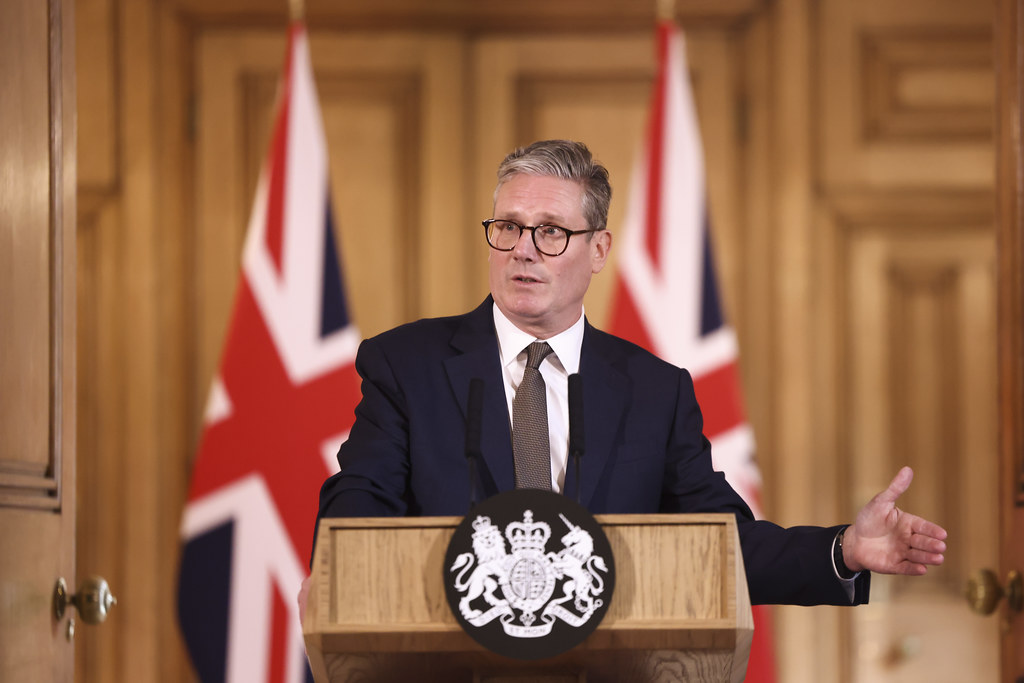
The Government is banning overseas recruitment for the UK care sector / Credit: Simon Dawson / No 10 Downing Street (via Flickr)
“Together, these measures will move the UK away from a dependence on overseas workers to fulfil our care needs,” the Government said in a statement.
Despite the plans announced today being received well by some, they have been met with some criticism from industry figures – with Care England describing it as a ‘crushing blow to an already fragile sector’.
“The Government is kicking us while we’re already down,” explained Professor Martin Green OBE, who is the Chief Executive of Care England.
“For years, the sector has been propping itself up with dwindling resources, rising costs, and mounting vacancies. International recruitment wasn’t a silver bullet, but it was a lifeline, and taking it away now, with no warning, no funding, and no alternative, is not just short-sighted, it’s cruel.”
Featured Image – Kampus Production
News
Rochdale is bidding to become the UK’s first-ever Town of Culture in 2028
Emily Sergeant
Rochdale has announced its intention to bid to become UK Town of Culture 2028.
Entering into the national competition launched by the Department for Culture, Media and Sport (DCMS), following on from the success of the already-existing City of Culture award, the Greater Manchester town is hoping to be the first-ever town to claim the title.
The Town of Culture competition invites towns across the UK to showcase their cultural story and develop ambitious programmes that celebrate local heritage, creativity, and communities.
The winning town receives a £3 million grant from the Government to deliver a major year-long cultural programme in 2028 designed to boost civic pride, attract visitors, and provide everyone with the opportunity to participate in cultural activities.
Rochdale’s bid is being led by Rochdale Borough Council and Rochdale Development Agency, alongside cultural groups, education providers, and community organisations.
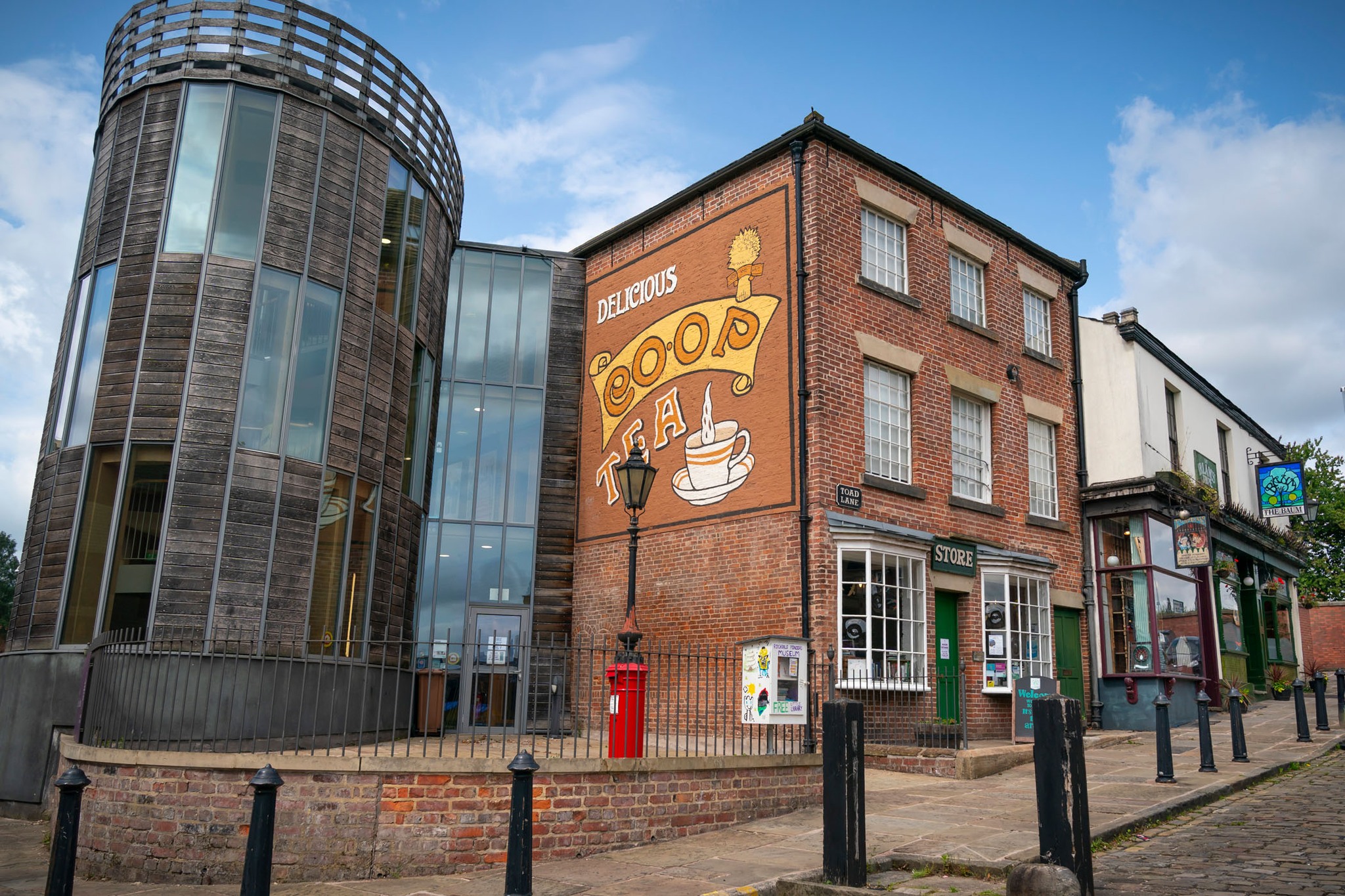
The bid will build on the town’s history as the birthplace of the Co-operative movement, and a centre of political reform, collective action and working-class cultural innovation.
A town of national and international significance, whose people and ideas have shaped the social, democratic and cultural life of the UK and beyond, Rochdale Council says the town’s story is ‘distinctive’ and as highly relevant today as it ever has been, and this is a driving force behind its Town of Culture 2028 bid.
Not just historically, but over recent years too, the town has made a significant contribution to the UK’s popular culture, producing internationally recognised musicians, artists, writers, and performers.
Local leaders say the bid to become the UK’s first ever Town of Culture underlines Rochdale’s ambition after just completing a ‘hugely successful’ year as Greater Manchester Town of Culture for 2025.
Rochdale is bidding to become the UK’s first-ever Town of Culture / Credit: The Manc Group | Rochdale Council
“We have a strong foundation for a bold and future focused UK Town of Culture programme and an incredible story to tell,” commented Cllr Neil Emmott, who is the Leader of Rochdale Borough Council.
“We’ll be developing a fabulous programme of new events and activities as well as amplifying our existing offer and recently transformed town hall square and centre.
“As we have already seen during our year as Greater Manchester Town of Culture, we have an established infrastructure of creative partners ready to go, who have already expressed their support for our bid, providing significant capacity and scale to deliver a UK town of culture programme in 2028 that would leave a permanent cultural legacy.
“We have exciting and varied attractions and iconic venues that have seen significant investment, an array of creative talent and we’re very well connected.
“This bid will allow us to share this in new ways and invite others to experience it.”
Featured Image – Rochdale Borough Council
News
Sara Cox tipped to replace Scott Mills for Eurovision 2026
Danny Jones
Greater Manchester’s very own Sara Cox is reportedly set to replace Scott Mills at the 2026 Eurovision Song Contest following his sacking from the BBC.
Mills was axed by the news and entertainment corporation on Monday, 1 April, for ‘misconduct’, which has now been revealed to involve a historic relationship with a boy aged under 16.
While the fallout surrounding Scott Mills is only just beginning, the task of finding his replacement in multiple roles has already begun – though it looks like one may have already been decided.
Now reported by multiple outlets, it appears as though Bolton-born Sara Cox is first in line to pick up Mills’ co-hosting duties for this year’s Eurovision show.
Having already been involved with coverage of the event on multiple ocassions in the past, it now appears that she’ll be in post for the Grand Final too.
As a long-standing radio and TV staple, it only takes a quick look at social media to see how much backing she has already received in the past, with a post from last year reading, “Great to have Sara Cox back commentating on Eurovision“, and others from over a decade ago praising her past presenting.
In fact, it might not end just here either, as many are already calling for her to replace the 53-year-old breakfast show host.
From her days as a Radio 1 favourite to becoming a BBC mainstay across the board, her popularity only seems to have grown over the last decade, especially thanks to her charity fundraising efforts.
While an official announcement is yet to be made, the feeling is that it is all but confirmed for her to take over from Mills as part of the Eurovision commentary team.
As for the now vacant early morning slot on BBC Radio 2, the likes of Claudio Winkleman, Vernon Kay, fellow Manc Nick Grimshaw, the aforementioned Rylan, and several others have all been floated as potential stand-ins/future full-time hosts.
Do you think both should be given to Sara Cox, and if not, who would you like to see replace Scott Mills?