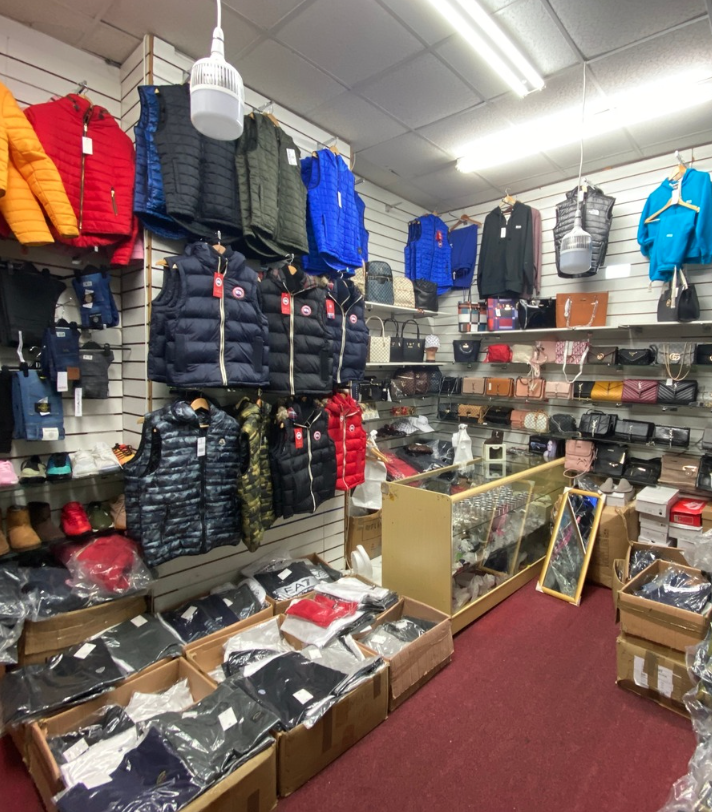
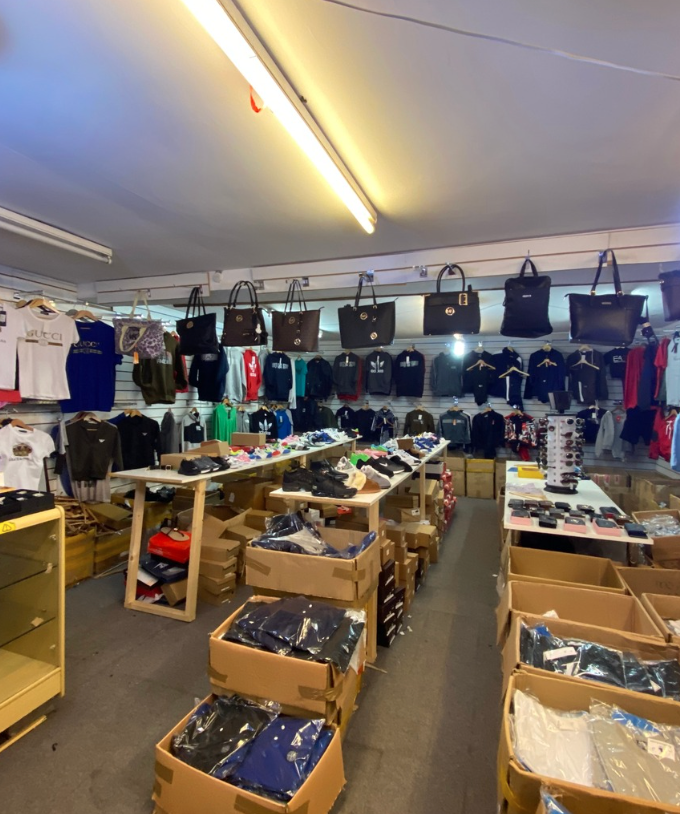
Greater Manchester Police (GMP) is set to make a radical move to smash a “national magnet for criminality” by bulldozing parts of the infamous ‘counterfeit street’.
After decades of repeat raids to seize tonnes of counterfeit clothing and goods worth tens of millions of pounds, the police force has confirmed that buildings on Bury New Road in the Strangeways area of Manchester are to be closed, compulsory purchased, and then flattened – for good.
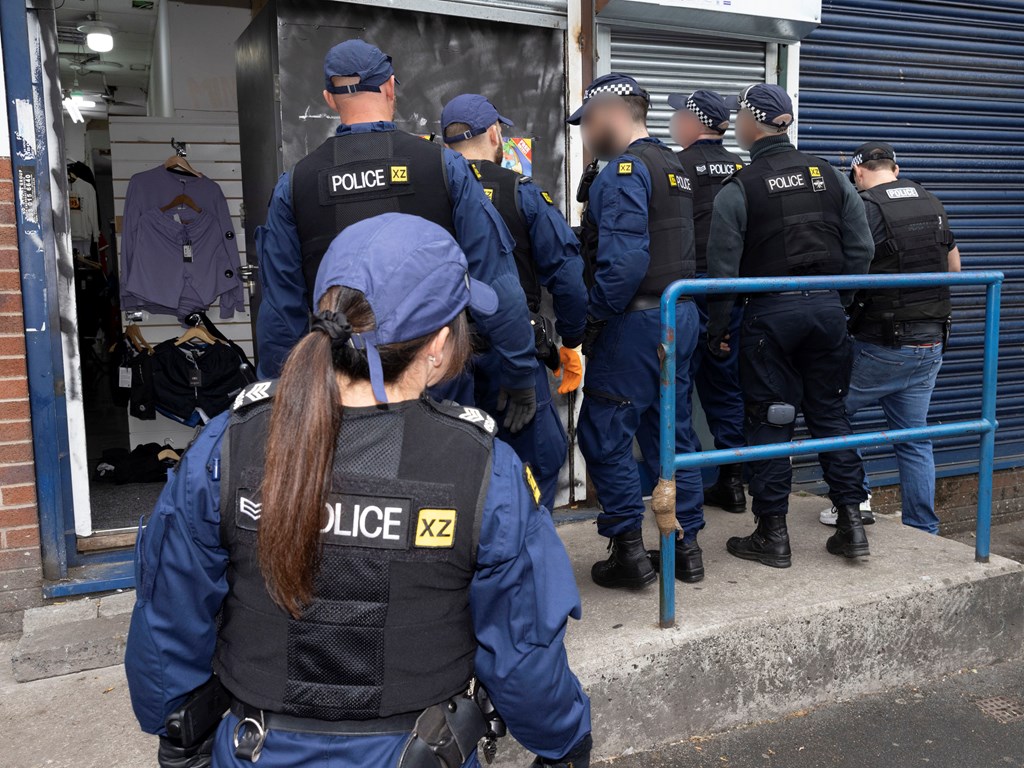
It’s all part of a new operation known as ‘Operation Vulcan’.
Operation Vulcan is setting out to shut down shops selling fake clothing, perfume, tobacco, and toys that are believed to be a front for serious crime, and comes after GMP has already stablished that 33 organised crime gangs from across the UK have links to the Cheetham Hill area.
The area is also known to have links to illegal immigration, modern-day slavery, human trafficking and women being forced to work as sex workers.
ADVERTISEMENT
Police say the gangs also have links to mass money laundering, firearms, drugs, and more.
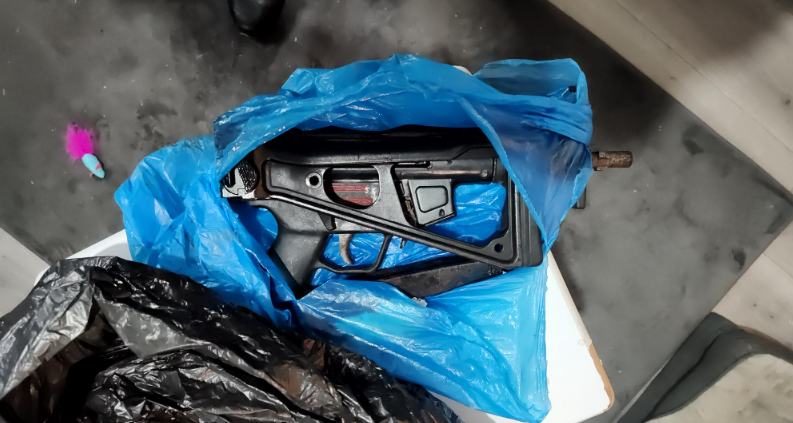
Greater Manchester Police is set to bulldoze Manchester’s infamous ‘counterfeit street’ / Credit: GMP
But now, the area’s reputation is set for a facelift as GMP is to work with Manchester City Council and other organisations to deliver “a permanent solution”.
ADVERTISEMENT
“This comes directly from our Chief Constable. He has described Cheetham Hill as a place that is criminally hostile and he is not prepared to have that in his force area,” Detective Superintendent Neil Blackwood, who is heading Operation Vulcan, told the Manchester Evening News.
“Counterfeiting has been around for a very long time but the criminality has shifted into prescription drugs [and] people being exploited sexually and for their labour, and illegal immigration – a microcosm of criminality.”
When asked if Operation Vulcan would eventually see the demolition of the buildings used for counterfeit sales and other crimes in the area, DS Blackwood confirmed this in the works.
ADVERTISEMENT
“We are probably in the position of clear, hold, build. Clear it, and hold, so no one comes back, and then its Manchester City Council’s gift to give in terms of rebuilding. Most of those buildings will end up at the end of a bulldozer. Most unrecoverable, because they have been chopped and changed around.
“There has been a lack of consistency – we are there one day not the next, and that is where our chief has recognised that is a problem, so we will be there everyday.
“I have more patience than them.”
It’s all part of a new operation known as ‘Operation Vulcan’ / Credit: GMP
DS Blackwood said the aim of Operation Vulcan is not only to shut down counterfeit street, but also to pursue multiple prosecutions for other major offences.
“It needs to feel safe, it needs to be for the law-abiding community,” DS Blackwood said.
ADVERTISEMENT
“We will do whatever it takes – arresting people for drug dealing, if they have premises – which a lot of them do – we will take it off them, and we will close it.”
Featured Image – GMP
News
Council calls on Manchester public to help bring hundreds of empty homes back into use
Emily Sergeant
Residents across Manchester are being called on to help bring hundreds of empty homes across the region back into use.
Since the beginning of this year, a major review has been underway around the city’s draft strategy for bringing empty homes back into use to help meet demand for affordable homes across the city, while also improving communities by tackling empty homes that can blight an area… but now, Manchester City Council needs your help.
Following a major public consultation, the Council is now acting on feedback to accelerate plans to bring as many long-term empty homes back into active use as possible.
Although the number of long-term empty homes in Manchester is near a historic low, with the Council having managed to reduce the number by more than half since 2013, there is still more work to be done.
“Every void property is a missed opportunity to provide a family a place to live, reduce homelessness, and lessen the burden on temporary accommodation,” the Council said in a statement.
The Council is calling on the Manchester public to help bring hundreds of empty homes back into use / Credit: Benjamin Elliott (via Unsplash)
So, how can residents help then? What do you need to do if you spot an empty home on a street nearby?
Well, the easiest way to report an empty home is to report the issue online here, or by emailing [email protected]. And then once that’s done, a team of dedicated empty homes officers will take up the case to find out who owns the property and work with the owner on a plan to bring the home back into use.
The vast number of empty homes are privately owned with complex histories, and there are some cases where an owner may have passed away.
While working collaboratively with housing providers, voluntary organisations and public services are also a key element of detecting potentially empty or ‘problematic’ homes to repurpose them.
Officers can also support, where required, if a communication or language poses a barrier to resolving an empty home issue.
Tailored approaches to different communities – where empty homes impact neighbourhoods in different ways – are also being considered, according to the Council.
“To think, if we could bring all empty homes back into use, then we could provide more homes for those on the housing register and take pressure off the whole housing system,” explained Cllr Gavin White, who is Manchester City Council’s executive member for housing and development.
“The potential of making empty homes a thing of the past is huge for Manchester families looking for a place to call home – and a significant part of tackling the housing crisis.”
Featured Image – Wikimedia Commons
News
Urgent travel warning issued ahead of one of Manchester’s busiest event weekends of the year
Emily Sergeant
Greater Manchester is gearing up for what is set to be one of the busiest weekends of the year.
Manchester‘s biggest music festival, Parklife, returns to Heaton Park this weekend (Saturday 20 and Sunday 21 June), with tens of thousands of people expected to make the journey to see headliners Calvin Harris, Sammy Virji, Skepta, and Zara Larsson, as well as many other well-known music names… but that’s not all.
Over at the Etihad Stadium, Take That are set to perform a series of shows across the weekend, while the Etihad Campus will also host the Women’s Netball Final at Co-op Live from 3pm on Saturday afternoon.
The city will also welcome Lily Allen and the B52s across three nights at the AO Arena, and the Women’s Cricket World Cup will draw thousands to Emirates Old Trafford on 21 June, when South Africa take on India.
So, as you can see, we’ve got a jam-packed couple of days coming up.
📣 This weekend is expected to be one of the busiest in Manchester, with multiple events taking place across the city.
🚗 Public transport, roads and venues are likely to be extremely busy.
🕛 If you’re travelling anywhere this weekend, please plan ahead and allow extra time… pic.twitter.com/iqtmlSpAOR
In fact, it’s estimated that more than a quarter of a million people are expected to be travelling to the various events over the weekend, and of course, this means the roads and public transport will be significantly busier than usual.
Whether you’re one of the many fans or just making a regular journey, Transport for Greater Manchester (TfGM) is advising everyone to ‘plan ahead’, allow extra time for their journey, and avoid the busiest areas and times.
To prepare for the increase in travel, TfGM has confirmed that there will be more trams serving event venues, alongside extended tram operating times, to ensure everyone gets home safely.
For travel to and from Parklife, the specific Parklife travel ticket – which will be available on the Bee Network app – is valid on trams and buses across Greater Manchester, and this includes relevant shuttle buses operating to and from the city centre.
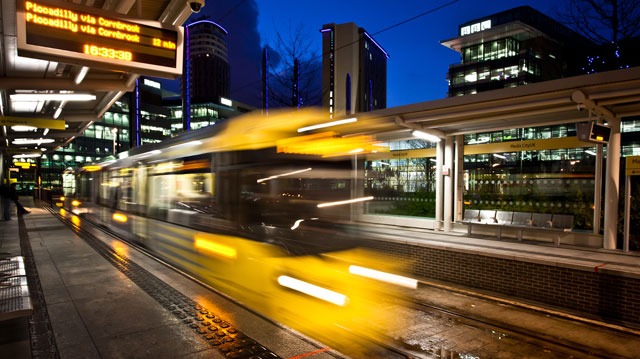
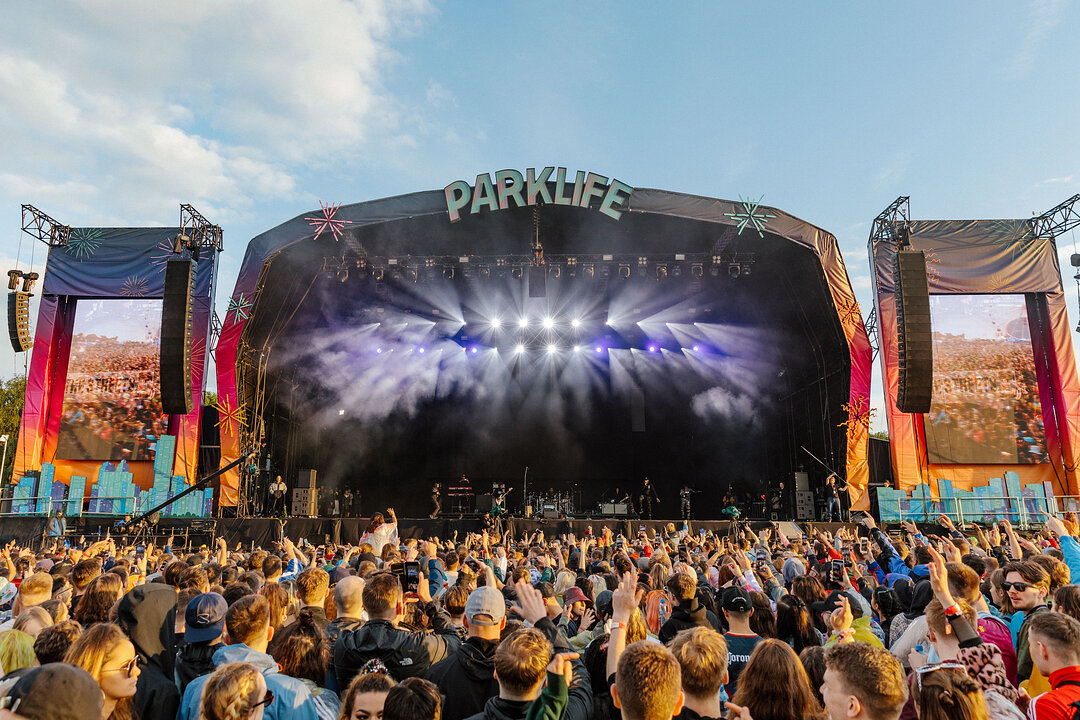
An urgent travel warning has been issued ahead of one of Manchester’s busiest event weekends of the year / Credit: Steve Turvey (Supplied) | TfGM
Throughout the weekend, extra staff and TravelSafe Support Officers will be out and about across the transport network to help passengers, and TfGM will be working closely with police and other partners to manage roads and the transport network around the clock.
“We’re expecting it to be very busy across the network, with more than a quarter of a million fans travelling to various sports and music events,” commented Danny Vaughn, who is the Chief Network Officer at TfGM.
“We will have as many staff as possible on the network, running as many services as we can to ensure that the Bee Network is here to help you get where you need to go.
“So, for everyone looking to get out and about, please plan ahead, check the Bee Network app for updates and have a safe journey.”
A dedicated travel page for this weekend’s event has been set up, so you can find out everything you need to know and get live updates on the Bee Network website here.

 Emily Sergeant -
25th October 2022
Emily Sergeant -
25th October 2022