Manchester City Council’s new leader Bev Craig on ‘levelling up’ and tackling inequality
On 1st December, Councillor Bev Craig became the leader of Manchester City Council. She spoke with The Manc about her plans to improve life in the city.
Growing up on a council estate just outside of Belfast, Manchester Councillor Bev Craig assumed everyone lived as she did – until she moved to Manchester, that is.
It’s a time that she acknowledges was instrumental in shaping her worldview. A self-proclaimed socialist, she has been a key player in making Greater Manchester a real living wage city and has strong views on how to improve housing, infrastructure and investment across the ten boroughs – not just in the city centre.
First landing in Manchester as a young undergraduate student in 2003, knowing little more than what she’d seen of it on the telly, she was a self-confessed ‘skint student’ working all the extra hours she could find to supplement her income.
Back then, she tells us that life was ‘pretty much Fallowfield, up the Oxford Road corridor and into the city centre’ – quite a stretch from the life she lives in Manchester today, as the city council’s first new leader in 25 years.
“I grew up thinking we lived a very normal and ordinary life,” she told us during an interview for our Manc Meets series.
ADVERTISEMENT
Bev Craig. Credit: The Manc Group
“I grew up on a council estate just outside of Belfast, and it wasn’t really until I moved to Manchester for university that I actually realised in life more people had money than we did growing up.”
She says that a lot of her hanging out as a student was done at home, laughing as she adds there was “possibly a bit of drinking at home before going out, and probably too much junk food on the way [back]”.
ADVERTISEMENT
Keen to stress that over the years her tastes have since refined, she adds: “There’s no Lambrini anymore, I’m firmly on the proper wine – I’d say the city has drastically changed and I’ve got to know the city much, much better.”
As someone with close experiences with those living in poverty, she’s very focused on tackling inequality in Greater Manchester within her new role.
“I want Manchester to have a really exciting and thriving economy but I want that to be inclusive. I want the growth in the city to continue, but I want all Manchester people to benefit from its successes,” she tells us.
ADVERTISEMENT
With plans that include building new social and affordable housing, taking action on the climate breakdown and delivering a net-zero carbon status for Manchester by 2038, she’s got a lot to get done.
As a socialist, she says that means: “Wanting to get the best deal for Manchester and having a city where everybody can thrive, where everybody has opportunities, and where we build a more equal and fair and sustainable city.”
She says: “Ithink sometimes the Labour Party gets a bit hung up on labels that we call ourselves, actually it’s about what you believe in and what can you do for the city.”
When it comes to achieving these improvements for local people, one area in which she is particularly clear is that it isn’t enough to just increase wages – but rather that introducing new terms and conditions, and ensuring good quality pay over a long period of time, is also incredibly important.
“I don’t think that the minimum wage we have in this country is enough, it’s not enough to pay your rent, to pay your bills, and to be able to actually have a life that you can enjoy.”
Councillor Bev Craig
“So I’ve been a supporter over the years of the real living wage campaign but for me, that’s the start, that’s why improving the minimum level that you get paid but actually there has to be something much bigger”.
ADVERTISEMENT
As the executive member or cabinet member for adults health and wellbeing, one of the first things that she brought in was the real living wage.
As a result of this, she improved the pay for Manchester’s home care workers across the board – then, when she became deputy leader she went one step further, launching Manchester’s bid to become a real living wage city.
Whilst she’s clear that nobody in Manchester should be paid less than the real living wage, she adds she’s also a pragmatist.
“We need to bring people with us and that, we need to bring businesses with us, the city council has been doing it for years now but we need to encourage other people to come with us,” she tells us.
“We’re talking about Manchester people getting CEO jobs, working in digital and tech, working in some of our frontier economies around what are we going to do to solve climate change and the green economy, and that begins in schools, colleges, universities and the whole way through.”
ADVERTISEMENT
Bev Craig. Credit: Manchester City Council
It all sounds a lot like the current government’s ‘levelling up’ agenda, something Bev says ‘is what we’ve been talking about as Labour politicians for a very long time’.
“It’s about tackling some of the differences in spending in the north of the country, particularly in infrastructure and investment that we see in London and the south-east,” she continues.
“Yeah I’m a Labour politician, but any government of any colour, if they want to invest in the city and do the right thing we will absolutely work with them on that.”
Much has also been made of the fact that Bev is the city’s first-ever female leader and Manchester’s first openly gay council leader – not to mention one of very few openly gay women in British politics across the board.
She acknowledges the significance of her position and says that her message to Manchester young people is ‘it doesn’t matter who you are or where you’re from, you can be anything that you want to be’.
ADVERTISEMENT
However, she also adds that she’d “like to get to the point where being a woman and being gay is like the least interesting thing about me, rather than the thing that people hone in on.”
This year, she will be launching a commission around tackling misogyny and violence against women and girls in Manchester – asking people to input their views and their feelings on the matter in light of an increase in incidents since the start of the pandemic.
Acknowledging that “people perhaps still don’t feel as safe as they could be”, she’s also asked the council’s licensing team to be working with venues, “to make sure that we’re doing as much as we can when people go and enjoy a night out.”
She also tells us that “housing, homelessness and tackling some of the broader inequalities that might lead up to homelessness” are three of the key areas she’ll be looking at in the next 12 to 24 months, as well as an upcoming battle around HS2 and a big for Manchester to get its own underground railway station, akin to the London Underground.
ADVERTISEMENT
“I’m really proud I think of the city that Manchester’s become over the last twenty years-end certainly something that gives me hope and optimism, and something I would say is the journey we’ve been on, the improvements we’ve made, that’s in no way, it’s not finished, there’s plenty more to do and there’s loads of exciting stuff I think in Manchester’s future that we’re looking forward to build.”
Having only just been elected to her position at the beginning of December 2021 now is the time for her to start putting those words into action.
In what is already being dubbed the ‘year of the squeeze’, we think it’s safe to say that the people of Manchester definitely need it.
Feature image – Manchester City Council / The Manc Group
News
Fontaines D.C. at AO Arena, Manchester – tickets, times, and more for 2026 European tour
Lydia Mastrolonardo
Fontaines D.C. are in town this weekend as part of their biggest headline tour to date.
Thousands of fans will descend on the AO Arena this Saturday (21 November) for just one of the 20 arena shows the Irish band are putting on across Europe this autumn, following the release of their fifth album Dopamine Chamber last month.
Dopamine Chamber explores the modern anxieties of the ‘glorious age of distraction’ in relation to digital devices and social media as a form of escapism in a world that feels ever increasingly broken.
Their relatable lyrics also seem to touch on the dread people feel in terms of environmental collapse, Artificial Intelligence, and emotional exhaustion, while remaining hopeful about human connection and romance.
The lads kicked off their European tour in Lisbon on 21 October, visiting dozens of major cities along the way – but this weekend, it’s finally Manchester‘s turn.
Here’s everything you need to know aboutFontaines D.C. at AO Arena.
___
Fontaines D.C – UK Arena Tour Dates 2026
Friday 20 November 2026 – M&S Bank Arena, Liverpool
The 2026 UK tour dates are fully sold out, although there are a few verified resale tickets or premium verified resale tickets on Ticketmaster, so keep your eyes peeled HERE to secure some last-minute tickets.
Click HERE to access tickets for Heaton Park 2027.
Who is supporting Fontaines D.C. at the AO Arena?
For the 2026 dates, Fontaines D.C. will be supported by Chalk – a post-punk dance duo, formed in Belfast.
This tour will mark a significant point in the band’s career following the release of their debut album Crystalpunk earlier this year, which gained the top spot in the UK album Dance Chart, closely followed by the release of their single ‘Heaven / Hell’ last month.
It’s a exciting time for Chalk, and we’re looking forward to seeing their electric energy live.
What are the stage times for Fontaines D.C. in Manchester?
Doors are set to open at 6pm, followed by support act Chalk at 7:30pm. Timings are yet to be announced for Fontaines D.C., though they should be on stage around 8-9:15pm, judging from previous gigs.
Be sure to keep your eyes on their Instagram accounts, as well as the AO Arena website, for further information, as stage times are typically announced on the day of the show.
One thing we know for certain is that the show will finish before 11pm, due to AO Arena‘s curfew.
Expected setlist for UK Tour 2026
As always, we cannot confirm the exact setlist, as everything can depend on the city or night, but this is an idea of the songs they’ve been playing throughout Europe so far on this tour:
Tongue
Here’s The Thing
Nabokov
Boys in the Better Land
Marianne
Jackie Down The Line
You Miss Me
Roman Holiday
A Hero’s Death
In The Modern World
Happy For You
Big Shot
Death Kink
Mimesis
Six Shot Morning
Bug
Favourite
Demolition
Starburster
Encore:
Japan
I Love You
Where Is Gone?
Fontaines D.C. are heading back to Manchester on their new European tour / Credit: Supplied | Elizaveta Porodina (Supplied)
Getting to AO Arena
Tram
For those of you heading to AO Arena, luckily, it’s connected to Manchester Victoria Station, and it has an integrated Metrolink stop to make your life even easier.
Head along the pink, light blue or yellow lines directly to the Victoria stop, and you can get off the tram literally spitting distance from the arena. You can find the full map HERE.
Train
Considering this live entertainment venue is situated right in the middle of one of Manchester’s most frequented stations, concertgoers should find no problem getting to the arena, wherever they are.
Bus
A variety of buses cover AO Arena andVictoria Station on their route, with stops just a one-minute walk away from the venue.
A full list of buses and their routes can be found HERE.
Getting there by car and parking
The Arena has its own official CitiPark, with 958 car parking spaces, including 40 Blue Badge parking bays, which can be booked in advance.
Alternatively, anyone attending a gig can park at their nearest train station and jump on a train service or the various Metrolink park and ride facilities.
Walk/cycle
Greater Manchester now also offers the option to hire bikes through the Beryl app, with riders able to locate, unlock, get to their destination and then safely lock up the bike all through an easy-to-use app.
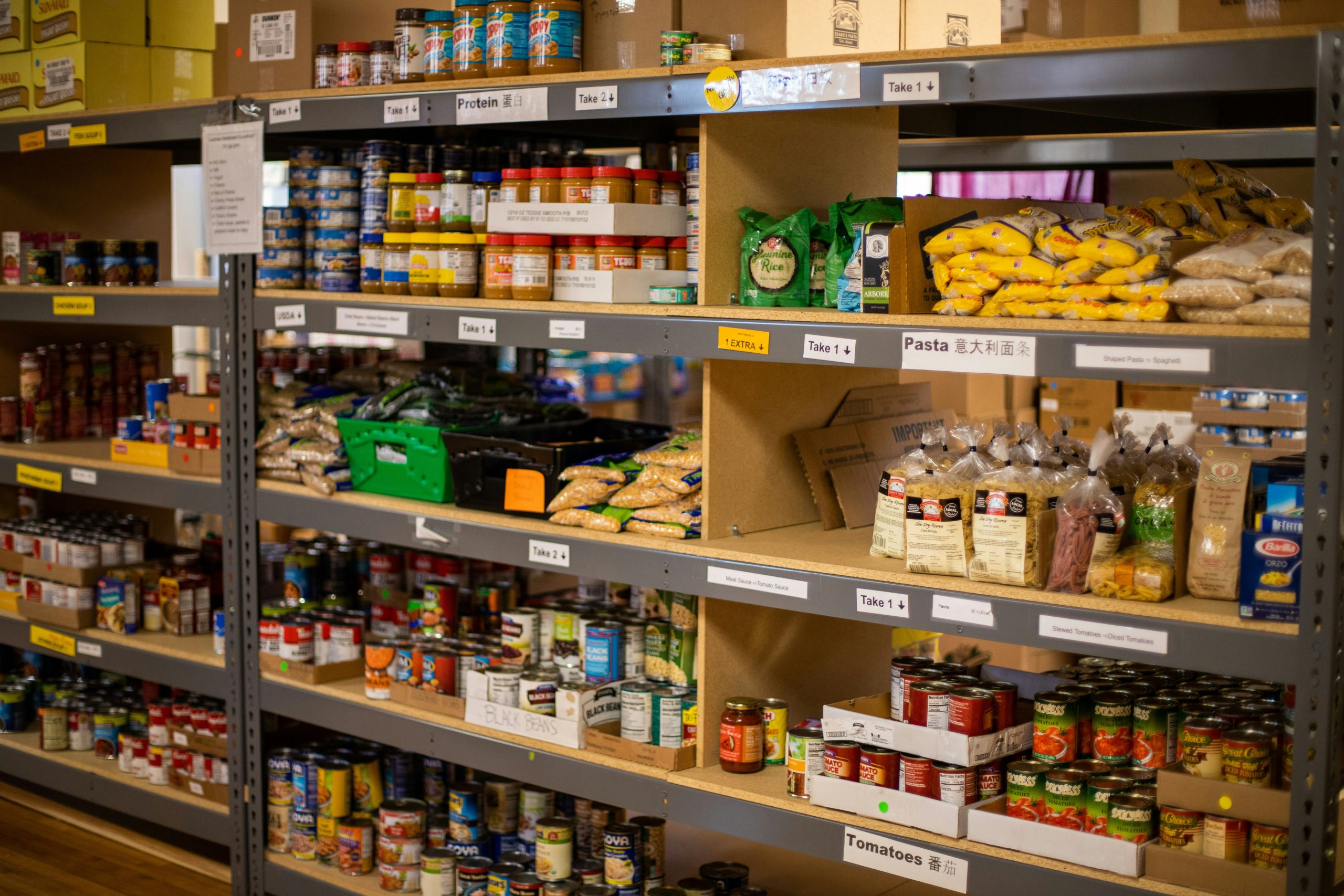
Greater Manchester residents urged to donate to local food banks this winter amid ‘critically low’ stock
Emily Sergeant
Greater Manchester residents are being urged to donate to local food banks this winter amid reports of ‘critically low’ stock.
As we head into winter and the temperatures continue to drop, it has been reported that nearly half of Trussell food banks across the UK are ‘critically low’ on donation levels, and some unfortunate new data has revealed that they’re apparently bracing to provide one emergency food parcel every 12 seconds these next couple of months.
Trussell says that almost half of food banks (46%) in its community feel that preparing for winter is harder this year than in previous years.
This claim comes as they contend with falling donations, rising operating costs, and ‘persistently high’ levels of need.
“For many people on the lowest incomes, there is simply nothing left to cut back,” Trussell said in a statement. “Behind these figures are people already living on a knife’s edge, where a rent increase, broken appliance or unexpected bill can be enough to push families into crisis.”
As a result, food banks are increasingly having to buy food themselves to ensure people can continue access emergency support, which is creating a ‘growing financial challenge’ at a time when costs remain high and inflation is rising.
Food banks are spending millions of pounds buying food to keep their shelves stocked with almost 5,900 tonnes of food, according to the new analysis – which is the equivalent weight of around 500 double decker buses.
Alarmingly, Trussell says the gap between food bank need and donations has widened since the start of the cost of living crisis, with food banks only having to purchase around 6% of the food needed to support people in 2021, compared to 25% in 2025.
The charity is, therefore, urging anyone who can to donate this winter to help food banks continue supporting people in their communities.
“Food banks continue to see people forced to skip meals, go without heating and sitting in the dark because they can’t afford the essentials like toiletries, rent, and household bills,” commented Trussell’s co-chief executive, Emma Revie.
“We are encouraging anyone who is able to, to donate food or funds this winter. Your help today will make a real difference your neighbours’ lives, by ensuring people get the emergency food and practical support they need, while we work towards a future where nobody needs a food bank to survive.”

 Georgina Pellant -
14th January 2022