News
Manchester scientists claim ‘advanced aliens’ could soon detect life on earth
The new revelation has been described as an "exciting development".
 Emily Sergeant -
15th May 2023
Emily Sergeant -
15th May 2023 New research carried out by a team of scientists in Manchester has found that advanced aliens could “soon detect life on earth”.
The groundbreaking revelation came after scientists from the University of Manchester worked together with the University of Mauritius using crowdsourced data to simulate radio leakage from mobile towers in a bid to determine what alien civilisations might detect from various nearby stars.
The research – which was published in the Monthly Notices of the Royal Astronomical Society journal – found that, at the moment, only more technologically-advanced civilisations would be able to detect the current levels of mobile tower radio leakage from Earth, but this could soon change as it looks increasingly more likely that “most alien civilisations have more sensitive receiving systems”.
Scientists claim that as we move towards more powerful broadband systems on Earth, the detectability of humans from other intelligent beings will become “more and more likely”.
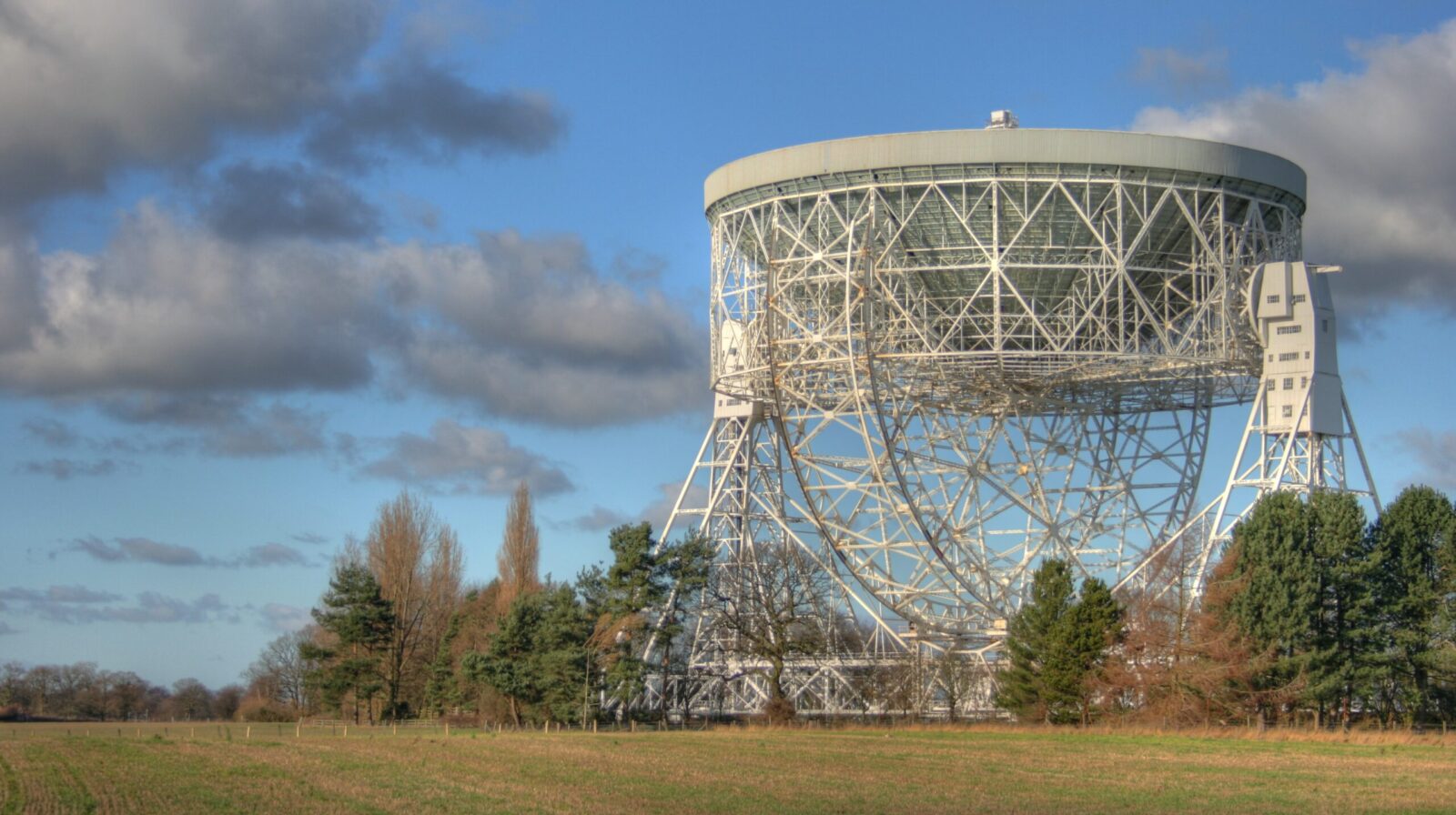
Professor Mike Garrett, who is the team leader of the project and Director of Jodrell Bank Centre for Astrophysics at the University of Manchester, says he has “always contested” his colleagues’ claims that Earth has become increasingly more radio quiet in recent years.
“Although it’s true we have fewer powerful TV and radio transmitters today, the proliferation of mobile communication systems around the world is profound,” Professor Garrett admitted.
“While each system represents relatively low radio powers individually, the integrated spectrum of billions of these devices is substantial, and current estimates suggest we will have more than one hundred thousand satellites in low Earth orbit and beyond before the end of the decade.
“The Earth is already anomalously bright in the radio part of the spectrum; if the trend continues, we could become readily detectable by any advanced civilisation with the right technology”.
The models and simulations which demonstrate the signals that aliens may receive from Earth also show that the Earth’s mobile radio signature includes “a substantial contribution” from developing countries.
Read more:
- Shaun Ryder branded ‘TV gold’ after revealing his UFO and alien encounters
- People confused about the enormous beam of light above Manchester that looked like an ‘alien invasion’
- Manchester scientists create ‘cosmic concrete’ from space dust and astronaut blood
Scientists have called the revelation an “exciting development”, and highlights success in “bypassing the landline stage of development and moving directly into the digital age”.
Featured Image – University of Manchester