Did your hear that £900 million was allocated to funding groundbreaking new AI research during yesterday’s Budget announcement?
As Jeremy Hunt outlined his first Budget as Chancellor of the Exchequer, and the first Budget of 2023, to MPs in the House of Commons yesterday, he revealed that the UK will launch a so-called “AI sandbox”, which will aim to encourage groundbreaking research into artificial intelligence as part of the early stages of the UK government‘s new Quantum Strategy.
The new £2.5 billion 10-year quantum research and innovation programme is said to show the government’s ambition for the country to become a “science and technology superpower”.
A new national #AI award called the Manchester Prize is named after our invention of the Baby – the world's first stored program computer.
— The University of Manchester (@OfficialUoM) March 15, 2023
This means that by 2033, with the help of the £900 million funding, the UK is expected to become one of only a handful of countries across the globe to he home to an exascale computer – which is significantly more powerful than a conventional computer, and allows quantum physics to store data and perform calculations that are both key to AI.
On top of this, the Chancellor also revealed in his Budget that millions of pounds in prize money will be up for grabs every year over the next decade – and that prize, just so happens, to be named after Manchester.
ADVERTISEMENT
The annual £1 million prize is to be named ‘The Manchester Prize’.
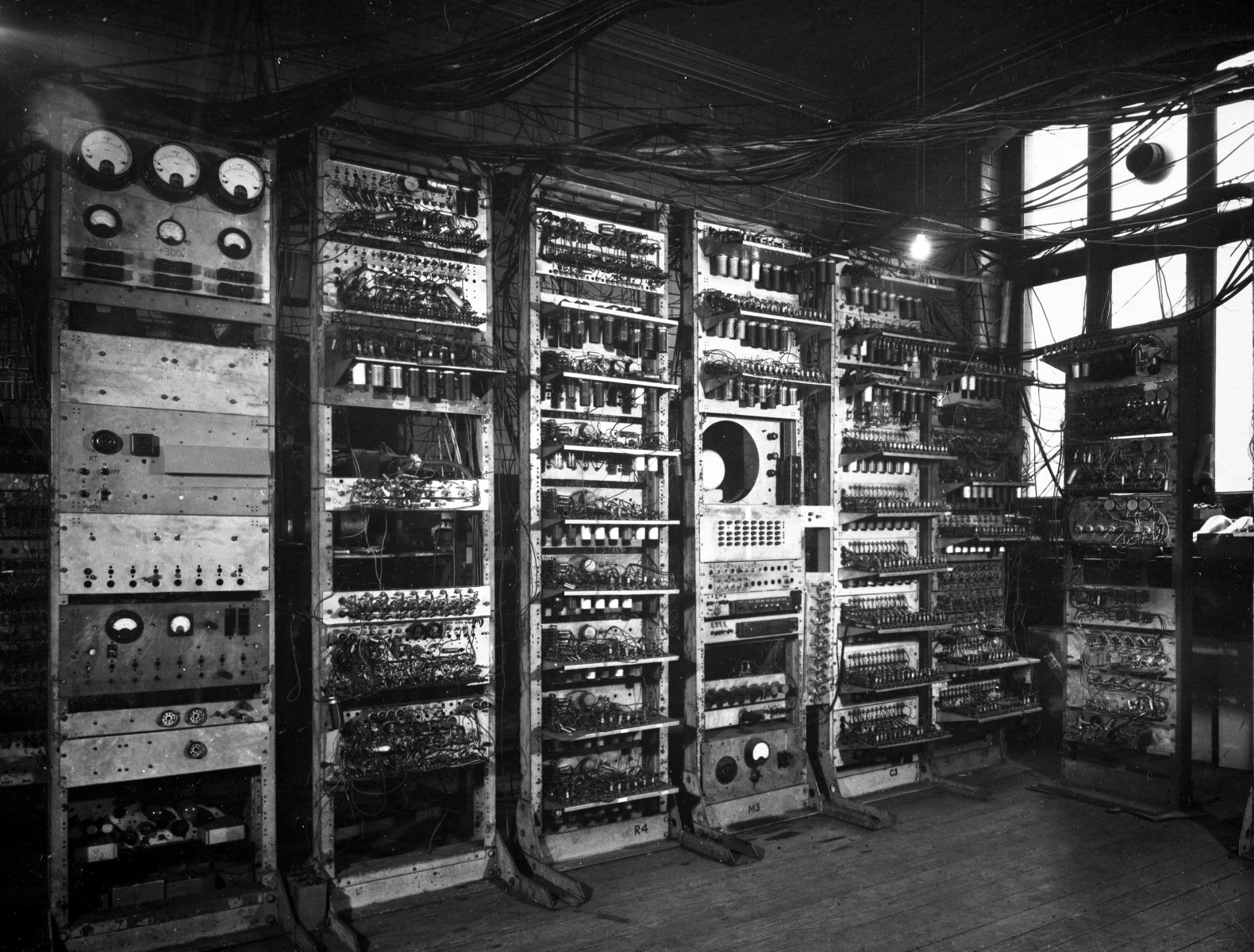
The original ‘Manchester Baby’ completed its first successful run on 21 June 1948 / Credit: University of Manchester
Obviously, us Mancs know that our city is a special one, and we’ve gifted the world so many important things over the years, but why exactly is a new AI research funding prize to be named in Manchester’s honour? Well, it’s all because Manchester has earned its place in computing history and continues to be a pioneer in computer science today.
ADVERTISEMENT
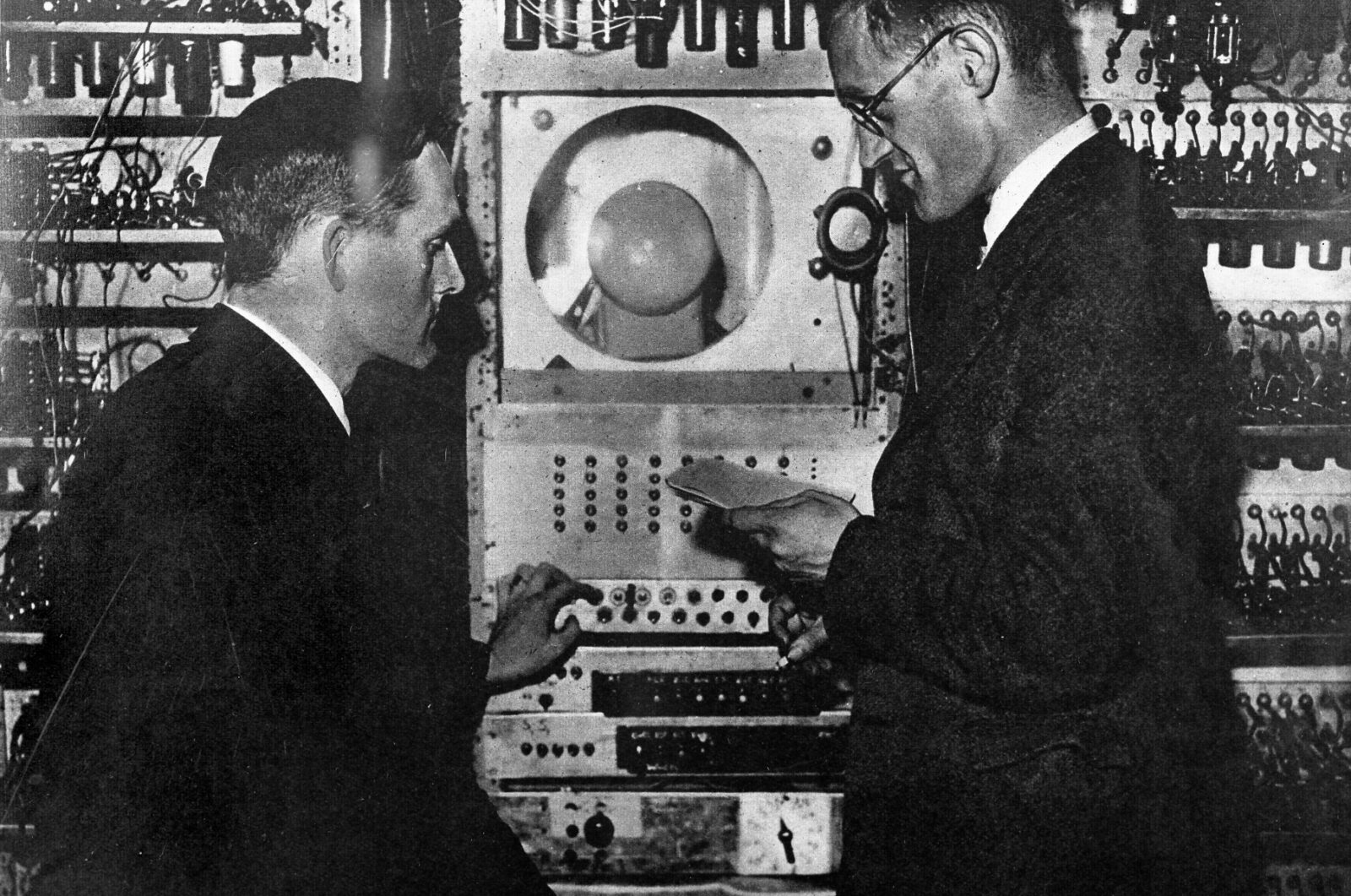
In case you didn’t know, on 21 June 1948, the world’s-first stored program computer – named the Manchester Small-Scale Experimental Machine, and later nicknamed the ‘Manchester Baby’ – completed its first successful run at the University of Manchester (UoM), taking just 52 minutes and running through 3.5 million calculations before it got to the correct answer.
And it’s safe to say, this went on the change the world.
“75 years on, the Baby has grown up, so I will call this new national AI award the Manchester Prize in its honour,” Mr Hunt announced in his Budget speech yesterday.
ADVERTISEMENT
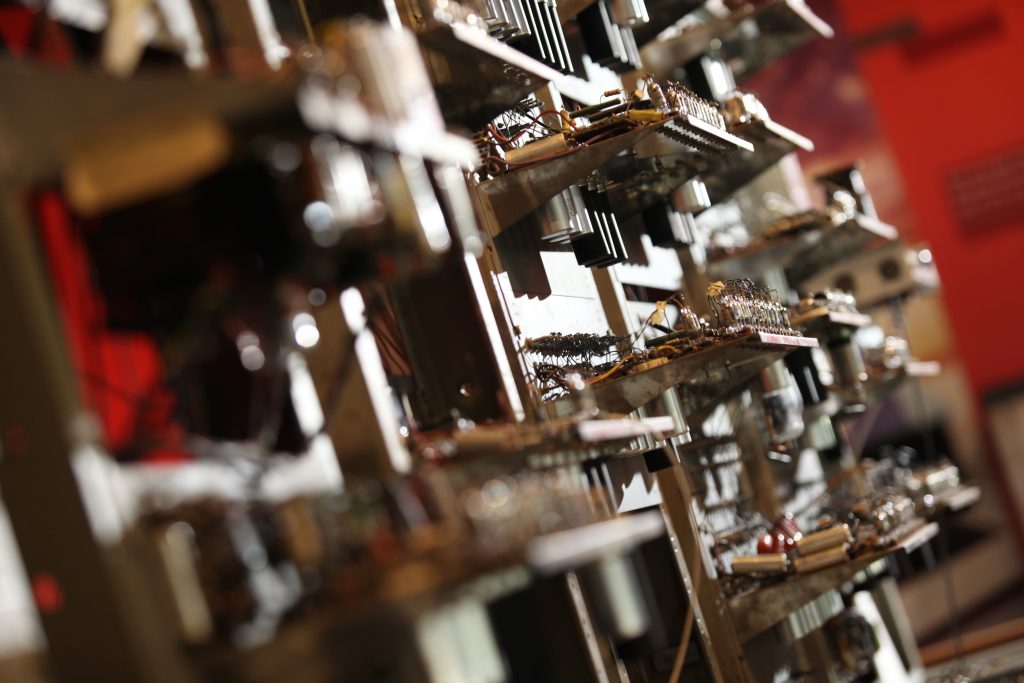
The ‘Manchester Baby’ replica at the Science and Industry Museum / Credit: Science Museum Group
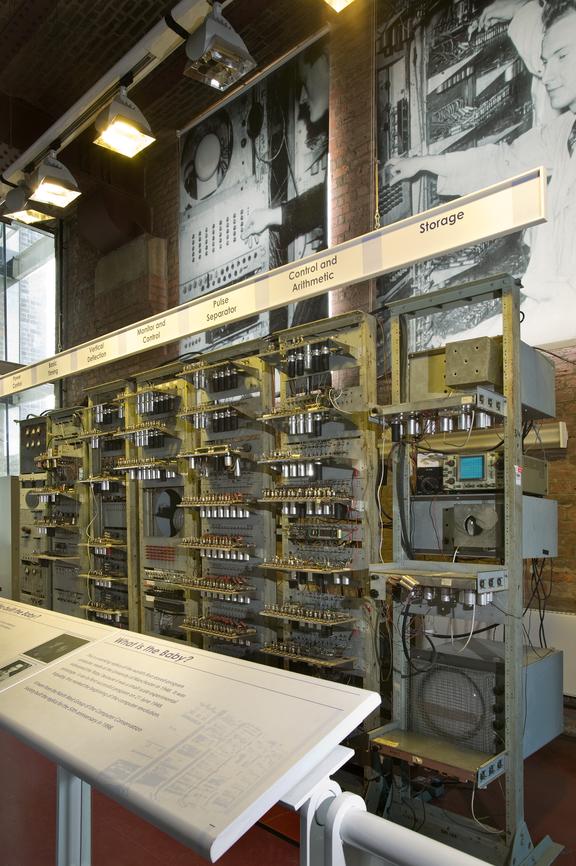
The original ‘Manchester Baby’ computer was built using technology developed for World War II radar and communications equipment, and sadly no longer exists – but the Science and Industry Museum in the heart of the city centre is home to a full-scale replica that was built in 1998 with the guidance of the original designers using 1940s vintage parts.
The replica was built to mark the 50th anniversary of the groundbreaking invention, and attracts hundreds of thousands of visitors to the museum to see it every year – with a talented team of volunteers regularly running programs on it live in the gallery.
It really does demonstrate just how far computing has come since 1948.
To this day, the ‘Manchester Baby’ still proves to be the basic blueprint used in billions of computers, and the scientists and engineers that call Manchester home continue put the city at the forefront of a global technological revolution.
A new national prize for AI has been named in the University's honour after the invention of the Baby – the world’s first stored program computer. #Budget2023pic.twitter.com/71OBglCqHE
— The University of Manchester (@OfficialUoM) March 15, 2023
Artificial intelligence research has also gone from strength to strength at UoM since then, and today, teams of scientists, professors, and experts at the University working work on fundamental AI, robotics and autonomous systems, advanced manufacturing systems, and neuroscience daily.
ADVERTISEMENT
So, is it really any wonder why the new £1 million annual AI funding prize has been named after Manchester? We certainly can’t think of a better city for its namesake.
You can find out more about visiting the ‘Manchester Baby’ replica on the Science and Industry Museum website here.
The museum also has a packed programme of events happening this Spring to occupy the kids during the school holidays, including a massive “gaming extravaganza” and the chance to check out the popular immersive Power UP exhibition, and you can find out more and grab tickets here.
Government announces social media crackdown with potential ban for under 16s
Emily Sergeant
The Government has announced a social media crackdown in a bid to keep children safe amid rapid technology changes.
Prime Minister Keir Starmer wants to take ‘immediate action’ to make the online world safer for children.
The new measures announced today include a crackdown on ‘vile’ illegal content created by AI, including fast action to shut a legal loophole and force all AI chatbot providers to abide by illegal content duties in the Online Safety Act or face the consequences of breaking the law.
The Government says it’s also taking new legal powers to lay the groundwork for immediate action following its consultation on children’s wellbeing online carried out earlier this year.
No social media platform should get a free pass when it comes to protecting our kids.
These new powers introduced this week will mean Government ministers can act fast on the findings of the consultation within months, rather than waiting years for new primary legislation every time technology evolves, and this means, crucially, being able to prohibit measures like setting a minimum age limit for social media – which Australia famously became the first country to do so last year – and restricting features like infinite scrolling that are also harmful.
It’s also likely that there will be restrictions introduced on children’s use of AI chatbots, as well as options to age-restrict or limit children’s VPN, and changing the age of digital consent.
The Prime Minister has insisted ‘no platform gets a free pass’.
The Government has announced a social media crackdown with a potential ban for under 16s / Credit: Julian Christ (via Unsplash)
“As a dad of two teenagers, I know the challenges and the worries that parents face making sure their kids are safe online,” Mr Starmer said.
“Technology is moving really fast, and the law has got to keep up. With my Government, Britain will be a leader not a follower when it comes to online safety. The action we took on Grok sent a clear message that no platform gets a free pass.
“Today we are closing loopholes that put children at risk, and laying the groundwork for further action. We are acting to protect children’s wellbeing and help parents to navigate the minefield of social media.”
Featured Image – Robin Worrall (via Unsplash)
News
Pep Guardiola delivers important reminder about multiculturalism after Jim Ratcliffe controversy
Danny Jones
Manchester City manager Pep Guardiola has delivered an important message about the power of multiculturalism in his most recent press conference.
Guardiola’s comments come after the high-profile controversy surrounding his rival club across the city, Man United, whose co-owner, Sir Jim Ratcliffe, saw some of his recent remarks fall under major scrutiny.
In case you somehow missed it, the Failsworth-born British billionaire was heavily criticised after claiming he believes the UK has been “colonised by immigrants”.
Fast forward a couple of days, and while the club and the fan base are still dealing with the fallout of the story, Pep acknowledged the debate by reminding people that “embracing other cultures” makes for a “better society”.
Well put, Pep – in fact, we couldn’t have said it better ourselves.
Although he didn’t reference the 74-year-old directly after being probed on the subject by journalists, the Man City boss reiterated that his time spent living and working across the world has only broadened his mind and enriched his life.
That goes for both his professional and personal spheres, by the way, as the Catalan coach has often spoken of his love for English culture and the Manc people, specifically.
Speaking ahead of this weekend’s FA Cup game against local side Salford City, Pep described the attitudes towards immigrants around the world as a “big problem” despite most people simply leaving their country in search of “a better life”.
He also drew attention to the fact that he, like so many others in football – a sporting industry loved the world round by people from all walks of life and that the likes of Ratcliffe directly benefit from – is an immigrant working and contributing to not just the game but the British economy by being here.
Meanwhile, Manchester United have since shared a public statement on their club website and across social media, reiterating to fans and supporters the world over that they are an “inclusive club”.
‘We will continue to represent our people, our city and our fans with purpose and pride.’
The INEOS chairman, CEO and minority stakeholder in Manchester United Football Club, has since apologised (at least in part) for his “choice of language” following the divisive interview with Sky News.
In a world where plenty of people are quick to pessimism, negativity and turn to division almost by default, Pep’s message is one echoed by so many and is one that we should all keep in mind.
And for anyone who needs a more light-hearted bit of content on their timeline this week, here’s what else Pep said in his pre-match presser…
Pep Guardiola responding to a really intelligent question from a reporter:
‘Do you want to be my assistant coach, fucking hell, you are brilliant…’