A new study has revealed that girls in the north feel less happy, confident, and safe than those in the south of England.
According to a recently-conducted research by Girlguiding – which saw some 3,015 girls and young women aged between seven and 21 across the UK surveyed between March and April for the charity’s annual Girls’ Attitudes Survey 2022, funded by the People’s Postcode Lottery – girls from the North were found to be “significantly less happy” with their lives than their Southern counterparts.
Northern girls were also less likely to feel safe in public, and also felt that certain gender stereotypes hold them back at school, according to Girlguiding.
Overall, the survey found that more than half of girls and young women aged 11 to 21 do not feel safe outside alone (53%) in the North, while 45% said the same about being out in public, and 19% did not feel safe in school.
More than half of girls in the North (51%) feel just generally unsafe in public – which is compared with 41% of those in London and the South.
3,000+ girls and young women told us about the things that affect their lives – from sexism and stereotypes to mental health and wellbeing. We amplify their voices 🧵👇 pic.twitter.com/fsjKpKArSw
Girls in the North were also found to be the least likely to feel safe outside alone and at school.
It’s not just in public, as 26% of northern girls said they do not feel safe online, and the survey even found that 36% of girls and young women on average – 41% in the north – are put off certain jobs due to the level abuse that high-profile women get online.
ADVERTISEMENT
Girls and young women in the North were also more likely to say that gender stereotypes hold them back at school (26%), compared with 21% overall and 18% in the South.
Overall, two-thirds of girls and young women aged 11 to 21 said they experience or see sexism in their daily lives at school, college, university, or work, and 17% aged 13 to 21 said the fear of sexual harassment holds them back at school.
New study finds Northern girls feel less ‘happy, confident, and safe’ than those in the south / Credit: Priscilla Du Preez (via Unsplash)
“It’s shocking how many girls and young women, some as young as 11 years old, don’t feel safe at school, on social media or out in public,” commented Angela Salt – chief executive of Girlguiding.
ADVERTISEMENT
“Our research shows just how common discrimination, stereotyping and sexism is in our society and how unsurprisingly this creates barriers to happiness, confidence, and success.
“Coupled with the disparities in girls’ experiences across the country, it is vital we act now to address these issues to ensure every girl and young woman is provided with the opportunities to fulfil their potential, no matter where they live.”
Girlguiding is now calling on the government to take action.
The charity said the government must ensure levelling up is meaningful for girls and young women by prioritising their safety and wellbeing in education, health and public spaces, and online.
Details released of Andy Burnham’s meetings with Manchester City owners while Mayor
Emily Sergeant
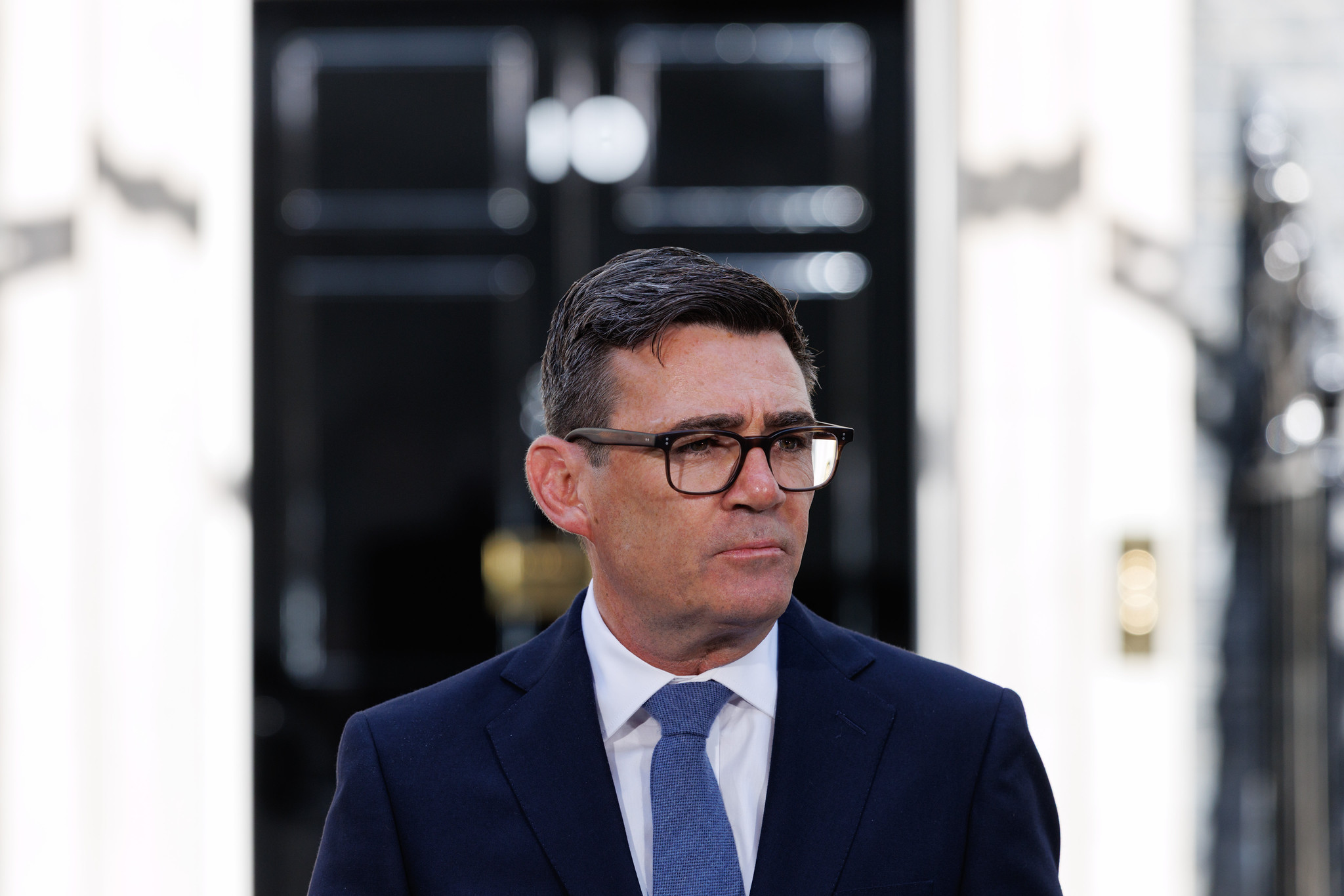
Details of Andy Burnham’s meetings with Manchester City owners during his tenure as Mayor of Greater Manchester have been released.
In case you need bringing up to speed on the situation a little first, Manchester City was found guilty back in September all of its charges related to the Premier League’s financial rules over a nine-season period, and on top of that, was also found guilty of the majority of charges in relation to its failure to co-operate with the League’s investigation.
According to the Premier League, the independent Commission found that Manchester City had arranged so-called ‘sham’ commercial deals with a number of its sponsors.
These were part of a disguised funding scheme – with those sponsors only required to pay a portion of the relevant sponsorship fees.
The remainder was then funded by Abu Dhabi United Group Investment & Development Ltd (ADUG), which owned the club.
The Commission also concluded, as quoted by the Premier League, that the club had ‘made concerted efforts to stop and frustrate the Premier League investigation’.
Within the past week or so, it has since come to light that now-Prime Minister Andy Burnham had dealings with Manchester City during his tenure as Greater Manchester Mayor, and Greater Manchester Combined Authority (GMCA) has now issued a public statement, giving details on the matter and what these ‘dealings’ entailed.
A spokesperson for GMCA confirmed that Burnham had a ‘formal meeting’ with Man City Chairman, Khaldoon Al Mubarak, back in October 2021.
The statement reads in full: “In October 2021, Andy Burnham, in his role as Mayor of Greater Manchester, had a formal meeting with Khaldoon Al Mubarak at the UK Government’s Global Investment Summit arranged by the Department for International Trade.
“In his capacity as Mayor, he was a guest of Manchester City FC at home matches on a small number of occasions, including attending Vincent Kompany’s testimonial match in September 2019, where he met the Chairman informally in the stands. These have been declared in the usual way.
“Also during his time as Mayor, representatives of Greater Manchester sporting clubs would routinely join business delegations as part of Mayoral international visits.
“This included representatives from Manchester United travelling to Austin and Dublin, Lancashire Cricket Club joining a delegation to India, and Manchester City FC staff supporting visits to China and Japan.”
Featured Image – Lauren Hurley / Number 10 Downing Street (Press Image via Flickr)
News
Multiple arrests made for ‘tragedy chanting’ and police officer assault as Man City defeated Liverpool
Emily Sergeant
Multiple people were arrested over the weekend as Manchester City defeated Liverpool in a Premier League clash.
Merseyside Police have confirmed that a total of 10 people were arrested during the policing operation at Liverpool’s home ground of Anfield as they hosted Manchester City on Sunday 11 October.
One man was arrested on suspicion of assaulting a police constable, five were on suspicion of tragedy chanting, one on suspicion of being drunk and disorderly, two for affray, and one on suspicion of throwing items onto the pitch.
Police are now appealing to the public, and are particularly looking to speak to witnesses of the assault of the officer.
At around 6:35pm, as fans left the stadium, a police officer sustained a ‘serious facial injury’ during the arrest of a man on Anfield Road, and was subsequently taken to hospital for treatment but is now recovering at home.
Investigating officers are now conducting enquiries, speaking to witnesses, and analysing CCTV and camera phone footage.
Chief Inspector Leanne Hobin said it’s ‘extremely disappointing’ that an officer has sustained a serious injury while carrying out their duty.
“I hope the arrests send a clear message and act as a deterrent to others,” Chief Inspector Hobin continued. “Anyone who engages in this abhorrent behaviour risks ending up in custody and getting a criminal record.
“Despite the actions of a few, the overwhelming majority of the 60,000 fans in attendance behaved well and I want to thank them for their co-operation.”
Manchester City ended up defeated Liverpool 3-0 during the Premier League clash at Anfield.

 Emily Sergeant -
26th October 2022
Emily Sergeant -
26th October 2022