News
Officer who led police response to Manchester Arena attack could face criminal charges
He is currently being investigated by the the Independent Office for Police Conduct (IOPC).
 Emily Sergeant -
6th July 2023
Emily Sergeant -
6th July 2023 A former police officer who led the first response in the wake of the Manchester Arena attack could be facing criminal charges.
Police watchdog, the Independent Office for Police Conduct (IOPC), has today revealed that it will be referring a file of evidence to the Crown Prosecution Service (CPS) on accounts of the night of the atrocity on on 22 May 2017 as provided by former Greater Manchester Police (GMP) officer, Dale Sexton.
Mr Sexton has now retired from the force, but was the Chief Inspector and force duty officer in the city centre on the night of the attack, and led the initial police response.
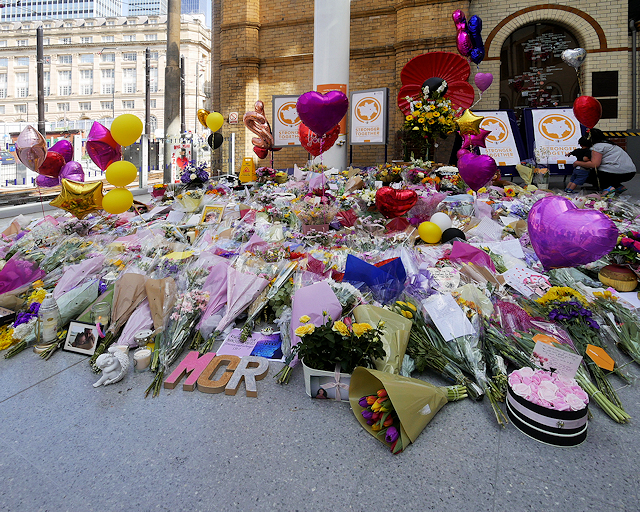
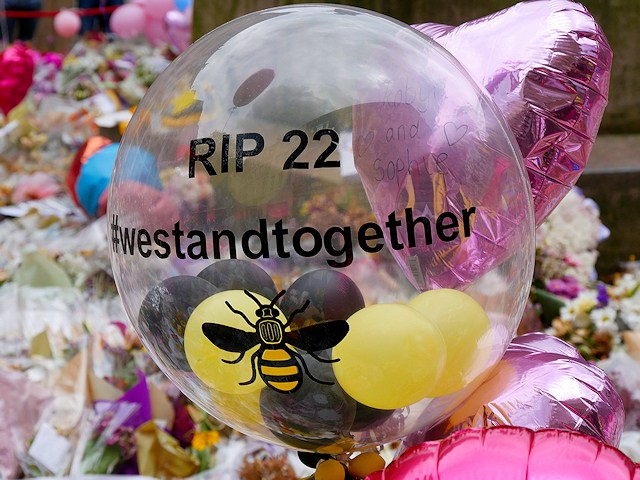
22 people tragically lost their lives, and thousands more were left injured and affected, during a bombing at the end of an Ariana Grande concert at Manchester Arena.
The IOPC had already previously investigated a complaint lodged on behalf of the victims’ families in relation comments provided as evidence by Mr Sexton, where the now-retired officer denied he was “overwhelmed” with the situation and claimed GMP made “a deliberate decision” not to inform other emergency services that the force had declared ‘Operation Plato’ – which was an agreed national identifier to a no-notice marauding terrorist firearms attack.
However, when interviewed back in 2018 as part of the Kerslake Report, Mr Sexton neglected to mention going against protocol and keeping the declaration secret from partner services.
When Mr Sexton was later challenged by the independent inquiry into the emergency response – which was commissioned by Greater Manchester Mayor Andy Burnham – as to why he had not admitted to going against the protocol earlier, he said he felt like he had “almost got away with it on the night”.
When the investigation finally concluded earlier this year back in February, Mr Sexton was cleared by the IOPC of breaching standards of professional behaviour or committing a criminal offence.
But now, after the IOPC has “subsequently completed and upheld” a Victims’ Right to Review (VRR) – which it says was requested by the families of the victims – a second decision maker, who has no connection to the original investigation, reviewed the “substantial amount of evidence” gathered during the IOPC investigation and determined “an offence may have been committed”.
“We will now begin preparing a file of evidence for the CPS to consider any possible charges,” the IOPC confirmed in its statement this morning.
Addressing the situation, Amanda Rowe – who is the Director of Operations at the IOPC – commented: “The Manchester Arena bombing was a tragedy that had a profound impact right across Greater Manchester and beyond, [and] it will live long in the memories for all the wrong reasons and our thoughts remain with all those affected by this horrific act of violence.
“This was a complex investigation, carried out independently of police, and investigators obtained a significant amount of information, which was considered as part of our decision-making.
“In cases like this, and in line with other organisations, victims and complainants have a right to have their case reviewed by someone unconnected to the original investigation [and] in this instance, we determined the matter requires further exploration and will be submitted to the CPS to consider in due course.
“A referral to the CPS does not necessarily mean that criminal charges will be authorised.
Read more:
- More than 16,000 people trained in first aid thanks to campaign set up after Manchester Arena attack
- Nearly half of the Manchester Arena attack injury compensation claims have been rejected
- Manchester Arena attack memorial vandal who caused £10k-worth of damage is sentenced
“It will now be for prosecutors to determine whether charges should follow and, if so, what those charges may be.”
Featured Image – GMP