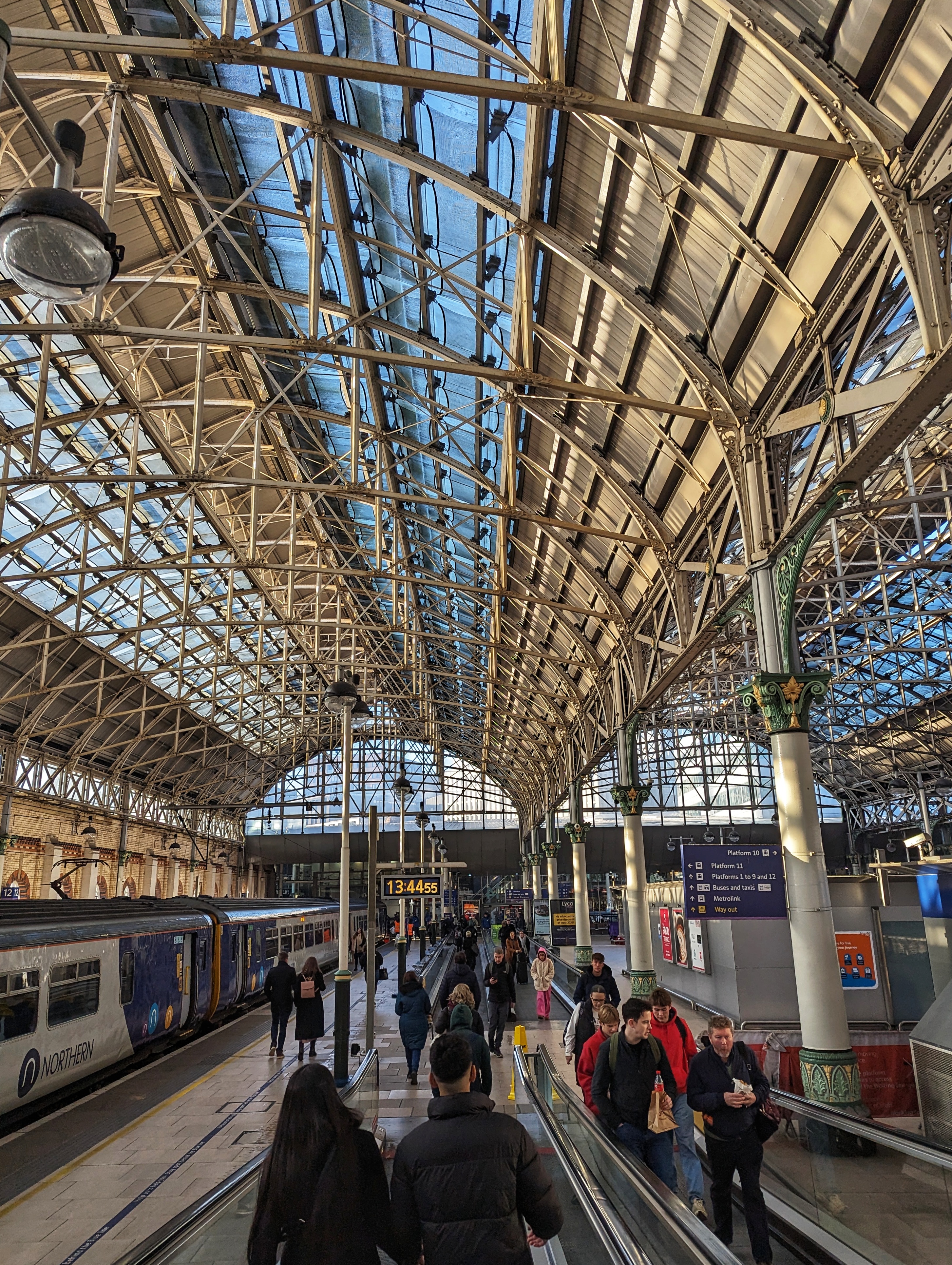
Manchester Piccadilly is set to close for nine days for a major ‘once-in-a-generation’ £7.9m upgrade.
The busiest train station in the North West will be almost entirely shut for more than a week next February, to enable improvements to take place to both track and signalling systems on the southern approach.
The work will span all main lines, which means passengers will find no trains from the south or east of the city will run into Manchester Piccadilly.
The main train shed – which is platforms one to 12 – will be closed completely, but the concourse will remain open and so will platforms 13 and 14 for limited westbound services.
Teams will be replacing 11 sets of points, renewing 9,000m of cabling, upgrading timber sleepers with modern concrete equivalents, and bringing lineside equipment bang up to date across six lines – some of which dates back to the 1980s.
ADVERTISEMENT
Network Rail has said that this investment has been ‘long-awaited’, with the ageing infrastructure capable of disrupting all trains in and out of Manchester.
There will be no trains from the south and east of the city into Manchester Piccadilly for nine days over February half term (Saturday 14 – Sunday 22 February 2026).
ADVERTISEMENT
Some trains from across the north will also be impacted during the essential upgrades as well as direct connections to Manchester Airport station.
These services will terminate at other stations, including Stockport, with staff on hand across the network to coordinate bus and Metrolink Bee Network journeys.
Manchester Piccadilly to close for NINE days for ‘once-in-a-generation’ upgrade. Credit: Network Rail
Alternative travel plans will be released in the coming months by Network Rail, train operators, Transport for Greater Manchester (TfGM) and Manchester City Council.
ADVERTISEMENT
Julien Dehornoy, Network Rail’s North West & Central deputy regional managing director, said: “We’re investing £7.9m in renewing the Piccadilly corridor, a stretch of track critical to the journeys of around 400,000 trains into Manchester every year.
“This work is going to significantly reduce disruption for the many passengers who regularly use this route. Once the job is done, we will have a better, more reliable railway.
“The major overhaul over six railway lines can only take place during a full railway closure and we are working closely with train operators, TfGM and Manchester City Council on alternative travel plans to keep people on the move, the full details on which will be published in mid-November.”
Simon Elliott, Network Director Rail at TfGM, said: “This investment in Manchester Piccadilly’s rail infrastructure is a crucial step forward in delivering a reliable and resilient railway for passengers, freight and supporting the city-region’s continued economic growth.
“While unfortunately there will be some short-term disruption due to the nature of the works, through the Bee Network we’re committed to working with rail industry colleagues to ensure people can still move easily across Greater Manchester while these essential upgrades take place.”
ADVERTISEMENT
A spokesperson for train operators said: “This work will improve the reliability of trains running into the region’s busiest station.
“In the coming months, passengers can expect more detailed information about their specific journeys and any potential disruption.
“We would urge people to check with their operator or with National Rail Enquiries to plan their travel in advance.”
Featured image: The Manc Group
Travel & Tourism
The surprisingly luxurious caravan park that’s the perfect place for a Peak District getaway
Daisy Jackson
We probably all have fond memories of caravan holidays as a child, frolicking around the British countryside before tucking up on a squeaky single bed – and as fond as those memories may be, they don’t exactly scream *luxury*.
But the times are a-changing, and so are UK holiday parks, with many caravans and static homes now kitted out just as beautifully as any premium lodge or Airbnb.
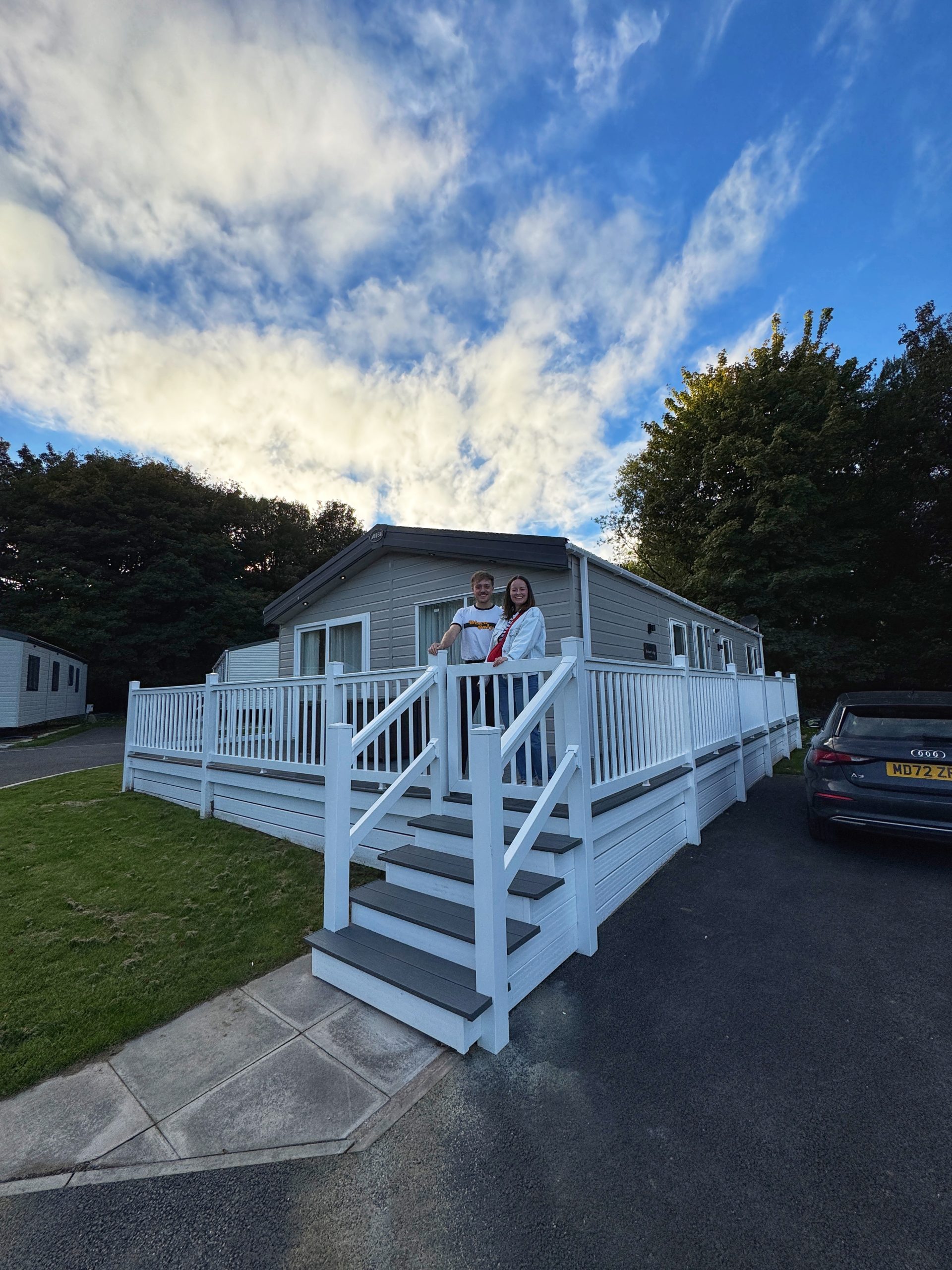
You’ll find some such caravans at Newhaven Holiday Park, which sits right at the heart of the Peak District and is perfectly placed for exploring some of the area’s best attractions.
The platinum lodges here feature sizeable living spaces – a lounge, fully-equipped kitchen, and dining room (again, unlike your childhood holidays where you’d just fold away the table) – alongside three bedrooms, two of which have en suite bathrooms.
The design details are premium, like matte black bathroom fittings, pale wood details, and plush carpets.
The huge living space and kitchenNewhaven Holiday ParkAn en suite bedroom in the platinum lodge
But really, the best thing about staying at Newhaven Holiday Park is that it lands you right on the doorstep of some of the Peak District’s best bits.
Within seconds, you’ll find yourself surrounded by rolling hills dotted with sheep and pheasants, and within a short drive you’ll be strolling around the beautiful grounds of Chatsworth Estate, currently ablaze with autumn colours.
If you’re feeling peckish after your walk, head a short distance along into the charming village of Baslow, and to Charlotte’s of Baslow, a lovely cafe serving treats like soup in a bread bowl, apple crumble oats, and açai bowls.
Pastries at Charlotte’s of Baslow
You’re also not far from the village of Bakewell, home of the Bakewell Pudding (visit the higgledy-piggledy The Old Original Bakewell Pudding Shop for a potted history of the pudding and its sibling, the Bakewell tart).
The village is also packed with local independent bakeries, delis, cafes, shops, and more.
On your way back to Newhaven Holiday Park, swing by Tagg Lane Dairy, an ice cream farm making its own award-winning gelato, with flavours like apple pie, and pineapple chilli cheesecake.
Tagg Lane DairyBakewell villageThe Old Original Bakewell Pudding Shop
If you’re looking for a great base in the Peak District, without blowing the budget, definitely don’t overlook a caravan stay.
You can see more and book your stay at Newhaven Holiday Park HERE.
No trams to run on THREE major Greater Manchester lines for two weeks this month
Emily Sergeant
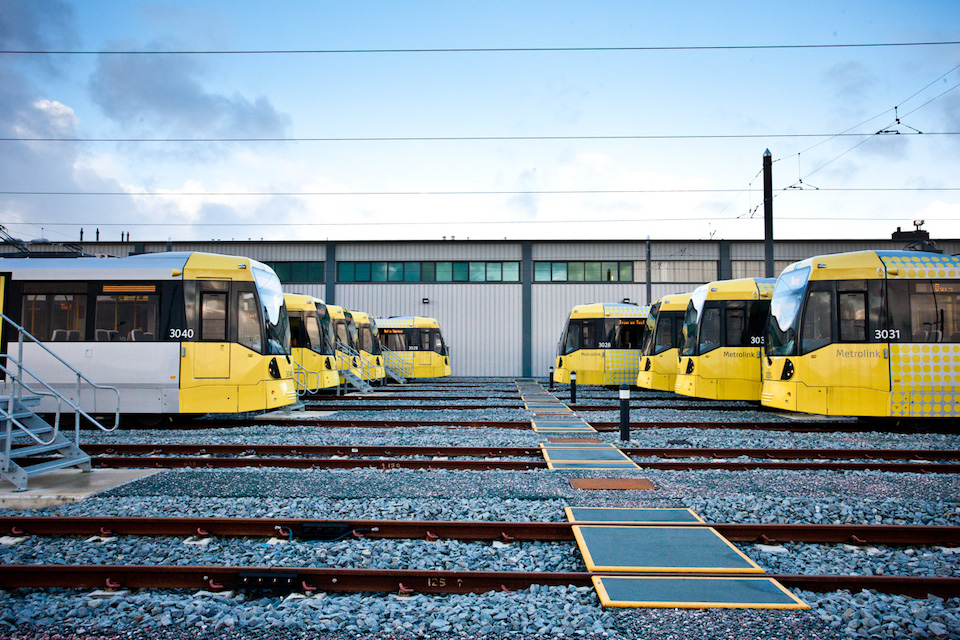
Widespread disruption is expected, as no trams will be running on three major Greater Manchester lines for two full weeks.
As the next phase of the ongoing £150m investment into Greater Manchester’s tram network gets under way later this month, it has been announced that essential improvement work is set to be be carried out on three major Metrolink lines across the region in a bid to make the network ‘safer’ and ‘more resilient and reliable’ for years to come.
From Monday 19 October to Sunday 1 November, tram improvement works will take place at Deansgate-Castlefield, and Trafford Bar.
Additional works will also take place in the city centre during this time, allowing Transport for Greater Manchester (TfGM) to keep closures of the tram network to a minimum.
During the dates above, no trams will run on the Altrincham, Trafford Centre, and Eccles lines.
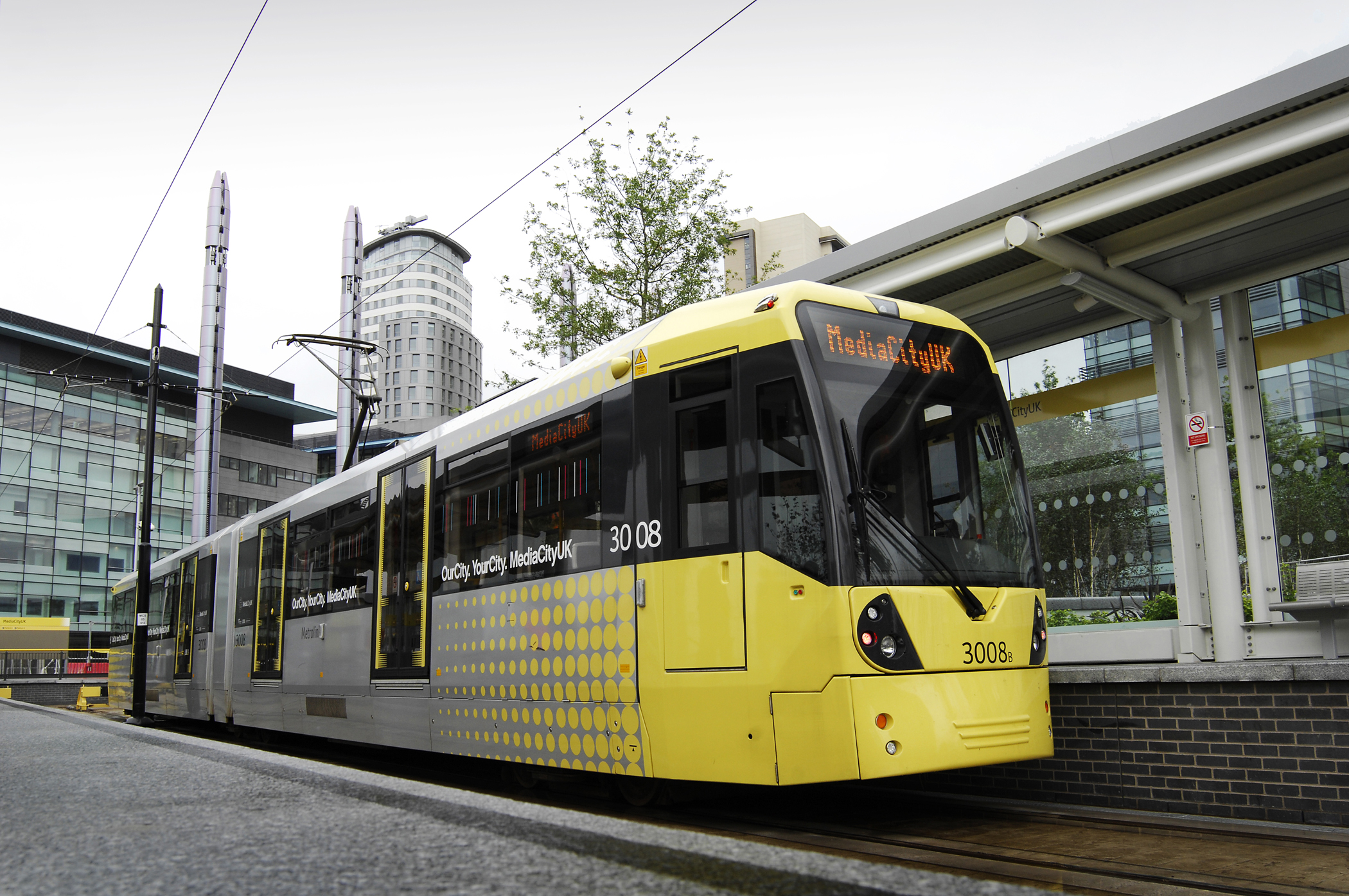
No trams will be running on three major Greater Manchester line for two weeks this month / Credit: TfGM
A number of shuttle bus services will the running over the course of the two-week closure – with services arriving every 10 or 15 minutes, depending which line it’s on, and you can find a full list of these here.
Services operating on the East Didsbury and Manchester Airport lines will terminate at Firswood, and from Firswood, passengers will then need to board a replacement bus service to continue their journey into the city centre.
Services operating on the Rochdale line will terminate at Exchange Square, it has also been announced.
Services will resume on these lines from start of service on Monday 2 November.
However there will be some minor route changes through the city centre in place from Monday 2 to Wednesday 4 November, so it’s important to check your journey before you travel.

 Daisy Jackson -
25th November 2025
Daisy Jackson -
25th November 2025