A ‘significant’ programme of works are set to be carried out across Greater Manchester’s tram network this year.
As part of a wider £150m plan to ‘maintain, upgrade, and improve’ tram infrastructure across the region and make sure the Bee Network continues to deliver reliable and accessible services for millions more people into the future, Transport for Greater Manchester (TfGM) has announced that it’ll be undertaking various works throughout 2026.
And just as you’d expect, there is expected to be some ‘temporary periods of disruption’ for passengers while they are carried out.
Work is set to begin from this spring through to the autumn at a number of locations across the Greater Manchester network – including near Trafford Bar, Deansgate-Castlefield, Monsall, Newton Heath & Moston, Eccles, Derker and Piccadilly Gardens.
This does mean trams will have to stop on some lines while the work is done, but TfGM will reveal more information on this in due course, and promises ‘plenty of notice’ too, so keep your eyes peeled.
ADVERTISEMENT
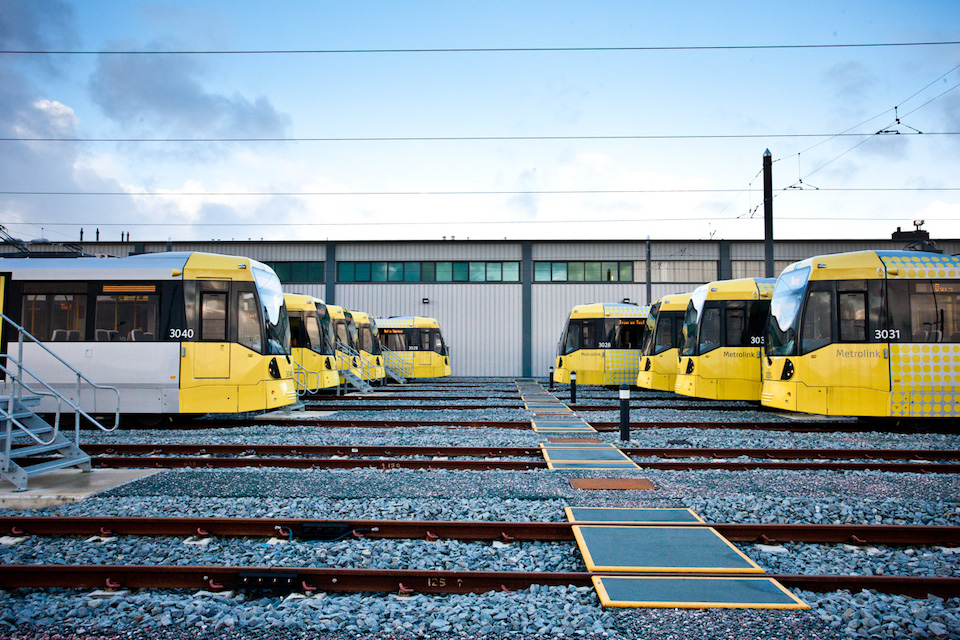
A ‘significant’ programme of Metrolink engineering works are set to run throughout 2026 / Credit: TfGM
The first major works will take place during the Easter Weekend at Trafford Bar and Deansgate-Castlefield, which are ‘preparatory works’ ahead of full track replacement later in the year, set to be carried out over four days from 3 to 6 April.
During this closure, rail replacement work will also take place on the Altrincham line, meaning there will be no trams on the Altrincham, Eccles, and Trafford Park lines all weekend, while the East Didsbury and Manchester Airport lines will run to Firswood only.
ADVERTISEMENT
Aside from plans for engineering works, there will also be somewhat reduced services for a different reason for a large chunk of the year.
From Monday 30 March until autumn, a revised timetable will be introduced across the tram network while a significant recruitment drive gets underway to ‘take on and train up’ new tram drivers in a bid to build extra capacity and resilience in the workforce.
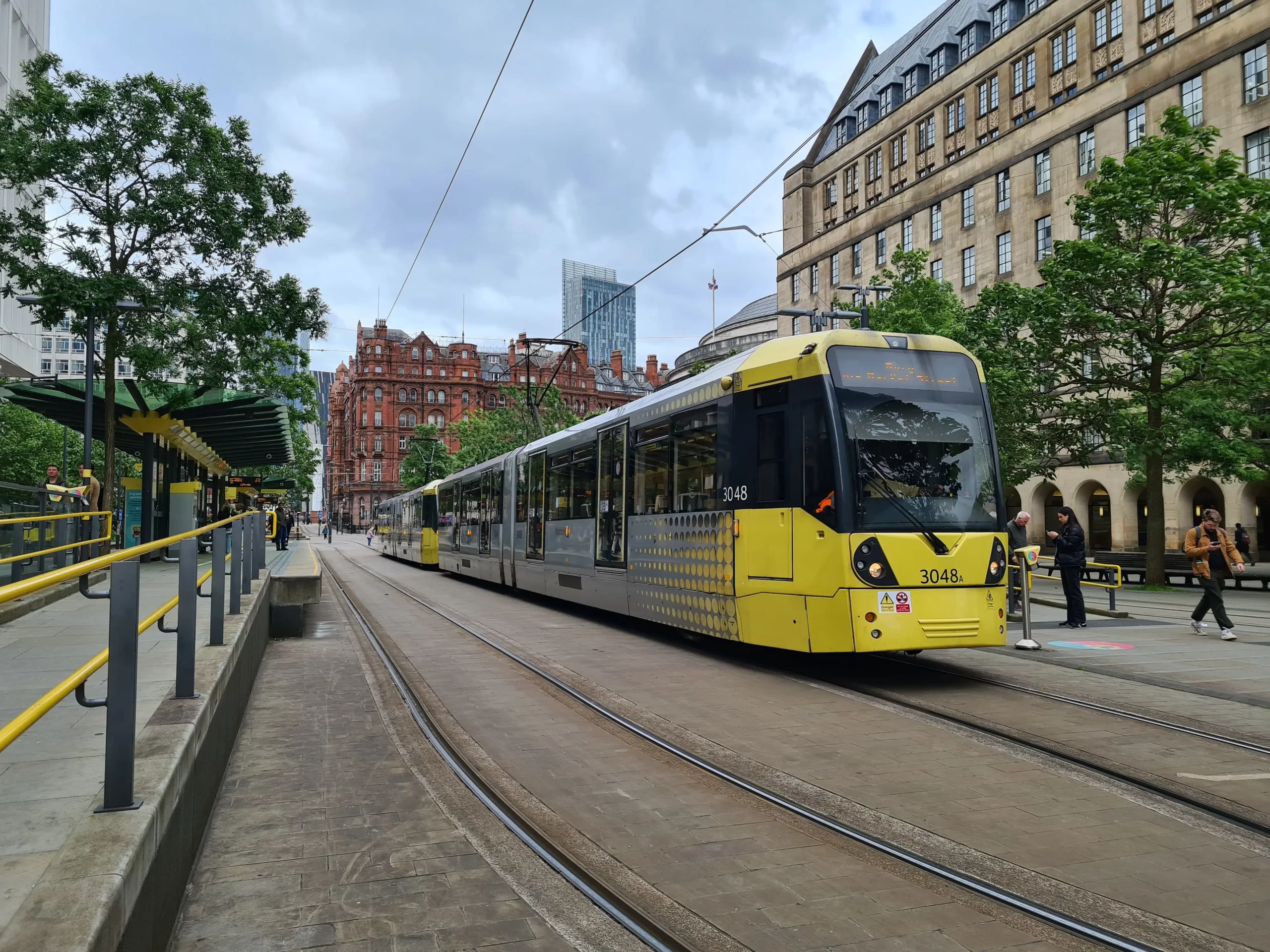
TfGM has indicated that some disruption will be caused for passengers / Credit: Janus Boye
During this time though, TfGM promises there will still be ‘reliable and frequent’ tram services running every 15 minutes and every 7.5 minutes at the busiest times on the most popular lines.
ADVERTISEMENT
“Keeping our network safe, reliable, and ready for the future is our absolute priority,” explained Ian Davies, who is the Network Director for Metrolink at TfGM.
“This year’s programme is one of the most significant we’ve ever undertaken and will strengthen the whole network. Whilst we complete this work, we will introduce a temporary timetable change that will run between spring and autumn.
“We know that some of this work will mean temporary disruption, and I want to thank passengers for their patience while we get it done.
“But by investing now, we can reduce faults, improve day to day reliability and make sure Metrolink can keep pace with the growing number of people who depend on it every day now and for the future.”
You can find everything you need to know about this year’s tram improvement works on TfGM’s dedicated page here.
Featured Image – TfGM
News
TfGM issues statement as ‘essential’ work begins on three major Metrolink lines across Greater Manchester
Emily Sergeant
Passengers are being urged to plan ahead as no trams will be running on three major Greater Manchester lines for the next two weeks.
If you need bringing up to speed a little, as part of the ongoing £150m investment into Greater Manchester’s tram network, essential improvement work is being carried out on three major Metrolink lines across the region in a bid to make the network ‘safer’ and ‘more resilient and reliable for passengers’ for years to come.
This means that from today (Monday 19 October) through to Sunday 1 November, tram improvement works will take place at Deansgate-Castlefield, and Trafford Bar.
Additional works will also take place in the city centre during this time, allowing TfGM to keep closures of the tram network to a minimum.
During the dates above, no trams will run on the Altrincham, Trafford Centre, and Eccles lines.
A number of shuttle bus services will the running over the course of the two-week closure, however – with services arriving every 10 or 15 minutes, depending on the line, and you can find a full list of these here.
But despite the alternative services, widespread disruption is still expected for hundreds of people.
TfGM has issued a statement on the works being carried out, and offered support to anyone who may need it: “This is essential work that will help keep our tram network safe, reliable and fit for the future. We’re sorry for the disruption and we’ll be doing everything we can to make sure people can still get around while it’s taking place.
“We’ve listened carefully to feedback from customers during previous closures and have introduced more direct shuttle buses between key locations and extra buses on local Bee Network routes.
“If you use any of the affected lines, now is the time to check your travel plans.
“We’d encourage everyone to visit the Bee Network website or app before travelling so they can see the options available to them and allow extra time where necessary.”
Services will resume on these lines from start of service on Monday 2 November.
However there will be some minor route changes through the city centre in place from Monday 2 to Wednesday 4 November, so it’s important to check your journey before you travel.
Featured Image – TfGM
News
Victim named and murder investigation launched after young woman is killed in Newton Heath stabbing
Emily Sergeant
The victim of a street stabbing in Newton Heath this week has been named for the first time as a murder investigation continues.
It comes after officers from Greater Manchester Police (GMP) responded to reports of a disturbance at around 2am yesterday (Thursday 15 October) on Dorking Avenue, in the Newton Heath area of Manchester, and when they arrived on the scene, they found a woman in her 20s with serious injuries that were ‘consistent with a stabbing’.
Despite best efforts of all emergency services involved, the young woman was sadly pronounced dead at the scene.
As the murder investigation progresses, the woman has now been publicly named and a photo of her has been released for the first time.
She has been named as 26-year-old Alisha Samuels.
At this time, one man, aged 25, has been arrested on suspicion of murder, and a man and woman, aged 61 and 38, have been arrested on suspicion of assisting an offender, and they all remain in custody – with officers continuing their enquiries to establish the full circumstances of this incident.
Alisha’s family have asked for privacy whilst they deal with the devastating loss of their loved one, GMP has stated.
“We are continuing to urge people who may have information in relation to this incident to please come forward to support our investigation and bring justice for Alisha,” the police force said in a public appeal.
Anyone who may have witnessed the incident, or has mobile phone, CCTV, or doorbell footage, is urged to call GMP on 0161 856 5464, or contact them via the Major Incident Public Portal here.
Alternatively, you can contact Crimestoppers on 0800 555 111

 Emily Sergeant -
5th March 2026
Emily Sergeant -
5th March 2026