Pre-departure testing for travellers entering the UK, and the need to self-isolate on arrival until receiving a negative PCR result have now been scrapped under new COVID travel rules.
Speaking to MPs in the House of Commons on Wednesday, Prime Minister Boris Johnson confirmed that several changes would be made to relax the rules that are required to be followed by travellers entering the UK with at least two doses of a COVID vaccine.
The changes came into force from 4am this morning (7 January).
The changes mean that new vaccinated arrivals will no longer have to self-isolate until they get a negative PCR test result, and instead, will have to take a lateral flow test at the end of their second day in the UK, and if that result is positive, they will then require a follow-up PCR.
Unvaccinated passengers will still need to take a pre-departure test and self-isolate for 10 days, ensuring they take a PCR test on day two and day eight.
The Prime Minister explained when he announced these new and more relaxed rules, that previous pre-departure measures were said to be having a limited impact because the Omicron variant is so prevalent.
ADVERTISEMENT
He said the change to measures is a way to “live with COVID without letting our guard down”.
From today, fully vaccinated adults & under 18s don't need to take a pre-departure test before entering England.
From 4am Sunday, fully vaccinated adults & over 5s must take a post-arrival lateral flow test. A PCR is needed if they test positive.
— Department of Health and Social Care (@DHSCgovuk) January 7, 2022
“When the Omicron variant was first identified, we rightly introduced travel restrictions to slow its arrival in our country – but now Omicron is so prevalent, these measures are having limited impact on the growth in cases, while continuing to pose significant costs to our travel industry,” he said in his statement.
Johnson continued: “All these measures are balanced and proportionate ways of ensuring we can live with COVID without letting our guard down.
ADVERTISEMENT
“And we can only do this thanks to the biggest and fastest booster campaign in Europe.”
Transport Secretary Grant Shapps said he hopes the move will make travel “easier and cheaper” for passengers who are fully-vaccinated.
✈️INTERNATIONAL TRAVEL UPDATE ✈️
We're removing the temporary extra testing measures we introduced last year at the border to slow cases of Omicron coming to the UK. Now Omicron is the dominant variant & is widespread in the UK, these measures are no longer proportionate [1/6]
The decision to relax the rules on travel comes after the travel industry had been consistently calling for the removal of all COVID testing restrictions, arguing that it would have no real impact on Omicron infection rates and would actually help to restore consumer confidence.
Reacting to the news at the time, Charlie Cornish – CEO at Manchester Airport Group (MAG) – said: “Today’s announcement is very positive news and will help restart the recovery of the travel and tourism sector [as] the removal of these temporary measures is important recognition that travel restrictions should not remain in place if they no longer help prevent the spread of the virus.
ADVERTISEMENT
“By removing barriers to travel in what is a critical period for forward-booking, passengers, airports, airlines and business across the UK can now plan ahead with confidence.
“We look forward to working with Government on a roadmap for the removal of all remaining restrictions, in order to help our prized aviation sector enjoy a full recovery.”
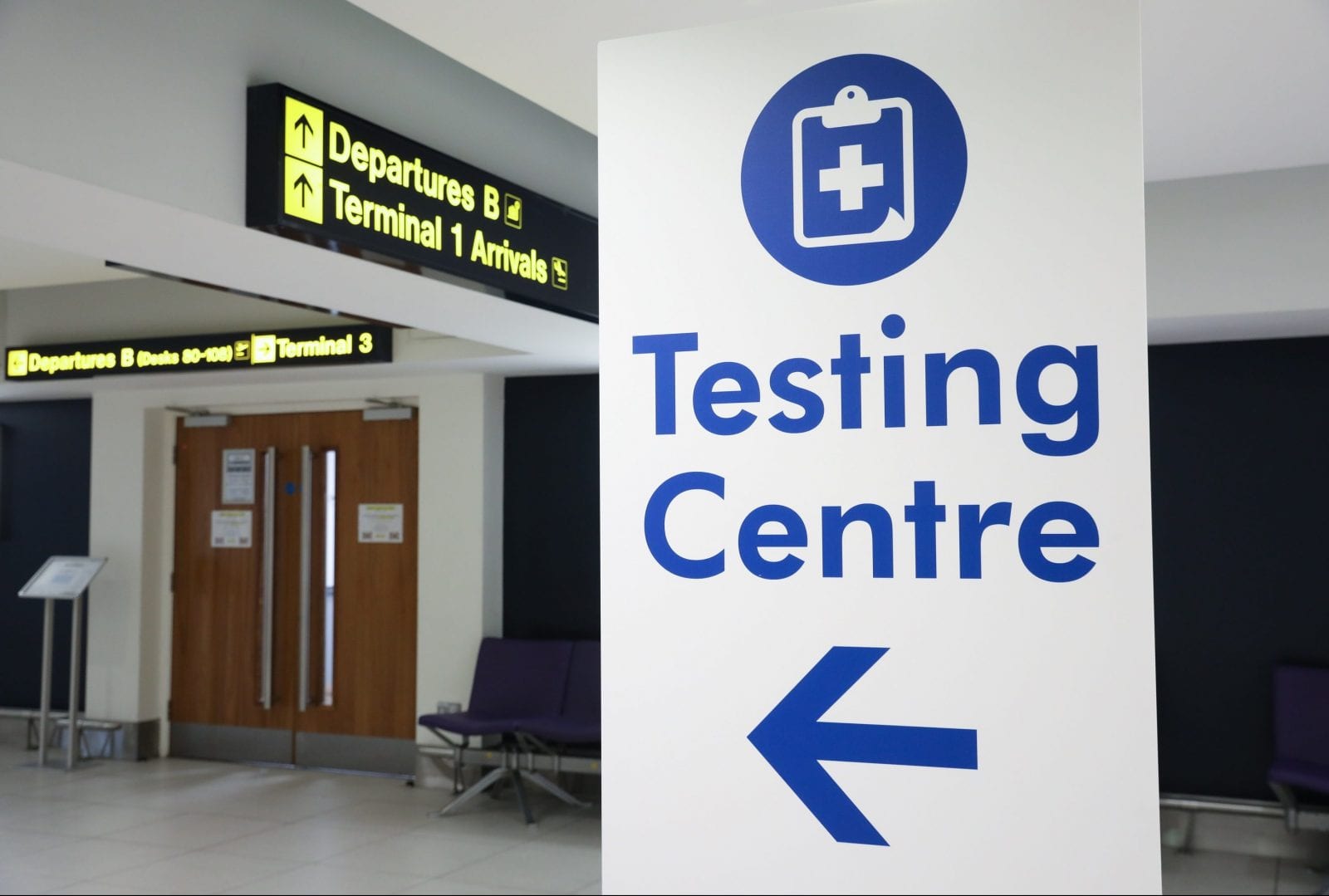
The Prime Minister said relaxing travel measures is a way to “live with COVID without letting our guard down” / Credit: Manchester Airport
Since the changes were announced on Wednesday, a number of travel companies have now reported a spike in interest for international travel, with easyJet revealing it had seen a boost of almost 200% in bookings, with demand for some destinations up more than 400% week on week.
British Airways also told Sky News that its holidays arm had seen a rise of almost 40% in web searches compared with the previous week.
Popular pumpkin patch attraction describes ‘catastrophic’ impact of Storm Boelo
Daisy Jackson
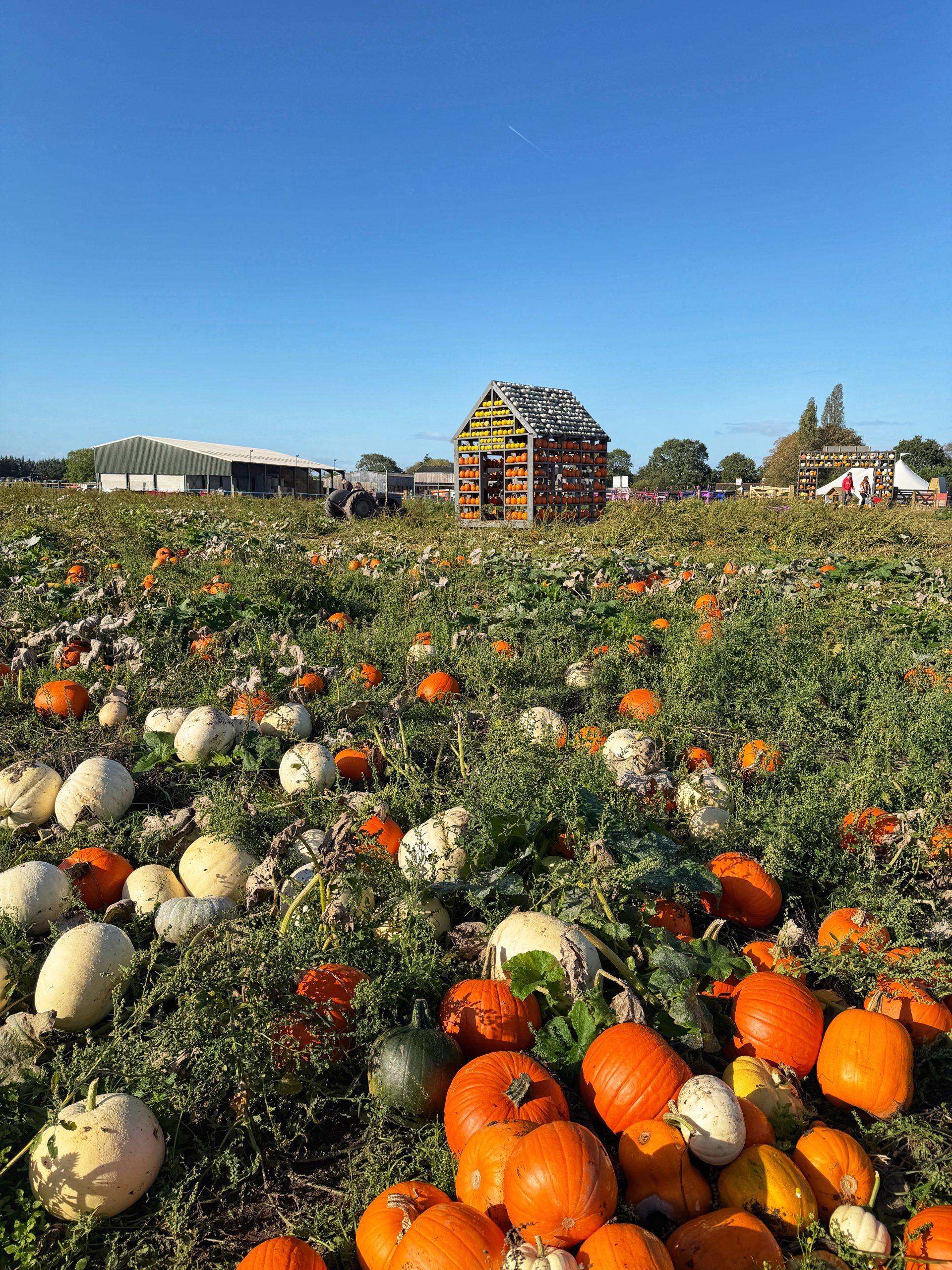
Bates Farm, one of the most popular pumpkin patch attractions in the North West, has shared its heartbreak after Storm Boelo forced its closure on the busiest day of the season.
The Warrington-based family farm said the financial impact has been ‘honestly catastrophic’, after they had to cancel all tickets for Sunday.
Sisters Ali and Fiona Wilshaw, who run the farm, said it was simply not safe to allow members of the public onto the farm in the storm, with ‘crazy’ gusts of wind.
They later shared a video that showed their marquee was badly damaged and many footpaths turned to deep mud.
The sisters said they were ‘heartbroken’ to have to close at such a busy time, but stressed to followers that ‘your safety and our integrity will always come first’.
On Saturday, as Storm Austen and Storm Boelo chased each other across the UK, several people shared videos of themselves getting battered by the weather at Bates Farm.
And it’s pretty clear from that why Ali and Fi decided to cancel all tickets and close for the day on Sunday.
They wrote: “We have put in so much love, energy and investment putting on this event at this scale. The cost to cancel and refund everyone today on our busiest day of the season is honestly catastrophic, but business aside, your safety and our integrity will always come first.
“To think last night we were running round Tesco trying to stock up on milk and now we are in the depths of recovering the site to go again tomorrow. All emails and enquiries are being responded to as quickly as possible and we are doing our best to open up more available slots next week.
“We are being tested like never before, but pulling together in true force. Huge shout out to the whole team and Farmer Fi the absolute queen in any crisis.
“Thank you all for your patience and especially thank you to those who have sent such kind words and support, we are so grateful to have customers like you.
“We will be back tomorrow to enjoy the remaining of this tough season, we are putting in so many provisions with wood chip paths, undercover seating and an indoor barn to make your visit as enjoyable as possible. Ali & Fi.”
Anyone who had tickets to visit Bates Farm on Sunday will be refunded, and can book in for another date.
Bates Farm has safely reopened its autumnal experience and pumpkin patch today.
‘Violent’ Salford man jailed after raping two women he met on dating apps
Emily Sergeant
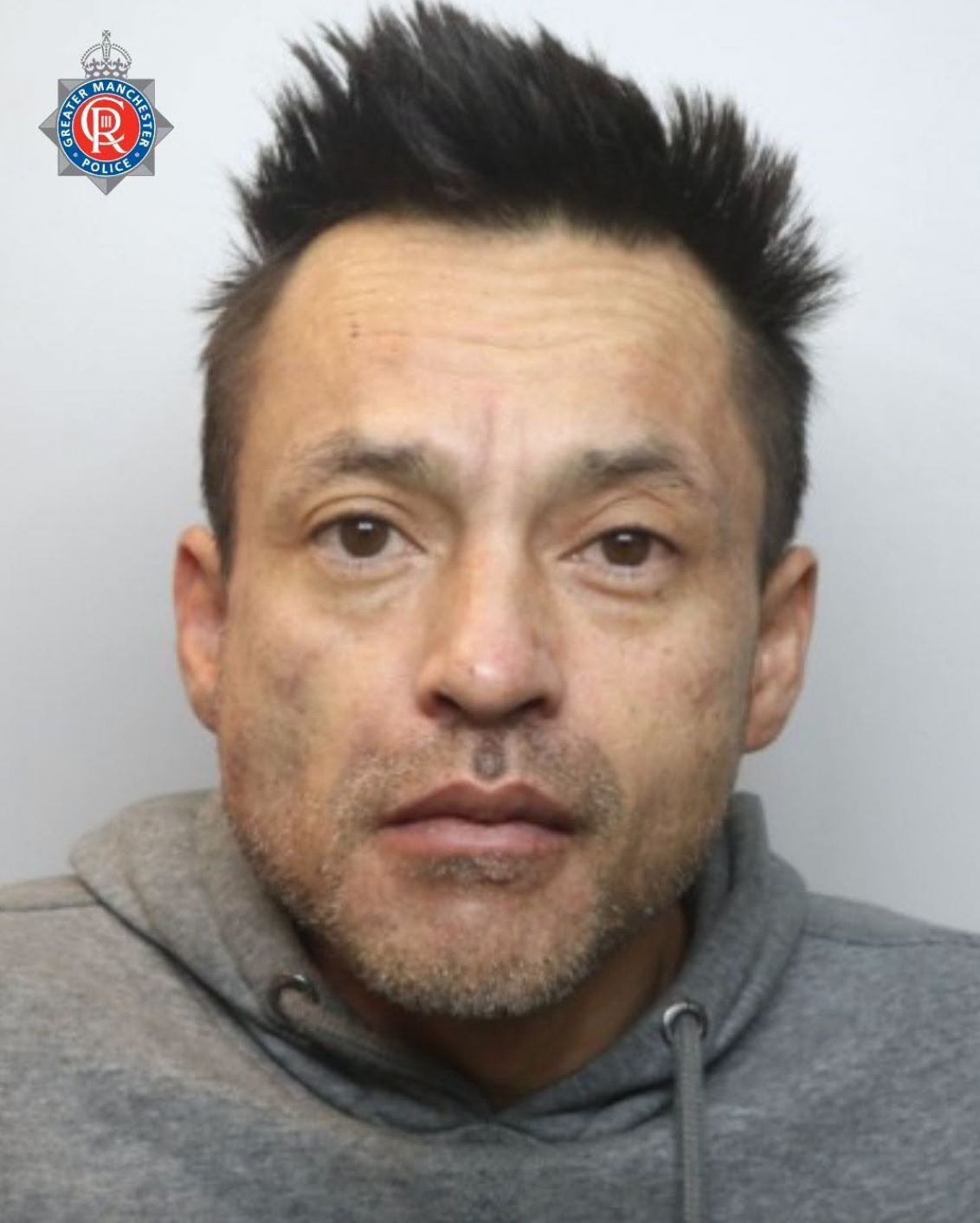
A man from Salford who police describe as ‘violent’ has been jailed after raping two women he met on dating apps.
Kenny Cox appeared at Manchester Crown Court for his sentencing last week (23 October) in relation to the rape of two women – one in November 2021 and one in September 2024.
The 46-year-old was arrested on 8 September 2024, charged and then remanded, before standing trial for both rapes in March 2025.
The trial, however, resulted in a hung jury, so a new trial commenced in August 2026, and Cox was then subsequently found guilty of two counts of rape and one of attempted rape.
It comes after, on 7 November 2021, one of the victims met up with Cox after connecting through a dating app. They went to a property in Salford, and after drinking alcohol together, the victim began to feel hazy and described herself as ‘feeling paralysed’ and ‘unable to move’.
It was during this time she was raped by the suspect.
After she was able to move, she left the property in a taxi and subsequently reported the incident to the police.
Cox was arrested on 14 November 2021 and bailed with stringent bail conditions not to contact the victim. But then, on 4 September 2024, he met up with a second victim, again after connecting through a dating app, and they went to a property in Salford where he raped her before she was able to leave and inform police.
Following the trial, Cox has been sentenced to 14 years in prison, with four years on licence.
He was also given an indefinite restraining order against the victims, and is subject to an indefinite Sexual Harm Prevention Order.
“I would firstly like to commend the strength of the victims in this case,” commented Detective Sergeant James Walsh, of GMP’s Salford Criminal Investigation Department. “They have gone through this trial process twice now and each time have has shown incredible courage to ensure Cox was put behind bars.
“He preyed on these women and is an violent, sexual offender.
“I hope this sentence and the subsequent sexual harm prevention order imposed gives the victims a sense of justice to help them try to move forward from this and put Kenny Cox firmly in their past where he belongs.”

 Emily Sergeant -
7th January 2022
Emily Sergeant -
7th January 2022