News
What will happen if Greater Manchester is reclassified as Tier 3 – and what is a ‘Gold Command’ meeting?
The body coordinating the government's pandemic response is holding a meeting today.
 The Manc -
14th October 2020
The Manc -
14th October 2020 

Today is the first day to which the new three tier restrictions system comes into effect, but change could be on the horizon once again for Greater Manchester.
Prime Minister Boris Johnson unveiled the government’s newest tiered strategy – which is aimed at curbing the spread of coronavirus (COVID-19) – in a direct address to MPs in the House of Commons on Monday afternoon, and then again in a subsequent press conference televised to the nation later that evening.
It was during this announcement that the region of Greater Manchester, along with other widespread areas of the North West including parts of Lancashire and Cheshire, was placed into Tier 2.
Under Tier 2 restrictions – which is also known as the ‘high’ alert level pertaining to the number of cases in the region – residents living in Greater Manchester must adhere to the rules of Tier 1 (‘Rule of Six’, 10pm curfew and necessary social distancing), and should also consider the following guidance:
- People must not meet with anybody outside their household or support bubble in any indoor setting, whether at home or in a public place.
- People can meet in groups of up to six outside – including private gardens.
- People should aim to reduce the number of journeys they make where possible and avoid peak times and public transport.
Unlike those areas placed under Tier 3 restrictions, businesses, pubs, bars, restaurants and cafes are permitted to remain open.
The categorisation of Greater Manchester into Tier 2 followed consultation with the Mayor of Greater Manchester Andy Burnham, who said that officials in the area were “glad that government has listened” to their standpoint, and also comes after Sacha Lord – Night Time Economy Adviser for Greater Manchester – announced that he would be taking legal action against the government to contest any new measures that prevent hospitality from trading.
It’s believed that these aforementioned conversations did significantly contribute to Greater Manchester avoiding the harshest tier of restrictions at the time.
But could all of this be about to change?
Yesterday evening, it was confirmed that the government is set to hold a ‘gold command meeting’.
During this meeting, the prospect of whether Greater Manchester and Lancashire need to be reclassified into Tier 3 measures is to be discussed, and this potential reclassification would thus place large parts of the North West into the ‘very high’ alert level.
It would mean that Greater Manchester could join the Liverpool City Region – which is at present the only area in England to be under Tier 3 – with the government stating that the situation is being kept under constant review, including a four-week “sunset clause”.
Areas under Tier 3 restrictions must:
- Close pubs and bars – although restaurants may remain open.
- Ban wedding receptions.
- Avoid mixing with anybody outside a household or support bubble in any indoor or outdoor setting.
- Avoid travelling outside the area except for work, education and youth services.
Overnight stays in this area are also banned, and residents of Tier 3 locations should also avoid staying overnight in other parts of the UK.
According to the government, “consultation with local authorities will determine additional measures”, which means local leaders will need to decide if further restrictions will be necessary, in the event that “baseline” measures prove ineffective, which is a prospect that Chief Medical Officer Chris Whitty did indicate during Monday evening’s press conference.
This meeting is due to take place today, but it does leave one question – what is a ‘gold command meeting’?
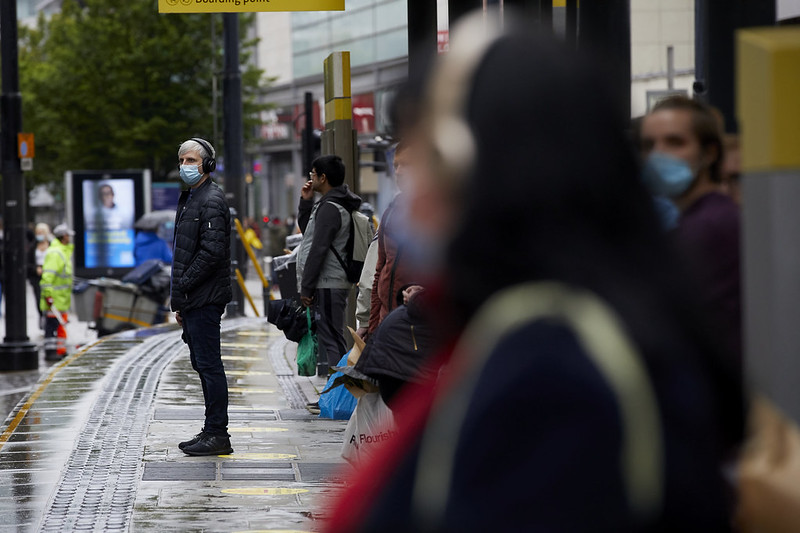
A ‘gold command meeting’ forms part of what is known as the ‘gold-silver-bronze command structure/hierarchy’ in the UK, which is used by the emergency services and the government, and was designed for responding to sudden major incidents and for organising planned operations, it has also been used for planned operations.
A ‘gold command meeting’ is defined as a meeting where a ‘gold commander’ is in “overall control of their organisation’s resources at the incident”.
This person will not be on site, but at a distant control room – gold command – where he or she will formulate the strategy for dealing with the incident, and if the gold commanders for various organisations at an incident are not co-located, they will be in constant touch with each other by videoconference or telephone.
The Civil Contingencies Act 2004 requires police to host and chair the multi-agency gold command, and this responsibility will usually fall to the local chief constable, or their nominated deputy.
It has not yet been confirmed as to when the meeting will actually take place today, nor who will be present to discuss matters, and when it is that we are likely to hear of any updates and outcomes from it, but due to the fast-paced nature of these matters unfolding, it is likely to be soon.
More information will be provided in due course.
___
For the latest information, guidance and support during the coronavirus (COVID-19) pandemic in the UK, please do refer to official sources at gov.uk/coronavirus.
#HandsFaceSpace