An enormous 300km walking trail around Greater Manchester has got the go-ahead and is set to be fully operational within two years.
The GM Ringway has been awarded a £250,000 National Lottery grant, which will allow a new long-distance trail to be established right on our doorsteps.
The route will make use of existing footpaths and parks, and will connect the beautiful countryside in the north west with tourist attractions and heritage landmarks.
It all splits down into 20 stages, and every section is designed to be accessed by public transport.
Spanning all 10 Greater Manchester boroughs, the GM Ringway will pass more than 40 Grade I and Grade II*-listed buildings, 13 museums, 57 conservation areas, 18 local nature reserves, 14 ancient monuments and parts of the Peak District.
ADVERTISEMENT
Attractions along the route include Bramall Hall in Stockport, Haigh Hall in Wigan; the Imperial War Museum in Trafford and Blackstone Edge Roman Road in Rochdale.
Peel Monument in Bury. Credit: Supplied
The GM Ringway will split into four broad sections, each one made up of five one-day stages.
ADVERTISEMENT
They’ll be the Southern Start-up (almost totally traffic-free route from the city centre to the Peak District, along waterways and green spaces), the Exhilarating East (the hills above Stockport, Tameside and Oldham), the Noble North (challenging stages connecting the peaks and valleys of the Pennines with Rochdale, Bury and Bolton) and the Western Wind-Down (the wetlands, mosslands and canals of Wigan, Trafford and Salford).
The Heritage Fund grant will pay for signposting and an improved app and website so that everyone can enjoy the trail.
There are plans to launch a trail passport, which could offer discounts to visitor attractions, pubs and cafes along the route.
ADVERTISEMENT
It’s estimated that 30,000 people will walk part of the route every year.
The groups working on the GM Ringway are countryside charity CPRE and walking charity The Ramblers.
A network of 200 volunteer ‘footpath guardians’ will also be recruited and trained to look after the trail and get involved in community events.
Debbie McConnell, chair of CPRE Lancashire, Liverpool City Region and Greater Manchester said: “The GM Ringway project is truly innovative and could act as a blueprint for other city-regions. Here in the north west, we’re fortunate to have a wealth of heritage and natural beauty on our doorstep and we want more people to get out and discover it.”
Margaret Manning, chair of Greater Manchester and High Peak Area Ramblers said: “The grant from the National Lottery Heritage Fund is just fantastic as it will enable us to make the GM Ringway project a reality, which is so exciting. The GM Ringway will open up opportunities to collaborate with local community groups, charities and partners in the health, heritage and environmental sectors on trail-related events and activities.
ADVERTISEMENT
The map of the GM Ringway
“We also hope heritage sites and hospitality businesses will benefit as visitors discover them on foot. The grant will allow us to establish this wonderful trail as a long-term asset for the region.”
Andrew Read, GM Ringway Project Lead, said: “Our core aim is to connect even more people with our local nature and heritage. We know there are proven health benefits that come from moving more and from spending time in nature.
“We’re particularly keen to enable those currently under-represented in the walking community to enjoy Greater Manchester’s incredible landscapes and heritage sites, especially those living in deprived areas, young people, those with disabilities or long-term health conditions, and different ethnic and faith groups.
“We believe that, as people explore Greater Manchester’s rich landscapes and history, it will increase their appreciation of and pride in their local area.”
For more information and news on the GM Ringway, including route maps, visit GMRingway.org.
Featured image: Supplied
Things To Do
Everything you need to know about Manchester Christmas Markets 2026 – dates, locations, and more
Emily Sergeant
Manchester Christmas Markets will be taking over the city centre this festive season, with hundreds of little wooden huts lining the streets.
Now in their 27th year, Manchester Christmas Markets are known and loved for bringing thousands of people into the city centre each year to fill up on fantastic festive treats and soak up all the Christmas atmosphere.
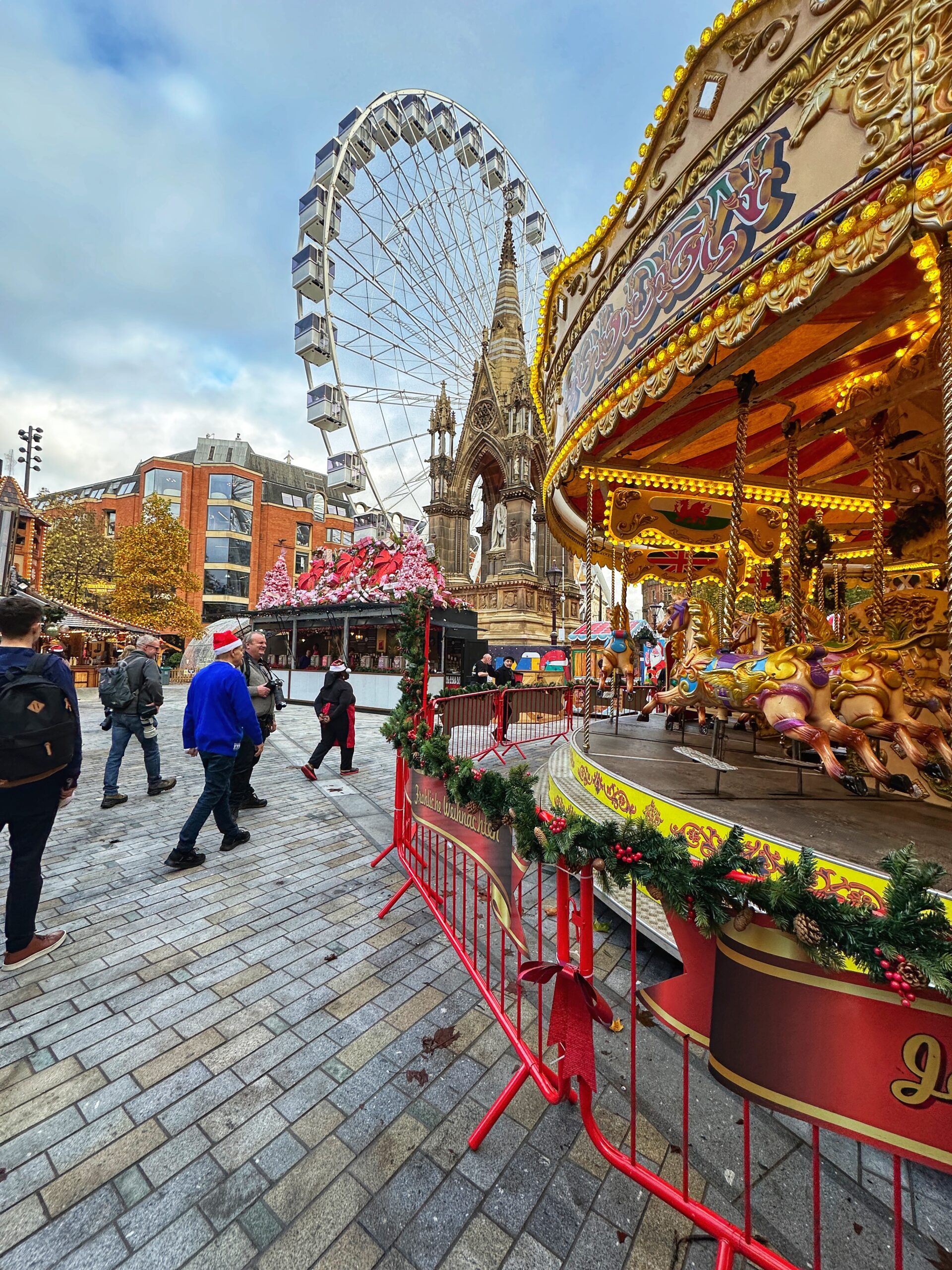
This year will see a bigger return of Albert Square, after the headline-grabbing partial return at last year’s event – with the big wheel also set to make a comeback.
There’s also set to be some new locations too for 2026, with Lincoln Square joining in on the action, as well as big changes to St Ann’s Square with what is being described as a ‘brand new layout’ bringing in a bigger number of market stalls.
There will be a total of 210 stalls spread out across the city centre.
When are the Manchester Christmas Markets 2026?
This year’s Manchester Christmas Markets will take place between Friday 6 November and Monday 22 December, across 10 different city centre locations.
Some sites will remain open even longer though – there’ll be festivities continuing at both Albert Square and Cathedral Gardens (which is home to the Skate Manchester ice rink) until Sunday 3 January 2027.
Another date for your diary is the Manchester Christmas Parade, which will see floats and performers filling the city on Sunday 6 December.
Manchester Christmas Markets locations
Manchester Christmas Markets
There are some brand-new spots to check out this year as the markets officially leave Piccadilly Gardens and return to their spiritual home around Albert Square.
Notably, Lincoln Square will be hosting a food and drink-focused market for the first time.
St Ann’s Square will also have a brand-new look, and Albert Square will again be home to a helter-skelter and a big wheel, along with loads of food, drink, and festive retail.
The locations are:
Albert Square
Lincoln Square
King Street
St Ann’s Square
Corn Exchange
Exchange Street
New Cathedral Street
Market Street
Exchange Square
Cathedral Gardens
You can see more about what each location will offer HERE.
Manchester Christmas Markets 2026 opening and closing times
The vast majority of the Manchester Christmas Markets locations will be open from 10am to 9pm daily, through to 22 December.
The only exceptions are as follows:
Albert Square
6 November – 23 December: 10am to 9pm
24 December (Christmas Eve): 10am to 5pm
25 December (Christmas Day): Closed
26 December – 30 January: 10am to 6pm
31 January (New Year’s Eve): 10am to 12.30am
1–3 January: 10am to 6pm
Cathedral Gardens
6 November – 23 December: 10am to 9pm
24 December (Christmas Eve): 10am to 5pm
25 December (Christmas Day): Closed
26 December – 30 January: 10am to 6pm
31 January (New Year’s Eve): 10am to 12.30am
1–3 January: 10am to 6pm
Food and drink highlights at the Manchester Christmas Markets
Great North Pie Co. at the Manchester Christmas Markets. Credit: The Manc GroupHong Kong French Toast at the Manchester Christmas Markets. Credit: The Manc Group
Until the markets are officially open, we’re not sure exactly what this year’s top stalls and must-eats will be – but looking at the trader list, we can give you a good idea.
The always-popular Yorkshire Pudding Wraps from Porky Pig will be back in Exchange Square, along with the iconic Witch House German bratwursts a short distance away on New Cathedral Street.
Other traders we loved in 2025 who’ll be returning this year include Great North Pie, Flat Baker, Hong Kong French Toast, and Oi Dumplings.
ADVERTISEMENT
Travel advice and how to get to the Manchester Christmas Markets
As usual, passengers are advised to travel with public transport wherever possible, as the city centre will be very busy with both Christmas Markets visitors and shoppers.
There are eight tram stops in the city centre that will put you within walking distance of the festivities, with St Peter’s Square the closest to the main site at Albert Square.
Trains and buses also serve the city centre well, but if you really need to drive, TfGM is advising to make use of the park and ride system rather than risking traffic delays in town.
Chester Zoo welcomes The Traitors stars Claudia and Alan – but it’s not what you think
Lydia Mastrolonardo
No, Chester Zoo isn’t keeping actual Claudia Winkleman and Alan Carr in enclosures – everybody stand down.
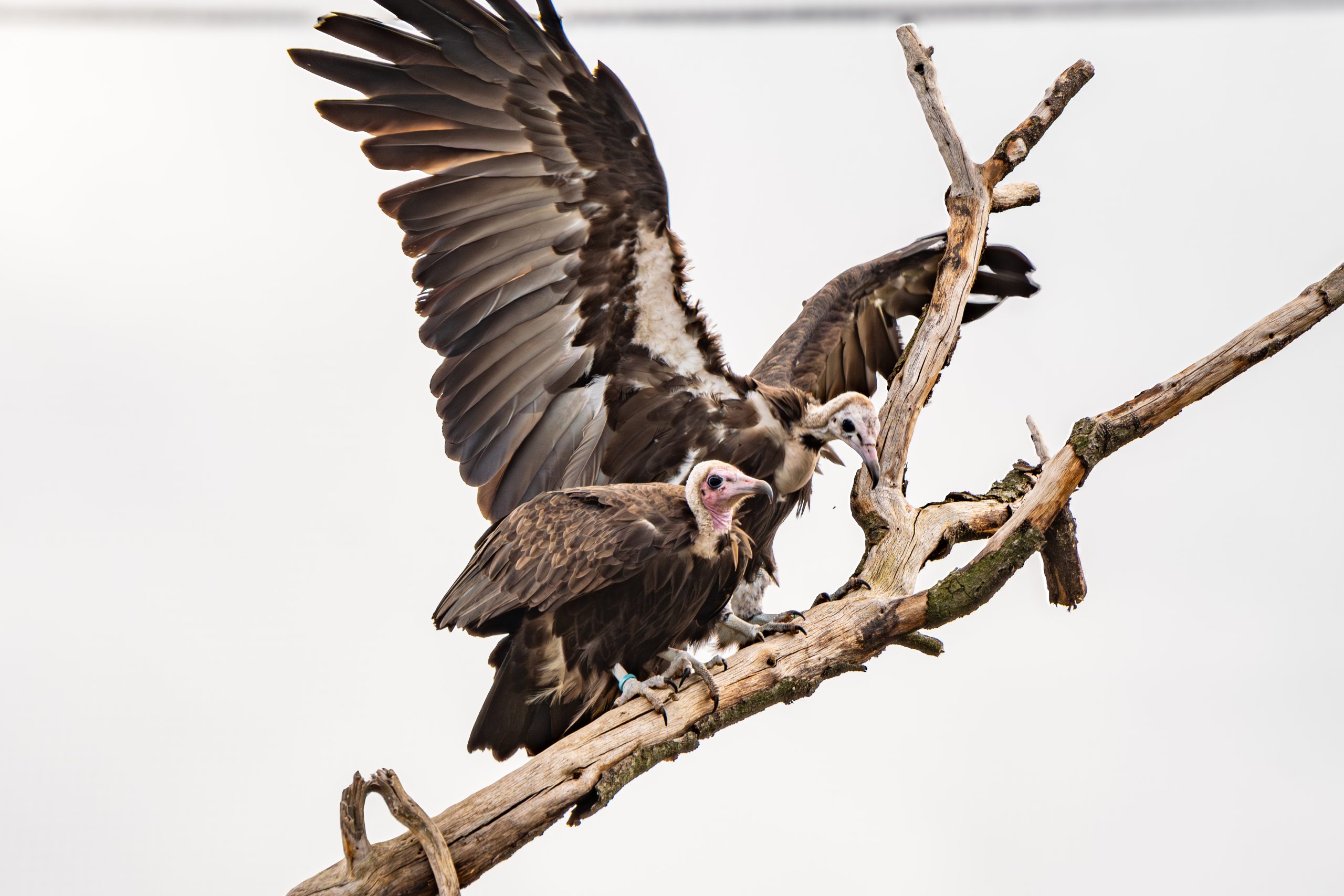
The zoo is in fact welcoming its first pair of hooded vultures, to hopefully boost the critically endangered species, and they just so happen to be named after some of our favourite celebrities from The Traitors.
As famous as Alan Carr and Claudia Winkleman are, these two give them a run for their money, as the first of their kind to ever come to Chester Zoo – making them pretty big celebs in the animal kingdom.
The pair of vultures are currently nestling in to their new home, alongside their new white-headed vulture roommates, at the Heart of Africa aviary. It is here that conservationists are hoping the newly bonded pair will start a family, as part of a Europe-wide breeding programme, to help safeguard their species from extinction – no pressure or anything.
Bird Keeper Heather-Anne Pedley said: “Alan and Claudia came to us from the Horstmann Trust, a conservation breeding centre for vultures, where they are an established breeding pair. We named them after Traitors stars Alan Carr and Claudia Winkelman, because what better way to reflect how funny and engaging they are, than to name them after two national treasures?
“Nobody prepared me for how much I would fall in love with them, their antics and characters. They look like they’ve just put a hood up, and they have this beautiful blue ring around their eyes, like natural eyeliner.”
Alan and Claudia, Chester Zoo’s new vultures. Credit: Chester Zoo
Hooded vultures are distinctive with dark brown feathers, a buff ‘hood’ and a bald face and throat, with wingspans of up to 180cm. They are native to west, central and southern Africa, where they typically pick up their lunch by soaring over the land, looking for carcasses to feed upon as part of ‘nature’s clean-up crew.’
It’s not all gore though, they are very active, clever and interested in their environment. The couples are monogamous, will preen each other, gently touch each other’s bills and co-build nests – quite the romantics.
Heather-Anne added: “This pair are real love birds, and we are hopeful they’ll go on to breed. Any youngsters they go on to have will become part of a European conservation breeding programme, helping to create an insurance population for this incredibly rare species.
“In the wild, vultures help prevent zoonotic diseases – illnesses that can spread between species – because their stomach acid is so strong they can eat decaying meat that other animals would not be able to digest. This helps prevent the spread of diseases like anthrax and botulism into the soil.”
Despite their crucial role across various ecosystems, vulture numbers are declining and they are now sadly classified as critically endangered, according to the IUCN Red List of Endangered Species.
This decline is driven by mid-air collisions or accidental electrocution by scanning the ground for prey whilst perched on uninsulated power lines. These birds are also at risk of being poisoned or even hunted to facilitate an unsustainable demand for vulture body parts and eggs to be used in traditional medicine and rituals, while there is no scientific evidence to support this use.
We are really rooting these two and hope that they settle into their new home.

 Daisy Jackson -
3rd November 2022