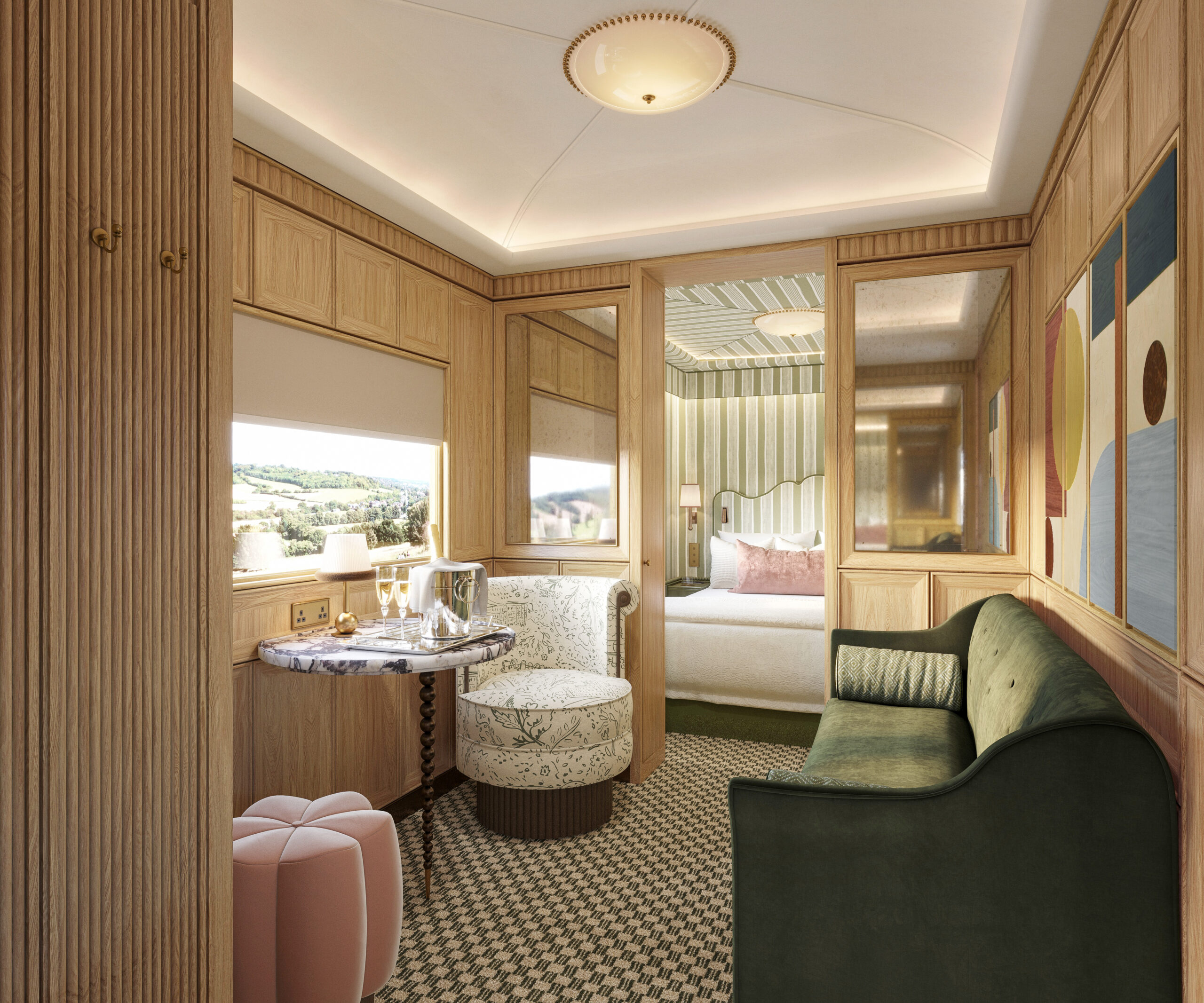
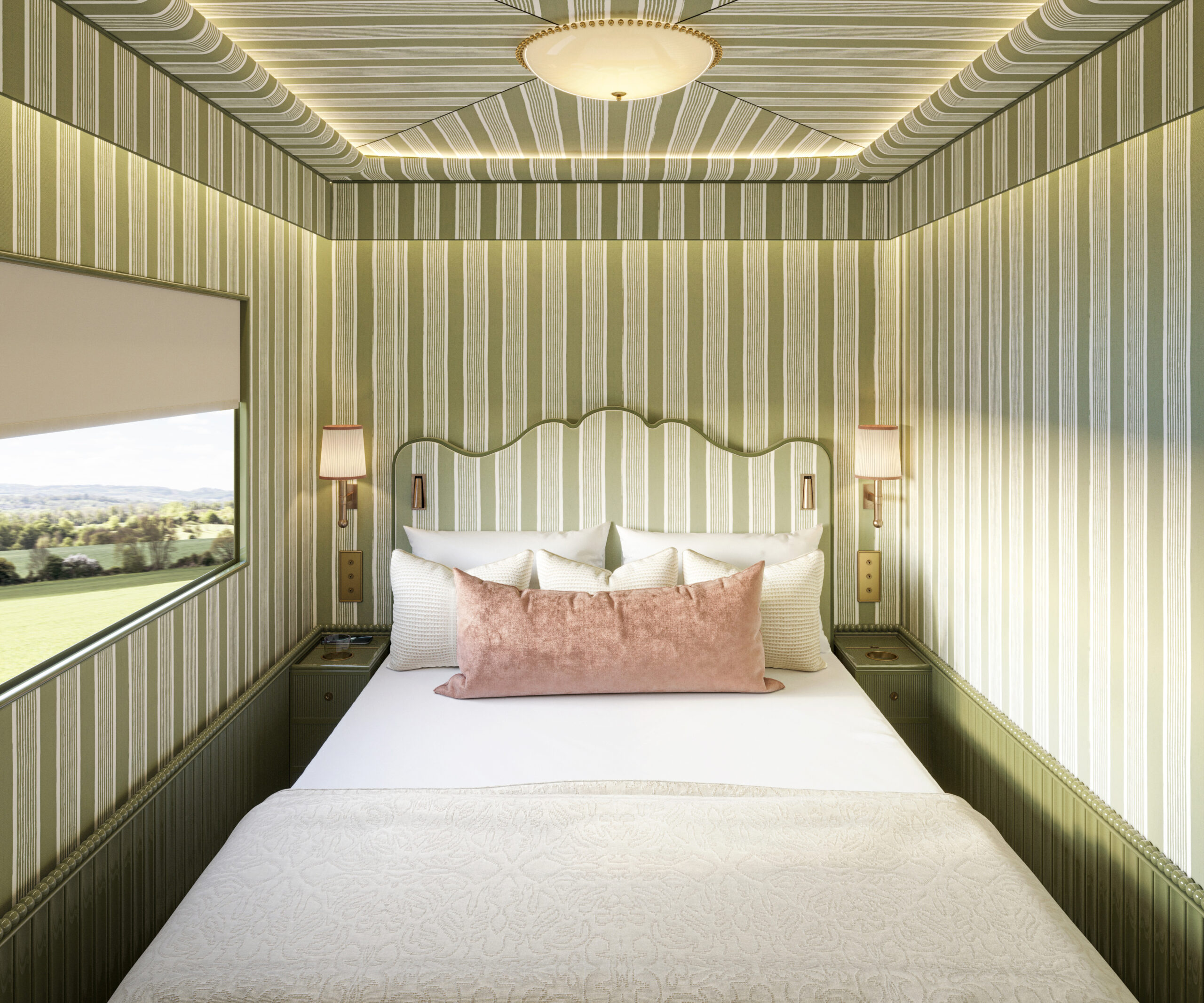
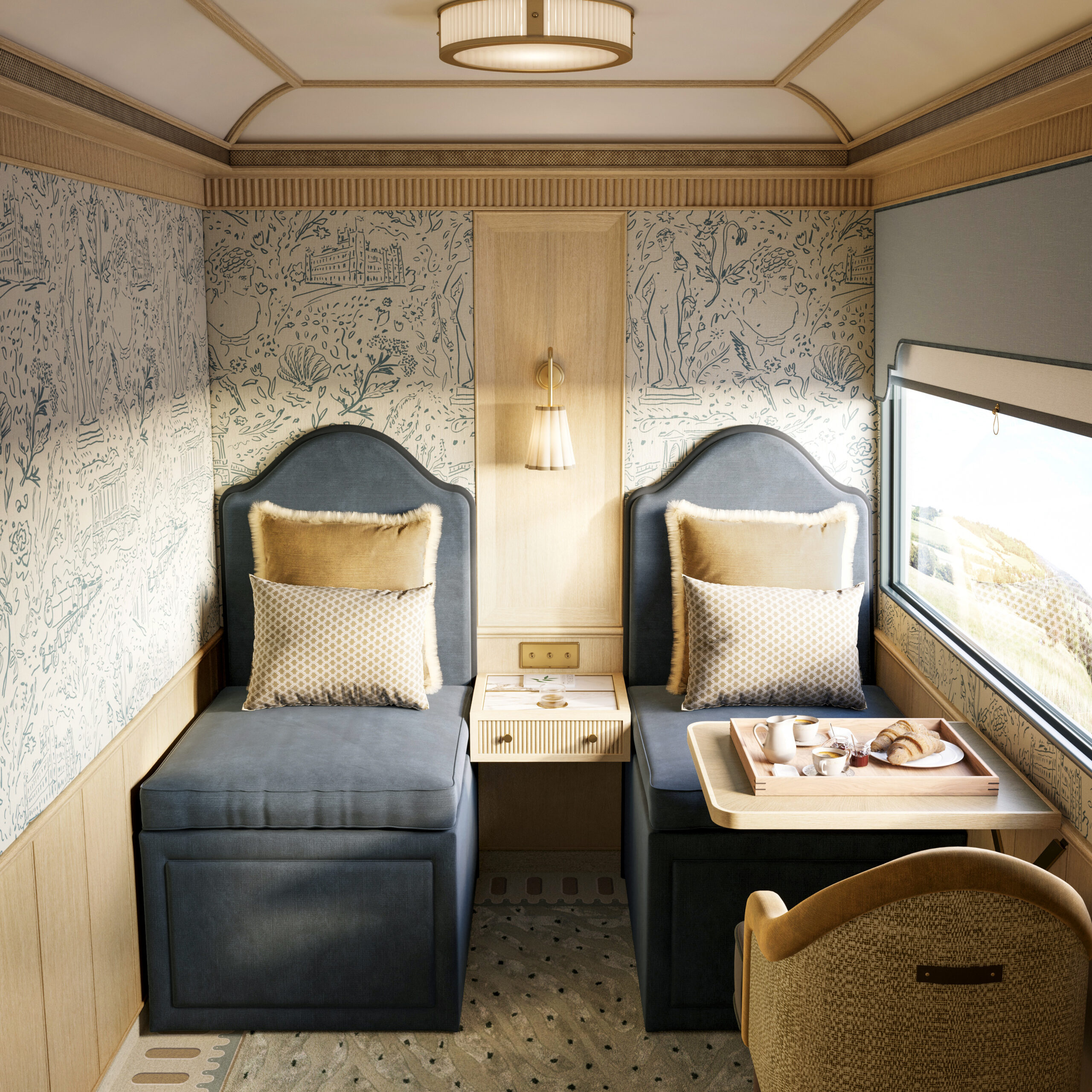
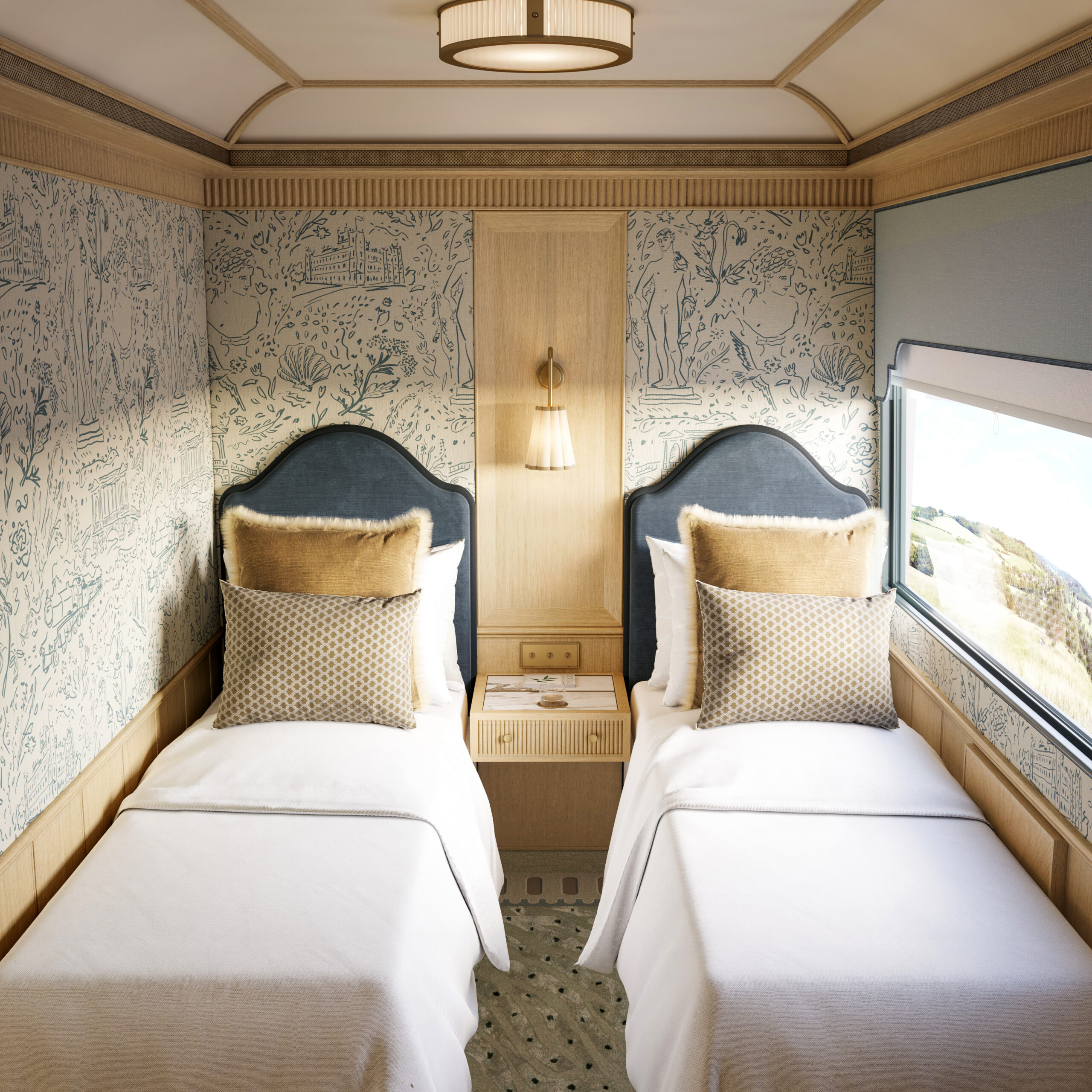
The first luxury sleeper train in England and Wales will make its debut next month, and will be whisking passengers on magical journeys through the North West.
The Britannic Explorer, A Belmond Train, will be embarking on three-night adventures to popular destinations around the UK, including the Lake District, Cornwall, and Wales.
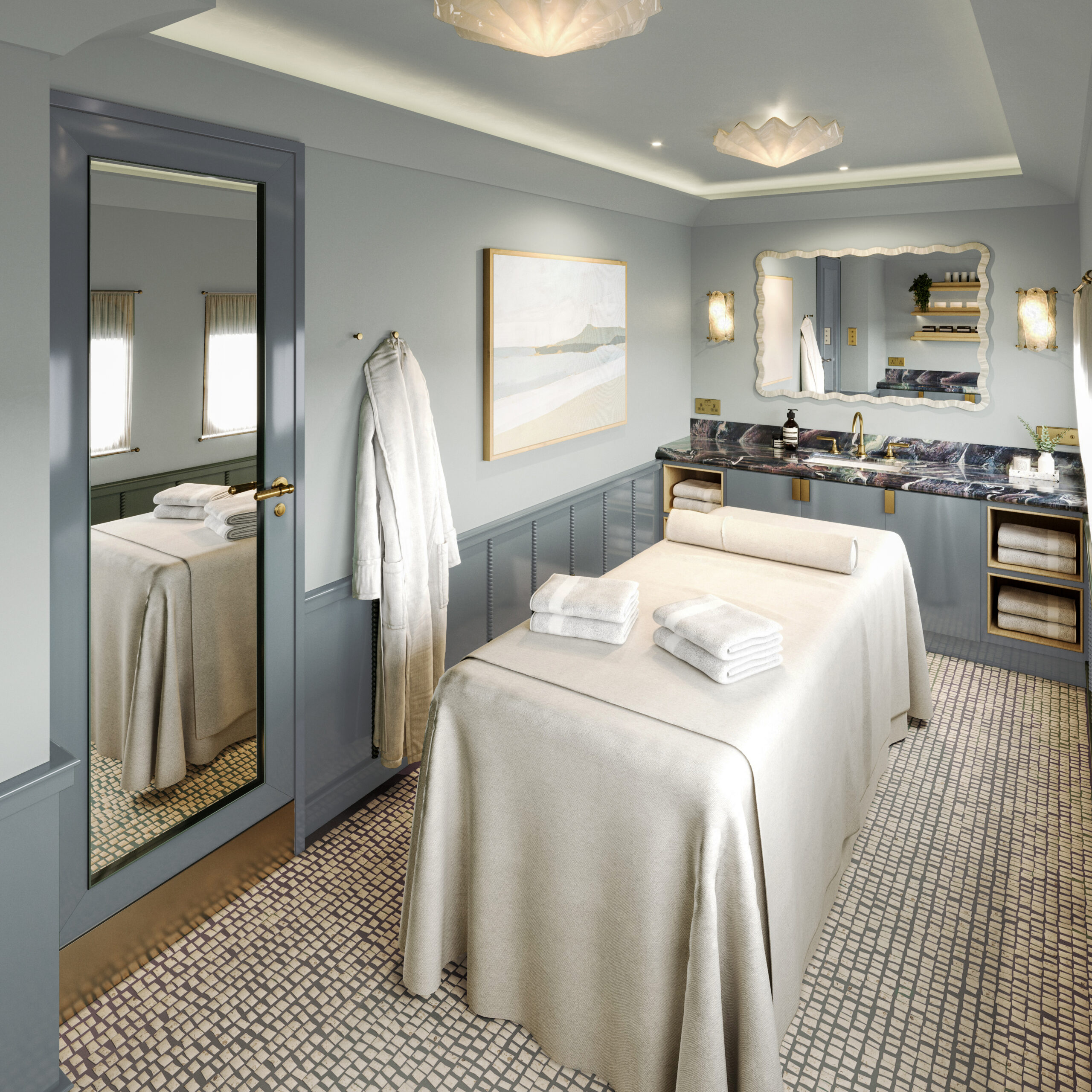
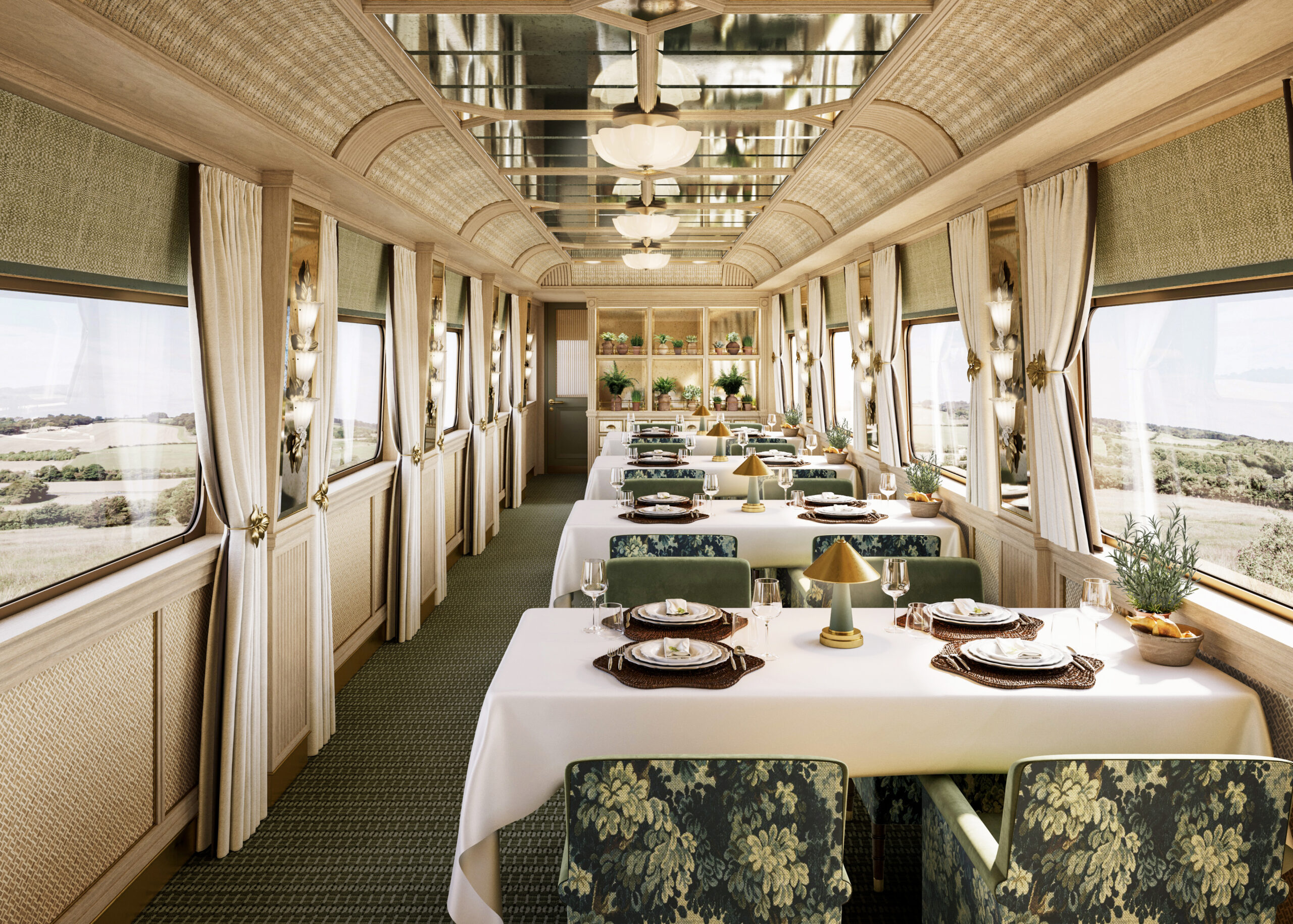
On board this magnificent train will be 18 cabins – three Grand Suites and 15 Suites – as well as an on-board spa, bar and restaurant cars, and an observation car.
There’ll be a fine dining menu designed by renowned chef Simon Rogan (he of three-Michelin star L’Enclume fame), which will showcase contemporary British gastronomy, culture and style.
The Britannic Explorer is promising to set ‘a new standard in luxury design’ and has interiors inspired by British charm and the natural world outside the train itself.
ADVERTISEMENT
Belmond’s portfolio already includes the iconic British Pullman, and the Royal Scotsman, as well as boutique hotels around the UK.
Of course, such luxury comes at a price – and a three-night itinerary on board this exceptional sleeper train comes in at £11,000 for a double cabin.
ADVERTISEMENT
On board the Britannic Explorer, a new luxury sleeper train in England. Credit: Bex Press
That price does include excursions, meals, wine and other alcoholic beverages.
Back to the trip itself though.
Journeys will depart from London and weave their way through some of Britain’s most scenic destinations.
ADVERTISEMENT
There are optional off-train guided excursions around the Lake District, while by night you can relax in the train’s botanical-inspired bar and observation car.
Guests can experience world-class galleries, breathtaking national parks, and historically rich cities in a unique way, such as a private tour and dinner at the renowned Hauser & Wirth Somerset and on-site restaurant Da Costa, guided hikes through picturesque Wales, wild swimming in the stunning landscapes of the Lake district and a visit to Tremenheere Sculpture Gardens in Cornwall.
One of the suites on board the sleeper train by day and nightOne of the suites on board the sleeper train by day and night
Or you can stay on board and make use of the wellness suite, with therapies designed to relax and revive.
Simon Rogan has created a seasonal and sustainable menu for passengers, with bespoke afternoon tea, lunch and dinner menus for each of the three routes.
Speaking of the collaboration, Simon Rogan shared: “For me, true luxury lies in humble ingredients, grown with care, respect for their surroundings, and harvested at their peak. Across all my restaurants, my dishes are defined by local, often home-grown produce, and by partnering with British growers and suppliers who share our deep connection to the land and its natural elements.
ADVERTISEMENT
“This philosophy allows our food to resonate with the environment from which it originates. I am very excited to bring this approach to the launch of the Britannic Explorer, where each plate will reflect Britain’s diverse landscapes.
The on-board spaSimon Rogan will design the menus
“I hope every passenger not only enjoys the flavours but also feels a connection between the dishes and the journey, making their time on board truly memorable.”
Gary Franklin, Vice President of Trains and Cruises, Belmond commented: “I am incredibly proud to launch this revolutionary new train, which further enhances Belmond’s global portfolio of market-leading luxury rail experiences.
“The Britannic Explorer offers something truly unique; an opportunity to discover the rugged Cornish coastline to Eryri’s untamed National Park and the vast expanses of the Lake District like never before.
“We are especially delighted to welcome the esteemed Chef Simon Rogan to helm the culinary direction. His vision brings a gastronomic journey that complements the train’s spirit of adventure, celebrating British produce and highlighting the finest local specialties along the route.”
ADVERTISEMENT
The Britannic Explorer will debut in July 2025 – you can find out more HERE.
Etihad Stadium showcases City Hall, the new beating heart of Manchester City match days
Lonnie Bowes
There’s a particular kind of Manchester buzz you only get pitch-side. If you’re a seasoned Cityzen this one’s for you – one of three major new hospitality options for your next game day at the Etihad Stadium.
Tucked in the heart of the new Pep Guardiola Stand, directly behind the goal, we have the brand-new City Hall.
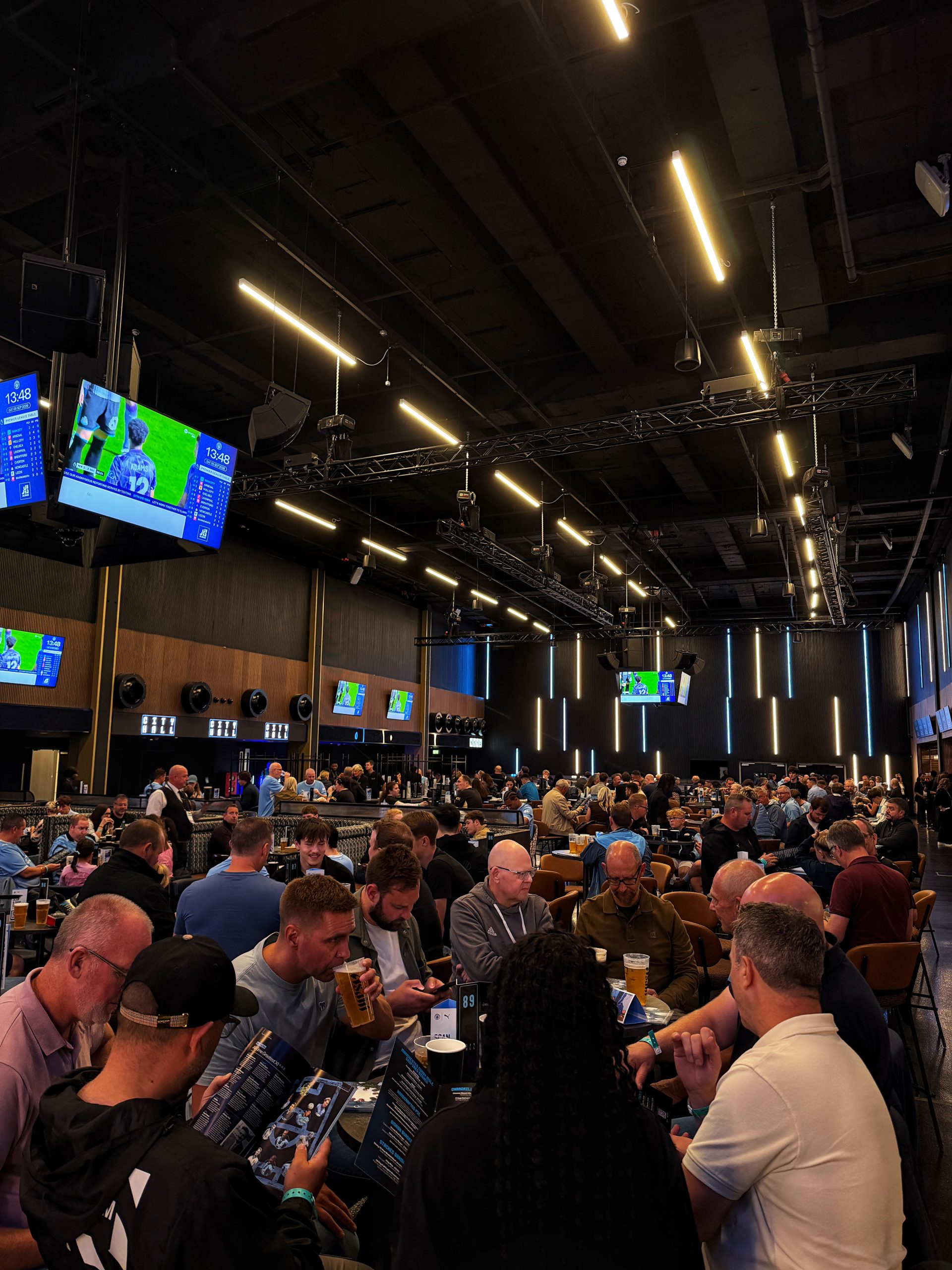
City Hall is built for people who actually want to watch football in comfort, and with a massive 500 capacity hall a stone’s throw from the pitch, it’s a hard one to pass up.
Doors open a full two hours before the match, and that early access turns the day into an occasion rather than a scramble.
There’s time to properly soak up the atmosphere in what is a genuinely lively, buzzing bar, and I have to say potentially one of the best I’ve come across on a match day.
Food and drink are where the local flavour really comes through. The street food menu leans into Manchester’s own identity with a modern twist.
The catering is relaxed and doesn’t take itself too seriously, let’s just say having a chip barm and chicken madras pie on the run-up to a kick-off is my idea of heaven.
Every guest gets an inclusive drink as part of your booking, too. You get to pick from a selected wine, beer or soft drink which you can claim at any point during your visit.
It’s a setup that suits everyone, whether you’re in it for a proper pre-match pint with your mates or meal with your family before a day of making pitch side memories.
The little touches matter too. A matchday programme is a nice, old-school addition in an era where so much matchday content has gone digital.
And crucially, the experience doesn’t end at the final whistle: with an hour’s access after the match, there’s no need to bolt for the exits the second the referee blows for full-time. You can sit and finish your drink, and let the ground empty out around you instead of fighting through it.
Put it all together and City Hall feels like hospitality done with an actual sense of place.
Manchester street food, a proper buzzing bar, and one of the best seats in the house, all wrapped around a schedule that respects the fact that match day is about more than just the 90 minutes.
For anyone looking to upgrade how they watch City this season, it’s well worth a look.
Have a look and make a booking at City Hall at the Etihad Stadium HERE.
A Medieval Faire with birds of prey and live demonstrations is coming to Manchester’s oldest building
Daisy Jackson
Manchester is going back to the Middle Ages this month as the city’s Medieval Faire returns to Chetham’s Library for a day of history, live entertainment, and family fun.
The free event is taking place on Saturday 26 September, with the grounds of the historic building transformed into a medieval celebration from 11am to 4pm.
And with Chetham’s medieval buildings dating all the way back to 1421, there probably aren’t many more fitting places in Manchester to spend the day pretending you’ve stepped back several centuries.
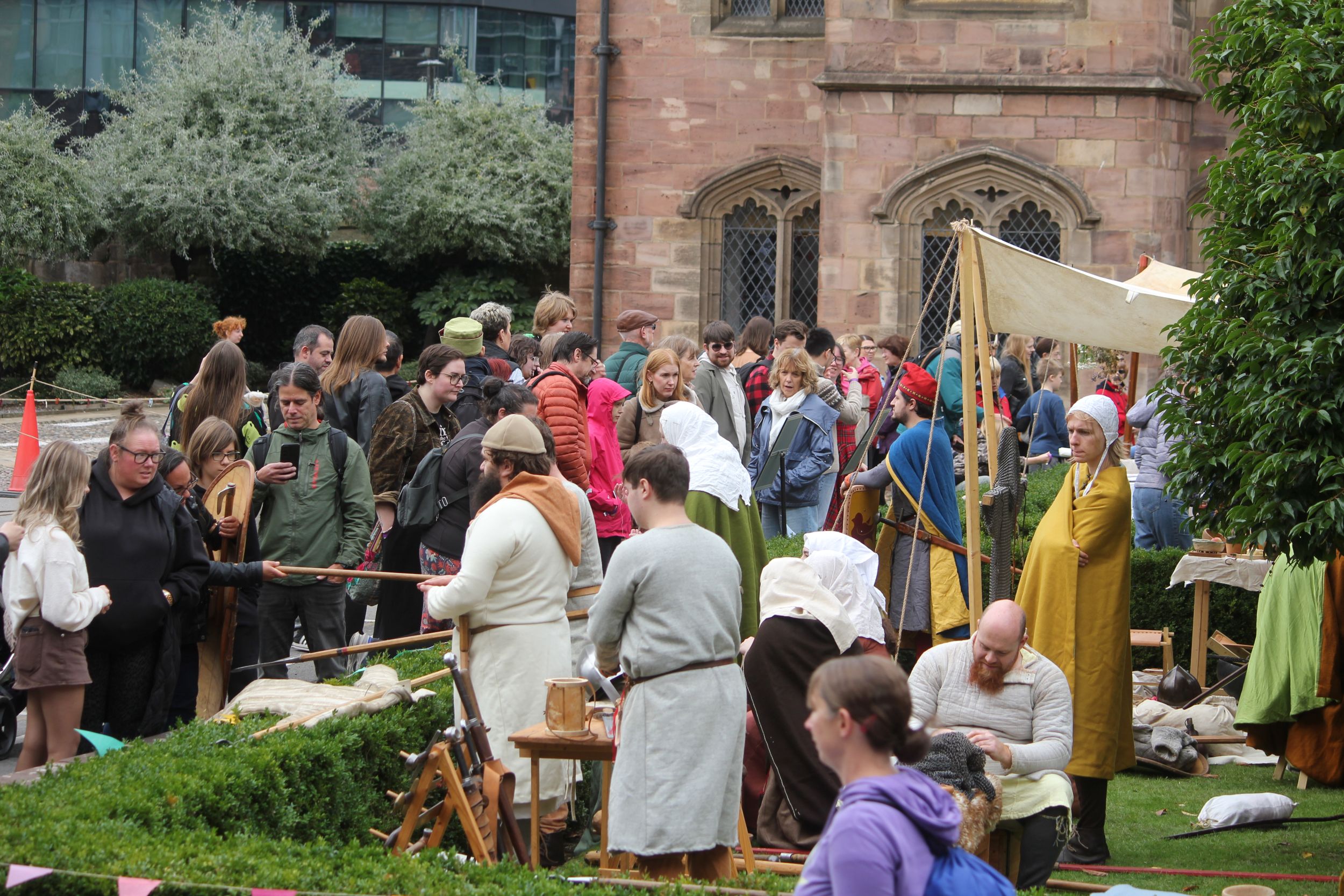
Visitors can expect plenty going on throughout the day, including walking tours of Manchester’s Medieval Quarter, birds of prey, specialist stalls, and live demonstrations showing what life was like during the medieval era.
There’ll also be historical re-enactors from Historia Normannis, bringing the sights, sounds and characters of the Middle Ages to life.
The event is being staged in partnership with the University of Manchester and Manchester Cathedral, with organisers hoping to get people of all ages interested in the city’s often-overlooked medieval history.
Julianne Simpson, Librarian at Chetham’s Library, said: “We’re delighted to welcome the Medieval Faire back to Chetham’s.
The Manchester Medieval Faire returns this month
“It’s a wonderful opportunity for people of all ages to discover Manchester’s medieval heritage through hands-on experiences, live performances, and historical demonstrations.
“Whether you’re a history enthusiast or simply looking for a fun family day out, there’s something for everyone to enjoy.”
Best of all, entry is completely free and you don’t need to book.
If you fancy going a bit deeper into Manchester’s history while you’re there, guided tours of Chetham’s Library will also be available to book on the day for £8.50 per person.
The tours offer visitors the chance to explore one of the UK’s most significant historic libraries and discover more about its collections, characters and stories.
So, if your weekend plans involve less brunch and more medieval re-enactments, birds of prey and wandering around one of Manchester’s oldest buildings, this one’s worth putting in the diary.

 Daisy Jackson -
6th June 2025
Daisy Jackson -
6th June 2025