Motorists are being warned that some common unspoken rules of the road could actually see them hit with a hefty fine.
Given that us Brits are known for our manners and being polite, it has become common practice for drivers across the country to use a number of popular gestures to say thank you to our fellow road users when they give way to us, let us into a junction or lane, or just generally do something to help us out on the road.
A quick wave, thumbs up, or a flash of the headlights takes just a second to do, but the kindness goes a long way and helps to keep the peace.
In fact, when another driver doesn’t say thank you, we tend to think it’s pretty rude.
To prove this point, a new study of UK drivers was conducted by National Tyres and Autocare, and it found that one in five drivers choose to flash their headlights to say thanks, while one in three like to give a classic wave, and then one in six opt for a simple thumbs up.
ADVERTISEMENT
But did you know that some of these gestures are actually in breach of the Highway Code and could end up landing us in a bit of trouble and see us have to fork out money if we’re caught in the act?
In some cases, fines can rack up as high as £1,000.
ADVERTISEMENT
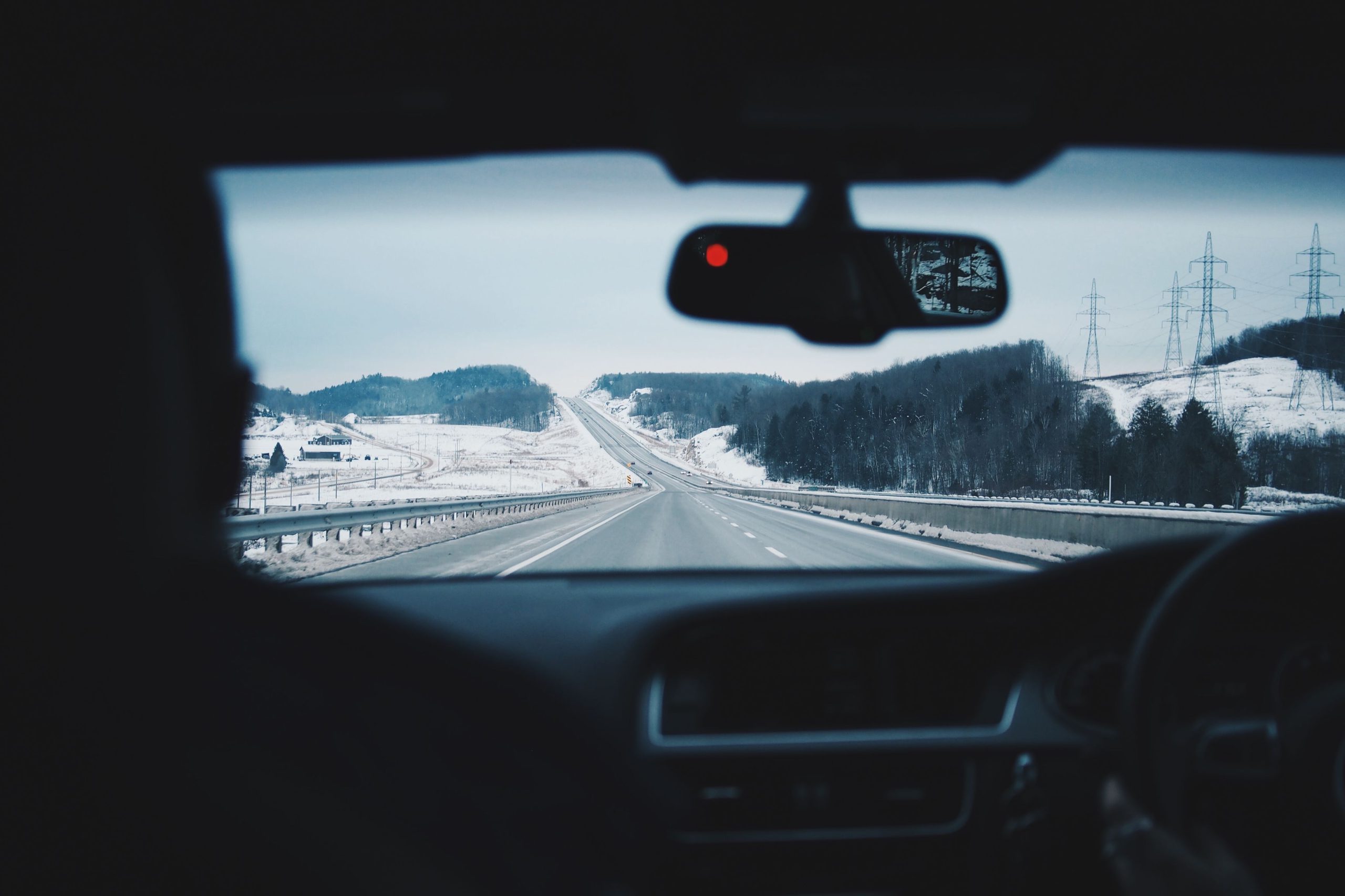
Motorists are being warned that some common unspoken rules of the road could see them fined / Credit: Nabeel Syed (via Unsplash)
When it comes to flashing our headlights to say thank you, rule 110 of the Highway Code actually states that we should “only flash headlights to let other road users know that you are there”, and we should not do not flash them to “convey any other message or intimidate other road users”.
Using hazard lights is another common way to say thank you, but again, according to rule 116 of the Highway code: “You must not use hazard warning lights while driving or being towed unless you are on a motorway or unrestricted dual carriageway and you need to warn drivers behind you of a hazard or obstruction ahead.”
It’s stated that we should only use hazard lights “for long enough to ensure that your warning has been observed”, and nothing more.
ADVERTISEMENT
By far the most common way to say thank you on the road during the daytime is to give a classic wave or thumbs up, but according to rule 160 of the Highway Code, once moving a vehicle you should “drive or ride with both hands on the wheel or handlebars where possible as this will help you to remain in full control of the vehicle at all times”.
It’s common practice for drivers across the UK to use gestures to say thank you / Credit: Vladimir Proskurovskiy (via Unsplash)
It adds: “You may use driver assistance systems while you are driving but make sure you use any system according to the manufacturer’s instructions.”
The latter of these common thank you gestures is the one that could land drivers in the most trouble if caught, as not only can fines rack up to £1,000, but being in breach of having proper control of your vehicle could also mean discretionary disqualification, and three penalty points on your licence as well.
Two North West cities named among the ‘noisiest’ in the UK – including Manchester
Emily Sergeant
A new analysis has revealed a list of the noisiest cities in the UK, and two Greater Manchester locations are in the top five.
From blaring sirens and car horns, to house parties, barking dogs, and loud neighbours, escaping the noise of a city can feel almost impossible – even in your own home.
No matter whether you live in the hustle and bustle, or you’re out in the sleepier suburbs, noise can keep you up at night, disturb your peace, and lead to frustration. But just how loud are Greater Manchester’s cities compared to the rest of the UK? In a bid to get to the bottom of it, Alpine Hearing Protection has done some research to compile a top 10 list.
And both Salford and Manchester have found themselves not just within the top 10, but within the top five… and to make matters worse, Salford has actually claimed the number one spot.
The reason Salford has found itself at the top of the list, according to the research, is because it sits at the intersection of several major transport and urban hubs, with major motorways running through or around the city including the M60, M61, and M62.
Major rail routes also run through the city – including via Salford Crescent – which sees 16 million passengers every year, and also leads to Manchester Airport.
Top 10 noisiest cities in the UK
Salford
Portsmouth
Manchester
Southampton
London
Leeds
Stoke-on-Trent
Wakefield
Newcastle upon Tyne
Bradford
Parts of Salford are also very built-up, making pockets of the city noisy – especially in the concentrated centre where traffic, construction, nightlife and commercial activity get loud.
And of course, like any growing city, construction noises have been noted as ‘particularly bothersome’ for residents where major developments are springing up.
Manchester is third on the list of noisiest cities, due to many of the same reasons as Salford.
But the difference being that Mancunians are noted as one of the many reasons why the city is so loud – with residents making 5,301 noise complaints across Manchester between January 2024 and January 2025, and Hulme identified the loudest area with 304 complaints.
As well all know, Manchester is also home to many universities, which brings an active nightlife scene to the region, especially in the city centre, and in recent FOI data, it was revealed that the University of Manchester saw 2,049 noise complaints in the last five years.
Motorists warned of common winter driving habit that could land them with annoying fines
Emily Sergeant
With the temperatures drastically dropping now as we head into winter, motorists are being warned against a common driving habit.
On a wintry morning when the windscreens are frozen and your hands are equally as frozen too, it’s pretty common for drivers to start the engine, turn the heater right up, and remain stationary for several minutes to warm the car up before setting off on their journey… but did you know that doing this could see you, inadvertently, fall foul of the law?
That’s right – as ridiculous as it sounds, leaving your car engine running ‘unnecessarily’ while parked on a public road is illegal.
And to make matters worse, the rules on ‘engine idling’, as it’s known, apply regardless of whether the driver is using the heating, waiting for someone, or simply sitting in the vehicle.
Known as a stationary idling offence, Rule 123 of the Highway Code states that drivers must not leave a vehicle’s engine running unnecessarily while it is stationary on a public road, and according to the rule, a fixed penalty of up to £80 can be issued, right there and then.
Motorists are being warned of a common winter driving habit that could land them with annoying fines / Credit: PickPik | Wikimedia Commons
Fines will only be handed out if a motorist is stopped by a police officer who asks them to switch the engine off, and they fail to comply.
“However tempting it might be to sit in a vehicle with the engine running and the heater on to warm up, we strongly advice against it,” commented RAC senior policy officer Rod Dennis.
“As well as polluting the air and wasting fuel, drivers who leave their engines idling unnecessarily on a public road also risk an on-the-spot fine of £80. On cold mornings, the best approach is to clear any ice or snow properly and ensure windows are fully de-misted before setting off, then get on your way and let the car warm you up.”
There are some exceptions to the rule, however, as keeping the engine running is permitted in certain circumstances.
This includes when a vehicle is stationary because of traffic conditions, when the engine needs to run so a mechanical fault can be investigated, or if certain work is being carried out on the side of the road.

 Emily Sergeant -
26th January 2023