Returning to our old lives is going to be an adjustment – particularly for young people and children / Image: Kelly Sikkema via Unsplash
A sense of relief washed over the country when the roadmap out of lockdown was unveiled last month.
After weeks of uncertainty and speculation, the government’s published exit plan provided some much-needed clarity – and a set of dates on which particular restrictions will be lifted.
All the talk now is about a return to ‘normality’ – but what happens when we get there?
We’ve been social distancing and wearing masks for so long, even the sight of large crowds mingling shoulder-to-shoulder on television can be a briefly unsettling sight.
ADVERTISEMENT
Returning to our old lives is going to be an adjustment – particularly for young people and children.
According to Dr Michael Barnish, Head of Genetics & Nutrition at REVIV Global Ltd – a worldwide health and wellness organisation with a HQ right here in Manchester – some parents have expressed concerns regarding how their children will adapt.
ADVERTISEMENT
“Many of my patients have children and their own anxiety is being exacerbated by worrying about their children and how they’re going to cope when they return to normal,” he stated.
“Life has been disrupted for a year now and many people have expressed their worry about being in contact with other people or getting on public transport again but adults can talk about their feelings.
“Children aren’t as well equipped, but they struggle too.”
ADVERTISEMENT
Dr. Becky Spelman, Psychologist and Clinical Director of Private Therapy Clinic, also believes that younger people could find the shift of surroundings somewhat jarring when the time finally comes to exit lockdown.
Dr. Becky Spelman, Psychologist and Clinical Director of Private Therapy Clinic
Dr Spelman stated: “It’s going to cause anxiety for many of us to return to normal including young people and often younger people are not very good at talking about their emotions – they haven’t learnt how to articulate them just yet.
“You’ll see signs of young people being very quiet and introverted and you might not know what’s wrong. Something to look out for is anxious avoidance: This is when someone is scared or intimidated by a situation and you’ll see a very natural avoidance so that they can keep safe and comfortable in the short term.”
According to Dr Spelman, any children showing signs of anxiety should be “encouraged to confront situations” and “taken out” of these environments if it becomes too much; re-approaching them at a later time.
“If [children] are feeling very anxious encourage them to stay in the situation and reassure them that the anxiety will get better with time,” the doctor stated.
ADVERTISEMENT
“Also, ask them what they’re feeling, this is a question that parents can forget to ask. But actually, saying what are you feeling?
“Can you describe it? Can you put a label on it? Is it fear, anxiety, sadness? Trying to understand your child’s feelings is important in helping you be able to address it.
“Ultimately, they need confront the situations that are making them feel that way.”
Children may suffer anxiety when surroundings change after lockdown, according to experts / Image: Atoms via Unsplash
Dr Spelman also emphasised that children will become more confident over time.
“If they have bouts of low mood because they haven’t been as active or engaging in social activities as much during lockdown, they definitely need to become more active and regain a more balanced life,” she stated.
ADVERTISEMENT
“If it is anxiety then they need to learn to sit with those feelings and not avoid situations. Encourage your child to get doing lots of things and with time they will notice they will become more confident.
“If they really don’t want to [visit] certain places the question you need to ask is do they not want to go because they won’t enjoy it? Or they don’t want to go because they’re feeling uncertain of the situation?
“If it’s the latter you will want to encourage them to go regardless and avoidance here isn’t helpful and you want to encourage your child in overcoming that.”
More information and support for young children and mental health is available on the Young Minds website.
Trending
The cheapest Christmas Markets in the world for mulled wine have been revealed
Daisy Jackson
The most affordable Christmas Markets for drinking mulled wine have been revealed – and Manchester is nowhere in sight.
With Christmas markets across Europe preparing to welcome millions of visitors, festive fans looking to enjoy a warming cup of glühwein without breaking the bank might want to take note of the latest findings.
Festive experts at Christmas Tree World have analysed mulled wine prices at Christmas markets around the world to discover where visitors can enjoy the seasonal favourite for less.
Topping the rankings is Brussels’ Winter Wonders, where mulled wine is available for as little as £2.14 – about a third of the price of a mulled wine at the Manchester Christmas Markets.
Cologne Cathedral Christmas Markets and Strasbourg’s Christkindelsmärik share second place, with starting prices of just £2.56.
Other European favourites also feature prominently in the rankings. Budapest’s Christmas Market at the Basilica takes fourth place, with mulled wine costing £3.19, while Prague’s Old Town Square Christmas Market comes in sixth at £3.55.
Germany makes another strong appearance, with Dresden’s Striezelmarkt and Nuremberg’s Christkindlesmarkt (which handily just launched new direct flights from Manchester) both offering mulled wine for £3.85.
Meanwhile, Vienna’s Christmas World rounds off the European entries in ninth place, with prices starting at £4.28.
For those planning a festive adventure further afield, Tokyo’s Christmas Market also makes the top five, with mulled wine costing £3.22.
However, not every destination offers such a bargain. Across the Atlantic, New York City’s Winter Village takes the title of the most expensive market in the study, with mulled wine costing a rather less festive £11.74. Chicago’s Christkindlmarket isn’t far behind, charging £8.80.
Manchester Christmas Markets start on Friday 6 November – we’ll see how our prices stack up then.
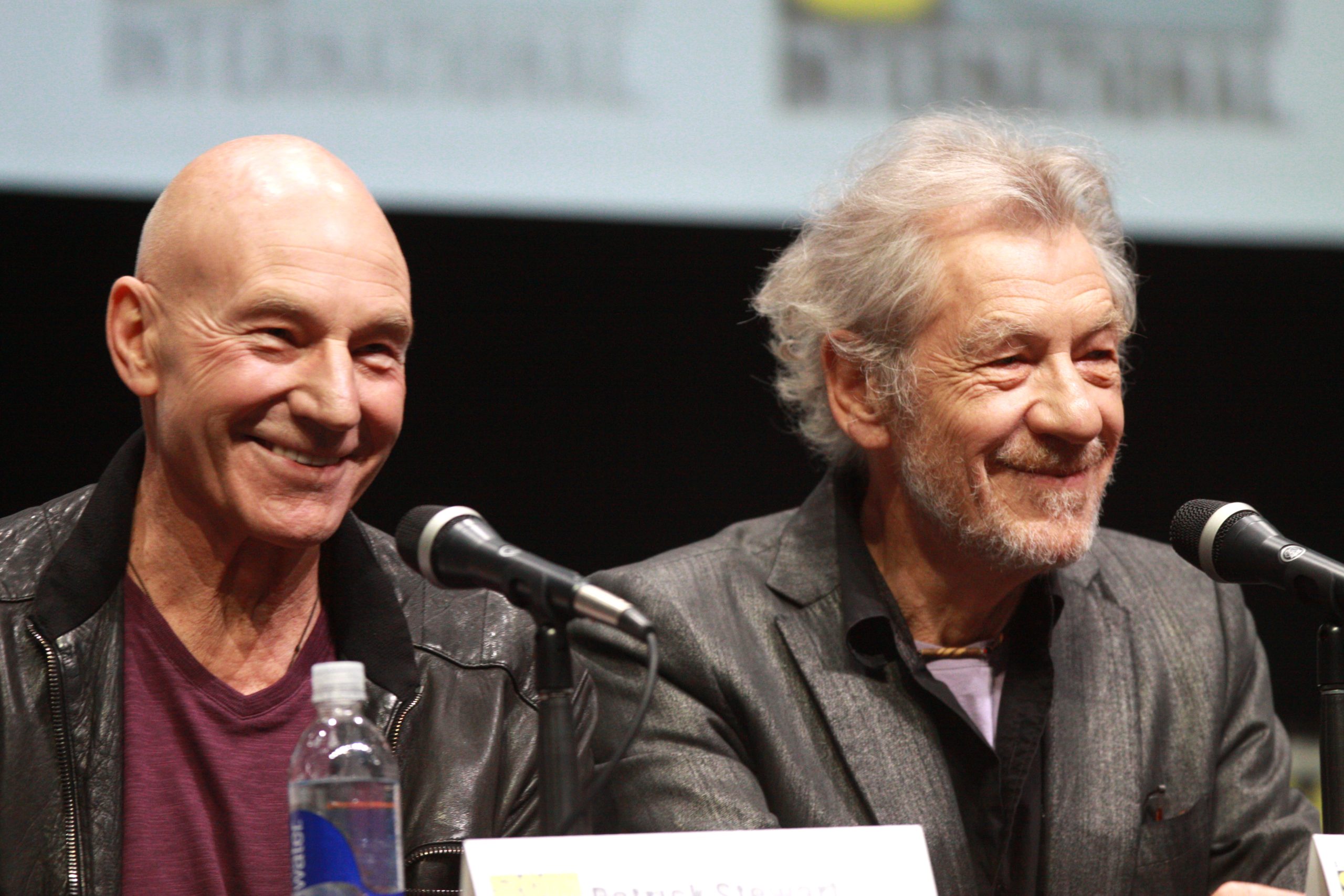
Sir Ian McKellen pays emotional tribute to long-time friend and fellow northern actor Sir Patrick Stewart
Emily Sergeant
Sir Ian McKellen has paid an emotional tribute to his long-time friend and fellow northern actor, Sir Patrick Stewart, following his death.
Sir Patrick Stewart – who was born and bred in Mirfield, West Yorkshire, and is best-known for his theatre work alongside an illustrious 60-year screen career, taking on prominent roles in franchises such as Star Trek and X-Men – sadly passed away at the age of 86, with his death being announced publicly yesterday evening (29 October).
And now, his long-time friend and fellow northern actor, Sir Ian McKellen, has paid tribute.
Sir Patrick and Sir Ian shared the stage together countless times over their decades-long careers, but also famously starred alongside each other in the X-Men franchise, and subsequent Marvel movies, as Charles Xavier/Professor X and Magneto.
The tribute, shared across Sir Ian’s social media platforms, reads: “Before everything else, Patrick was defined by being born and bred in Yorkshire, the proud county in the north of England which he loved to the end. You could hear it in his accented voice and in the stern honesty with which he told you what he thought and felt. Yorkshiremen have no truck with half-truths or avoidance of big issues. He wore his heart on his sleeve, which made him a man to rely on, to admire and in my case, love.
“We first met as ambitious young actors with the Royal Shakespeare Company half a century ago but we weren’t in the same productions.
“My first strong memory was a few years later, meeting him in the street in central London when he told me about an offer to take over a leading part in ‘Star Trek’. “But Patrick think of your stage career in the UK. Do you really want to risk getting lost in Hollywood for years and years?”
“Well, he took the risk and thank goodness for us all that he did, for not just his devoted Trekkies, but film and theatre audiences who marvelled at his using international celebrity to star in a string of cinema successes (‘X-Men’ of course) and in great classical plays by Shakespeare, Ibsen, Arthur Miller, Peter Shaffer, Pinter and Beckett at Stratford-upon-Avon, in London’s West End and on Broadway.
“America was his adopted home, where he met his adored Sunny who has cared for him through sickness and health, through thick and thin.
“But he never forsook his origins: and the proudest achievement of the most respected and beloved actor of his generation on either side of the Atlantic, was his appointment as Chancellor of Huddersfield University in Yorkshire.”

 The Manc -
3rd March 2021