Gyms and all non-essential shops across England are expected to be allowed to reopen once lockdown ends in the lead-up to Christmas.
It is part of the UK government’s COVID Winter Plan – a new blueprint to fight the pandemic which looks to not only save lives during the winter, but also prevent a Commons revolt by rebel Tory MPs – which Prime Minister Boris Johnson is due to announce to MPs in the House of Commons this afternoon.
Mr Johnson will explain the detail of England’s return to the “three tier system” when lockdown ends on 2nd December.
As announced over the weekend, a break for Christmas is to be allowed, but Mr Johnson is not expected to confirm how many households will be able to bubble together at Christmas, or how long the break in restrictions will last.
That announcement is currently planned for tomorrow.
ADVERTISEMENT
Government ministers are however reportedly believed to be working on plans for three households and a five-day break – from Christmas Eve to 28th December – subject to agreement from the Scottish, Welsh and Northern Irish governments.
Health Secretary Matt Hancock told Sky News this morning that a final decision “hasn’t been made”.
ADVERTISEMENT
He said the government will “confirm it when we have that agreement across the four nations”, and added: “We’ve agreed in principle that there should be a set of rules that applies across the board that is balanced, that allows a little bit more freedom, but is still safe.”
PicPik
But despite the differences in the new three tier restrictions due replace England’s national lockdown, the Prime Minister is today expected to announce:
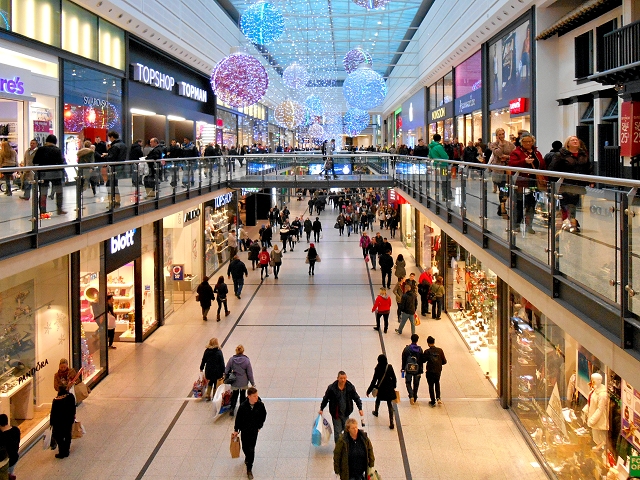
Non-essential retail will be allowed to open, in a boost for Christmas shoppers – and the high street.
Gyms will be allowed to open too in the run-up to Christmas.
The 10pm curfew for pubs and restaurants – which critics claim did more harm than good – is to be altered.
And a mass testing programme is to be launched in Tier 3 areas, using the Army, like the recent pilot programme in Liverpool.
A scrapping of the self-isolation period for COVID contacts is also expected.
ADVERTISEMENT
Prime Minister Boris Johnson is today expected to say: “The selflessness of people in following the rules is making a difference [and] the virus is not spreading nearly as quickly as it would if we were not washing our hands, maintaining social distance, wearing masks and so on, and in England, where nationwide measures came into effect at the start of this month, the increase in new cases is flattening off,
“But we are not out of the woods yet.
“The virus is still present in communities across the country, and remains both far more infectious and far more deadly than seasonal flu, but with expansion in testing and vaccines edging closer to deployment, the regional tiered system will help get the virus back under control and keep it there.”
___
For the latest information, guidance and support during the coronavirus (COVID-19) pandemic in the UK, please do refer to official sources at gov.uk/coronavirus.
#HandsFaceSpace
News
Council announces return of FREE firework displays in Manchester parks
Emily Sergeant
The skies over Manchester will light up once again, as free firework displays are set to return to several of the city’s parks.
You may remember that major fireworks events throughout the city had been paused following the COVID-19 pandemic, due to funding challenges, with Manchester City Council choosing to invest in a range of other community-focused events across throughout the autumn season instead, rather than one-off firework celebrations.
But now, once this November rolls around, all of that is set to change.
That’s because, on Saturday 7 November, free fireworks events will return to Heaton Park, Wythenshawe Park, and Platt Fields Park.
First up, there will be a reduced-noise, low-impact display at 5pm for families and SEND audiences, and a main fireworks display then to follow a little later at 8pm.
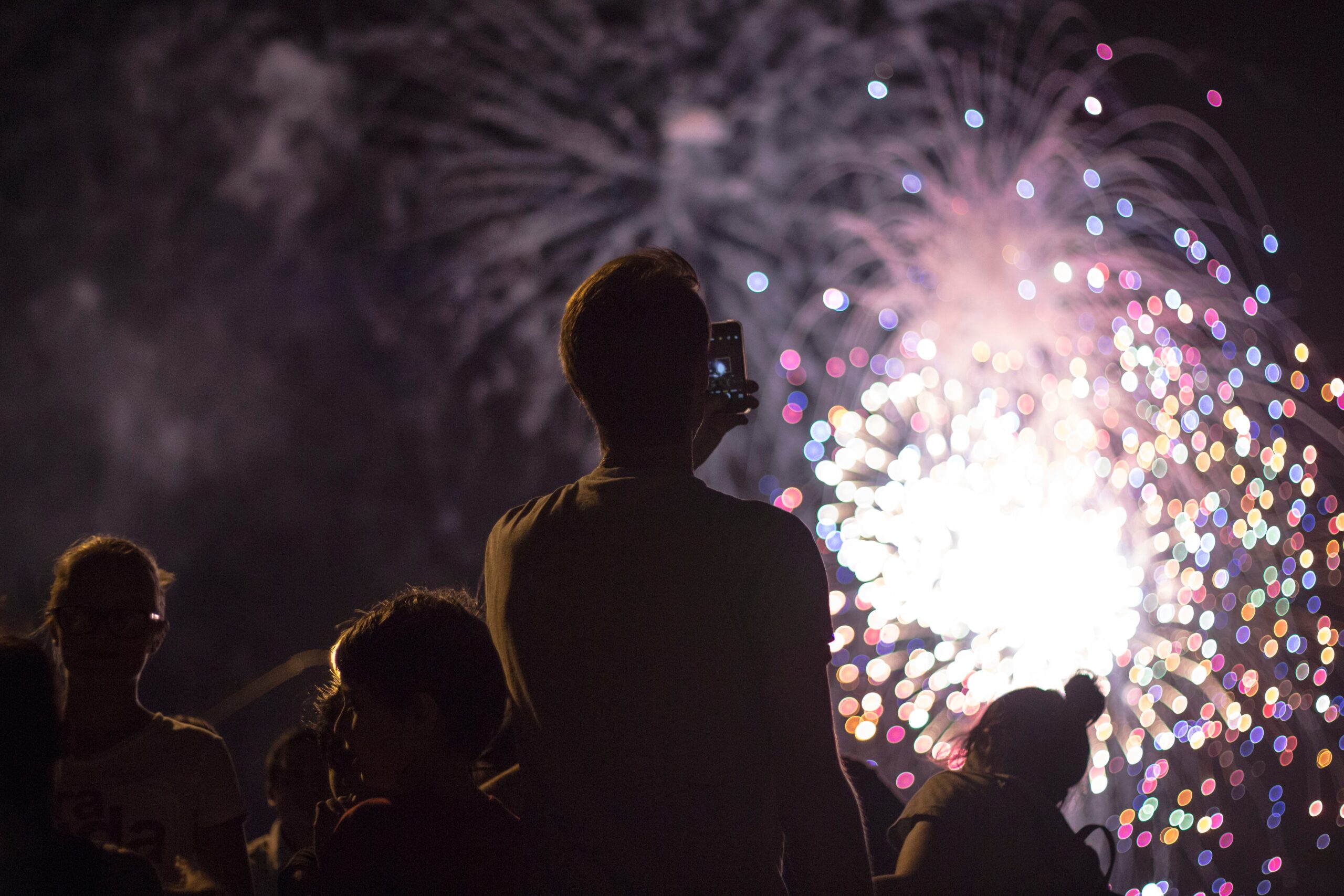
The Council has announced the return of free firework displays in Manchester parks / Credit: Unsplash
Each of the three parks will host lantern making workshops in the weeks leading up to the events too, with family-friendly lantern parades taking place ahead of the 8pm firework shows.
The Council says that the return of the free fireworks events reflects residents’ recent feedback about what they want to see in their community and how they want funding to be distributed.
“It’s a chance, at the start of the shorter days and beginning of the dark winter months, to come together and resume a much-loved annual tradition as well as enjoying an evening of safe entertainment and spectacular fireworks displays,” Manchester City Council said in a statement.
Councillor Basat Sheikh, who is the Executive Member for Neighbourhoods, added: “We are delighted to announce and welcome the return of our much-loved fireworks celebrations.
It’s the first time they’ve returned since the COVID-19 pandemic / Credit: Elisha Terada (via Unsplash)
“Our parks should be shared spaces that create opportunities for Manchester people to gather, which is why bringing back the fireworks displays was top of our agenda. And we also recognise the importance of community which is why we will also continue to invest in a wide range of activities in our parks throughout the year.
“The return of these events is a wonderful opportunity for families and communities to create lasting memories and enjoy the long-standing tradition of fireworks in our parks in a safe way.”
Additional entertainment will be announced for each park in the coming weeks too, so keep your eyes peeled for more.
Featured Image – Alex Jones (via Unsplash)
News
Stockport man admits to drugging and raping his wife without her knowledge for more than 20 years
Emily Sergeant
A man in his 60s from Stockport has admitted drugging and raping his wife in a ‘horrific’ 20-year campaign of abuse.
According to Greater Manchester Police (GMP), the man – who cannot be identified in order to protect the life-long anonymity of the victim – previously admitted five counts of rape, three counts of sexual assault, six counts of assault by penetration, and one count of sharing intimate photos or film.
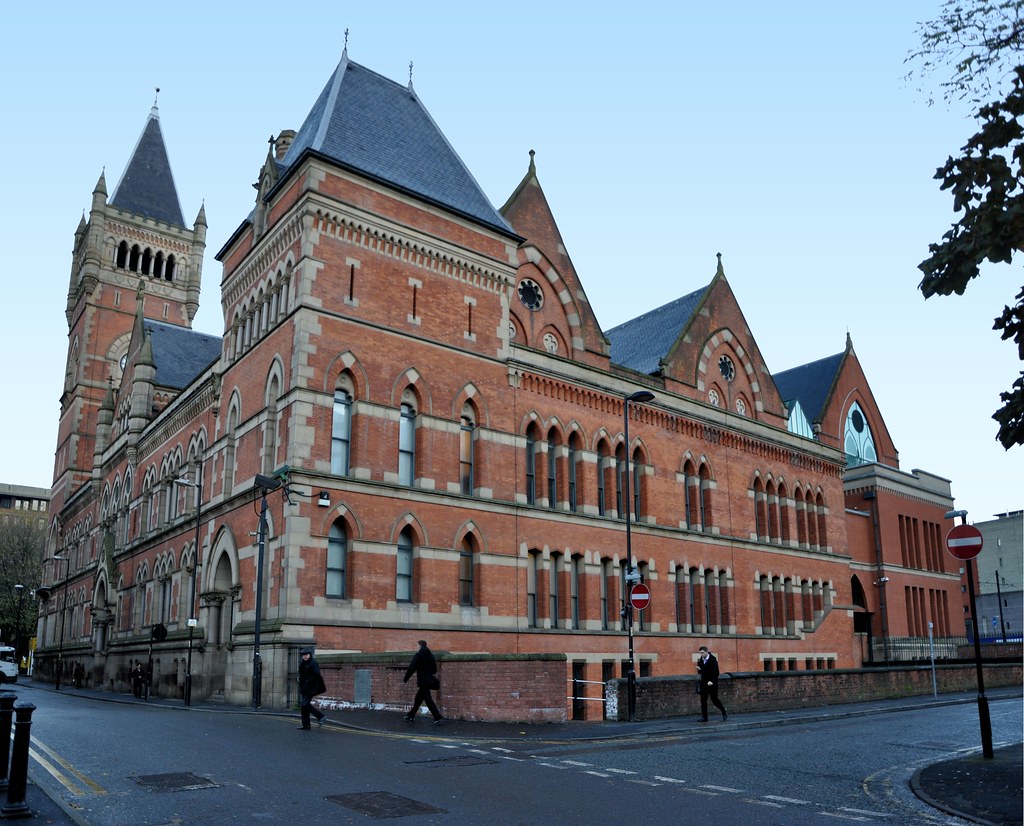
And now, during an appearance at Manchester Minshull Street Crown Court yesterday (14 September), he pleaded guilty to a further 45 charges.
This makes it 60 charges in total the man has now pleaded guilty to.
Some of the charges he pleaded guilty to yesterday include a further 16 counts of rape, nine counts of assault by penetration, seven counts of sexual assault, and four counts of attempted rape, amongst several others.
Speaking following the court appearance yesterday, GMP’s Assistant Chief Constable, Rick Jackson, said: “Our focus remains on supporting the victim of this horrific campaign of abuse through what is a very complex investigation.
“Specialist support continues to be provided to the victim at the centre of this case.
“If you are concerned you or someone you know may be affected by drug-facilitated sexual abuse, please know that you do not need proof, certainty, or a clear memory to be taken seriously.
“You are not expected to understand exactly what has happened or who was involved in order to be taken seriously. If you feel that something has happened, then please report it or ask for help.”
GMP reiterates that anyone who does choose to report sexual abuse does not need a full account or clear memory, can share as much or as little as they feel able, and will be supported by trained officers, as their ‘immediate’ safety and wellbeing will be the ‘priority’.
They may also speak to a support organisation first and decide later whether to involve police.
Saint Mary’s Sexual Assault Referral Centre – Services are available on a 24-hour basis, and can be accessed by calling 0161 276 6515.
Greater Manchester Rape Crisis – Call on 0161 273 4500 or email [email protected]

 The Manc -
23rd November 2020
The Manc -
23rd November 2020