The beauty of Worsley Woods is something well known round these parts.
Part of a well-trekked three-mile circular walk – often highlighted as being one of the best across Greater Manchester – that also provides you with the chance to stroll along the Bridgewater Canal and take in the picturesque Worsley village and its cultural heritage, you can easily find yourself exploring the rich woodland area of this Salford suburb for hours.
But tucked away in a far corner of the RHS Bridgewater plot is something that’s really worth seeing.
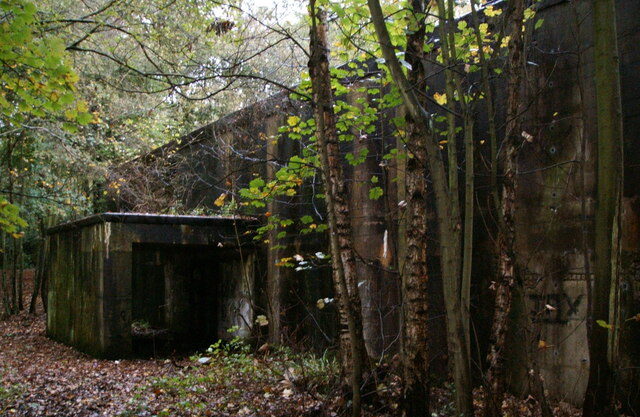
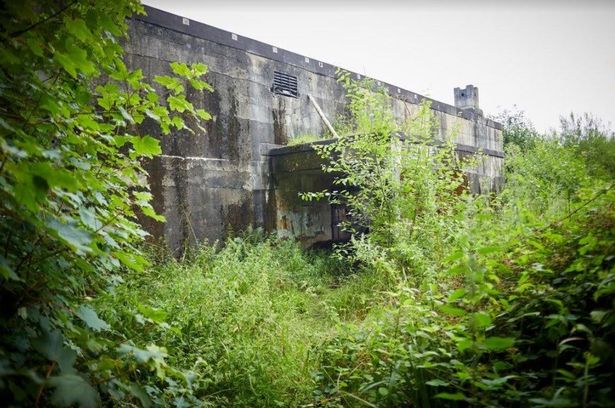
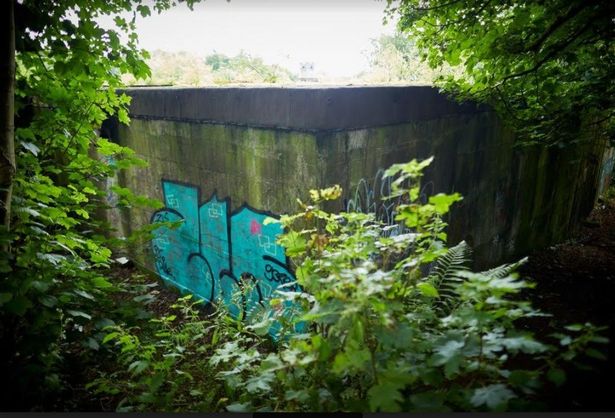
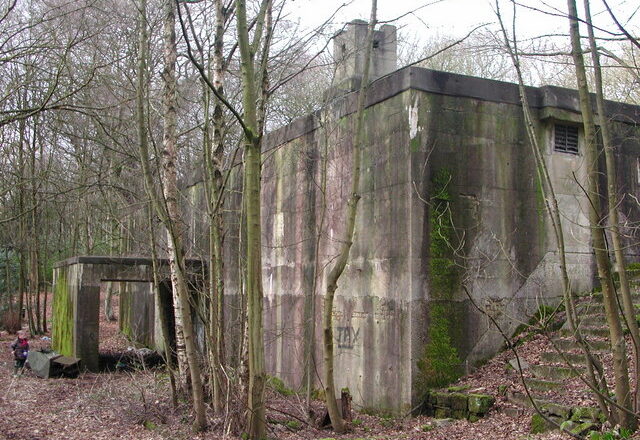
If you know just where to look, then you’ll come across a bunker from the Cold War that may one day blossom into a protected ancient monument.
Sure, it’s not exactly a pretty site – now well camouflaged by graffiti and foliage – but it’s long been a destination for so-called ‘urban explorers’, and in 2009, was also a magnet for thousands of party-goers who attended illegal, underground raves.
ADVERTISEMENT
It’s history goes back much, much further than that though.
Mark Waugh / RHS Bridgewater
Dug into hillside in 1951, the bunker was constructed when the potential of a nuclear strike by a Joseph Stalin-led Soviet Russia was deemed to be at its height.
ADVERTISEMENT
According to a report by Salford University’s Applied Archaeology Department, it was built by the War Office as an anti-aircraft operations room on land at Worsley New Hall, and was part of a national network of defences, which included an alternative seat of government to the House of Commons underground at Box Hill, near in Corsham in Wiltshire.
In the event of a potential Soviet attack, it was thought the British population could be protected by anti-aircraft guns, and so the country was divided into 33 gun-defended areas arranged in five groups.
The bunker at Worsley was part of this web, with the next nearest at Frodsham.
ADVERTISEMENT
The two-storey square structure at Worsley was a main operations room, surrounded by eight reinforced concrete rooms and a viewing gallery and it would have had its own electricity supply and ample space for stores of food, but as nuclear technology advanced during the Cold War, defence policies changed.
It soon became clear a nuclear attack would come not from bombs being dropped by planes, but rather by inter-continental ballistic missiles.
Austerity in the 1950s also led to defence budget cuts.
By 1956, the Worsley bunker was being used as a Royal Navy store, by 1961, it had been transferred to the local authorities as a control centre in the event crisis, and then by 1968, it was closed for good.
Geograph / Anthony Parkes
The story of the bunker doesn’t end there though, as in more recent decades, it has continued to have a varied history.
ADVERTISEMENT
Through the 1970s to the early 1980s, it was used by Greater Manchester Fire Service. Then in 1985, it was leased to to the Worsley Rife and Pistol Club who turned it into a shooting range, before Peel Investments acquired it in 2000.
In April 2009, one of several raves were held in the bunker attracting thousands of people.
Due to extensive vandalism occurring at the event, and in the years prior and post, both entrances were eventually blocked up, and it has remained empty ever since.
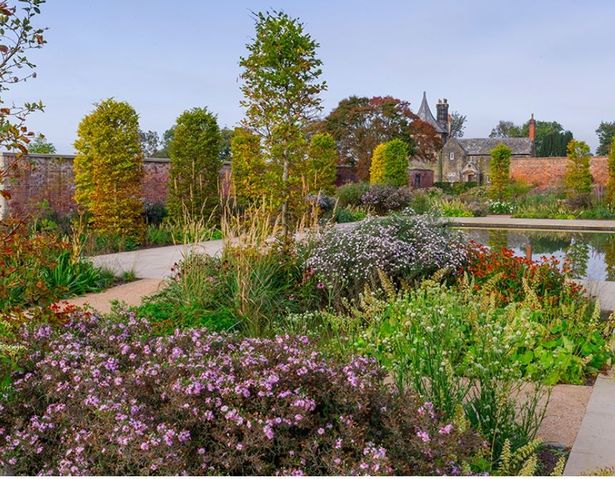
But when RHS Bridgewater eventually opens in May, the bunker will form part of its estate.
RHS Bridgewater will be the country’s fifth national garden.
ADVERTISEMENT
The Worsley Woods plot where the bunker stands was sold by Peel to the RHS, and Salford City Council then put £19 million towards the creation of the garden.
The £44m attraction – which covers 156-acres of land – was due to welcome visitors in July 2020, but just like most things, this was delayed due to the coronavirus (COVID-19) pandemic, although planting and preparation has been in full swing ever since, and it is set to transform the grounds of the former Worsley New Hall when it opens to the public this year.
What’s in store for the bunker in the future then? Well, it doesn’t sound like it’s going away any time soon.
A spokesperson for the RHS said: “The bunker definitely won’t be demolished, as it’s a really interesting part of the site’s heritage.
“There are no firm plans for how it’ll be used just yet, this will be looked at as part of the next phase of garden development from 2022 onwards.”
ADVERTISEMENT
___
You can get the latest updates on RHS Bridgewaterhere.
Trending
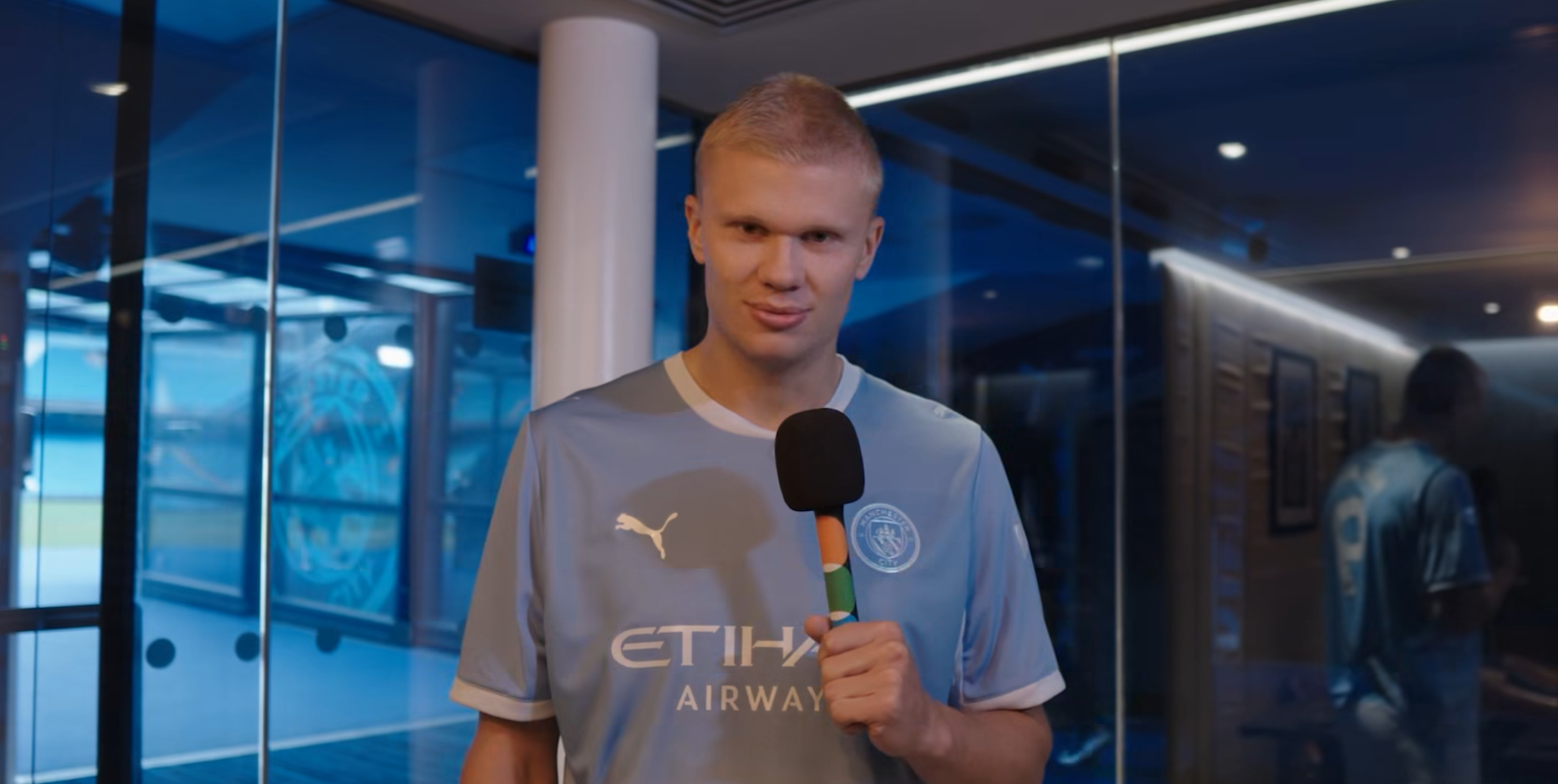
Erling Haaland has named his four favourite films… and fans have a lot to say on it
Emily Sergeant
Erling Haaland has answered the all-important question.
The question heard around the world, the question on everyone’s lips, a question that has absolutely nothing to do with football whatsoever… that’s right, he’s answered Letterboxd’s famous question of ‘what are your four favourite films?’.
If you’re unaware of what Letterboxd is, it describes itself as being an ‘online diary platform and app for film lovers’ and it gives users the chance to display their four favourite films at the top of their profile for all to see (and judge).
An extension of this has then been Letterboxd asking celebrities in press junket interviews and on red carpets what their ‘four faves’ are – and it’s gone on to become something of a phenomenon in the film world.
Everyone from massive A-list movie stars, to indie darlings and up-and-coming names have answered this question before, and now (it appears) to be Erling Haaland’s turn.
He’s not the first footballer to be tasked with question though, as the entire Spurs team was ambushed with it by former player – and famously massive cinephile – Alfie Whiteman last year, but it’s fair to say that after the summer he’s had with Norway at the World Cup, achieving international fame in the process, that Haaland is one of the most high-profile to answer it in a long while.
So, what’s on Erling’s list then?
Well, to self-confessed ‘film bros’ out there, you’re not going to find any deep cuts in this selection unfortunately, and you’re probably not going to get any recommendations for movies you haven’t seen before either, but come on, he is only a footballer after all.
Erling Haaland has named his four favourite films… and fans have a lot to say on it / Credit: Letterboxd
First up for the Manchester City striker is a pretty common pick by straight white men, it’s The Wolf of Wall Street, and he doesn’t give much of a reason for it, other than just suggesting: “I think you understand why”.
He then follows that up with Ridley Scott’s classic Gladiator, calling it ‘amazing’, before naming 2004’s epic Troy, and then rounding it out with a Christmas favourite for many, Home Alone, adding that he ‘watched it a lot as a kid, and then again now’.
As for fan reaction to Haaland’s four favourites, let’s just say it’s been mixed.
Among the 1,000+ comments on the Instagram video, you’ll find just as many people called him ‘king’ and saying he has ‘goated’ taste, as you will comments like this: “He has the most male gazed top four in history of Letterboxd.”
Noel Gallagher reveals his and Liam’s children are now ‘best friends’ after the Oasis reunion
Emily Sergeant
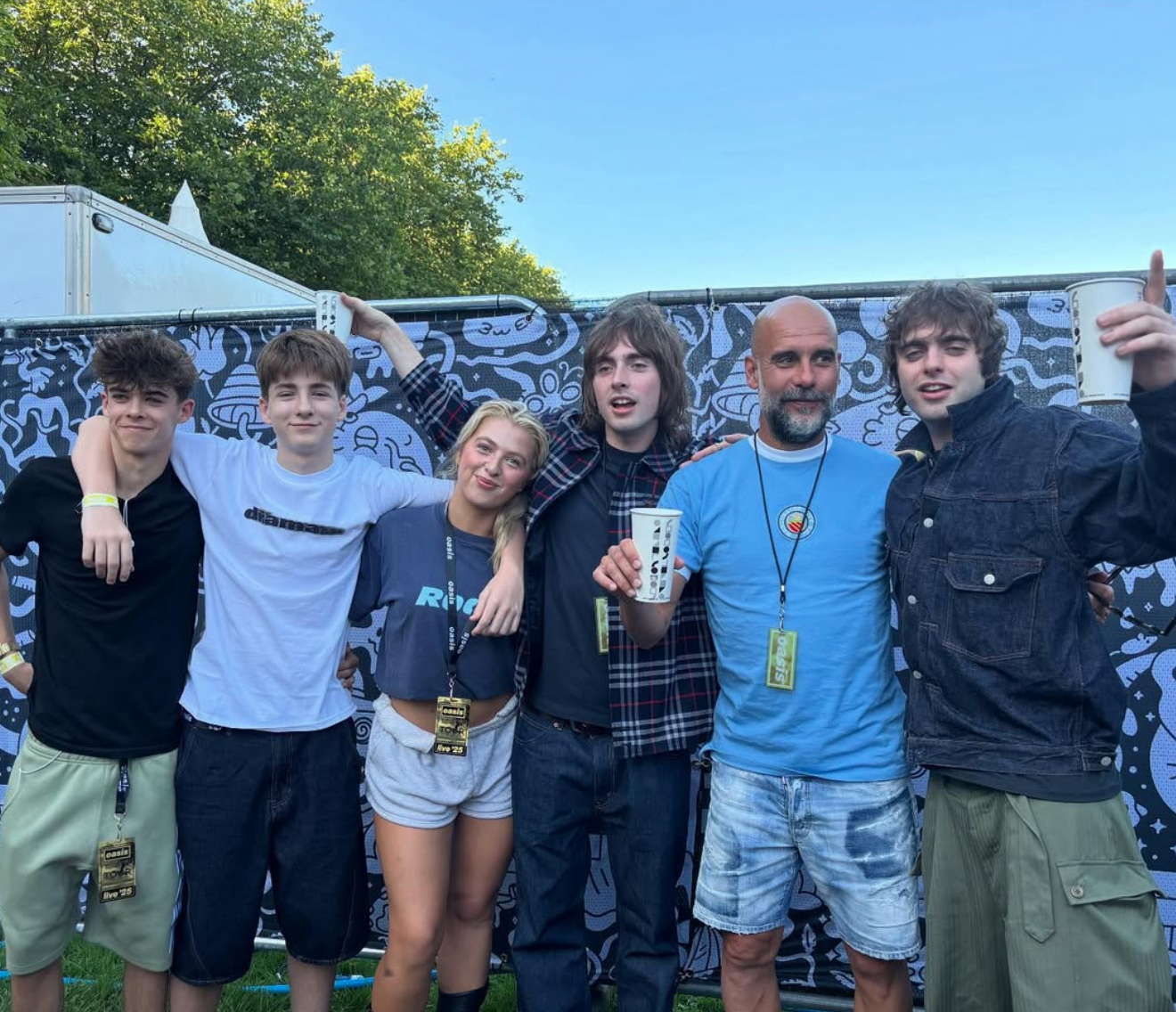
Noel Gallagher has revealed that his and Liam’s sons had never met each other before the Oasis reunion last year.
But now? Well now they’re ‘best friends’, apparently.
Unless you’ve been living under a rock, then I’m sure you’ll know by now that Oasis reunited last year for the first time since they disbanded back in 2009 to bring the world the long-awaited Oasis Live ’25 reunion tour – including five nostalgia-drenched gigs here in Manchester at Heaton Park, which saw more than 300,000 people descend on our city.
It was undeniably one of the biggest cultural events of the 21st century so far, given the fact most fans presumed the Gallagher brothers‘ feud meant they would never meet each other again.
Now though, it’s been revealed that some Gallaghers actually hadn’t met before last year.
According to those lucky fans who have already had the chance to see the Oasis: Don’t Look Back In Anger documentary concert film – which premiered first at the 2026 Venice Film Festival this past weekend, and then had its world premiere in London last night (7 September) – Noel Gallagher shares a story about how his two sons, Donovan and Sonny, had never met Liam’s sons Lennon and Gene prior to the reunion tour.
Noel Gallagher reveals that his and Liam’s sons had never met before the Oasis reunion:
Noel has three children – 26-year-old daughter Anaïs from his first marriage to Meg Matthews, and then two sons, 18-year-old Donovan and 16-year-old Sonny from his second marriage to Sara MacDonald.
Liam, on the other hand, has four children – daughter Molly, 28, two sons Lennon and Gene, aged 26 and 25 respectively, as well as a 13-year-old daughter named Gemma, who he is yet to meet.
Speaking on the relationship between his kids and their cousins, Noel said: “When my kids met his kids they didn’t know each other.
“Donovan and Sonny had never met Gene and Lennon. Lo and behold they’re best friends now.”
Oasis: Don’t Look Back In Anger is set to show the meteoric rise of Oasis through rare footage and untold stories as the band reunites for Oasis Live ’25, chronicling their journey from Manchester streets to global rock stardom.
It releases in cinemas nationwide, including in IMAX, this Friday 11 September.

 Emily Sergeant -
29th January 2021
Emily Sergeant -
29th January 2021