91% of the UK companies that took part in the world’s largest four-day work pilot have said they will continue with it now the trial has ended.
The pilot programme – which was run by 4 Day Week Global, in partnership with think tank Autonomy, the 4 Day Week UK Campaign, and a number of university researchers from Oxford, Cambridge, and Boston College – began in June 2022, and ran for a total of six-months before it was brought to a close earlier this year.
More than 60 companies and 3,300 workers from firms spanning a variety of industries signed up to the trial – with companies in banking, hospitality, care, IT, software training, and even animation studios taking part in the trial.
Staff taking part in the trial were given 100% of their pay for 80% of their time on the understanding that they maintain maximum productivity over the four days.
With the trial now complete, the feedback from participating companies provided, and the results determined, 4 Day Week Global has revealed that almost every organisation from the trial will stick to a four-day week – with 91% saying they will definitely continue or are planning to continue, and a further 4% leaning towards continuing.
ADVERTISEMENT
Only 4% of participating organisations said they wouldn’t continue.
IT WORKS.
⁃ 92% of companies keep it ⁃ Burnout down by 71% ⁃ Sick days down by 65% ⁃ Revenue up 1.4% on avg.
No question about it – the UK’s 4-day week trial was a 𝙝𝙪𝙜𝙚 success.
Companies rated their overall experience of the six-month trial an average of 8.5 out of 10.
ADVERTISEMENT
Business productivity and business performance each scored 7.5 out of 10, while revenue rose by 35% over the trial period when compared to similar periods from the previous year, and hiring increased and employee absentees decreased.
The health and wellbeing of employees also improved, according to 4 Day Week Global – with significant increases in physical and mental health, time spent exercising, and overall life and job satisfaction.
Rates of stress, burnout, and fatigue all fell, and problems with sleep declined.
ADVERTISEMENT
Environmental outcomes were also encouraging, according to those running the campaign – with commuting time falling by an average of half an hour per week.
91% of UK trial companies to continue four-day work week after ‘major breakthrough’ / Credit: RawPixel
Speaking on the success of the trial, leader researcher Professor Juliet Schor of Boston College says she saw an “encouraging consistency” in the data, and added that: “Results are largely steady across workplaces of varying sizes, demonstrating this is an innovation which works for many types of organisations.
“There are also some interesting differences.
“We found that employees in non-profits and professional services had a larger average increase in time spent exercising, while those in construction and manufacturing enjoyed the largest reductions in burnout and sleep problems.”
Overall, 4 Day Week Global says the trial has been a “huge success” and a “massive breakthrough” – which ultimately signals “good news for the future of work”.
The campaign’s co-founder and managing director, Charlotte Lockhart, said the organisation is looking forward to adding its Australasian pilot results to the UK data “in the coming weeks”, as well as the results from the European, South African, Brazilian, and North American trials over the next couple of months.
A Greater Manchester neighbourhood has been named one of the ‘coolest’ in the UK
Clementine Hall
A neighbourhood in Great Manchester has been crowned one of the coolest in the country – and this time, it’s not Ancoats.
Every year, we wait with bated breath to see which UK neighbourhoods have made the cut in Time Out’s annual ranking of the coolest places in the world.
But, as it turns out, Britain is just so damn cool that we’ve earned a list of our own.
In its latest guide, ’11 Coolest Neighbourhoods in the UK’, Time Out has rounded up the places across the country that are really making a name for themselves.
Images: The Manc
And one neighbourhood here in Greater Manchester has made the cut, and although you’d immediately think of Ancoats that has made its way to similar lists before, this time there’s a newbie on the block.
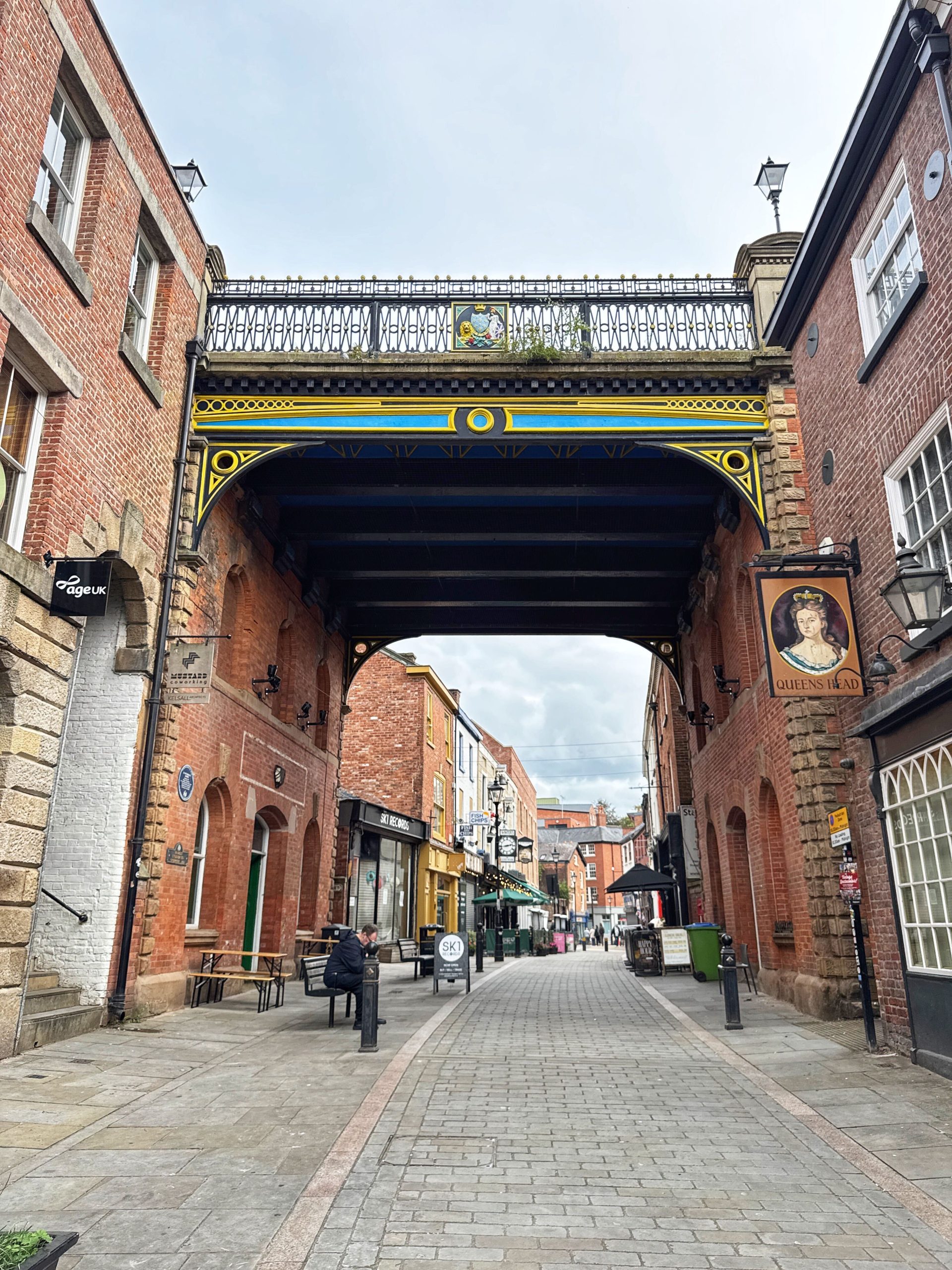
Coming in at a very respectable fourth place, Stockport and the Underbanks received a glowing report in the coveted list.
Images: The Manc
Are we surprised? Not one bit.
We love Stockport for its flourishing food scene, cool community vibe and ever-growing roster of independent businesses – not to mention its brilliant mix of old-school charm and new-school cool.
It’s a place that feels like it’s constantly evolving, without losing the character that made people fall in love with it in the first place. And clearly, Time Out agrees.
Images: The Manc
Kyle MacNeill, contributing writer, said: “If you live anywhere near Manchester, you may have heard this one on the rumour mill: ‘Stockport is The New Berlin’. It’s a gag, alright: the humble market town hasn’t got a club, let alone the most hedonistic nightlife scene in the world. But it is true that SK is rapidly becoming the place-to-move-to for the Second City’s creatives, thanks to cheaper rent and some serious suburban tenacity.
“The Underbanks, a cobbled high street once home to hat-makers and hosiers, has been transformed into a bustling hub of forward-thinking vendors, while various local institutions have embraced Euro-style cafe culture, midcentury decor, sustainable fine-dining, small plates snacking and chic drinking dens. All of which, actually, come to think of it, is very Berlin… “
High praise indeed, you can read the full list of the UK’s coolest neighbourhoods here.
Murder investigation launched and five people arrested after man dies in Salford
Emily Sergeant
A murder investigation has been launched after the death of a man in Salford this week.
Greater Manchester Police (GMP) explained that officers were called out to an address on Great Clowes Street in Salford at around 7:50pm on Tuesday evening (6 October), and when they arrived on the scene, a man in his 40s was found ‘unresponsive’.
Despite the best efforts of emergency services and all the medical professionals involved, the man sadly died a short time later.
The identity of the man has not been revealed as of yet.
Police have confirmed that five men, all aged between 24 and 35-years-old, have been arrested on suspicion of murder.
A public appeal for information has now been issued as the investigation into the circumstances surrounding this man’s death continues.
Detective Chief Inspector Ian Partington explained: “Our priority is to establish exactly what happened and we are keeping an open mind as we work to build a full picture of the events leading up to his death. A post-mortem is taking place to establish the cause of death, which will be an important part of our investigation.
“We understand that an incident of this nature will understandably cause concern within the local community but at this stage, we are confident that there isn’t any wider threat to the public.
“Officers will remain in the area while enquiries continue, and I would encourage anyone who has information, or who may have witnessed anything that could assist our investigation, to speak to officers or contact us.”
Can you help? Anyone with information should contact police on 101, use the LiveChat function on the GMP website, or contact Crimestoppers, anonymously, on 0800 555 111.

 Emily Sergeant -
22nd February 2023
Emily Sergeant -
22nd February 2023