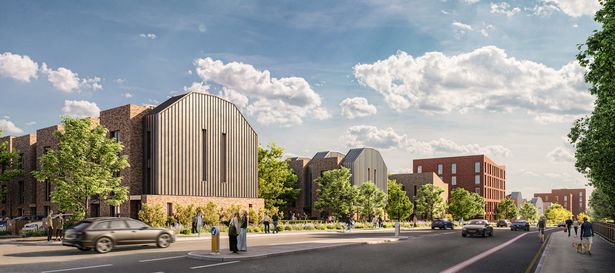
This regeneration scheme forms part of the city’s £4 billion Northern Gateway project.
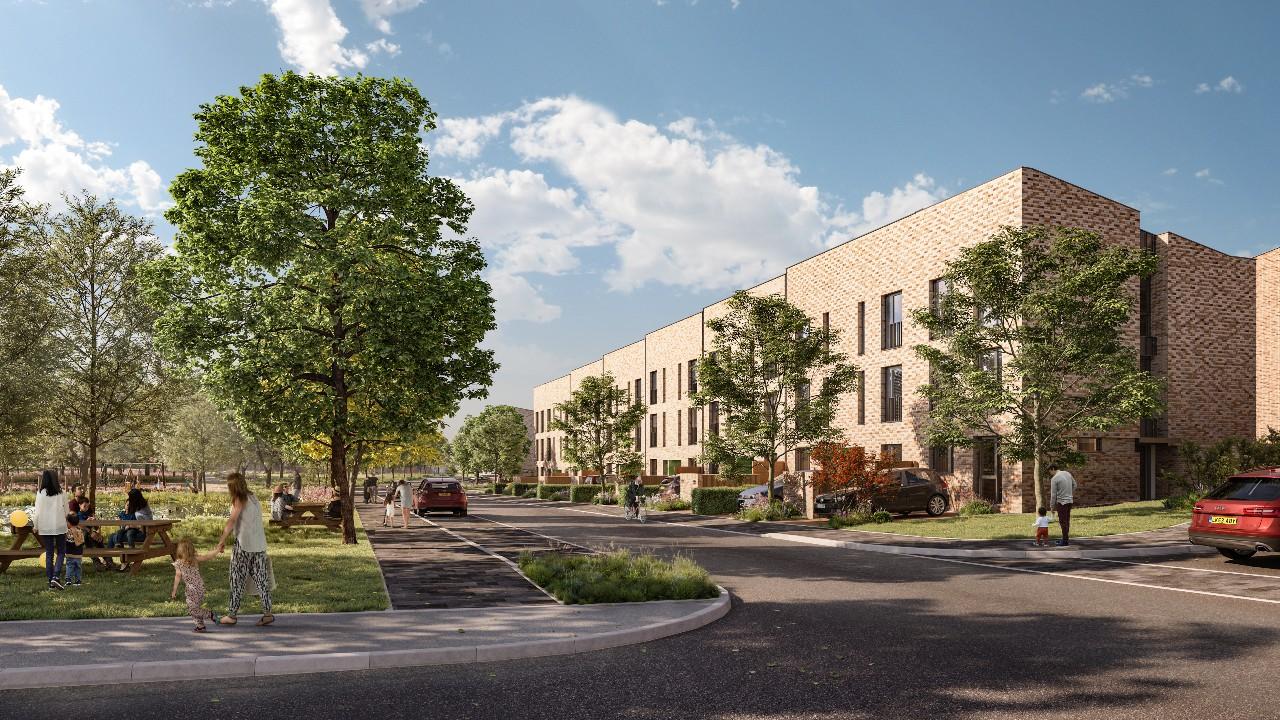
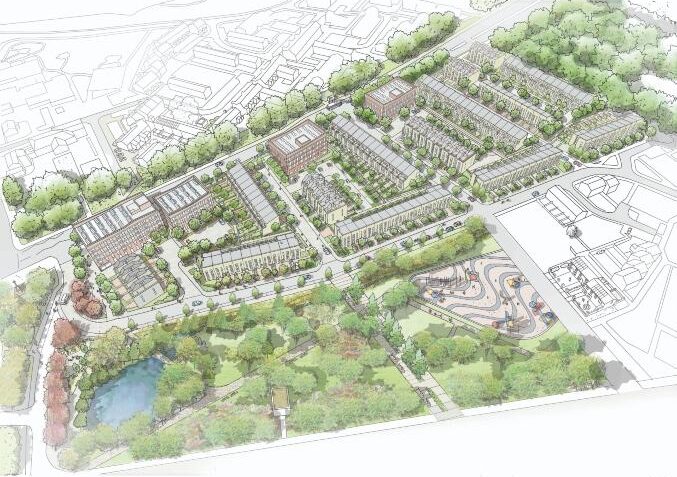
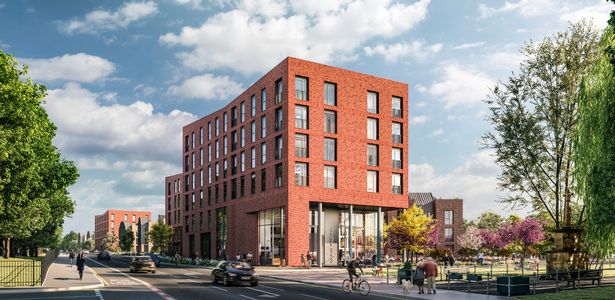
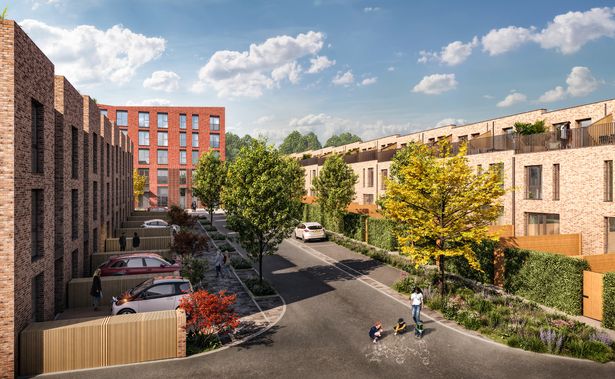
The proposals – which represent the first major regeneration of the area in 50 years – feature 244 new homes, comprising a mix of town houses and apartments, including 100 homes for social rent, and a new 1.3 hectare public park.
The diverse range of homes is intended to cater for a mix of families, young professionals and older residents, as the joint venture looks to create a sustainable neighbourhood for current and future generations.
As part of the Collyhurst Village proposals, the first phase of New Collyhurst Park will deliver a new public green space for Manchester, with more than 450 trees expected to be planted as part of a network of green links to the surrounding village, and according to Manchester City Council, the masterplan for the area also includes almost 2,000 sq ft of neighbourhood-focused commercial and retail space, as the joint venture partnership looks to “improve community assets and provide new inclusive public realm spaces for residents”.
ADVERTISEMENT
The planning application – which has been submitted to Manchester City Council’s Planning & Highways Committee – follows a three-phased public consultation delivered by FEC in 2020.
Manchester City Council / FEC
More than 2,500 people – including local residents – took part across both physical and digital consultations, with the first phase of plans said to “reflect local appetite for increased connectivity, green space and the continued celebration of Collyhurst’s identity and heritage”.
ADVERTISEMENT
Responses to the consultation overwhelmingly supported the proposals, with respondents equally positive that they met the needs of the community in Collyhurst.
The proposals represent part of the first phase of the Strategic Regeneration Framework for Manchester City Council and FEC’s redevelopment of parts of North Manchester – other neighbourhoods involved in the first phase of development include Red Bank and New Cross – which is aiming to deliver up to 15,000 new homes, while rejuvenating disused land over the next 15 years.
And detailed proposals for a second scheme to be delivered within neighbouring South Collyhurst – one of the seven neighbourhoods to be developed as part of the overall Framework – are expected later this year.
ADVERTISEMENT
Initial developments across the two neighbourhoods are expected to deliver 130 new affordable homes.
Manchester City Council / FECManchester City Council / FEC
Speaking on the plans submitted and the release of the first computer-generated images to coincide with this, Cllr Suzanne Richards – Executive Member for Housing and Regeneration at Manchester City Council – said: “Submitting the first planning application for Collyhurst Village is a landmark moment for local people and represents the beginning of the end of a long journey for residents in the area who have been waiting for this investment in their community.
“The Northern Gateway project is hugely exciting for Manchester.
“Given the economic impact of the coronavirus (COVID-19) pandemic on our towns and cities, the continuation of this investment is encouraging as a marker of confidence that our city will recover and thrive once COVID is behind us.”
She also thanked everyone who took part in the consultation last year.
ADVERTISEMENT
“The number of responses was brilliant and input from the people who live in the area has provided invaluable insight to help guide the principles of development” she added.
Manchester City Council / FEC
Victoria Hunter – Development Manager at FEC – also added: “Over the past 12 months, we’ve seen the overriding importance of tight-knit communities, and the role access to high quality homes, sustainable community assets and green space have to play in facilitating them.
“Working with and for the people of Collyhurst, who have informed this application, it’s our ambition to deliver a vibrant and inclusive neighbourhood that has unique and lasting appeal for both existing and new residents.
“In doing so, we plan to champion the area’s heritage and its residents as part of the wider regeneration framework, improving connections to the city while celebrating Collyhurst’s iconic red sandstone which forms the fabric of Manchester as we know it.”
___
ADVERTISEMENT
Work is expected to begin on the Collyhurst Regeneration this summer, with delivery scheduled for completion in summer 2024.
New data estimates that 7.3m Oasis fans are set to miss out on 2027 tour tickets
Emily Sergeant
New data has revealed that as many as 7.3 million Oasis fans could be set to miss out on tickets to the band’s 2027 tour.
In case you need bringing up to speed a little, it was announced earlier this week that, following the unprecedented success of the reunion tour, Oasis Live ’25, last year, including five nostalgia-drenched gigs at Manchester’s Heaton Park, Oasis would be hitting the road once again in 2027, and this time around, they’re going BIG.
We’re talking 11 nights at the Etihad Stadium and a return to the iconic grounds of Knebworth for four special shows there too, kind of ‘big’.
The iconic Manchester band will also be taking to a range of other world-famous stages across the globe, including five nights at Glasgow’s Celtic Park, and major cities like Barcelona, Amsterdam, Paris, Rome, and Las Vegas.
But despite the elevated number of dates the Gallaghers and co will be performing, some new data has unfortunately revealed that millions of fans may still not be lucky enough to snag a ticket.
The ticketing system for Oasis Live ’27 is not what it was for the last tour, nor will it be similar to many other tours of a similar scale in the past either, as this time, the band and their promotors are taking necessary measures to ensure ‘genuine fans’ get their hands on the tickets and that dynamic pricing doesn’t creep in.
Instead of going into detail on that now though, you can read our full guide on how to get tickets for the Manchester and Knebworth shows here.
Experts at online ticketing platform TicketSource have analysed the scale of demand for Oasis tickets by comparing the 10 million fans worldwide who queued for the initial release of 1.4 million tickets for their 2025 tour, with the newly announced 2027 tour dates and stadium capacities.
With an estimated 2.67 million tickets available across 38 dates and 11 locations between 21 May and 19 September 2027, Oasis could still face huge demand from fans hoping to see them live.
But research reveals the band would need to play 112 Wembley-sized shows to accommodate everyone who tried to get a ticket in 2025.
The 2027 tour would accommodate just 26.7% of those who tried to get tickets last time, meaning almost three-quarters (73%) of them could miss out, leaving a shortfall of more than 7.3 million fans.
Fingers crossed you’re among the lucky lot that secure tickets, though.
Featured Image – Joshua Halling (Press Image – Supplied)
News
Former GMP officer jailed after being found guilty of several online child sex offences
Emily Sergeant
A former police officer from Salford has been sentenced after being found guilty of a string of online child sex offences.
Following a trial back in July, 35-year-old Michael Aspinall was sentenced at Preston Crown Court earlier this week (Monday 14 September) after being found guilty of three counts of attempting sexual communication with a child.
It comes after Aspinall – who was employed by Greater Manchester Police (GMP) at the time of the offences – was arrested in October 2024 by detectives from the North West Regional Organised Crime Unit (NWROCU), and was immediately suspended from duty following his arrest.
The investigation began after evidence was obtained that Aspinall had been communicating online with individuals that he believed to be children, but he was in fact communicating with a police officer.
Following this series of interactions, he was charged with various offences.
In addition to his eight-month sentence – which has been suspended for two years – Aspinall will also be placed on the sex offender’s register for 10 years, subject to a five-year serious crime prevention order, and have undertake 20 days of rehabilitation, GMP has confirmed.
He has additionally been added to the College of Policing’s barred list.
An application to request forfeiture of Aspinall’s police pension has also been made to the Deputy Mayor of Greater Manchester.
“Aspinall’s offending was clearly unacceptable for any right-minded member of society and particularly inappropriate for a serving police officer,” commented Detective Chief Inspector Gareth Humphreys, from GMP’s Professional Standards Directorate.
“His actions put the whole police service under scrutiny, but thanks to the hard work and diligence of undercover officers, he was arrested, found guilty, and has now received his punishment.”
DCI Humphreys concluded: “[Aspinall’s] actions take away from the hard work of the men and women who work so hard for their communities every day, and it is only right that anyone committing these sort of offences are rooted out.”

 Emily Sergeant -
16th February 2021
Emily Sergeant -
16th February 2021