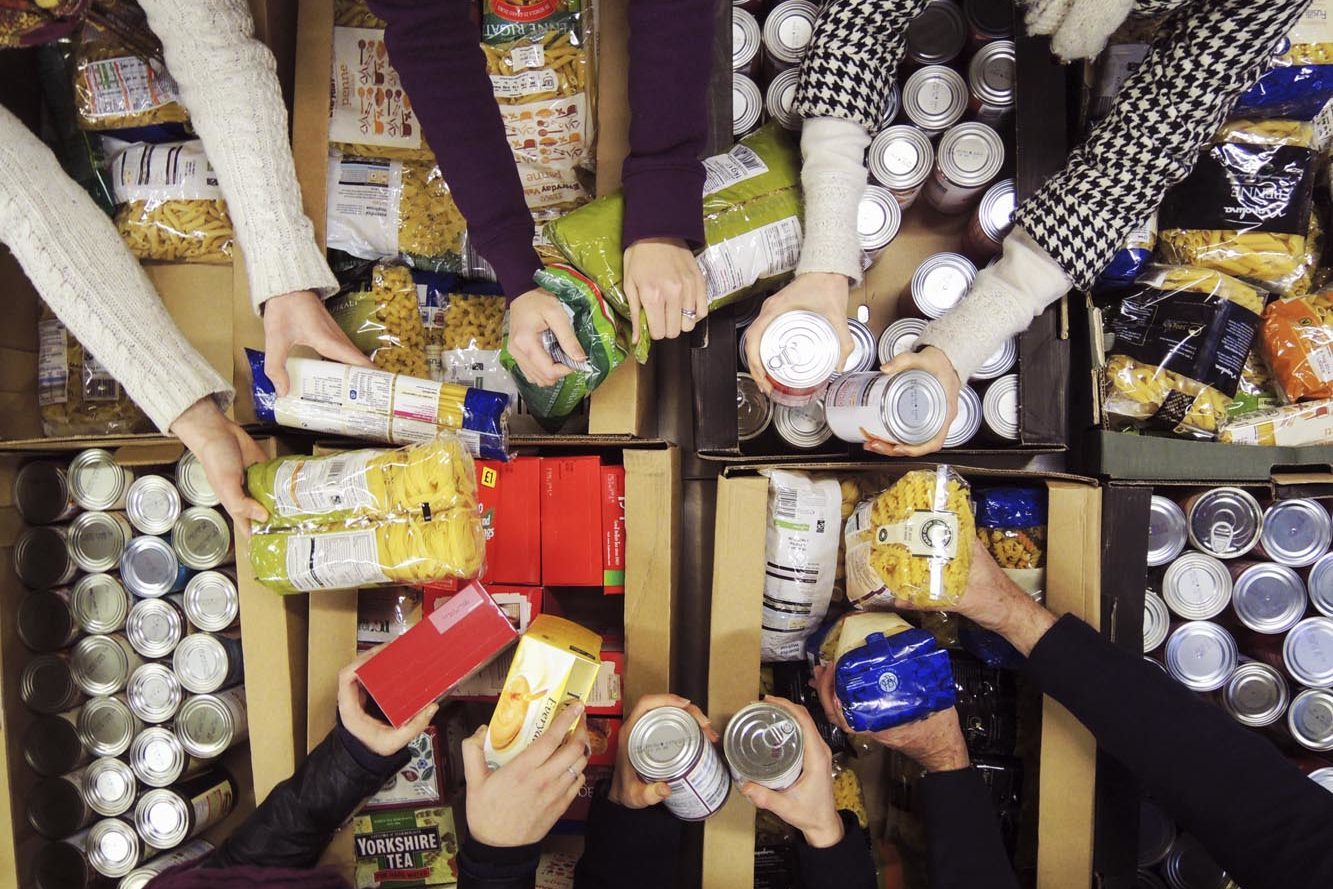
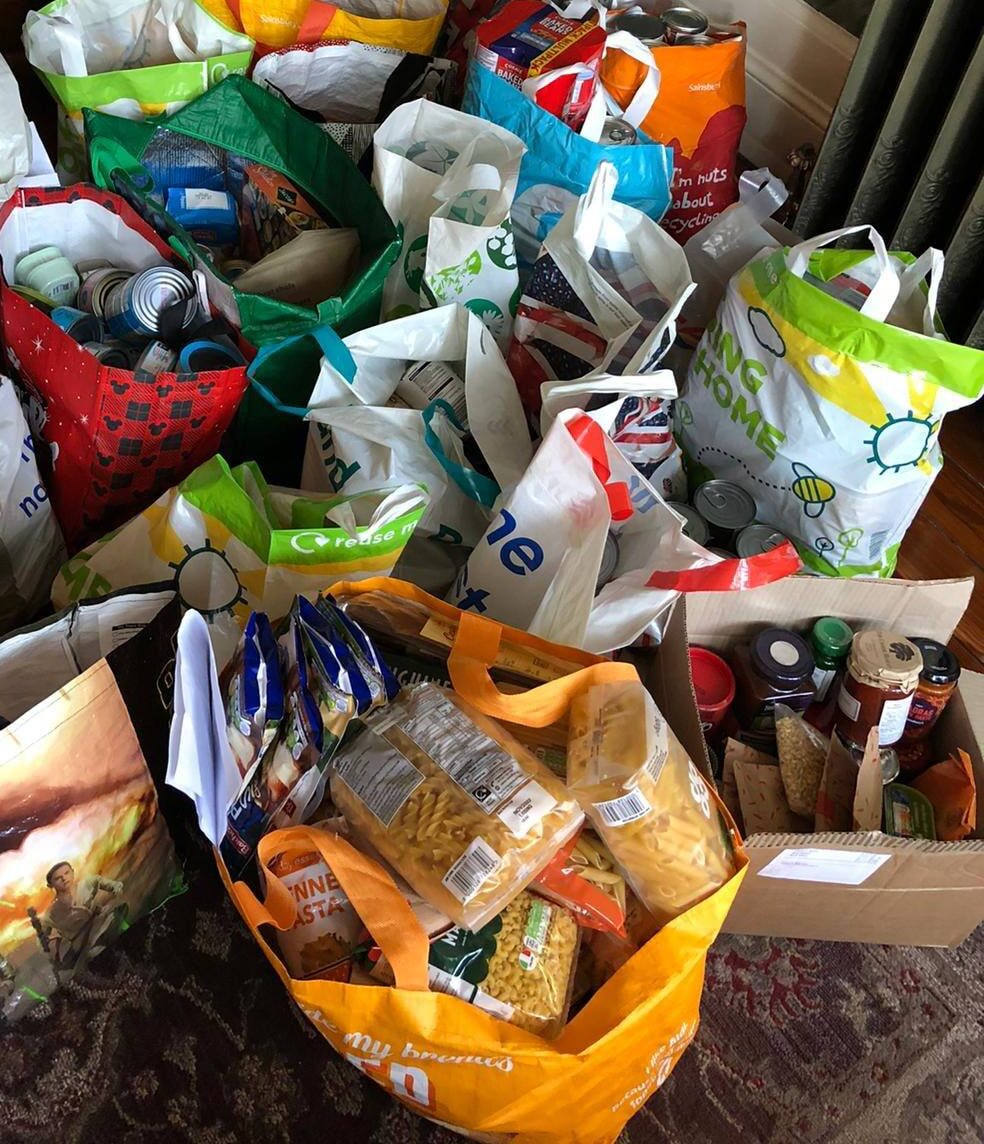
The North West relies on foodbanks more than anywhere else in the UK
Local charities and organisations are now warning that foodbank usage in the region could "spiral out of control" without sufficient government support.
A number of local charities and organisations are warning that foodbank usage in the North West could “spiral out of control” as it’s revealed that the region tops the list for demand.
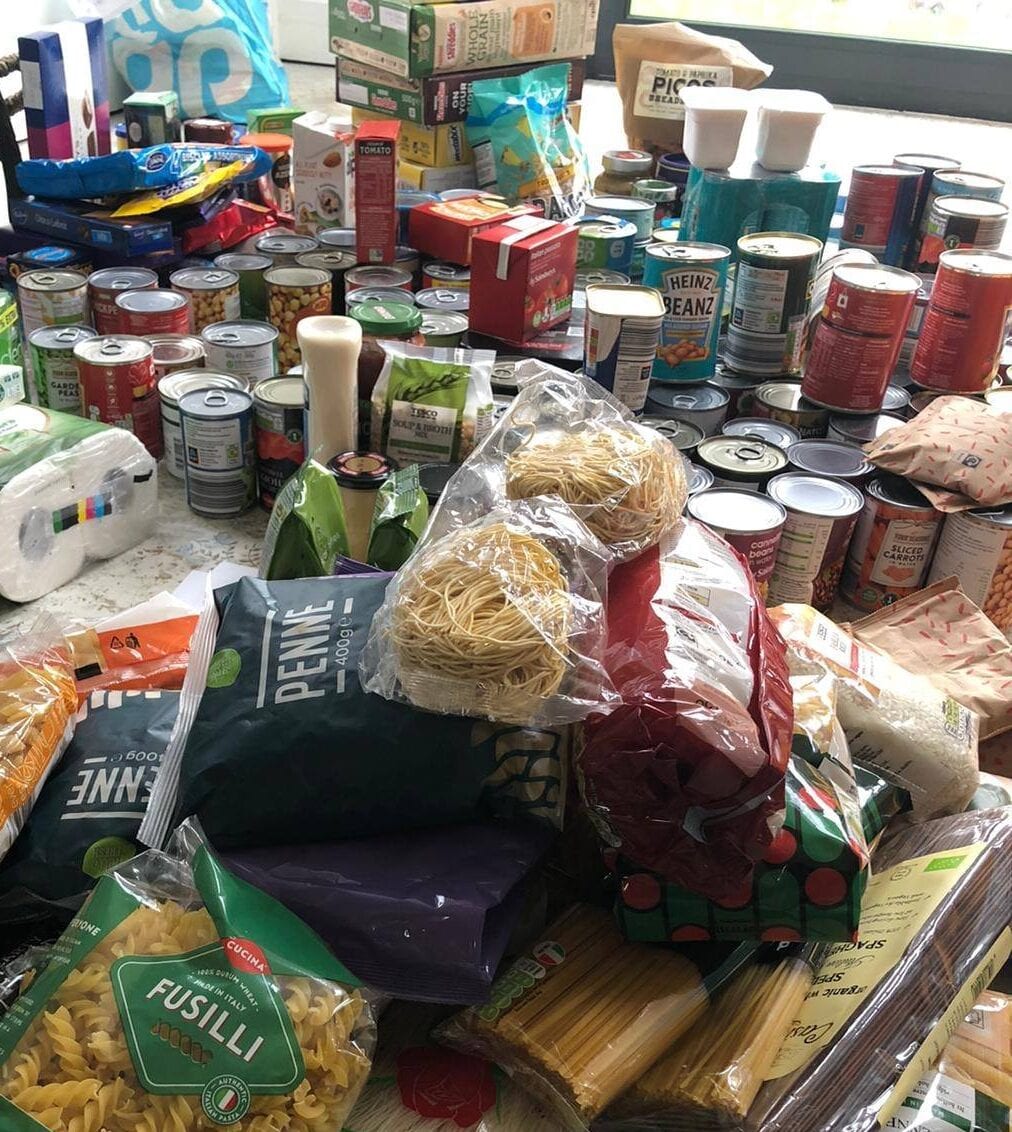
The stark warnings come as the number of families with children needing support from foodbanks continues to rise across the North West – with the region claiming four of the areas with the highest number of children living in poverty – and after statistics released by leading foodbank charity The Trussell Trust revealed that it gave out more food parcels within the region than anywhere else in the UK in 2020.
The warnings also come as predictions claim that more than five million children will be living in deprivation by the end of 2021.
On top of that, according to a report by the Food Foundation, 2.3 million children live in households that have experienced food insecurity in the past sixth months, and 4.7 million adults across the UK now experience food insecurity, which is higher than the levels before the coronavirus (COVID-19) pandemic hit.
Today we launch a report revealing how the pandemic’s effect on household food insecurity remains at crisis levels⚠️
— The Food Foundation (@Food_Foundation) March 1, 2021
As of March 2021, there are currently 105 foodbanks active across the North West.
ADVERTISEMENT
This latter figure does not however include food parcels that are provided by schools, local authorities or other independent providers, which is why more and more Greater Manchester charities and initiatives say they are having to step in to help families in need and are now calling on the government to introduce a National Poverty Strategy to provide support before the situation “spirals out of control”.
He told ITV Granada: “We urgently need some increases in the support people get through the Benefit System, we’ve got to retain the £20 Universal Credit uplift that was introduced at the start of the pandemic, but that’s just the very first step.
“We need to see increases in Child Benefit and other payments that are targeted at children in families so that all children in this country can live a life that is free from poverty.”
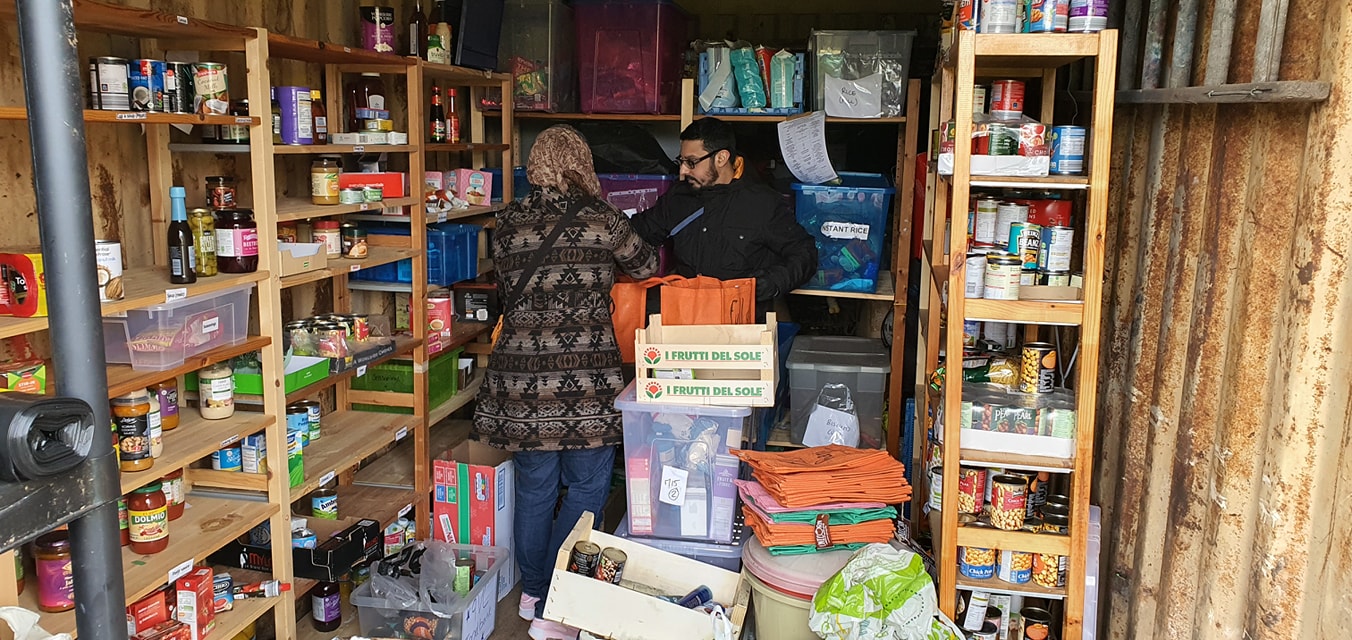
Manzoor Ali – who founded the Chorlton-based foodbank provider Barakah Food Aid over 11 years ago – told ITV Granada of how he has heard tragic stories of young children in the Greater Manchester area having to lick sugar from kitchen tops to stave off hunger.
ADVERTISEMENT
He said: “I could go on for ages, but one that springs to mind is delivering a food parcel and you check in with the kids sometimes ask how are you doing? Is everything ok? And she responded by saying I am really grateful that you came because she saw her younger brother licking sugar off the kitchen tops, it’s stuff like that, I can’t even explain.
“These people in power make out like they care about the country right now the way I look at it, they care more about money than the people.”
Mr Ali’s latter comments particularly hit home when it’s referenced that all the way back in 2001, the then-Labour Government pledged to eradicate child poverty by 2020, but now 20 years later, several charities in the region say things are much worse than they were when the pledge was made.
In response to the rising numbers of families relying on foodbanks across the region and throughout the UK, the government says it has targeted its support to families “most in need” by raising the living wage and boosting welfare support.
It added £23 million has been allocated to North West councils through the COVID Winter Grant Scheme to help pay for food and essential bills.
A government spokesperson said: “We are committed to making sure every child gets the best start in life.
“This is central to our steadfast determination to level up opportunity across the country. That’s why we’ve targeted our support to families most in need by raising the living wage and we have boosted welfare support by billions.
“Additionally, we have launched the COVID Winter Grant Scheme to help children and families stay warm and well fed during the coldest months and £23 million has already been allocated to councils throughout the North West to help pay for food and essential bills.”
___
You can find a list of active foodbanks in the region currently accepting and offering support – as in January 2017 by Greater Manchester Poverty Action (GMPA) – via the Greater Together Manchester website here.
ADVERTISEMENT
Due to the ongoing coronavirus (COVID-19) pandemic GMPA encourages those in need of support to contact food providers direct.
This is regarded as the best way to find out more about the services they are currently offering.
News
Derelict Manchester office block to become ‘vital’ accommodation for homeless families
Emily Sergeant
A derelict former office block in Manchester is set to become vital accommodation for homeless families in the region.
Manchester City Council has announced that, subject to planning approval, new temporary accommodation for dozens of homeless families will be created on the site of a derelict former office block in south Manchester, off Nell Lane in Chorlton.
The Council acquired the 1.1 acre site last month with the support of the Government’s Local Authority Housing Fund.
The initiative – which is part of wider plans to boost the city’s stock of quality temporary accommodation – will see self-contained two-bedroom accommodation created for around 55 homeless families built where former NHS offices, Mauldeth House, currently stand.
Mauldeth House has been empty for several years now at this point, and had become somewhat of a ‘blight’ on the neighbourhood, attracting anti-social behaviour along the way and being targeted by squatters – but with the plans for the new accommodation, this could change for the better.
The site, and therefore the new accommodation, is said to be ‘ideally located’ for families, as it’s close to shops, schools, public transport, leisure facilities, and Chorlton Park.
The new accommodation will see families supported by a specialist team based on site to help them move on as quickly as possible into permanent settled tenancies, which is, of course, the long-term goal for many.
The Mauldeth House initiative is cited as being one example of the Council’s drive to increase its temporary accommodation stock across the city to reduce the number of out-of-area placements.
Other successful examples of this initiative include Mariana House in Whalley Range, and The Poplars in Rusholme.
It also comes after it was announced last month that homeless children in Greater Manchester, particularly those who are placed in temporary accommodation out of area for their school, will now get free bus travel to and from school.
“Mauldeth House is a great example of how we can put derelict properties to good use to benefit those experiencing homelessness, as well as making our neighbourhood look better,” explained Deputy Council Leader, Cllr Joanna Midgley.
“We are tackling homelessness on many fronts, the most important one being prevention, but we also need an increased supply of good quality temporary accommodation within the city so that if people do become homeless they are not uprooted from their social support networks.
“One of the ways we are doing this is through the innovative use of existing sites whether they are council owned or we are able to acquire them, as in the case of Mauldeth House.”
Featured Image – Manchester City Council
News
Bolton woman who falsely accused 10 men of raping her has been jailed
Emily Sergeant
A woman from Bolton who falsely accused 10 different men of raping her over a six-year period has now been jailed.
Stacey Sharples, 31 from Farnworth in Bolton, pleaded guilty of 10 counts of perverting the course of justice in relation to reports against 10 separate men at Bolton Crown Court earlier last month (2 February 2026), before appearing in court again this week to be sentenced.
The investigation into Sharples was launched after the arrests and questioning of almost all these men, and following the pursuing of all relevant lines of enquiry, which consistently revealed evidence contrary to what had been disclosed by Sharples.
Greater Manchester Police (GMP) says investigations of this nature are ‘extremely rare’ and the decision to pursue Sharples as a suspect was ‘not one taken lightly’.
“However, it is our duty to act in the public interest and on the evidence and information we uncover and receive, which in this case demonstrated a continuous, wilful making of false allegations, knowing full well the consequences for each of the men involved,” GMP said in a statement following Sharples’ sentencing.
Of the allegations Sharples pleaded guilty to – of which were made over a six-year period between 2013 and 2019 – most of the men were arrested and spent time in custody, with some also undertaking intimate examinations, and almost all spending periods of time on police bail or released under investigation.
Statements from the men accused by Stacey Sharples / Credit: GMP
GMP says there’s ‘no doubt’ the reports and arrests have had an impact on these men, their sense of self and relationships, their wider networks, and how they move forward with their lives.
False accounts also undermine those who have genuinely experienced sexual violence.
Police say it also affects the confidence in the criminal justice system, and that the time spent investigating Sharples’ reports could have been put towards investigating ‘genuine reports of sexual offences’ instead.
Sharples has been sentenced to four-and-a-half years in prison this week after pleading guilty to making false rape allegations.
Speaking following Sharples’ sentencing this week, Detective Sergeant Steven Gilliland, who investigated this case, said: “We took the allegations made by Stacey Sharples seriously, explored all lines of enquiry and swiftly made arrests or interviewed of all the men she accused.
“We gave her multiple opportunities to provide further explanation or information to us, after interviews with the men and subsequent evidence uncovered didn’t align with her first recollection, as we understand that trauma can impact how victims and survivors recount their experiences.
“Ultimately, as the evidence continued to demonstrate that the reports were untrue, coupled with the desire for justice from some of the men who had been falsely accused, it was right that we followed the evidence and pursued the individual who had actually committed a criminal offence.”