Earlier this year, Ancoats was named as one of the coolest neighbourhoods in the world – described superlatively as a “damned magical” and “super-stylish” utopia of art, culture and greenery.
Of course, we’ve heard this all before. For the past five years, location guides and travel magazines have fallen over one another to heap praise on the regenerated eastern district of central Manchester – which has morphed into one of the busiest, buzziest, sought-after spaces in an incessantly evolving city.
Between the canalside balconies, independent art and critically-acclaimed restaurants (local eatery Mana won Manchester its first – and much-delayed – Michelin star in 2019), modern Ancoats has pretty much everything you could want in a neighbourhood. That’s often the headline. But it also has a fascinating history.
Before the skyscrapers, brunch plates and Michelin Stars, there were mill workers, ice cream carts and accordions.
Back in the 1800s, this part of Manchester was better known as “Little Italy“.
ADVERTISEMENT
This is wonderful. The Italian community in Manchester is a huge part of the city’s heritage and culture. This recognition is long overdue for the Italian immigrants who arrived in the city in the 1800s with nothing and helped shape the city’s history.
In December 2021, following a momentous effort by campaigners, a plaque was installed on George Leigh St to commemorate Ancoats’ heritage – in the same spot where the Manchester Italian Association was formed in 1888 (the Halle at St Michael’s building).
The plate has already delighted members of the Italian community in Manchester – several of whom have ancestors who grew up on the cobbled streets of Ancoats during its early years as an Italian quarter.
ADVERTISEMENT
People from areas such as Lazio and Campagna increasingly emigrated to the UK throughout the 19th Century and many settled in Ancoats – which turned into a bustling miniature version of the villages they knew back home.
Residing in the parish of St Michael’s – a Roman Catholic church – many of the immigrants went to work in the local mills, with the community described as bringing character to what was at the time a “grim part of Manchester”. Old family traditions were brought across to Ancoats – with the residents holding feasts, dances, Whit Walks, and parties throughout the year.
When Italian street musicians weren’t entertaining the neighbourhood with barrel organs and dancing bears, other residents spent the long summer evenings serenading their neighbours with the accordion.
ADVERTISEMENT
Ice cream vans queue up to be re-stocked on Dawn Street, Ancoats in 1966. Gerard's Ices was owned by Gerardo Scappaticci – the story of the many ice cream merchants in Ancoats ("Little Italy") is a fascinating part of Manchester history. pic.twitter.com/SYrH7v83XC
Some of the families who lived in the area also made their living in sweet treats – playing a trailblazing role in jump-starting the ice cream industry in Manchester.
Carts would bobble across the roads selling the dessert, although a ban was placed on the trade after the outbreak of the war due to rationing. Nonetheless, appetites for ice cream remained intact after 1945 – with manufacturers ramping up production and whizzing across town in new vehicles. An increase in competition even gave rise to turf disputes – a conflict which went down in history as “The Ice Cream Wars”.
Little Italy and its wider family also produced some of Manchester’s most famous personnel – including community leader and entrepreneur Domenico Antonelli (who was knighted by the Italian monarchy in 1932 for his business achievements).
Manchester’s own Sherlock Holmes, Jerome Caminada, also had links to the area. An “extraordinary” detective who prowled the streets of Victorian Manchester, Caminada’s intuition and talent for riddle-solving has written him into local legend – with the policeman best-known for donning a variety of disguises to catch the biggest crooks on Deansgate and beyond.
Manchester: Ancoats: Little Italy: 1963. Love the little guy leaning against the wall. pic.twitter.com/QuzKBPLVZe
The rich, vibrant legacy of Ancoats has long been championed by members of the contemporary Italian-Manchester community. And now, anyone who passes by St Michael’s can appreciate the true heritage of the area.
One resident described it as “wonderful”, claiming that “this recognition is long overdue for the Italian immigrants who arrived in the city in the 1800s with nothing and helped shape the city’s history.”
For a deeper, closer look at the history of central Manchester’s Italian past, head over to the wonderful website for Ancoats Little Italy.
Manchester
Hans Zimmer at Co-op Live, Manchester – movie magic brought to life
Lonnie Bowes
What do Batman, Kung Fu Panda, and Captain Jack Sparrow all have in common? Music by Hans Zimmer, of course.
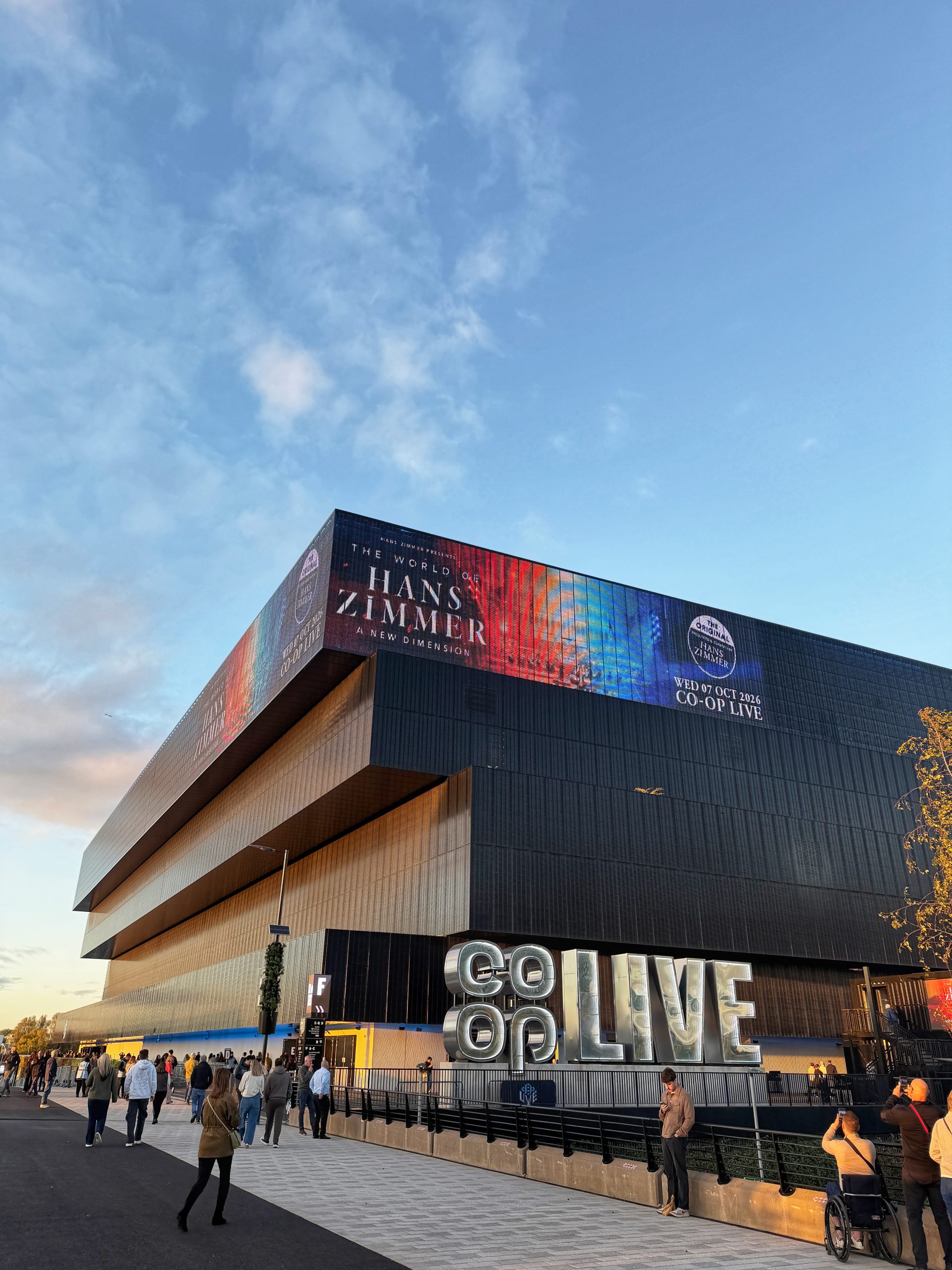
I must admit it’s an odd sight seeing 20,000 people seated in the Co-op Live. Manchester is no stranger to a big night out, but this is a different beast entirely. No mosh pits, no flying pints, no one on anyone’s shoulders. Just a full orchestra, a choir, and a wall of screens.
At the centre of it all is conductor Matt Dunkley, steering the Odessa Orchestra & Friends through some of the most recognisable music ever put to film. Zimmer appears on the big screens between pieces to introduce the music and the stories behind it. I was disappointed that Hans didn’t make an appearance but let me tell you this performance was no less impressive.
And in no time at all the gloves came off. Batman is, quite simply, incredible. All menace and muscle, strings sawing away like something is about to go very wrong, brass and percussion hitting so hard you feel it in your ribcage before you hear it.
Gladiator pulls things the other way. Where Batman pins you to your seat, this one lifts you out of it in a big way. Lets face it, if you are some what of a self respecting movie head, you’ll have seen Gladiator and know first hand how ‘Now we are free’ can command your mood. Well imagine that in person.
If the orchestra is the engine, the Nairobi Chamber Chorus is the heart. When their voices rise for The Lion King, it stops being a concert and becomes something closer to gospel.
Hans Zimmer at Co-op Live. Credit: The Manc Group
Because beneath the scale and the spectacle, there’s something more intentional at play. These pieces of music are part of people’s lives. We are talking first trips to the cinema, films watched with parents, soundtracks that got someone through a rough year.
And then there’s Interstellar. ‘No Time for Caution’ creates it own suspense. The organ churns, the tempo tightens like a ticking clock, you genuinely find yourself gripping the armrest as if you’re the one trying to dock a spinning spacecraft.
Time, from Inception, is the other side of that coin when it comes to what it emotes during the performance. It’s slow, it’s patient and it’s moving. It builds from almost nothing, layer on layer.
After all that, there’s only one way to send people home. Pirates of the Caribbean closes the night at full tilt. You think everything is drawing to end, Matt Dunkley has already guided you to the apex of nights performance, but no. Hans Zimmer flashes on to the screen one more time and alluded that’s we aren’t at the finish line just yet. Strings galloping, the whole orchestra going hell for leather. Heads nodding, feet stamping, grins everywhere.
Epic, emotional and beautifully played. This wasn’t just a concert it was a reminder: that a piece of music can take you somewhere else entirely, and that you don’t need a single lyric to make thousands of strangers feel the exact same thing at the exact same time.
Hats off to every musician on that stage. You absolutely smashed it.
Two Greggs in Manchester will be serving their breakfast menu in the evening next week
Emily Sergeant
Who says breakfast has to end at 11am?
In news that’s set to be music to the ears of breakfast lovers in Manchester, Greggs is giving them exactly what they want.
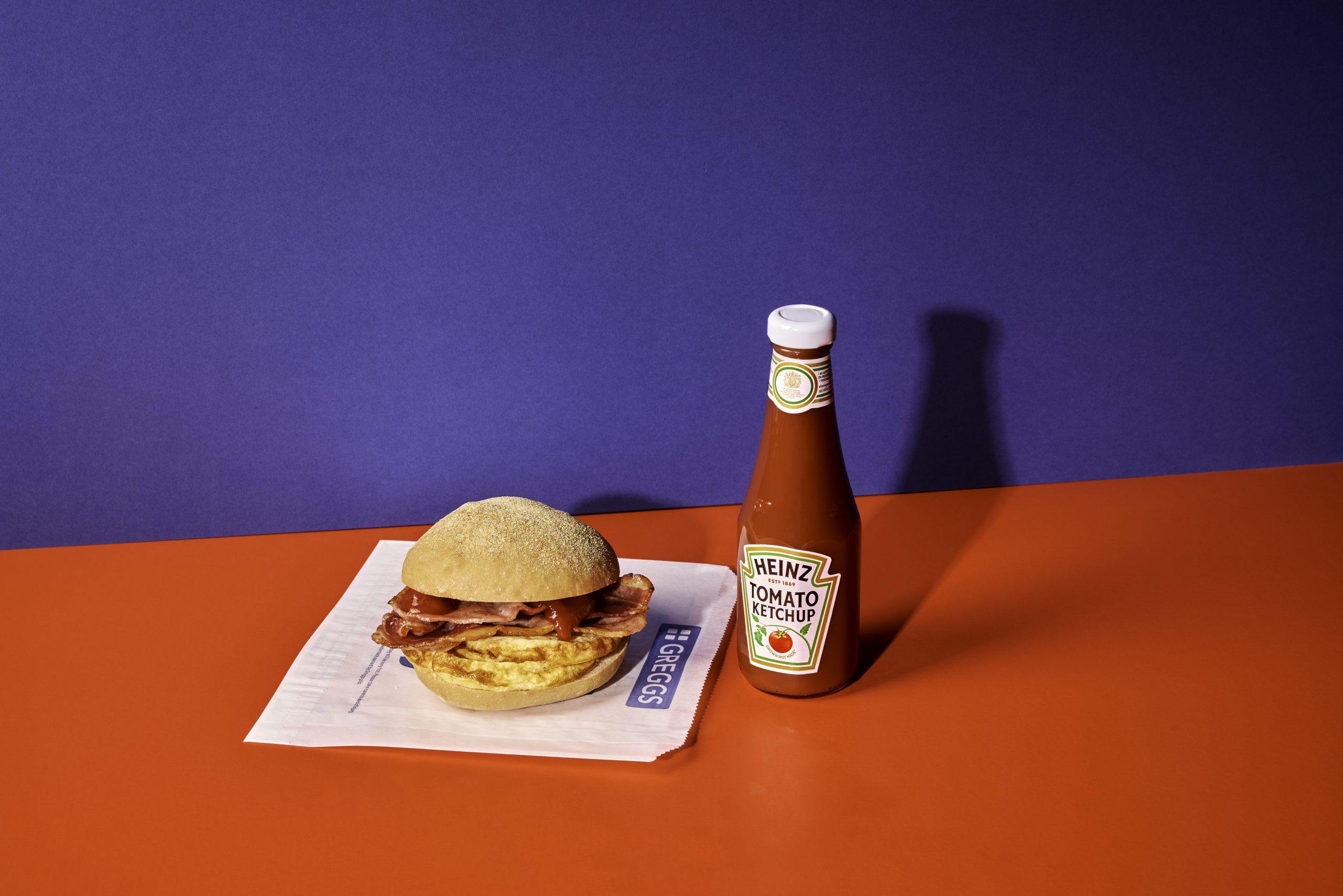
We all know that brunch is a ‘thing’ by now, so now it’s time for brinner to make a name for itself instead, as Greggs has teamed up with Heinz to bring its much-loved breakfast menu back for tea time, kicking off from 4pm onwards.
The move comes as a new survey has found that the majority of Mancs (69%) admit to enjoying eating breakfast food in the evening, saying it’s ‘convenient and comforting’ – even ranking breakfast as a ‘more important’ meal than tea, as well (38% vs 36%).
Two Greggs in Manchester will be serving their breakfast menu in the evening next week / Credit: Greggs (Supplied)
Greggs says it has ‘lost count’ of the amount of customers that have tried to order breakfast items after the usual cut-off time, especially in Greater Manchester.
But luckily for those breakfast-loving Mancs, they can finally get their favourite breakfast and sauce pairing long after the morning rush is over next… but only at two Greggs branches, and only for a very limited time.
On Wednesday 14 and Thursday 15 October, the Heinz x Greggs Brinner collab will be available at Greggs St Mary’s Gate and Greggs Oxford Road, from 4-7pm only.
“We’ve lost count of the number of customers who have tried their luck ordering breakfast after 11am, so when Heinz came to us with the idea of making Brinner a reality, it felt like the perfect excuse to give the people what they want,” explained Zoe Harris, who is the Customer Director at Greggs.
“And let’s be honest, a Greggs Bacon Roll just wouldn’t be the same without a squeeze of Heinz Tomato Ketchup.”

 The Manc -
10th December 2021
The Manc -
10th December 2021