It has now been confirmed that Greater Manchester’s Clean Air Zone plan has been referred back to the government for review over concerns it will cause “real hardship” for some residents in the region.
It comes after all 10 Greater Manchester councils met to discuss the plan yesterday.
The idea that the plan would be referred back to the government was already on the cards after Greater Manchester Combined Authority (GMCA) issued a statement on the matter last week, with bosses explaining that there is a “fundamental concern” that certain global and national factors may “impact on the ability” of local businesses and individuals to upgrade their vehicles, and whether the current support package agreed with government of £120 million would be sufficient.
The authority said that “emerging evidence” from businesses and trade has highlighted significant challenges related to supply chain issues and inflation.
They also say that more money is needed for taxis, vans, minibuses, and coaches.
In the statement, Eamonn Boylan – the Chief Executive of GMCA – said that they would be seeking approval from the secretary of state for an “urgent” review into the launch of the Clean Air Zone to “identify how a revised policy can be agreed to deal with the supply issues and local businesses’ ability to comply with the plan”.
ADVERTISEMENT
GMCA believes more work is needed to understand whether this could create significant financial hardship for commercial vehicle users.
Mayor Andy Burnham said he is “pleased” that the councils voted for the plan’s referral.
GM has tried in good faith to make the Government’s legal direction work. However, changes in the vehicle market mean it is impossible to proceed on the current basis without causing real hardship to some of our residents.
Taking to Twitter to share the news and comment on the referral confirmation, Mr Burnham said: “I am pleased that Greater Manchester councils have just voted to refer the Clean Air Zone back to the government [as] GM has tried in good faith to make the government’s legal direction work.
ADVERTISEMENT
“However, changes in the vehicle market mean it is impossible to proceed on the current basis without causing real hardship to some of our residents.
“We remain committed to tackling illegal levels of air pollution in GM as soon as possible.
“This decision opens up the space for urgent, joint discussions with the government about potential changes to make the scheme fair for everyone [and] I am listening to people’s concerns and will always stand up for GM.
“I am not the final decision-maker but will do everything I can, working with government, to get this to the right place.
“I know it’s difficult but bear with us and I will keep you posted on progress.”
ADVERTISEMENT
I am listening to people’s concerns and will always stand up for GM. I am not the final decision-maker but will do everything I can, working with Government, to get this to the right place.
I know it’s difficult but bear with us and I will keep you posted on progress.
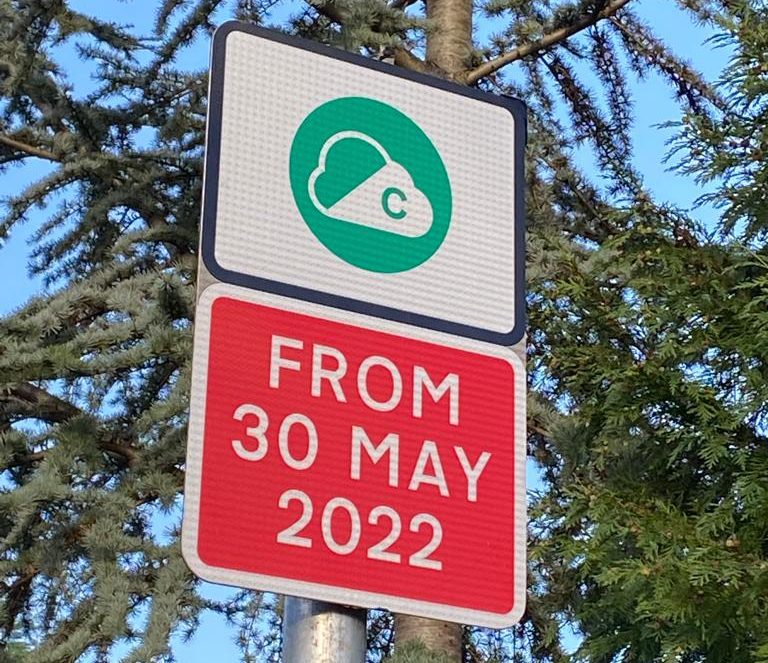
In case you haven’t noticed, signs informing members of the public that the controversial scheme will begin to take effect from 30 May 2022 have been going up across the region over the last couple of months, with the roadside cameras to enforce the new policy across said to be being installed later on this year.
Automatic Number Plate Recognition (ANPR) cameras will be used enforce any non-payment of daily charges that will come with the Greater Manchester Clean Air Zone.
The Greater Manchester Clean Air Zone is said to be “designed to protect everyone’s health by bringing harmful nitrogen dioxide air pollution at the roadside within legal limits as soon as possible.”
While private cars, motorbikes, and mopeds won’t be affected, some vehicles that do not meet emissions standards – known as ‘non-compliant vehicles’ – will be charged to drive in the Clean Air Zone, with charges ranging from £7.50 for taxis and private hire vehicles, and £10 for vans and minibuses, all the way through to £60 for buses, coaches, and HGVs.
Daily charges will also occur for campervans and motorhomes too, depending on the tax class of the vehicle.
ADVERTISEMENT
The Greater Manchester Clean Air Zone is said to be “designed to protect everyone’s health” / Credit: Twitter (@FSBManchester)
As much of the region has started to become more aware of the scheme since signs have gone up, and have begun to learn of the charges involved, this has thus prompted critique and generated widespread conversation on how local businesses will be affected.
The petition is aiming to “stop [the scheme] in its tracks”.
“Can you remember being asked by [Andy Burnham] or anyone in Greater Manchester if you wanted this? We were not. What sort of democracy is that? We need to stop this in its tracks,” the person who set up the petition exclaimed.
Some environmentalists, however, believe the scheme does not go far enough.
You can find out more about the Clean Air Zone charges for different vehicles, and the financial support on offer here.
Featured Image – Wikimedia Commons
News
Opening date finally confirmed for new Uniqlo store at the Trafford Centre
Emily Sergeant
Uniqlo is preparing to open its second store in Greater Manchester, and the official launch date has finally been confirmed.
The popular Japanese high street fashion retailer currently operates 24 stores in the UK, with its first British store having opened its doors all the way back in 2001, and its first European flagship store opening on Oxford Street in London in 2007 – but it was revealed earlier this year in April that Manchester was set to get a second helping.
Uniqlo announced that it would be opening its second Greater Manchester inside the Trafford Centre this autumn, following the huge success of its city centre store opening on Market Street in 2019.
The Trafford Centre store is set to make Manchester the first location outside of London to have two Uniqlo stores.
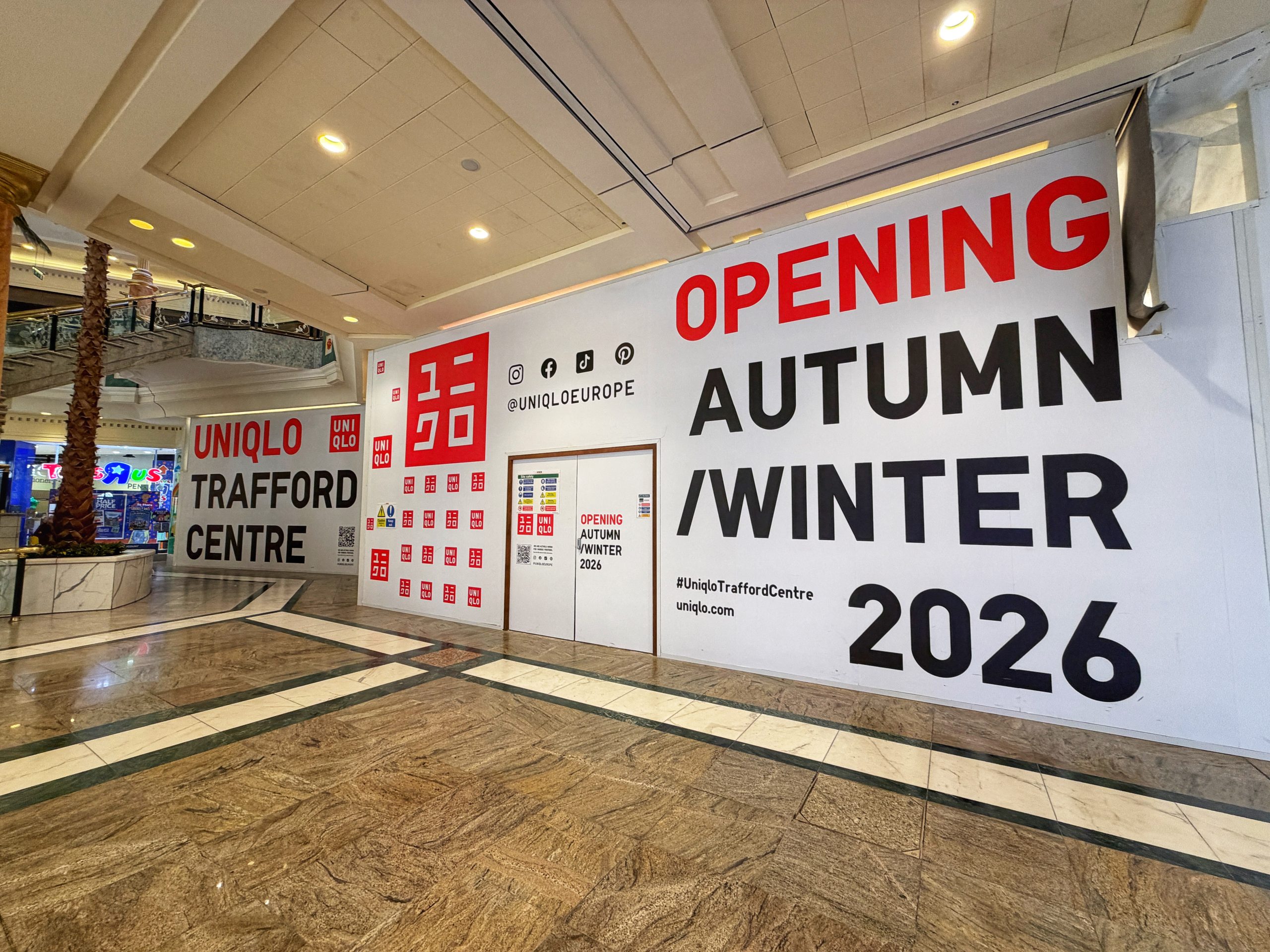
When news broke that the hoardings had officially gone up inside the shopping centre, elated shoppers raced to the comments to say things like: “No way! I’ve been waiting years for this.”
Uniqlo is preparing to open second its Manchester store inside the Trafford Centre next month / Credit: | The Manc Group
“Uniqlo in Trafford Centre would be a dream come true,” another person said on Instagram, while a third added: “I will never have to step foot on Market Street again,” and plenty others chimed in with comments like ‘finally’ and ‘can’t wait’.
And now, we officially have an opening date to share with you.
Uniqlo will open in the Trafford Centre for the first time on Thursday 15 October, with plenty of events happening across its extended opening weekend.
Traditional Japanese Taiko drumming performances will be happening throughout the day on Thursday 15 and Saturday 17 October, while the first 300 customers to spend over £69.90 in store on the Thursday (15 October) will get a special Uniqlo Manchester goody bag.
Uniqlo’s arrival at the Trafford Centre follows the opening of several other high-profile stores in recent months, like Urban Outfitters, White Company, Stradivarius, and many more.
Featured Image – The Manc Group
News
‘Do not let Britain’s independent businesses disappear on your watch’ – Manchester bakery makes heartbreaking plea to Andy Burnham
Clementine Hall
A beloved Manchester bakery has issued an open letter to Andy Burnham ahead of the Budget begging him for help.
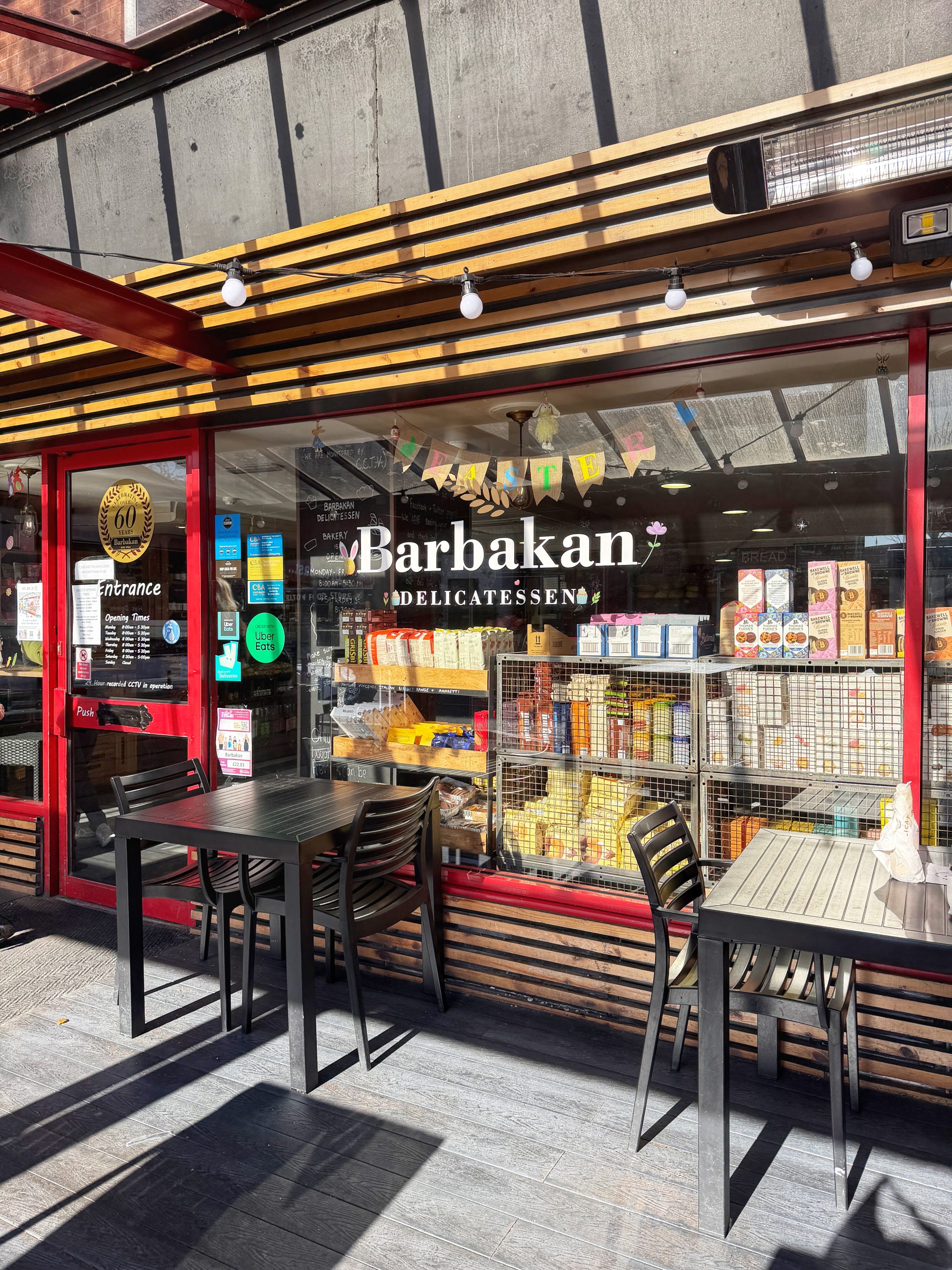
Barbakan Deli in Chorlton is basically an institution at this point.
The legendary bakery and delicatessen has been serving the community for 62 years, famed for its freshly-baked loaves of bread, its handmade sandwiches, and its pastries and cakes inspired by bakes from across Europe.
Posting on Instagram last night on Thursday 18 September, Frankie Dyer the director of Barbakan, issued an open letter addressed to Prime Minister Andy Burnham.
Images: The Manc Group
It read: “Dear Mr Burnham, As an independent business owner in the hospitality sector, I am begging you to please read this.
“Really read it. And seriously consider what businesses like mine are telling you before the upcoming Budget.”
It continued: “In just the last two years, we have self-funded new bakery machinery, new catering kitchens, essential repairs and renovations and opened a second retail site, creating another six local jobs. We have won more than ten national awards for the quality of what we do.
“We have invested. We have grown. We have employed more people. We have worked harder than ever. In short, Prime Minister, we are doing everything you keep asking British businesses to do.
“And our bank balance is finished. That is the reality.”
The letter finished by Dyer inviting Andy Burnham to come visit the bakery and pleading for a ‘fighting chance’ to save the business: “We need action. We need meaningful reductions in the tax burden placed on employers.
“We need Employer National Insurance looked at urgently. We need a business-rates system which allows independent high-street businesses to survive. We need VAT reform for hospitality. We need Corporation Tax to reward businesses which reinvest, employ and grow.
“And we need proper grants and incentives that help established independent businesses invest and expand — not schemes with endless criteria which most ordinary businesses can never access. We need you to do something.
“And we need more than one token gesture in the Budget. A band-aid for a bullet wound. So I am asking you, Prime Minister, to come back to Manchester and see it for yourself. Pop an apron on and stand behind our counter.
Images: The Manc Group
“Come into our bakery in the middle of the night and meet the people making Manchester’s bread while most of the city is asleep. Look at our payroll, our energy bills, our rates, our supplier increases.
“Look at what leaves our bank account every single week simply for the privilege of keeping 50 people employed and our doors open. You said you wanted a government that understood the regions. You now have an opportunity to prove it.
“Independent businesses across this country are not asking for a handout. We are asking for a fighting chance. I sincerely hope your next Budget gives us one”.

 Emily Sergeant -
21st January 2022
Emily Sergeant -
21st January 2022