Plans to transform Castlefield Viaduct into a ‘sky park’ similar to the High Line in New York are ploughing ahead.
The National Trust’s ambitious vision to create an urban green space on this heritage landmark is well underway.
More than 3000 plants are being added to the Victorian viaduct, which looms over the southern side of the city centre.
It’s now set to open as early as next month, turning the 330m structure into a park in the sky.
Planting on Castlefield Viaduct. Credit: National Trust Images, Annapurna Mellor
The Castlefield Viaduct dates back to 1892 and was built by Heenan and Froude, the same engineers who worked on Blackpool Tower.
ADVERTISEMENT
But the site closed in the late 1960s, and until recently the Grade II-listed structure had been left derelict.
Now gearing up to reopen as a sky park, soon visitors will walk along the viaduct surrounded by native plants, shrubs and trees, with a ‘show garden’ at the end.
ADVERTISEMENT
The design of the planters is inspired by the viaduct’s architecture. Credit: National Trust Images, Annapurna Mellor
The experience will also celebrate the industrial heritage of Castlefild, from the planters – inspired by the industrial architecture of the viaduct – to the section of it that will be left untouched, showing how nature has tried to reclaim this space of its own accord.
Some of the plants have been planted in a diamond pattern, mirroring the diamond shape of the viaduct’s steelwork.
A canopy is also being created using 600 half-hardy annual climbers, hops and clematis which will tumble down.
ADVERTISEMENT
Castlefield Viaduct progress. Credit: National Trust Images, Annapurna Mellor
Castlefield Viaduct progress. Credit: National Trust Images, Annapurna Mellor
Four sections of the viaduct have been handed to partner organisations so that they can create their own gardens.
These include the Science and Industry Museum (who have recreated the steam from the old locomotives with fluffy white plants, and used blue flowers to symbolise waterways), Urban Wilderness with charity 42nd Street (they’ve created a ‘garden of possibilities’ focused on improving mental health), and City of Trees (‘Past, Present and Future’ is the inspiration for theirs).
Castlefield Forum also have a section with landscape architects BDP, choosing plants that mirror the distinct features of Castlefield in both colour and scale.
These changes are, at present, temporary.
Artist impressions of Castlefield Viaduct. Credit: Twelve Architects Masterplanners
The National Trust has created the park space to gain the public’s opinion on what the long-term future of the viaduct could be.
ADVERTISEMENT
When the first phase of the £1.8m pilot opens next month, 100 people a day will be able to visit.
Entry onto the structure will be free, but a booking system will be in place to help manage numbers. As part of the experience, visitors will be able to join a guided walk on the viaduct.
Pamela Smith, senior national consultant for Gardens and Parklands at the National Trust said: “We’ve reached an exciting stage in the project to transform Castlefield Viaduct into a green space for the people of Manchester.
“Creating a garden on an industrial heritage structure such as this is untested territory for us and we’re intrigued to see how the plant life will take to its new surroundings.
ADVERTISEMENT
“In addition to greening up a heritage structure, we’re celebrating Manchester’s history adding the county flower, cotton grass, to the viaduct as well as fern species once collected by Manchester suffragist and botanist, Lydia Becker.”
Amy Watson, Castlefield gardener at the National Trust said: “Castlefield Viaduct is unlike any other garden in the National Trust’s care and we’ll be keeping a close eye on the garden to see how it gets on over the next twelve months.
A view across Manchester to Castlefield Viaduct. Credit:James Dobson, National Trust Images
“I’ll be working with a team of dedicated volunteers and apprentices to plant bulbs on a regular basis and adding to the planting to make sure there’s plenty to see throughout the year. We’ll also be working closely with our partners to see how their gardens are responding to their unique surroundings.”
Sophie Wardell, urban places programme manager at the National Trust said: “So much hard work has gone into getting the viaduct to this point and we couldn’t have got this far without the support of our partners and those who have helped make this happen for Manchester.
“A little over 12 months ago we’d only just shared the artist illustrations of what the viaduct could look like, and now it’s becoming a reality. This first year is an experiment for us to see what people want Castlefield Viaduct to be in the future and we’re excited to hear what ideas they have.”
Featured image: National Trust Images Annapurna Mellor
Feature
The Peak District walk with amazing views, a cosy cafe, and a great pub at the end
Daisy Jackson
If you’re looking for a country walk that’s got a bit of everything – we’re talking views, lakes, history, picturesque villages and, crucially, pints – this is the one.
Step across the Greater Manchester border into High Peak, and you can take on a circular walk that’s got it all.
The walk takes in all the best bits of the English countryside, from rolling hills to proper pubs.
Park in the village of Hayfield, then head out west to join the Sett Valley Trail, which joins Hayfield and New Mills.
The trail itself is 2.5 miles and follows a former railway line – but now it’s a tree-lined trail that’s perfect for a gentle stroll, cycle or even horse ride.
You’ll pass the Birch Vale reservoir, but won’t be following the trail all the way to New Mills.
Get as far as Emma’s Sett Valley Cafe and stop for an early break – indulgent hot chocolates, great bakes, and a decent amount of brunch dishes beneath colourful festoon lighting.
Emma’s Sett Valley Cafe. Credit: The Manc Group
Once you’re fuelled, head slightly back on yourself to skirt Birch Vale Reservoir, cross the River Sett, and walk towards Sitch Lane.
The road will take you to the very edge of the Peak District ready for an uphill climb to the peak of Lantern Pike.
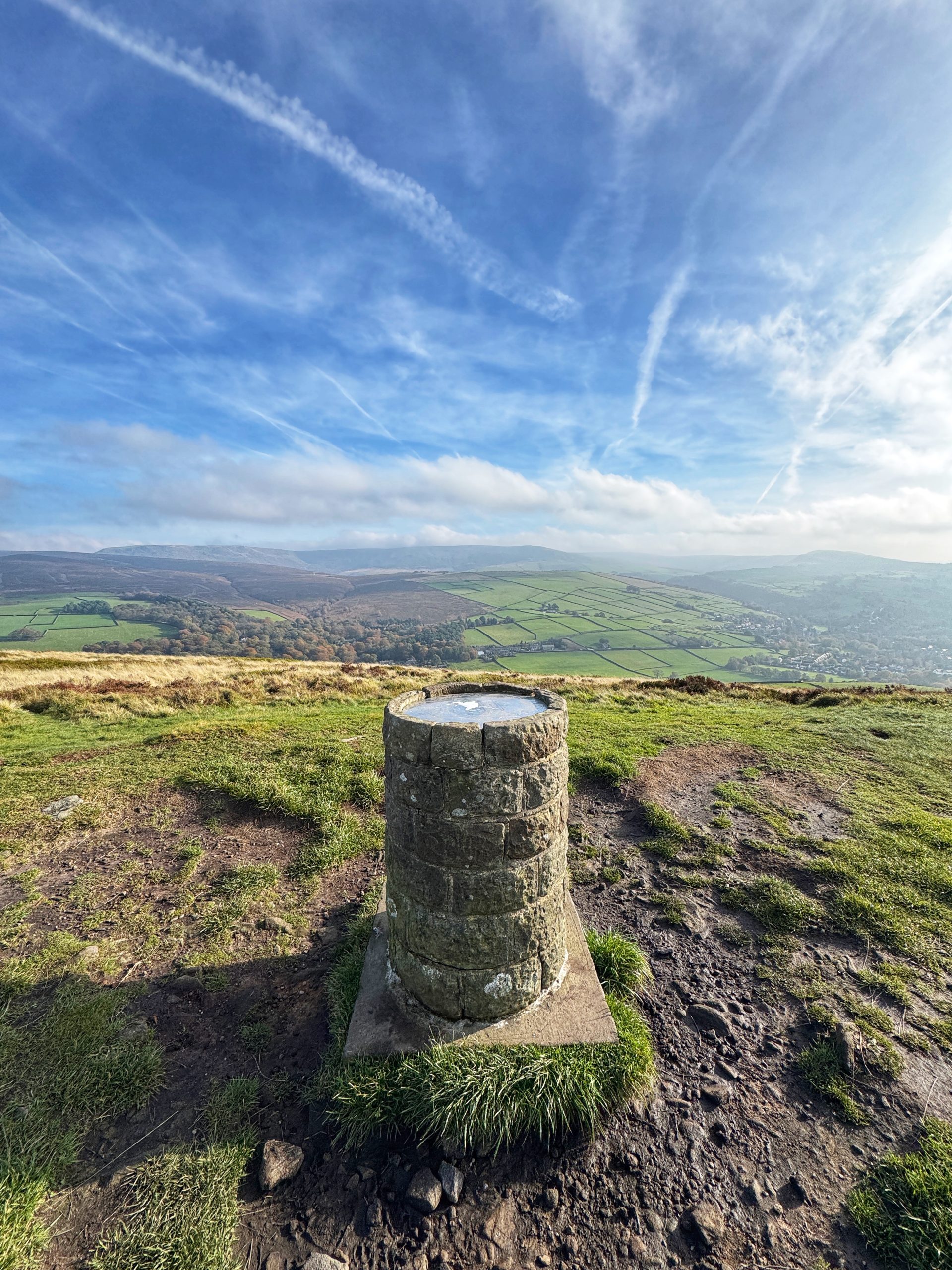
It’s not a giant by Peak District standards (373m compared to Kinder Scout’s 636m) but the views are 360 degrees – fields on all sides and the incredible Manchester skyline in the distance.
Walk straight over the summit and down the other side, walking along the edge of Hey Wood and across fields full of friendly cows, past Little Hayfield and back into the main village of Hayfield.
Views from the Sett Valley trailSummiting Lantern PikePretty views near Little Hayfield
Here you’ll find The Pack Horse, a country pub that’s gained some serious accolades in recent years.
Famed for its seasonal, locally-sourced menu, at this time of year you can expect hearty post-hike lunches like sharing pies, Manchester eggs, and incredible Sunday roasts.
Despite a top-notch menu, the pub is more than happy to welcome in customers (and dogs) who are covered in mud – as all good countryside boozers should.
Sharing pie at The Pack Horse in HayfieldThe Pack Horse in HayfieldTheir famous Manchester egg
You can see a map of the circular walking route at AllTrails HERE.
Mercury Prize 2026 review: RAYE takes home the crown as Newcastle celebrates the very best in music
Clementine Hall
One of the biggest nights in music kicked off last night as the Mercury Prize 2026 was awarded.
If there was ever a night to fall head over heels in love with British and Irish music, the 2026 Mercury Prize made a very convincing case.
Bringing together some of the country’s most exciting artists under one roof in Newcastle, this year’s ceremony was a reminder of just how much talent is packed into the current music scene.
From established legends to the names shaping what comes next, it was an absolute belter.
Images: Audio North
Held at the Newcastle Utilita Arena for the second year running, I think everybody in that room felt very lucky to be there to see firsthand who took home the coveted prize.
The shortlist brought together an impressive mix of artists, with Florence + The Machine, Olivia Dean, JADE, Suede, Pulp, Dave and Sir Paul McCartney among the big names making the lineup very star studded indeed.
Suede kicked things off with ‘Dancing With The Europeans’, bringing their unmistakable energy to the ceremony, while Pulp delivered ‘Begging For Change’ as part of the HELP(2) charity compilation.
It was a line-up that demonstrated the sheer range of music being made across the UK and Ireland, from contemporary pop to established rock and even jungle thanks to Bradford’s own Nia Archives.
And of course, there was one woman who had every reason to leave with a smile on her face.
RAYE took home the coveted Mercury Prize for THIS MUSIC MAY CONTAIN HOPE., an ambitious, genre-hopping album that blends jazz, soul, R&B and classical influences into something so fabulously unique.
Image: Audio North
Newcastle’s own Knats performance was definitely a highlight of the evening, combining slick jazz with spoken-word poetry against a projection of The Tyne Bridge.
A fitting image, and one that underlines the importance of holding such huge events in the north and highlighting the obvious talent that thrives here.
The 2026 Mercury Prize was a brilliant showcase of the country’s music at its best.
And with RAYE taking home the trophy, it’s clear there is plenty of ‘hope’ left in British music.

 Daisy Jackson -
17th June 2022