A mountain rescue team has issued a safety warning and some advice to hikers after an upsurge of visitors to several dangerous areas.
Stressing that ‘No Instagram story is worth the risk’, the Llanberis Mountain Rescue Team (LLMRT) urged people not to venture into the old slate quarries around North Wales – no matter how beautiful they may be.
LLMRT said that ‘considerable media and press coverage’ has brought waves of new visitors to the old quarries around Snowdonia, who are often ‘unprepared and inexperienced’.
Hidden dangers at these beauty spots include old railways and ladders that date back more than half a century, often rusted and decayed.
These are prone to collapse at any time, without warning, and are often found above precipitous drops.
ADVERTISEMENT
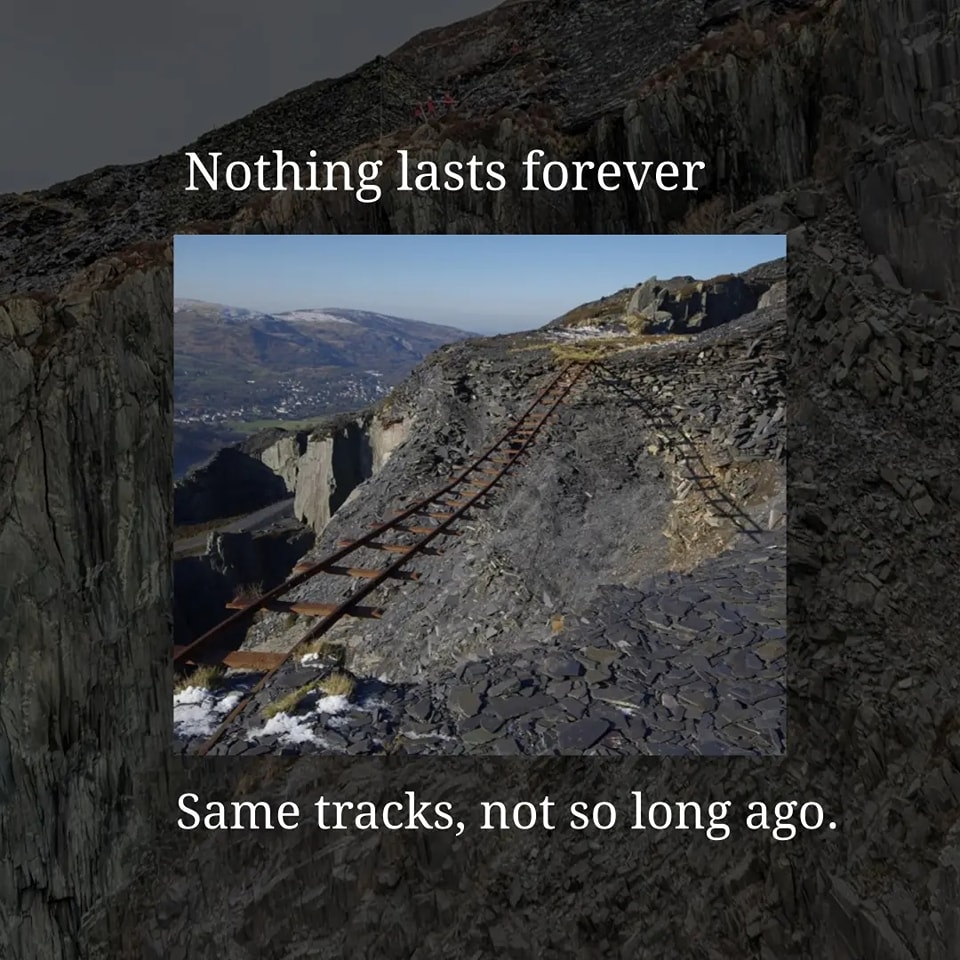
Their words of warning came with a series of photos of people posing on the old railway bridge tracks above Dinorwic Quarry, which jut out into thin air.
The Lllanberis Mountain Rescue Team wrote on Facebook: “When it comes to adventure, we hate to say ‘don’t’, but this is a seriously BAD idea.
ADVERTISEMENT
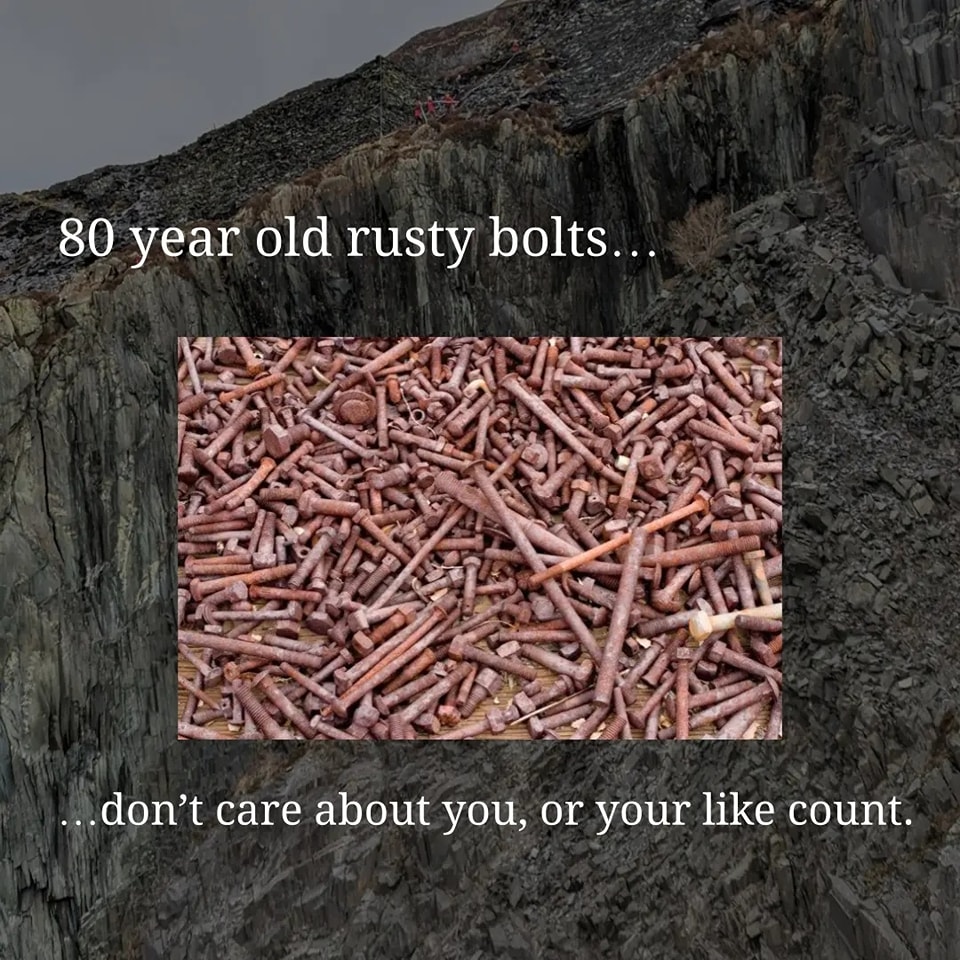
“Rescuing someone from here would be dangerous, horrific, traumatising. 80 year old rusty bolts don’t care about you, or your like count.”
They then posted photos of the same railway line from a few years ago, when it still made a bridge across the quarry.

The hills around Snowdonia are hugely popular with walkers from across the north west, including Mancs who can drive there in just a couple of hours.
ADVERTISEMENT
LLMRT say they are ‘increasingly concerned’ about the volume and nature of trips being made to such dangerous landscapes.
The advice issued has urged people to book excursions with professional and qualified leaders and instructors and to be wary of ‘social media meet-ups’.
They also said to bear in mind the three Adventure Smart Questions before heading out on any hill walks or hikes, which are: ‘Am I confident I have the KNOWLEDGE & SKILLS for the day?’, ‘Do I know what the WEATHER will be like?’, and ‘Do I have the right GEAR?’.
LLMRT’s full post on Facebook states: “The slate quarries in North Wales have seen an upsurge in visitor numbers in recent years. While we understand the urge to explore such historic manmade landscapes, there are increasing concerns at both the volume and nature of trips being made into these dangerous places.
“As a mountain rescue team, LLMRT train to operate safely in almost any mountain environment, but there are many hidden dangers in the slate quarries that we can’t always account for. Such unseen hazards can pose a considerable risk to rescuers or emergency services personnel called to assist persons in difficulty in these areas.
ADVERTISEMENT
“With the Easter holiday approaching and increasing number of visitors to the area, we’d like to ask people to consider the following:
“The old buildings and infrastructure of the slate quarries (railways, ladders etc.) are over half a century old and in various states of rust and decay. These old structures and fixtures, which can often be found above precipitous drops, could (and often do) collapse at any time and without warning. No Instagram story is worth the level of risk that some people are unwittingly taking.
“LLMRT are aware of many groups, often “social media meet-ups,”, exploring the quarries with unqualified and inexperienced leaders. LLMRT would always recommend that people joining such groups ascertain the qualifications and experience level of group leaders before participating in such events.
“The quarries and similar sites have recently received considerable media and press coverage, some extolling the adventures to be had here, which has encouraged unprepared and inexperienced people to explore these potentially very dangerous places. These articles can encourage the unwary into dangerous areas. LLMRT would always encourage inexperienced people to gain advice from professional and qualified leaders and instructors.”
Heaton Park’s historic tramway will be back up and running this summer after major funding secured
Emily Sergeant
Historic trams are set to run through Heaton Park once again from this summer thanks to some major new funding being secured.
For just over a year now, trams have been unable to run through Manchester‘s largest suburban park as the electrical substation which powers the Heritage Tramway needed an overhaul to bring it up to current safety standards – but now, some substantial funding has been secured to enable the essential restoration work to begin in the spring.
The trams operate on the only remaining section of the original tramway in Heaton Park, and offer locals and visitors alike a real glimpse into the past.
This piece of local history is operated by the volunteers of the Manchester Transport Museum Society (MTMS) on behalf of the Manchester Tramway Company Limited (MTCL) – a joint venture company between the Manchester Transport Museum Society and Manchester City Council.
This major investment into the existing infrastructure will ensure operation of the trams can continue for many years to come.
The £481,000 funding investment – which has been secured from Manchester City Council – should mean the tramway can restart in summer 2026, which just so happens to coincide with the 125th anniversary of Manchester’s first electric tramways in 1901, so it’s a big deal.
“Our support of the much-loved Heaton Park Tramway not only preserves an important piece of local heritage, but a piece of living history,” commented Councillor Lee-Ann Igbon, who is the Executive Member for Vibrant Neighbourhoods at Manchester City Council.
“The vintage trams hold a special place in the hearts of many people.”
Heaton Park’s historic tramway will be back up and running this summer after major funding was secured / Credit: David Dixon (via Geograph)
Geoff Senior, who is the Chairman of the Manchester Transport Museum Society, called the securing of funding ‘wonderful news’.
He added: “It represents a huge vote of confidence in the hard work and dedication [volunteers] have shown in the last 50 years of working to build, develop and run this vital piece of Manchester’s transport heritage, not only for the citizens of Manchester but those who travel to the park from wider afield.”
As mentioned, upgrade works to the Heaton Park Tramway will begin this spring – with the hopes trams will be back up and running again in the summer.
Featured Image – Adam McKendrick (via Wikimedia Commons)
Travel & Tourism
Transport Secretary commits to ‘transformational’ rail deal with Greater Manchester
Emily Sergeant
The Transport Secretary has signed a ‘transformational’ rail deal for Greater Manchester.
The Government has formally agreed to work with Greater Manchester and Mayor Andy Burnham on plans for a new railway connecting Liverpool and Manchester, via Warrington, as part of Northern Powerhouse Rail (NPR).
The new Liverpool-Manchester line is said to underpin the Northern Growth Corridor – which is a bold strategy to drive growth from the Mersey to the Pennines, stretching into Yorkshire, Lancashire, North Wales, and beyond – with a key connection at Manchester Airport.
Local analysis has suggested that the new line could generate around £90 billion in additional revenue by 2040.
Also, as part of the major investment of up to £45 billion – which was announced a couple of weeks back, and is tipped to transform rail travel across the North – the Government has also said it will work with Greater Manchester partners to explore an underground option at Manchester Piccadilly station, recognising its potential as a ‘catalyst for growth’.
Local leaders say they are keen to demonstrate how an underground station could turn Piccadilly into a ‘Kings Cross of the North’.
Transport Secretary Heidi Alexander met with Mayor Andy Burnham last week to sign the formal agreement.
The agreement recognises the potential for an underground solution at Manchester Piccadilly, while also acknowledging the need for further ‘testing’ to make sure it will deliver value for money, and additionally sets out how the Government will work with Greater Manchester on the wider NPR scheme – which will be delivered in three stages, with the Liverpool-Manchester line to be built in the second phase.
The Transport Secretary has committed to a ‘transformational’ rail deal with Greater Manchester / Credit: TfGM (Supplied)
A formal review of the underground option at Manchester Piccadilly is to be lead by local leaders and senior civil servants.
“I’ve strengthened this Government’s clear and unwavering commitment to Northern Powerhouse Rail by signing an agreement with Mayor Burnham on the next steps for transforming connectivity in Greater Manchester,” explained Transport Secretary, Heidi Alexander.
“With a new line between Manchester and Liverpool at the heart of our plans, alongside new stations at Manchester Piccadilly and Manchester Airport, we will unlock new opportunities, more jobs and more housing for thousands of people.
“By providing early clarity on scope and phasing, we are giving Greater Manchester the certainty it needs to plan ahead and unlock the full economic and social benefits for its people.”