COVID-19 led to most countries around the world closing their borders. However, borders are slowly opening again, and visa can be applied for online as well.
For more than a year now, travelling abroad has been virtually impossible. Here, we outline the current global state of affairs, and explain the consequences for visa applications.
Travel industry hit hard, but hope for the future
The entire travel industry has been hit hard by the consequences of the coronavirus. Due to entry restrictions and negative government travel advices, hardly any distant travel has taken place in the past year. However, the future looks a lot brighter. Vaccination programs are progressing well in many countries around the world, allowing them to ease certain lockdown measures, both for citizens and for incoming travellers. The EU has made it clear that travel between its member states will be possible again this summer, and the UK is in talks to be included in that group. A European holiday is therefore looking very likely this summer.
Current situation in the USA
Vaccination in the USA is going much faster than in most European countries. The Americans have broken vaccination record after vaccination record. The USA leads the world in overall vaccination numbers, having already fully vaccinated close to 45% of its total population Since 19 April, all adults in America have been able to receive a vaccine. This means that even non-US citizens can get vaccinated. In some cities, people can even get a vaccine at the supermarket.
ADVERTISEMENT
Due to the rapid spread of the coronavirus in European countries, the US government announced a travel ban for all travellers who had been in one of the Schengen countries in the two weeks prior to their arrival in the US. Later, the United Kingdom was added to that list. This travel ban (Schengen Travel Ban) is still in force. This means that it is currently not possible to travel to the USA from the United Kingdom or Ireland, even if you have a valid ESTA or visa travel permit. The ESTA permit, which due to its lower cost is most commonly used by Brits to travel to the USA for a holiday, can still be applied for online for a trip later this year or even next year, since an ESTA is valid for two years total.
However, there is also good news. Recently, it was revealed that the UK and the USA are in talks to allow travel between the two countries in the near future. No concrete dates have been given, but given the timing of the news, it is likely that both countries want to take advantage of the upcoming summer holidays.
ADVERTISEMENT
The situation in Asia
In many Asian countries, the situation is more problematic. In India, there has been a huge increase in infections, and hospitals are suffering from severe shortages. Infections are also rapidly rising in other Asian countries, such as Sri Lanka and Cambodia. Sri Lanka was recently even moved from the “Amber” travel list to the “Red” travel list, meaning travelling to Sri Lanka is strongly advised against by the UK government, and returning travellers are subject to strict quarantine measures. This is not expected to change in the near future, meaning a holiday in Asia is quite unlikely this summer.
Despite the rising infection numbers, India recently eased its entry restrictions. Business and medical visa for India are being granted again since a few weeks. Tourist visa, however, are not. Sri Lanka already opened its borders to foreign tourists at the start of 2021. However, the rapid increase in infections prompted the government to quickly close its borders again.
ADVERTISEMENT
Down under: New Zealand and Australia
For a more positive view, Australia and New Zealand are almost free of coronavirus, reporting only a few infections each week. Both countries have been placed on the “Green” travel list of the UK government, meaning travelling to those countries does not require a quarantine when returning to the UK.
You can in theory apply for a visa for both Australia (Australia visa) and New Zealand (NZeTA). However, while the British government deems the countries safe, New Zealand and Australia have not yet opened their borders for foreign tourists. This means that a holiday to New Zealand or Australia this summer seems extremely unlikely, unless the governments of both countries suddenly change their minds.
Featured image: Unsplash
Business
Manchester rent is now ‘41% more expensive than five years ago, according to a recent study
Danny Jones
Yes, that’s right, as per some of the latest data on leased housing in central Manchester, it’s now approximately 41% more expensive to rent here than it was half a decade ago.
If you’ve lived in and around the city centre for long enough, chances are that you’ve already been feeling that difference, especially of late.
The ongoing cost-of-living crisis roughly began in 2021, following the economy and the world essentially opening back up after multiple lockdowns, so it’s little surprise that new research has shown affordability when it comes to renting has been on a slump ever since, too.
As well as the price of seemingly most things in everyday life going up post-pandemic, the average rental rate for even just a one-bedroom flat/apartment has jumped up significantly between 2020 and 2025.
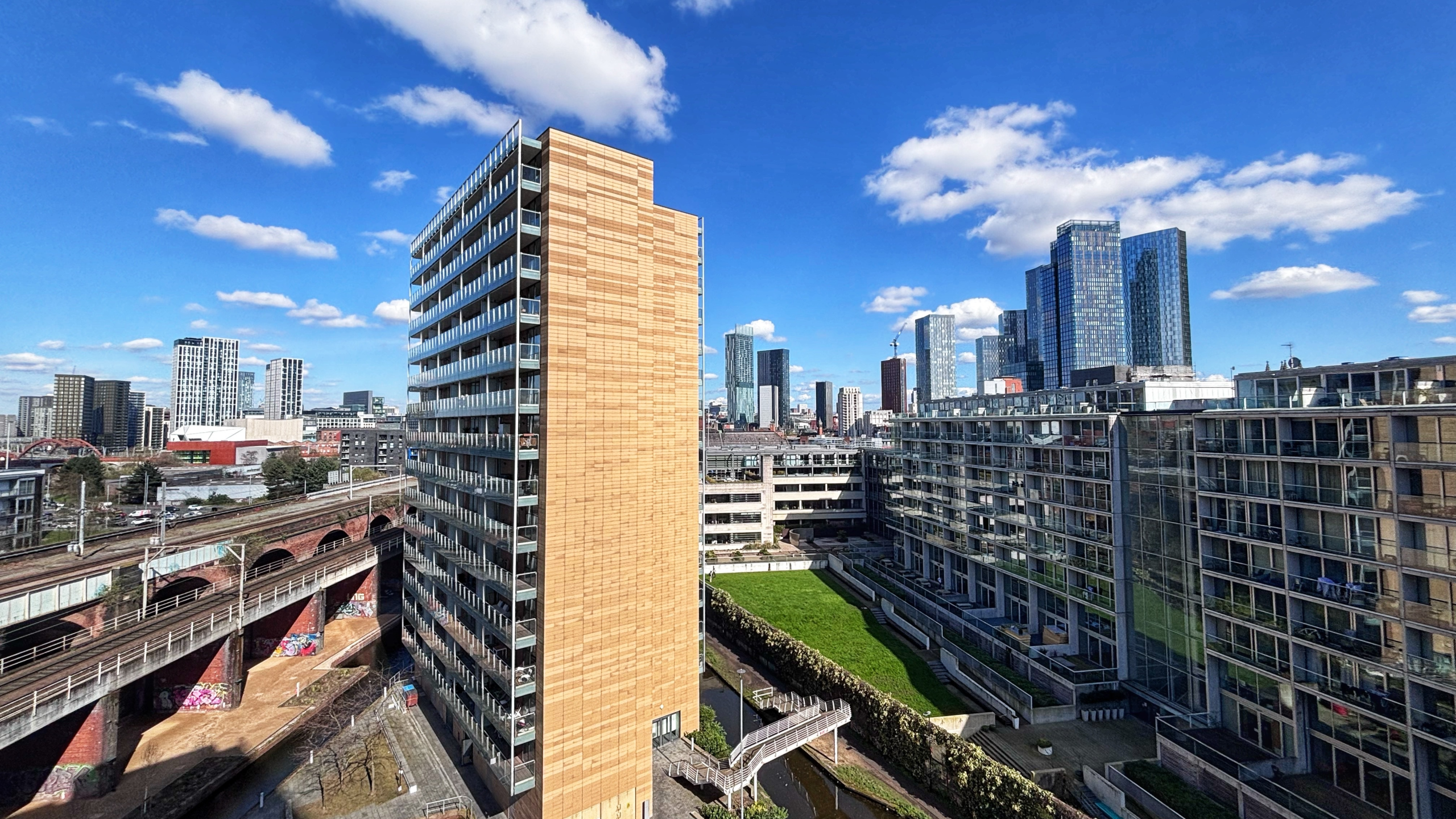
Even some ‘available’ housing in town is being hampered by claddin (Credit: Valienne via WikiCommons)
That’s according to the numbers crunched by credit card experts, Zable, anyway.
Not only did their recent report cite the rent prices going up even before the cost of living crisis – essentially following the outset of the Covid-19 outbreak – but if their figures, the rate of inflation and the unwaveringly high demand for housing are anything to go by, this trajectory is likely to continue in 2026.
As of February this year, around one in three UK households is now a single-person occupancy, which already comes with its challenges (the Manchester City Council tax discount being a thin lifeline for countless), not to mention energy bills and the cost of groceries continuing on an upwards trend.
Put in the simplest and most reductive terms, it’s now almost £300 dearer for most people to live on their own than it was back in 2020, and besides Liverpool clocking in as second on the list of increasingly expensive cities to live (a 42.12% increase), Manchester came in third.
You can see the full table down below:
Rank
City
% increase – 2020-2025
Difference from 2020 to 2025 in £
Average rental cost for a 1 bed 2025
1
Newport
47.39%
£2,611
£8,121
2
Liverpool
42.12%
£2,290
£7,727
3
Manchester
41.00%
£3,364
£11,569
4
Edinburgh
40.28%
£4,620
£16,090
5
Leicester
39.93%
£2,391
£8,379
6
Wolverhampton
39.22%
£2,049
£7,273
7
Nottingham
39.07%
£2,400
£8,543
8
Glasgow
38.02%
£2,679
£9,725
9
Colchester
37.63%
£2,617
£9,572
10
Cardiff
37.06%
£2,828
Average rental cost for a 1-bed 2025
Another fear is that with lots of people finding it hard to manage living in other major cities like London, even those moving to Manchester are also having an impact on how available affordable housing is here.
That’s why schemes such as the new ‘social rent’ development over in Wythenshawe are so important to the current generations of renters, with the possibility of owning your own property in the future becoming increasingly difficult for so many.
It’s also worth noting that Manchester ranked fourth among the British locations where the cost of living is said to have increased the most over the past five years, with the average difference in annual spend growing by an estimated 22.84%.
Millions of UK workers to get pay rises from today as National Living and Minimum Wage increases
Emily Sergeant
Millions of workers across the UK are set to begin receiving substantial pay rises from today.
After the Government announced back in November that it would take the recommendations made by the Low Pay Commission, and increase both the National Minimum Wage and National Living Wage, those changes have now come into force in a bid to ensure people on lower incomes are ‘properly rewarded’ for their work.
If you’re unfamiliar with the Low Pay Commission, it’s an independent body made up of employers, trade unions, and experts whose role is to advise the Government on the minimum wage.
As mentioned, the rate recommendations introduced today were agreed unanimously by the Commission.
This means that the living wage, for eligible workers who are aged 21 and over, has now risen by 4.1% from today to £12.71 an hour.
For a full-time worker, that means a pay increase of £900 a year.
Millions of workers in the UK are getting pay rises from today / Credit: John Kakuk (via Unsplash) | Pexels
The National Minimum Wage rate for workers aged 18 to 20-year-olds has also increased today by 8.5% to £10.85 an hour, and then for 16 to 17-year-olds, and those on apprenticeships, the rate has increased by 6% to £8 an hour.
“The recommendations we made last autumn sought to balance the need to protect the economy and labour market, whilst providing a real-terms increase for the lowest-paid members of society,” commented Baroness Philippa Stroud, who is Chair of the Low Pay Commission.
“A lot has changed since we gave our advice to the Government last autumn, and we are now beginning to gather evidence for recommendations later this year.
“The current economic uncertainty makes it essential that the Commission hears from those affected by the minimum wage and builds consensus for evidence-based recommendations.
Workers aged 21 and over are now legally entitled to the National Living Wage after the age threshold for the highest rate was lowered from 23 in 2024.
National Minimum Wage rates are available to workers aged 16 upwards.

 The Manc -
17th June 2021
The Manc -
17th June 2021