Actual Leonardo DiCaprio has publicly praised Chester Zoo for its conservation work, which saw a fish species ‘brought back from the dead’.
The Oscar-winning megastar and keen environmentalist posted on Instagram to his 55.6m followers to talk about golden skiffia fish.
The fish species hasn’t been seen in its native central-western Mexico since the 1990s, but 1,200 were successfully bred and released into the Teuchitlan River this month.
The reintroduction of the fish coincided with the country’s Day of the Dead celebrations.
Leo wrote: “This year’s Day of the Dead celebrations included a unique ‘resurrection’ in Jalisco, Mexico, where conservationists released more than 1,000 Golden Skiffia into the fish’s native range in the Teuchitlán River.
ADVERTISEMENT
“The freshwater fish had not been documented in the wild since the late 1990s. The events, in the midst of Mexico’s #DayoftheDead celebrations, included formal speeches, traditional dances and the official release of the fish.
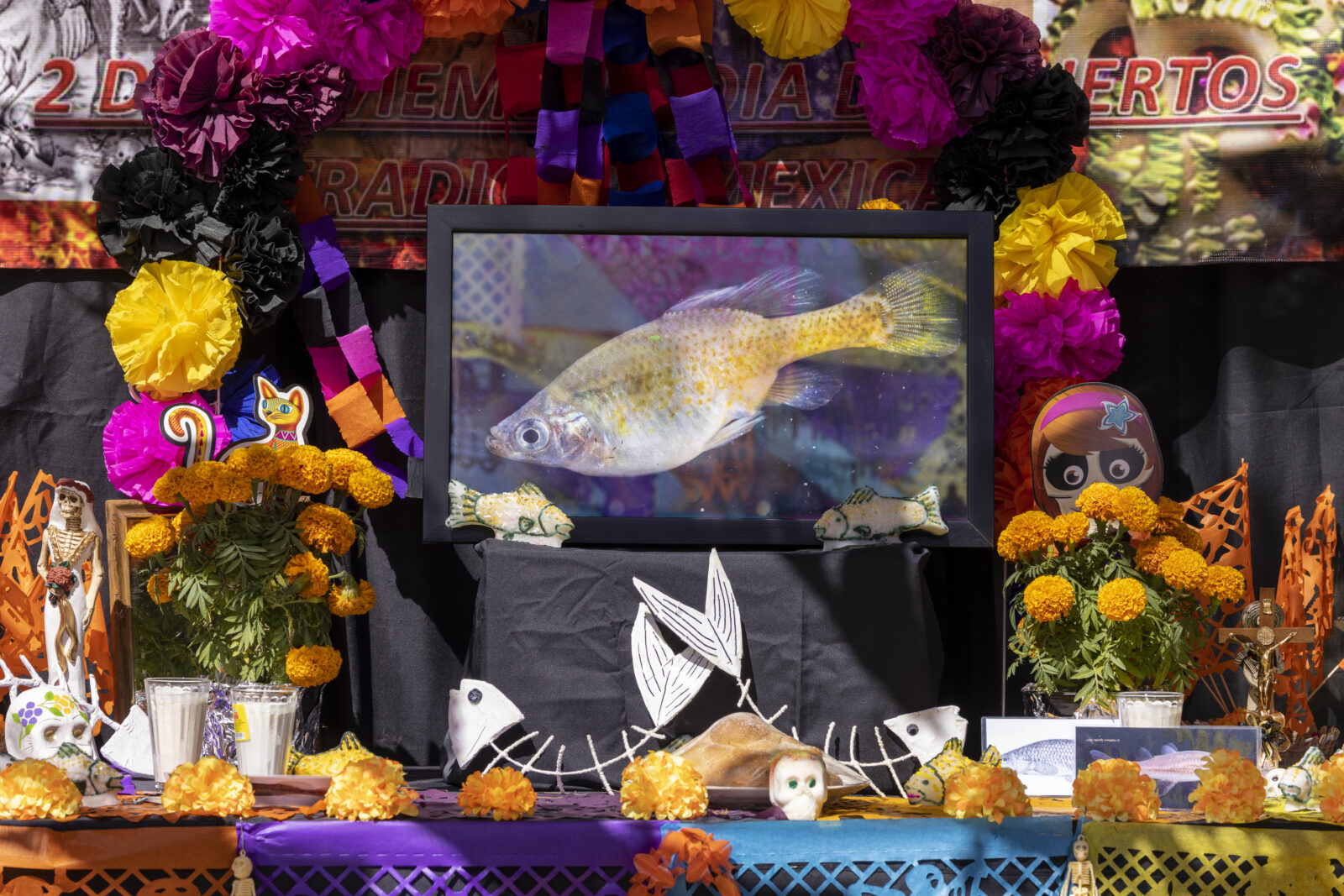
“Bringing the species back from the ‘dead’ is the result of collaborative conservation work between Michoacan University of Mexico, @chesterzoo, the Goodeid Working Group and @Shoal_Org (a program of @Rewild and @synchearth).”
ADVERTISEMENT
Paul Bamford, regional programme manager for Latin America at Chester Zoo, added: “This project is a great example of how zoos can contribute to conservation in the field through conservation breeding and research, utilising the skills and experience that have been developed in zoos to help strengthen existing and new wild populations.
“By supporting freshwater conservation in Mexico and the ecosystems where the fish live, we’re not only protecting biodiversity and the wellbeing of freshwater environments, but also the people and communities that live alongside them.”
Omar Domínguez-Domínguez, a professor and researcher from the Michoacan University of Mexico, who is leading the golden skiffia reintroduction, said: “The Day of the Dead is a traditional Mexican celebration, when it is believed that people’s deceased ancestors return to the land of the living for one night, to talk and spend time with their families.
ADVERTISEMENT
“Releasing the golden skiffia at this time is a metaphor for how the species has come back from the dead to return to its home, not for one night, but forever.
“Releasing this species back into the wild is a light of hope for this wonderful family of fishes – the goodeids – and for the conservation of freshwater fish more generally. Knowing that universities, zoos and aquarists can come together to fix some of what has been destroyed and return to nature some of what has been lost is an amazing thing.”
The skaffia was pushed to extinction by dam construction, water extraction, pollution and the introduction of invasive species.
Conservationists hope that the fish being released will ultimately result in a healthy, self-sustaining population that can fulfil its important natural role in the ecosystem of eating algae and mosquito larvae, which helps keep populations of those species in check.
Featured image: Sony Pictures

Cheshire
A rare piglet born at Chester Zoo could help save an entire species from extinction
Danny Jones
A very cute and rare new arrival at Chester Zoo could potentially save the animal’s future, and she might just be one of the cutest little piglets we’ve ever seen.
Say hello to Rana.
A tiny ‘babirusa’ – also sometimes referred to as the ‘pig-deer’ – Rana is an indigenous species found on just four small Indonesian islands, and one which is sadly on the verge of extinction, according to the International Union for the Conservation of Nature.
Part of the threat to the population is due to African Swine Fever (not to be confused with swine flu), which reached these islands around half a decade ago and could see these precious little pigs considered ‘critically endangered’ very soon. But Chester Zoo are working hard to prevent this outcome.
Born this summer, Rana is the baby of mother babirusa Matano, who was herself born at Chester Zoo over a decade ago.
Fast forward 11 years, and she has descendants living in zoos all across Europe, as well as a whole new generation of children here in the UK.
However, she is the first one born in some time, with this particular phylum only ever birthing one or two kids at a time as opposed to a litter like most other pigs.
Described as being like grapefruit “only with legs”, she may be small for now, but she’s growing fast and carries the weight of big hopes and expectations for the rest of her kind.
Chester Zoo conservationists are currently working with partners to protect wild babirusa populations through Action Indonesia‘s Global Species Management Plans.
Helping design camera-trapping projects to monitor babirusas on Sulawesi, and working with other organisations to locate and protect surviving numbers, the aim is to share conservation breeding expertise, with results so far having bred at least 17 babirusas towards national cooperative targets.
For context, only on two occasions were babirusas photographed in the wild during the entirety of 2023-24, hence why efforts have been ramped up even further over the past year or so.
Amy Humphreys, a conservationist at the zoo who is working with Action Indonesia, the country’s government and other groups to combat their decline and rescue this species, says we are in “a race against time” to save these omnivorous, ‘charismatic’ and intelligent pigs.
She goes on to add that “babirusas are important to island ecosystems as they drop seeds as they forage, helping forest regeneration, and they are a key indicator species for overall environmental health, but their situation is bleak.
“We risk losing a truly unique species, one that’s an important part of Indonesia’s cultural and natural heritage and one of the oldest pig species still living […] Rana’s arrival is worth celebrating; her birth is a chance to shine a light on babirusas and show people why they deserve protection.”
It’s uplifting and inspiring stories like this that constantly remind us why we’re fortunate we are to have the award-winning zoo and conservation centre in our region; and if you were wondering whether we’ll be booking a trip soon just in hopes of seeing little Rana running around, you’d be absolutely right.
A local Manchester run club is holding two special running routes to see the total eclipse
Danny Jones
With the highly anticipated total eclipse fast approaching, people not just here in Greater Manchester but all over the UK, Europe and the rest of the world are gearing up to try and watch it – but this native running club are doing it a bit differently.
Eclipses occur once every 12-18 months, but this is set to be the biggest since 1999.
The moon is set to cover approximately 96-98% of the sun this coming Wednesday, 12 August, 2026, and rather than try to watch it from a window at home or drive to somewhere with supposedly ‘the best view’, local sports club Manchester Road Runners are turning it into their latest one-off event.
Sharing details online, the free-to-join local organisation, which boasts thousands of members on Facebook and various other platforms, will be timing things to make sure they catch the phenomenon.
Writing in the accompanying caption, the Road Runners say: “We’ve pulled some strings and have a very special event taking place on August 12th, a solar eclipse! Come run with us under a darkened sun next Wednesday from The Wharf at 18:30, with peak moon coverage expected at around 19:10.”
Better still, they’re also teaming up with their trail running spin-off club for an even more scenic twist on the evening excursion.
“If you prefer to experience your solar phenomena under the wide open skies”, they go on to write, “our friends over at Trail Division will be holding a hike/run off road, meet at Piccadilly Station at 18:00 to get shady in the great outdoors.”
Fortunately, they have issued an important disclaimer, going on to remind runners that “while beautiful and majestic, the sun should NEVER be directly looked at in the face unprotected”, signing off by adding, “Respect the sun, respect your peepers, stay ocularly safe out there.”
If you’ve never come across MRR before, they’re probably the biggest run club in the entire Greater Manchester region and their social-first jogs, intervals, track sessions and more revolve around meeting back up with your mates for a wholesome pint and a chat.
For many, it’s the biggest and the best in the city.
As for the eclipse run, it’s set to be a very magical variation on their usual Wednesday evening meets.
Quite rightly, they also point out in the post that you can actually buy certain glasses to view eclipses on these rare occasions, with search traffic often ramping up in and around these events.
Meanwhile, the Trail Division branch is yet to confirm the route for their run/hike, but it will most likely remain in the nearby North West vicinity; keep your eyes peeled on their social media pages (linked above) for more information and other upcoming trail events.
Speaking of trail runs, there’s a pretty beautiful albeit challenging one coming up next month…
Stunning vistas, walkers welcome, and multiple distances available.🏃♂️🥾
And the best part? It's less than 90 minutes away from Manchester. 🏞️