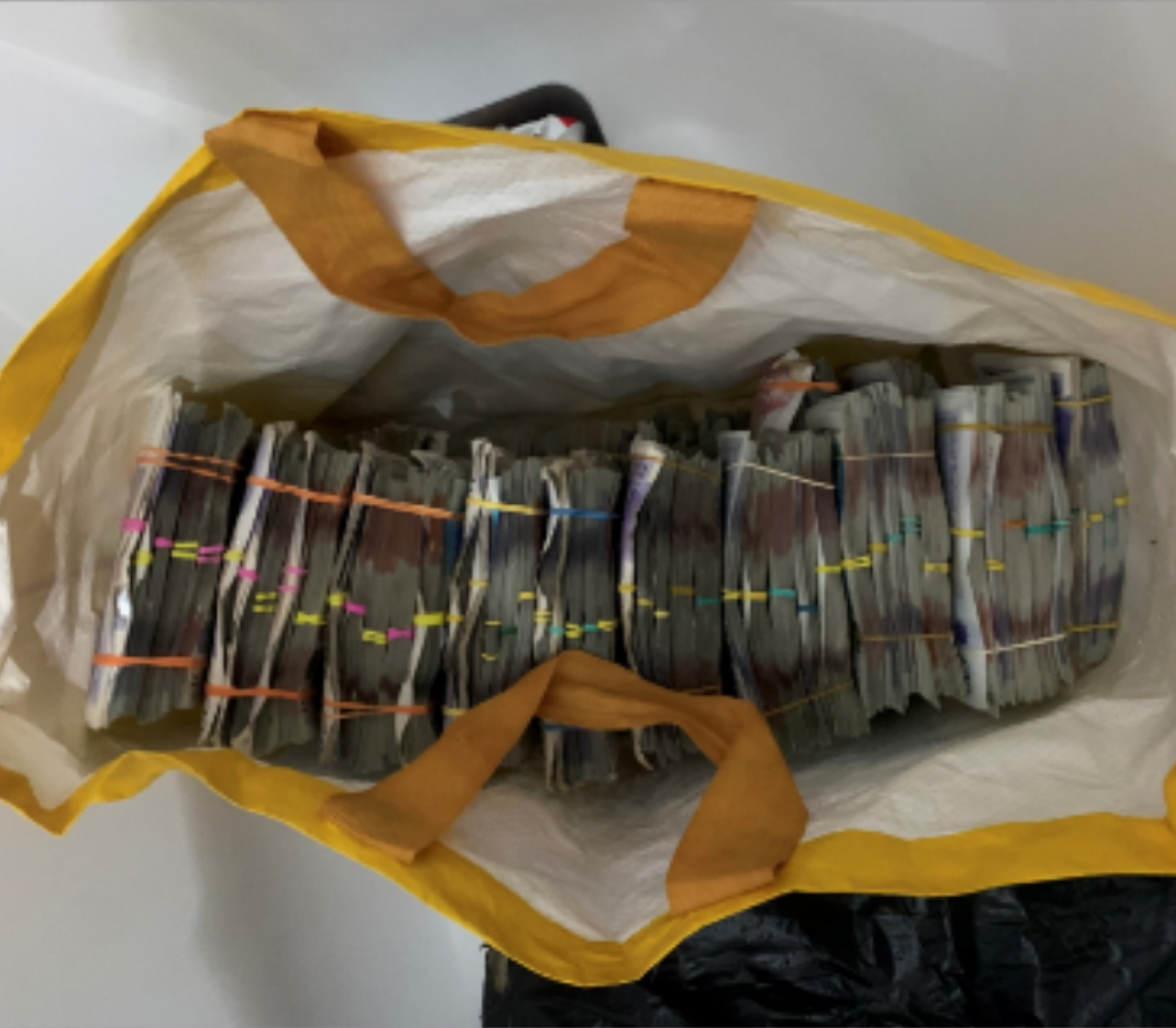
Police have reinvested more than £15 million in cash seized from criminals back into local communities across Manchester.
Over the last financial year, Greater Manchester Police‘s (GMP) Economic Crime Unit – which is made up of police officers, detectives, and other additional staff – have together recovered a whopping total of £15,163,436.27 of ‘criminal’ money.
The Economic Crime Unit is tasked with dealing with complex investigations relating to serious fraud, money laundering, and the confiscating of the finances of those that have profited from crime in Greater Manchester – with each of the teams working within the unit specialising in targeting criminals’ cash in the journey from its seizure, to the recovery of funds in court.
Some of the teams who work as part of the Economic Crime Unit include the dedicated ‘Money Laundering Team’, the ‘Account Freezing Order’ team, the ‘Asset Detention and Recovery’ team, and the ‘Restraint and Confiscation’ team.
#NEWS |Criminal cash given back to communities as we seize over £15 million in the last tax year 💰
The unit is made up of a number of teams who target criminal cash in the journey from the seizure of cash to the recovery of these funds in court.
— Greater Manchester Police (@gmpolice) June 10, 2024
By working together as a team, each with a dedicated task at hand, this has meant that the Economic Crime Unit has broken records in the sheer volume of cash it has seized and then recovered for the force throughout this past year.
ADVERTISEMENT
The seized funds are then used as Asset Recovery Incentivisation Scheme (ARIS) funding to benefit the local communities across our region.
Detective Inspector Sarah Langley, of GMP’s Economic Crime Unit, described the amount of criminal cash seized this financial year as a “significant achievement” for the region, as it not only “disrupts criminals as they look to line their pockets with illicit cash” but it also “directly benefits” communities across Greater Manchester as these funds are being reinvested into “vital” community programmes and services.

ADVERTISEMENT
£15 million of ‘criminal cash’ seized by police has been reinvested back into Manchester’s communities / Credit: GMP
“It’s fitting that we recover the money from those individuals who have profited from crime for their own selfish gain, and will now be used to improve our communities in Greater Manchester by giving the funding to those who need it the most,” DI Langley explained.
“Over the last year, we have worked hard to dismantle several criminal networks engaged in money laundering, fraud, and other financial crimes.”
DI Langley said the reinvestment of the seized funds is “so satisfying”.
She continued: “This year we have recovered over £15 million, and a significant amount has been put back into Greater Manchester, and it’s so satisfying when we can see that our hard work has a difference on the communities we serve.
“This encourages us to get even more money this next financial year.”
Featured Image – GMP

News
Every Greater Manchester borough to get 24-7 night bus services as part of Bee Network improvements
Emily Sergeant
Every borough of Greater Manchester is set to get a night bus service in what is hoped to be a ‘boost’ to the night-time economy.
Widespread improvements are coming to bus services across the whole region are coming later this year, as Greater Manchester Mayor Andy Burnham has today (Thursday 18 March) announced 36 service changes in total – many of which are said to be the ‘most significant’ and ‘wide-ranging’ upgrades the Bee Network has seen since bus franchising was completed early last year.
The announcement comes after the Mayor gave a major update yesterday on plans to deliver a ‘decade of good growth’ in Greater Manchester, backed by at least £500 million of investment from the National Wealth Fund, taking the GM Good Growth Fund to almost £2 billion.
The Bee Network insists this raft of new changes have ‘only been made possible’ by bringing buses back under local control.
As mentioned, the most major improvement is set to be the introduction 24-hour night buses throughout Greater Manchester – with five new night buses launched to bring a 24-hour service to parts of the region that haven’t previously had them, like Oldham, Stockport, Tameside, and Trafford.
Every Greater Manchester borough is set to get 24-7 night bus services / Credit: TfGM
It’s hoped around 625,400 people in jobs that operate late into the night, as well as those enjoying everything the region’s nightlife has to offer, can get home safely.
Some of the other changes announced include a selection of brand-new bus services, more frequent buses during the day and at the weekends, and overall better connections to key employment and leisure destinations like Manchester Airport, Trafford Centre, MediaCity, Middlebrook Retail Park, Kingsway Business Park, and Logistics North.
“These changes will benefit people right across Greater Manchester,” commented Greater Manchester Mayor, Andy Burnham.
“They have come about as a direct result of your feedback and support for the Bee Network and have been made possible by the decision we took to bring our buses back under local control.
“By expanding Bee Network night buses to every borough, and providing more frequent services to key employment locations, we are creating more ways for people to access jobs and opportunities across the region.
“This is just the start. As we continue to lead the way on economic growth, so will we continue to lead the way on transforming the Bee Network, setting us up for another decade of good growth so that everyone in Greater Manchester can live a good life.”
Featured Image – TfGM
News
‘Deeply worrying’ figures reveal one in seven NHS staff were physically attacked last year
Emily Sergeant
The NHS is ‘deeply worried’ after figures revealed one in seven staff were attacked by a patient or member of the public last year.
According to the latest NHS staff survey, 14.47% – which works out to almost one in seven staff members – were physically attacked by a patient or the public in the last year, which sadly works out to be the highest rate for three years.
On top of this, the shocking statistics also saw a record percentage of staff say they were subjected to ‘unwanted’ sexual behaviour, rising steeply to almost one in three ambulance staff (31%).
It also found that nearly one in 10 staff (9.26%) said they were subjected to discrimination from patients and the public, which is the highest on record.
The 2025 NHS Staff Survey results are now published.
Thank you to all NHS staff who took the time to share their experiences.
The survey helps us understand what’s working well and where improvements can be made.
Presumably because of figures like this, the survey revealed that the number of staff who would recommend their workplace to others fell slightly to 58.05% in 2025, which is down from 60.79% last year in 2024.
“These figures paint a deeply worrying picture of the abuse our hardworking NHS staff face,” commented Danny Mortimer, who is the Director General (People) for NHS England.
“Staff safety and wellbeing is paramount, and we want everyone experiencing any kind of unwanted incident to feel confident enough to report it. But while that behaviour is completely unacceptable, we must look at what more we can do to support the people who keep our services running.
‘Deeply worrying’ figures reveal that one in seven NHS staff were physically attacked last year / Credit: rawpixel
“We know about the everyday pressures staff face and we haven’t moved fast enough to fix them.
“Staff have worked so hard to improve NHS performance and deliver care over winter as shown in the latest performance figures. These survey results show it is now for the NHS to deliver improvements for staff because there is so much more to do to make the NHS a better place to work.”
However, despite all of this, an overwhelming 87.78% of respondents did say they felt their job ‘made a difference’ to patients.
As mentioned, all of these statistics have been revealed as part of the latest NHS staff survey, where more than 766,000 workers in England responded – providing what is said to be ‘vital data’ for employers and stakeholders about the staff experience.