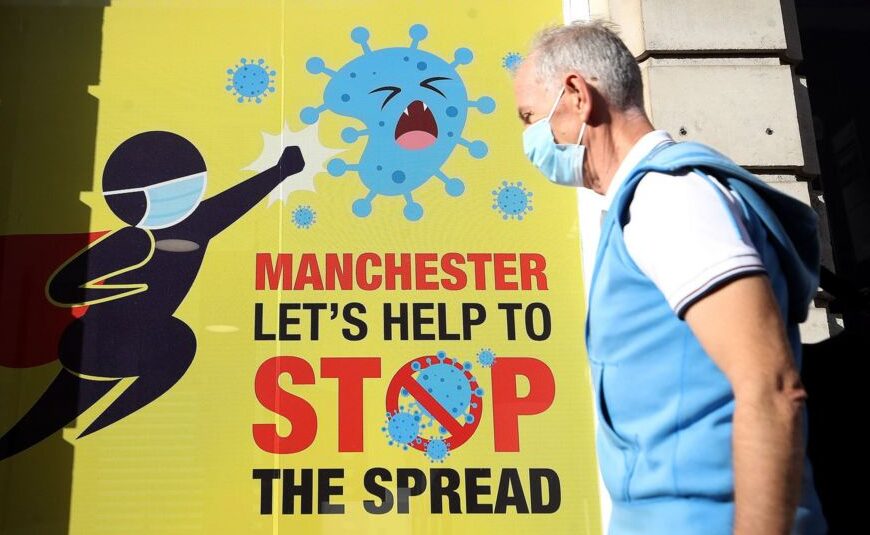
It has been confirmed today that Greater Manchester will be placed into Tier 4 restrictions following the second official review of the UK government’s tier system.
The new classification was announced by Health Secretary Matt Hancock during a direct address to MPs in the House of Commons a few moments ago.
These changes will take effect at 0.01am tomorrow.
Announcing the new classifications, Mr Hancock said: “Unfortunately, this new variant is now spreading across most of England and cases are doubling fast [and] it is therefore necessary to apply Tier 4 measures to a wider area, including the remaining parts of the South East, as well as large parts of the Midlands, the North West, the North East and the South West.”
Lancashire, Cheshire, Warrington, Blackpool and Blackburn with Darwen will also move from Tier 3 restrictions into Tier 4.
ADVERTISEMENT
Liverpool City Region will move from Tier 2 restrictions into Tier 3, while Cumbria will from Tier 2 into Tier 4.
BREAKING: Health Secretary Matt Hancock says that three quarters of the population of England are now going to be in Tier 4 due to the spread of the second COVID variant.
It comes after coronavirus (COVID-19) infection rates have continued to rise across the region – with nine out of the ten boroughs seeing increases – and the latest data now showing the region-wide infection rate looking set to top 200 cases per 100,000 people again for the first time since last month.
ADVERTISEMENT
Greater Manchester had previously remained under Tier 3 restrictions since the country came out of the national second lockdown at the start of December, with no changes in almost four weeks.
Tier 4
The new tier 4 restrictions will see Greater Manchester residents told to “stay at home” and not leave or be outside of their home except for specific purposes.
No household mixing is allowed – aside from support bubbles and two people meeting in public outdoor spaces – all hospitality and non-essential retail must close, except for takeaway, drive-through or delivery services, and all indoor leisure and entertainment venues must too close.
Travel is only permitted for work, education or other legally permitted reasons, and residents must not leave a Tier 4 area or stay overnight away from home.
Residents in Tiers 1 – 3 should also not enter Tier 4 areas.
Education Secretary Gavin Williamson is now due to make a follow-up announcement regarding the return to school ahead of the new term for millions of children across the country at 3:30pm.
Health Secretary Matt Hancock has announced millions more people are facing tighter Covid-19 restrictions as the Government extends Tier 4 rules to cover more areas in England
The review follows widespread reports by a number of major news outlets that have been emerging over the past week or so to suggest that England could immediately head into a full lockdown, or even see additional ‘Tier 5’ restrictions imposed following the confirmation by Health Secretary Matt Hancock earlier this month that a “new variant” of coronavirus has been detected in the UK, which first forced London and large parts of the South East into Tier 4 “stay at home” measures over the festive period.
ADVERTISEMENT
It also comes after millions more people were then moved into tougher restrictions on Boxing Day, with some six million people entering Tier 4, and a further four million people placed into Tier 3.
This thus brought the total of people in Tier 4 to 24 million, which was 43% of the population.
The approval of the new vaccine is set to accelerate UK’s immunisation campaign – with 100 million doses of the Oxford jab already ordered – and is has prompted Matt Hancock to express confidence the country could now “get out of the pandemic by spring”.
Two shots will be required for maximum effect, and the rollout of the Oxford-AstraZeneca vaccine is scheduled for 4th January.
ADVERTISEMENT
This is a BREAKING NEWS story – More to follow.
___
For the latest information, guidance and support during the coronavirus (COVID-19) pandemic in the UK, please do refer to official sources at gov.uk/coronavirus.
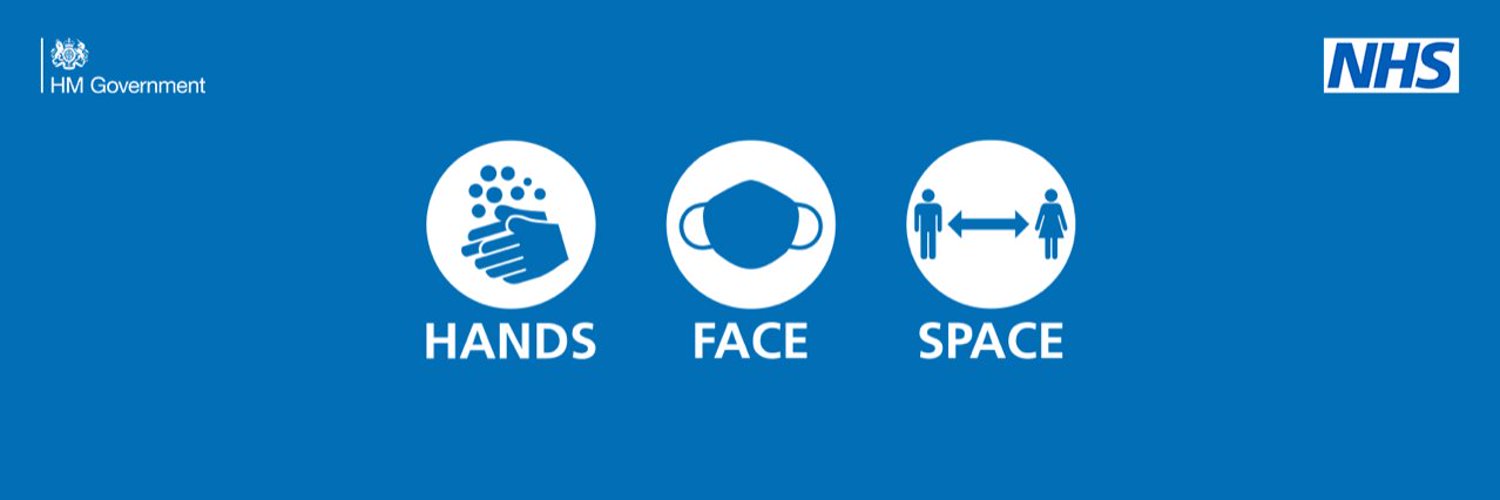
#HandsFaceSpace
News
The simple hack that can save healthcare workers and teachers money on their holidays
Danny Jones
With cost-of-living pressure ever-present in the background of most everyday lives, finding some spare pennies for a getaway feels more difficult than ever, and if there’s anyone who deserves discounts on a holiday, it’s healthcare workers.
That’s why, when we became aware of the simple hack that can save those working in healthcare services money on holidays, we thought we’d help spread the word.
We’re sure lots of you working within the sector already know plenty about this booking strategy, but for anyone who doesn’t, how do you fancy saving up to half a grand on your next jolly?
In fact, even those working in education can cut their costs, too.
With searches for ‘holiday voucher code’ up by 73% on Google, and even the likes of TikTok seeing ‘money saving tips’ up by 45%, travel agency TUI have decided to team up with the Health Service Discounts platform for 2026.
Providing those who work for the NHS with a ‘Holidays for Heroes’ (HfH) access code on various popular peak-season trips, this exclusive discount can be added on top of all other seasonal TUI deals, including the company’s ‘First Choice’ package holidays.
With the HfH code alone guaranteeing workers an extra £100 off their bookings, play your cards right, and you could get up to £500 in total discounts overall.
How to access the healthcare ‘Holidays for Heroes’ deal
Separate from standard Blue Light card savings, here’s how it works, and don’t worry, it’s all very simple:
As mentioned, education workers can also benefit from similar money off, with an extra £50 per person through the TUI x Discounts for Teachers partnership, as well.
Ella Foden-Lynch, Partnerships Manager for TUI, said in a statement: “Getting away is absolutely vital for wellbeing, especially for those working in high-stress healthcare and education roles.
“With the cost-of-living crisis still putting a strain on household budgets, we know how hard it is to stretch your pay to cover a much-needed family break. By unlocking these exclusive TUI deals, we hope to give our key workers the realistic recovery time they deserve without the financial worry.”
So, for those of you healthcare heroes and teachers looking for a well-deserved break, we urge you to find an affordable holiday that suits you very soon. With cheaper airport pints also inbound later this year, here’s hoping you save even more spends for when you’re away.
New ‘cutting-edge’ cancer treatment to be rolled out on NHS from next week
Emily Sergeant
A new ‘cutting-edge’ cancer treatment is set to be rolled out on the NHS from next week.
Thousands of men with prostate cancer are to be offered high-powered ‘precision’ radiotherapy on the NHS to target the disease more effectively – helping reduce side-effects and spare them 15 courses of treatment.
The highly targeted SABR (stereotactic ablative radiotherapy) delivers radiotherapy to the tumour from many different directions to help reduce the risk of cancer spreading or returning.
SABR has been proven to be effective at far fewer doses than conventional radiotherapy.
Standard radiotherapy can often be a major burden for patients and loved ones, due to the substantial treatment and travel time involved, but SABR is typically delivered in just five doses within a fortnight, compared to at least 20 doses with external beam radiotherapy.
Thousands of men with prostate cancer are to be offered high-powered ‘precision’ radiotherapy on the NHS to target the disease more effectively, helping reduce side-effects and spare them 15 courses of treatment.
Around 17,500 men are diagnosed with low or intermediate risk prostate cancer in England each year and could be offered the option of SABR radiotherapy.
It is expected that the cutting-edge technique for localised prostate cancer will be offered at all 48 radiotherapy providers across England in the coming days – with the first centres making it available on the NHS from next week.
The roll-out could free up around 50,000 appointments for prostate cancer treatment each year, helping the NHS continue to bring down waiting times for patients.
NHS chief executive, Sir Jim Mackey, said the news will ‘transform’ treatment for thousands of men with localised prostate cancer.
“This cutting-edge approach will transform treatment for thousands of men with prostate cancer, helping the NHS provide far more powerful and convenient care to stop their cancer spreading,” Sir Mackey commented.
“Having been proven effective in keeping cancer under control, this technology will not only help reduce the risk of certain side effects but also the major ‘to-and-fro’ burden of hospital treatment, which can be really draining for so many patients and their families.”